Why cloud incident manuals matter in 2026
Cloud incidents in 2026 look very different from five years ago: AI‑driven attacks, multi‑cloud sprawl and heavy reliance on SaaS turn small misconfigurations into business‑wide outages. That’s why having practical manuals of resposta a incidentes em cloud serviços gerenciados stopped being “nice to have” and became basic hygiene. A good manual isn’t a PDF nobody reads; it’s a living set of tactical plans, playbooks and coordination rules wired into tools and chat channels. The goal is simple: shorten detection, decision and recovery time, while reducing improvisation at 3 a.m. when everyone is tired and stressed.
Clear definitions: tactical plan vs playbook vs runbook
Let’s ground the terminology, because many teams mix it up. A tactical plan is the high‑level “how we fight” during a crisis: roles, escalation paths, communication norms and priorities between availability, data and compliance. Playbooks sit one level below and describe decision trees for a type of incident, for example “suspected credential theft in production account”. Runbooks are even more granular: step‑by‑step technical procedures you could almost hand to a junior. Modern playbooks of resposta a incidentes em cloud para empresas usually embed or link multiple runbooks plus automation scripts and dashboards.
Text-based diagram: how it all connects
Imagine a simple diagram in text form:
[Diagram: “Threat” → “Detection tools” → “Playbook selector” → “Tactical command room” → “Runbooks & automation” → “Post‑incident learning”]. The threat hits the environment, detection raises an alert and the correct cloud playbook is picked automatically, often via tags or incident categories. The tactical “command room” — usually a chat war‑room plus a ticket in an ITSM system — coordinates who does what. Engineers then execute runbooks and automation, while someone owns communication with business stakeholders. Finally, learnings feed back to improve both playbooks and strategic architecture decisions.
Comparing cloud manuals to old on‑prem practices
Traditional incident response manuals assumed static environments, few perimeter devices and slow change. In contrast, cloud demands velocity: infrastructure as code, autoscaling and serverless keep mutating the attack surface hourly. Instead of a huge binder with dozens of generic chapters, modern cloud incident manuals favor small, composable playbooks. They also integrate tightly with CI/CD, identity platforms and logging pipelines, which old practices rarely did. Where on‑prem teams relied on tribal knowledge and individual heroes, current cloud handbooks stress automation, clear ownership and repeatability, because human memory simply can’t keep up with ephemeral workloads and multi‑region topologies.
Modern tooling and the price question
By 2026, there’s a whole ecosystem of SaaS platforms that generate, store and orchestrate playbooks. When companies compare ferramentas de incident response para nuvem preço, the conversation is less about license cost and more about how much toil and downtime they remove. Useful tools integrate with cloud provider logs, ticketing, chat, SOAR and identity systems, then surface a context‑aware checklist the moment an alert fires. Some vendors now add generative AI to suggest missing steps or detect conflicting actions. The pragmatic approach: pilot with narrow use cases, measure mean time to recover and only then decide which features are actually worth paying for.
Where consulting and managed services fit
Not every organization has in‑house experience to design good cloud playbooks. That’s where consultoria em segurança cloud e resposta a incidentes still makes sense, particularly for regulated industries. External teams bring battle‑tested patterns, but in 2026 the best engagements are collaborative: consultants co‑create manuals with your engineers rather than dropping a static template. Some companies also lean on MDR or SOC providers who offer resposta a incidentes em cloud serviços gerenciados, especially for 24/7 monitoring of multi‑cloud setups. The main risk here is over‑outsourcing: if only vendors understand your manuals, you will struggle during contracts changes or large‑scale regional outages.
Building tactical plans: roles, flows, decisions
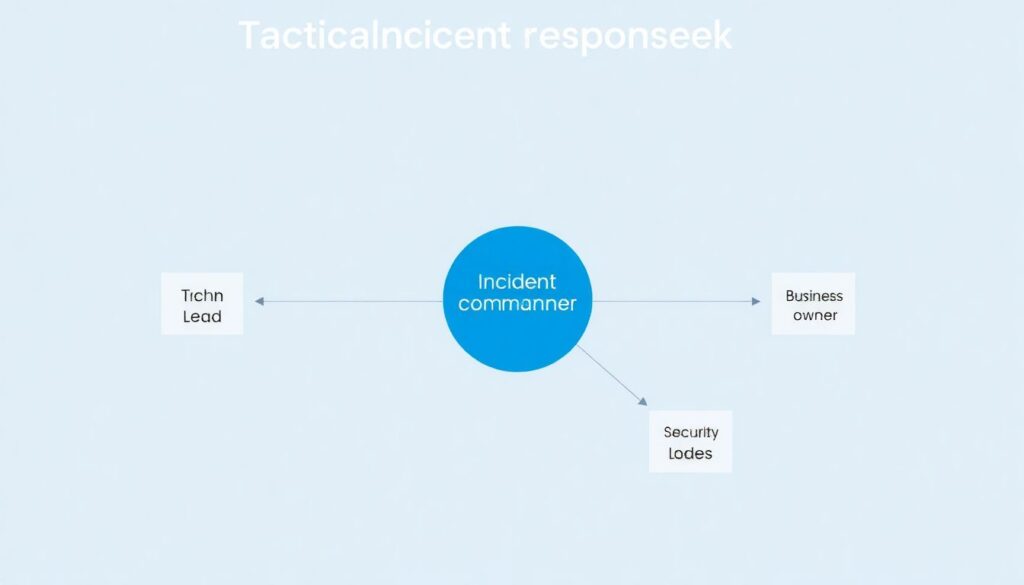
A solid tactical plan starts from clarity about who leads, who decides and who communicates. In a text diagram it looks like: [Diagram: “Incident commander” in the center, linked to “Tech lead”, “Comms lead”, “Security lead”, “Business owner”]. Around them, you define status update frequency, severity levels and standard entry and exit criteria for a major incident. Compared with generic corporate crisis plans, cloud‑focused documents add details like cross‑account access, emergency elevation of permissions and guardrails when running “break‑glass” operations, ensuring that urgency does not accidentally bypass logging or violate regulatory constraints.
Playbooks that actually get used
The biggest compliment to a playbook is when people open it without being told. To get there, you keep them short, visual and aligned with how engineers think. A useful pattern is to start with three questions: “Stop the bleeding?”, “Preserve evidence?”, “Protect customers right now?”. Only then move to root‑cause analysis. In 2026, mature teams treat playbooks as code: version‑controlled, peer‑reviewed and tested in staging. They also plug small simulations into CI pipelines — for instance, spinning up a fake compromised workload and validating that alarms fire and the correct playbook is suggested in the incident console.
Numbered roadmap for modernizing manuals
1. Map your top ten business‑critical cloud services and list realistic incident scenarios for each.
2. Draft minimal playbooks for those scenarios, including success criteria and rollback paths.
3. Wire playbooks into monitoring, ticketing and chat so they open automatically with alerts.
4. Assign explicit roles for incident command and make escalation rules visible and simple.
5. Run quarterly drills and refine manuals based on what slowed you down.
6. Use selective consultoria em segurança cloud e resposta a incidentes to benchmark maturity.
7. Continuously prune outdated steps as platforms and architectures evolve.
Training, culture and cross-team coordination
Even the best manuals fail if people see them as bureaucracy. That’s why treinamento corporativo resposta a incidentes em nuvem moved from slide decks to immersive exercises by 2026. Teams run game‑days using chaos engineering, simulate ransomware in a sandbox or rehearse region‑wide outages. Each drill stresses coordination between security, SRE, developers and business units, not just technical fixes. Compared to classic compliance‑driven awareness sessions, this hands‑on practice builds muscle memory and shared language. Over time, engineers start suggesting improvements to manuals themselves, turning incident response from a fear‑driven duty into a routine part of running reliable cloud systems.