
To meet LGPD, GDPR and ISO 27001 requirements in a cloud-only environment, treat each cloud account as part of one governed, documented security program. Define roles, classify data, enforce strong IAM and encryption, monitor continuously, and collect evidence from cloud-native tools to prove that controls run effectively over time.
Essential Compliance Goals for Cloud-Only Infrastructures
- Assign clear accountability for privacy, security and operations across all cloud accounts and regions.
- Maintain an accurate data inventory, including classification and residency for personal data.
- Harden identity, encryption, backups and baseline configurations using native cloud controls.
- Continuously log, monitor and respond to incidents in a cloud-centric way.
- Formalise vendor management and shared responsibility with all cloud and SaaS providers.
- Map every control to LGPD/GDPR/ISO 27001 requirements and keep auditable evidence.
| Area | Action (prep-checklist) | Owner | Evidence to keep |
|---|---|---|---|
| Governance and Roles | Assign RACI for data protection, security, operations and incident response | CISO / DPO / IT Manager | Approved RACI matrix, security policy, meeting minutes |
| Data Inventory & Residency | Catalogue systems and data flows with personal data and locations | Data Owner / System Owner | Data inventory register, records of processing, architecture diagrams |
| Technical Safeguards | Define baseline IAM, encryption, backup and hardening standards | Cloud Security Architect | Baseline documents, IaC templates, security configuration guidelines |
| Monitoring & Incident Response | Configure central logging, alerts and incident playbooks | SecOps / SOC Lead | SIEM dashboards, alert rules, runbooks, incident logs |
| Vendor & Shared Responsibility | Review contracts, DPAs, SLAs and shared responsibility matrices | Legal / Procurement / Security | Signed contracts, DPAs, cloud provider shared responsibility docs |
| Evidence & Audits | Define how to map and export evidence for LGPD/GDPR/ISO 27001 | Compliance Officer / Internal Auditor | Control matrix, audit trail exports, assessment reports |
Governance and Roles: Establishing Accountability in a Cloud-Native Stack
Cloud-only compliance is a good fit if your workloads already run in public cloud and you can standardise on a few providers (typically AWS, Azure, GCP). It is less suitable if you lack basic access control hygiene or have no central view of accounts, projects and subscriptions.
For organisations in Brazil asking about lgpd em nuvem como implementar requisitos de compliance, start by clarifying who owns which decisions. Without this, even the best ferramentas de governança e compliance em cloud para lgpd will not help.
- Define and approve a cloud security and compliance policy covering LGPD, GDPR and ISO 27001.
- Create a RACI matrix for cloud governance: who approves new accounts, who manages IAM, who signs off exceptions.
- Assign a DPO (LGPD/GDPR), an information security lead and at least one cloud architect.
- Standardise account structure:
- AWS: use AWS Organizations with separate accounts for prod, non-prod and security tooling.
- Azure: use management groups, subscriptions and Azure Policy for governance.
- GCP: use an organisation node, folders and projects aligned to business units.
- Document a change management process for cloud resources that impact confidentiality, integrity or availability.
Specialised consultoria compliance lgpd gdpr iso 27001 nuvem can help you review this governance model, but the internal ownership must remain with your teams.
Data Inventory, Classification and Residency Controls
Before implementing technical safeguards, prepare the following requirements and accesses.
- Access to cloud provider cost and resource inventory tools (e.g., AWS Config, Azure Resource Graph, GCP Asset Inventory).
- Knowledge of which applications process personal data (including customers, employees, partners).
- Participation from data owners and business area leads to validate classifications.
- Legal/compliance input on data residency rules for LGPD and GDPR (e.g., allowed regions, cross-border transfers).
Then implement a practical inventory and classification process:
- List systems and services handling personal data:
- Use tagging or labels (e.g., AWS resource tags, Azure tags, GCP labels) to mark workloads with
data=personal,data=sensitive. - Include managed services like databases, storage buckets, message queues and analytics tools.
- Use tagging or labels (e.g., AWS resource tags, Azure tags, GCP labels) to mark workloads with
- Classify data into a small, clear scheme (for example: Public, Internal, Confidential, Highly Confidential).
- Map where LGPD/GDPR personal and sensitive personal data sits (databases, object storage, logs, backups).
- Ensure logging and telemetry do not unintentionally store sensitive identifiers in plain text.
- Control residency and transfers:
- Restrict allowed regions at account or subscription level with policies:
- AWS: use Service Control Policies (SCPs) to deny non-approved regions.
- Azure: use Azure Policy to allow only compliant regions.
- GCP: restrict resource locations in organisation policies.
- Document any cross-border data flows and the legal basis (LGPD/GDPR requirement).
- Restrict allowed regions at account or subscription level with policies:
- Maintain a living data inventory:
- Export cloud inventories regularly and reconcile with your records of processing activities.
- Review inventory at least when new services go live or major features change.
These steps support soluções de segurança em nuvem conformidade lgpd e gdpr by giving a concrete view of what must be protected and where.
Technical Safeguards: IAM, Encryption, Backup and Secure Configurations
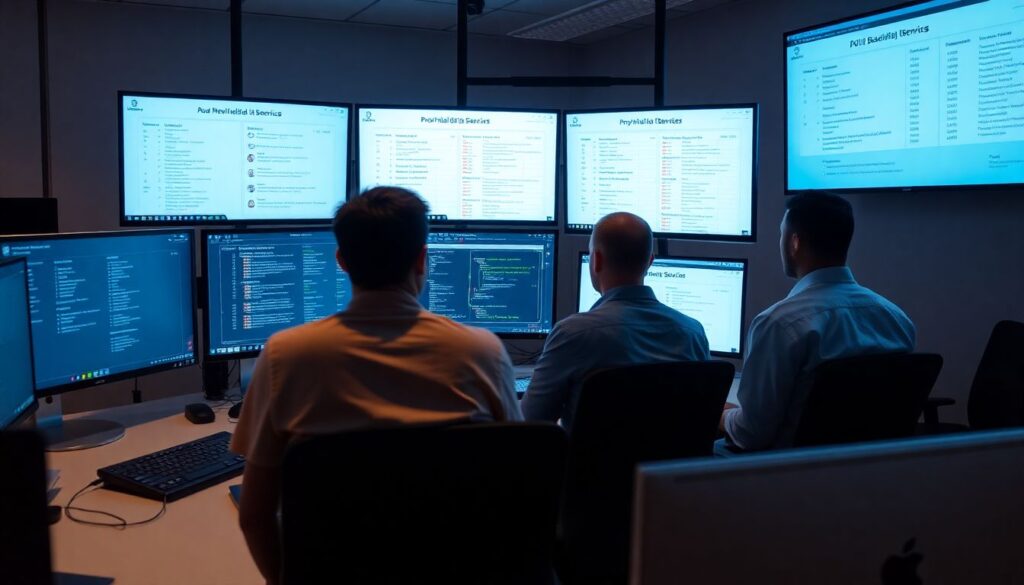
Before following the step-by-step implementation, prepare using this short checklist:
- Confirm who can create and manage IAM roles, policies and groups in each cloud provider.
- Identify all services storing personal data (databases, storage, backups, logs).
- Enable organisation-level security tooling (e.g., AWS Security Hub, Azure Defender, Security Command Center in GCP).
- Ensure you have version-controlled Infrastructure as Code (Terraform, CloudFormation, Bicep, etc.).
- Harden identity and access management (IAM)
Enforce least privilege and strong authentication as your first control layer.- Enable MFA for all human users; require phishing-resistant methods where available.
- Use groups and roles, not permanent high-privilege users (e.g., AWS IAM roles, Azure roles, GCP IAM roles).
- Deny risky actions at organisation level using SCPs, Azure Policy or GCP organisation policies.
- Segment environments and networks
Isolate production from non-production and restrict network exposure.- Create separate accounts/subscriptions/projects for prod and non-prod.
- Use private subnets, security groups/NSGs and firewall rules to minimise inbound access.
- Expose services via managed gateways (AWS API Gateway, Azure Application Gateway, GCP API Gateway) instead of direct IPs.
- Encrypt data in transit and at rest
Ensure all LGPD/GDPR-relevant data is encrypted.- Enforce TLS for all endpoints; use managed certificates where possible.
- Enable storage encryption using provider keys or customer-managed keys:
- AWS KMS for EBS, S3, RDS, etc.
- Azure Key Vault keys for Storage, SQL, disks.
- Cloud KMS for GCP storage, disks and databases.
- Rotate keys regularly and restrict who can manage them.
- Configure resilient backups and recovery
Protect against loss and corruption of personal data.- Define RPO/RTO targets per system and configure automated backups and snapshots.
- Store backups in separate accounts/subscriptions or regions, with strict access controls.
- Test restore procedures on a regular schedule and document results.
- Standardise secure configurations
Avoid configuration drift by defining baselines.- Use Infrastructure as Code to apply secure defaults (for example, block public S3 buckets by default).
- Use native configuration rules:
- AWS Config rules, Azure Policy, GCP Config Validator.
- Block deployment of non-compliant resources where possible.
- Integrate security into CI/CD
Prevent insecure code and misconfigurations from reaching production.- Add static application security testing (SAST) and dependency scanning to your pipelines.
- Scan IaC templates for misconfigurations before deployment.
- Require code review for changes impacting IAM, networking or encryption.
- Harden administrative access
Secure how administrators connect to cloud consoles and workloads.- Use just-in-time access for privileged roles when supported.
- Replace direct SSH/RDP exposure with managed services (AWS Systems Manager Session Manager, Azure Bastion, IAP for GCP).
- Log all administrative actions and retain them for investigation.
These safeguards, applied consistently, form the technical foundation for certificação iso 27001 ambiente em nuvem serviços gerenciados and for proving privacy-by-design in LGPD/GDPR contexts.
Monitoring, Detection and Cloud-Centric Incident Response
Use this checklist to confirm that monitoring and incident response are adequate for LGPD, GDPR and ISO 27001 expectations:
- All cloud accounts, subscriptions and projects have central audit logging enabled and sending to a secure log store (e.g., AWS CloudTrail, Azure Activity Log, GCP Audit Logs).
- Security findings from native tools (AWS GuardDuty, Azure Defender, GCP Security Command Center) feed into a central SIEM or alerting system.
- Alert rules exist for suspicious IAM actions, failed logins, configuration changes to critical resources and changes to security groups/firewalls.
- Application and API logs include correlation IDs and enough context for investigations, without logging sensitive data in plain text.
- There is a documented, tested incident response playbook for data breaches, including LGPD/GDPR notification criteria and timelines.
- On-call rotas and escalation paths are clearly documented, with contacts for security, legal and communications.
- Incident evidence (logs, tickets, timelines) is stored securely and can be presented during audits.
- Post-incident reviews result in tracked corrective actions and changes to controls or configurations.
- Automated health checks regularly verify that logging and monitoring configurations are still applied.
Vendor Management, Contracts and Shared Responsibility Models
Common mistakes when working with cloud providers and SaaS in a compliance program:
- Assuming that using a major cloud provider alone guarantees LGPD, GDPR or ISO 27001 compliance.
- Not reviewing data processing agreements (DPAs) and contract clauses covering sub-processors and cross-border data transfers.
- Ignoring the shared responsibility model and leaving customer-side responsibilities undocumented or unassigned.
- Failing to verify which certifications and reports a provider actually holds (for example, SOC reports, ISO certificates) and their scope.
- Relying on manual spreadsheets instead of integrating provider compliance reports into your control mapping.
- Not assessing smaller SaaS vendors that also process personal data but sit outside the main cloud platforms.
- Skipping periodic vendor reviews, especially when services add new features or regions that change data flows.
- Overlooking how managed service providers access your environment when helping with operations or consultoria compliance lgpd gdpr iso 27001 nuvem.
Evidence, Audits and Mapping Controls to LGPD/GDPR/ISO 27001
There are several practical ways to structure evidence and control mapping; choose what fits your maturity and resources.
- Central control matrix with manual evidence collection
Maintain a spreadsheet or GRC tool mapping each LGPD, GDPR and ISO 27001 requirement to specific cloud controls, owners and evidence locations. This is simple to start but requires discipline to keep up to date. - Cloud-native compliance dashboards
Use provider tools (AWS Security Hub, Azure Policy compliance, GCP Security Command Center) as primary evidence sources, exporting reports for audits. This works well when your stack is concentrated on one or two major providers. - Integrated GRC and automation
Connect cloud APIs to a GRC platform that automatically imports configuration and monitoring evidence. This approach is better for larger environments or when pursuing certificação iso 27001 ambiente em nuvem serviços gerenciados across multiple clients. - Focused external assessments
Combine internal work with targeted external reviews or consultoria compliance lgpd gdpr iso 27001 nuvem for high-risk systems. This keeps day-to-day governance in-house while getting expert validation for critical areas.
Whichever option you choose, ensure it can clearly show how technical controls, such as IAM, encryption and monitoring, support LGPD principles and GDPR rights, and how they align with ISO 27001 Annex controls.
Concise Answers to Frequent Cloud Compliance Obstacles
How do I start aligning a cloud-only environment with LGPD and GDPR?
Begin by identifying which systems process personal data, where that data is stored and in which regions. Then define clear ownership, apply strong IAM and encryption, and enable central logging. From there, incrementally map each control to LGPD and GDPR obligations.
Which cloud-native tools help with governance and compliance reporting?
Use AWS Organizations and Security Hub, Azure Policy and Defender, or GCP organisation policies and Security Command Center as core ferramentas de governança e compliance em cloud para lgpd. Combine them with tagging, logging and SIEM integration to produce consistent evidence.
Can I rely only on the cloud provider for LGPD and GDPR compliance?
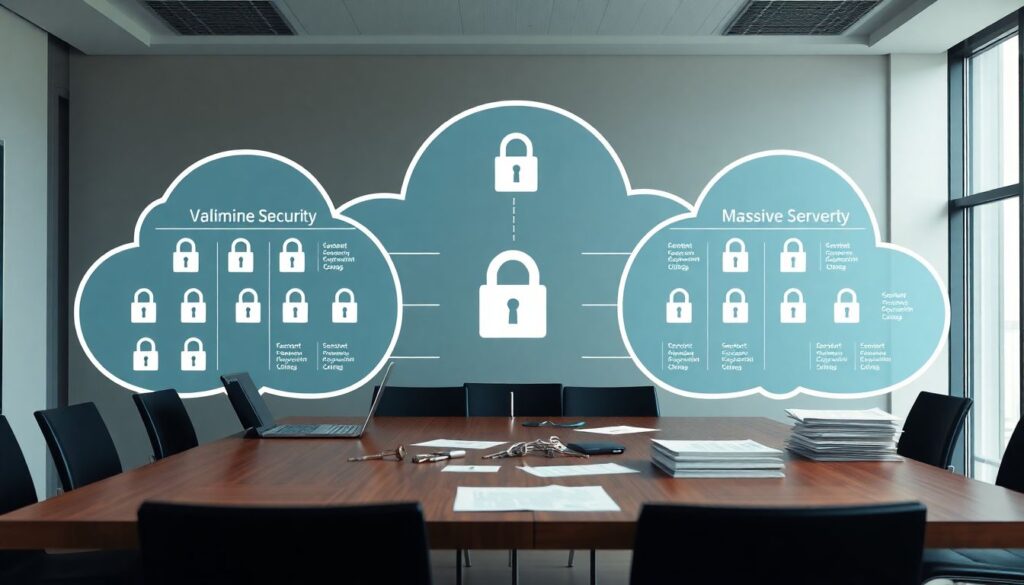
No. Providers secure the underlying infrastructure, but you remain responsible for configuration, access control, data classification and incident response. Study each provider's shared responsibility model and document who handles which control in your environment.
How does ISO 27001 fit into a cloud compliance strategy?
ISO 27001 provides a structured framework for managing information security risks, which you can implement using cloud-native controls. Mapping ISO 27001 Annex A controls to specific cloud services makes certification more achievable in a cloud-only setting.
What evidence do auditors usually expect from a cloud-only environment?
Auditors typically ask for policies, access reviews, configuration baselines, logs, incident records and examples of monitoring alerts. In the cloud, this often means exporting reports from security hubs, policy compliance dashboards and SIEM tools, linked to your control matrix.
When should I consider external consulting for cloud compliance?
External help is useful when designing your first cloud governance model, planning for ISO 27001 certification or handling complex LGPD/GDPR issues. It is especially helpful if you run multi-cloud environments or lack internal cloud security expertise.