
Cloud compliance in Brazil means mapping LGPD, ISO 27001, PCI-DSS and SOC 2 to concrete cloud controls, contracts and evidence. Focus on data flows, residency, shared responsibility, and provider-native tools. Start small: one critical workload, define scope, assign owners, then iterate with lightweight governance and continuous monitoring.
At-a-Glance Compliance Checklist for Cloud Deployments
- Define scope: systems, providers, regions, data categories and business processes touching personal or card data.
- Document data flows, residency and cross-border transfers relevant to conformidade lgpd na nuvem.
- Assign shared responsibilities with each provider (AWS, Azure, GCP) in contracts and a RACI matrix.
- Map LGPD, ISO 27001, PCI-DSS and SOC 2 requirements to concrete cloud services and configurations.
- Implement minimum technical baselines: identity, encryption, logging, backup, network segmentation.
- Collect evidence continuously: configuration baselines, tickets, reports, screenshots, exportable logs.
- Plan independent reviews: internal checks plus consultoria iso 27001 para cloud or auditoria soc 2 para ambientes em nuvem when needed.
Understanding Scope: Data Flows, Residency and Shared Responsibility
This guide is for Brazilian companies using public or hybrid cloud (AWS, Azure, GCP or local providers) that need to align LGPD, ISO 27001, PCI-DSS and SOC 2 without becoming full-time auditors. It assumes an intermediate understanding of security, but not deep certification expertise.
You should avoid starting a full multi‑framework project if:
- Your cloud usage is experimental or temporary (e.g., lab only, no real customer data).
- You store only anonymised or synthetic data and have no identified or identifiable natural persons.
- You process no cardholder data and do not provide services in scope for PCI-DSS.
- Your organisation lacks an executive sponsor or minimum security operations capacity.
Before investing in serviços de adequação pci dss em provedores de nuvem or similar engagements, make sure the following are clear.
- Identify cloud workloads and business processes
List applications, APIs, data lakes and SaaS that live in the cloud and handle personal, sensitive or card data. Classify each by criticality (availability, confidentiality, integrity) and regulatory scope (LGPD, PCI, contracts). - Map data flows end-to-end
Create simple diagrams from data collection to storage, processing, sharing and deletion:- Entry points: web/mobile forms, partner APIs, batch imports.
- Processing: microservices, queues, serverless, analytics.
- Storage: databases, object storage, backups, archives.
- Exits: third parties, government, cross-border transfers.
- Determine data residency and transfers
For LGPD, document which cloud regions are used and where backups/DR sites sit. Identify any transfer out of Brazil or to international providers and which safeguards apply (contracts, adequacy, clauses). - Clarify shared responsibility per provider
For each cloud (AWS, Azure, GCP, local):- List what the provider is responsible for: physical security, host OS on managed services, hypervisor, core networking.
- List what you own: IAM, tenant configuration, data classification, key management (unless fully managed), application security.
- Note grey areas: logging retention, DDoS protection tuning, backup strategy.
- Align frameworks with business priority
Decide the order: LGPD compliance risks and data subject rights first, then ISO 27001 governance, PCI-DSS for card data, and SOC 2 for B2B trust. An empresa de compliance em nuvem lgpd iso 27001 pci dss soc 2 can help you prioritise based on contracts and client expectations.
Mapping LGPD Obligations to Cloud Services
To implement conformidade lgpd na nuvem in a safe, structured way, you need specific information, tools and accesses.
Core inputs and documentation
- LGPD data inventory: categories of personal data, purposes, legal bases, data subjects, retention periods.
- List of joint controllers and processors, including all cloud and SaaS providers.
- Contracts and DPAs with providers, including data processing clauses and subcontractor lists.
- Existing privacy policies, consent flows, cookie banners and data subject request processes.
Cloud platform access and roles
- Read-only access to AWS/Azure/GCP accounts and main SaaS admin consoles.
- Ability to export:
- Configuration snapshots (e.g., AWS Config, Azure Policy reports, GCP Security Command Center findings).
- Audit logs (CloudTrail, Azure Activity Log, GCP Audit Logs).
- Access logs for storage and databases.
- Change-management visibility (tickets, pipelines) to see who changed what and when.
Technical controls usually required
- Identity and access management:
- Central IAM (SSO, MFA enforcement, role-based access).
- Privileged access controls and session recording for administration.
- Data protection:
- Encryption at rest and in transit (provider-native KMS where possible).
- Key rotation strategy and access policies tied to roles.
- Tokenisation or pseudonymisation for high-risk datasets.
- Logging and monitoring:
- Central log aggregation (e.g., CloudWatch Logs, Azure Monitor, GCP Cloud Logging).
- Alerting for suspicious access to personal data or mass exports.
- Data lifecycle:
- Retention policies mapped to LGPD and business needs.
- Automatic deletion or anonymisation for expired records.
- Backup and restore procedures respecting LGPD retention and deletion requests.
Organisational and process enablers
- A named DPO (encarregado) and a cross-functional privacy committee.
- Change-management process that considers privacy impact before enabling new cloud services.
- Runbooks for data subject rights in the cloud:
- Access and export of data.
- Rectification and deletion across microservices and data lakes.
- Onboarding/offboarding processes aligned with cloud IAM and privileged accounts.
If you work with consultoria iso 27001 para cloud, reuse risk assessments and asset inventory from ISO to avoid duplicating LGPD work.
Aligning ISO 27001 Controls with Cloud Operator and Customer Roles
The goal is to turn ISO 27001 into concrete, safe and auditable cloud practices without overcomplicating daily operations.
- Define the ISO 27001 scope and context for cloud
Start your risk assessment and Statement of Applicability by clearly scoping which cloud accounts, regions and services are in. Exclude test-only tenants or non-sensitive workloads with documented justification to keep implementation lean. - Build a shared responsibility RACI per control family
For each Annex A control family (access, crypto, logging, etc.), mark who does what:- Provider-responsible: data centre, physical security, hypervisor.
- Customer-responsible: IAM design, network segmentation, key usage.
- Shared: backup strategy, logging retention, incident response.
Map this RACI explicitly for AWS, Azure and GCP; use provider security whitepapers as references.
- Connect ISO controls to specific cloud services
Translate abstract controls into configurations:- Access control: IAM roles, Azure AD groups, GCP IAM bindings; SSO and MFA policies.
- Cryptography: KMS/Key Vault/Cloud KMS, customer-managed keys where justified.
- Operations security: cloud-native patching tools and configuration management.
- Logging: CloudTrail / Activity Log / Audit Logs, central SIEM integration.
- Standardise safe configuration baselines
Create and approve minimum baselines as code:- VPC/subnet templates with restricted ingress/egress and no public databases.
- Storage buckets disabled for public access, mandatory encryption.
- Security groups / NSGs / firewall rules with deny-by-default strategy.
Implement via Terraform, CloudFormation, Bicep or Deployment Manager with peer review.
- Define evidence for each ISO control in the cloud
For every applicable control:- Define what evidence proves effectiveness (screenshots, exported reports, policies, tickets).
- Specify how often it is collected and who owns it.
- Automate evidence where possible, e.g., scheduled configuration compliance reports.
- Integrate cloud changes into ISMS processes
Align ISO processes with DevOps:- Change management: require tickets for changes in security groups, IAM roles, KMS keys.
- Risk assessment: review new managed services (e.g., AI/ML, serverless) before use.
- Supplier management: evaluate each new SaaS or cloud marketplace product.
- Prepare for internal and external audits
Create an audit-ready package for each major cloud workload:- Architecture diagrams and data flow diagrams.
- List of controls and implemented services.
- Evidence folder linked to the Statement of Applicability.
This accelerates both ISO certification and auditoria soc 2 para ambientes em nuvem if required later.
Fast-track implementation flow
- Pick one critical cloud system and define its ISO 27001 scope and data flows.
- Map top 10 ISO controls (access, crypto, logging, backup) to specific cloud services.
- Implement safe configuration baselines as code and enable central logging.
- Collect minimal evidence set and run a short internal review with security, IT and legal.
PCI-DSS on Cloud: Network Segmentation, Tokenization and Logging

Use this checklist to verify whether your cardholder-data environment (CDE) in the cloud is designed and operated in a PCI-conscious way.
- Cardholder data is isolated in dedicated VPCs/VNETs/projects with strict network ACLs and firewalls.
- No internet-facing resources are directly connected to the CDE; DMZ or secure proxy patterns are used.
- Tokenisation or encryption is applied at the earliest possible entry point, reducing raw PAN storage.
- All storage containing card data (DBs, disks, backups, snapshots, object storage) is encrypted with strong keys.
- Access to CDE resources is strictly role-based, with MFA and just-in-time elevation for administrators.
- All administrative and payment-related activities are logged and shipped to a central, tamper-resistant log store.
- Vulnerability management and patching processes explicitly include cloud images, containers and managed services.
- Third-party payment gateways and SaaS are inventoried and evaluated for PCI responsibilities and attestation.
- Firewall and security group changes go through a documented approval process with change records.
- Serviços de adequação pci dss em provedores de nuvem or a QSA are consulted before major architecture shifts.
Translating SOC 2 Trust Services into Provider Assessments
When preparing or consuming SOC 2 reports in the cloud, avoid these frequent mistakes that undermine assurance.
- Assuming every SOC 2 report is equal without checking the Trust Services Criteria and scope system described.
- Ignoring carve-outs where the provider relies on subservice organisations that you must assess separately.
- Using outdated reports and not checking the review period against your contract and risk profile.
- Failing to map SOC 2 controls to your own responsibilities in the shared model (e.g., configuration, identity).
- Relying only on SOC 2 Type 1 when continuous operation (Type 2) evidence is needed for your customers.
- Not validating that your control objectives (e.g., data residency, LGPD requirements) are actually covered.
- Copying SOC 2 wording into your own policies without adapting it to your concrete cloud setups.
- Overlooking logging gaps: assuming provider logging equals full visibility for your environment.
- Skipping independent auditoria soc 2 para ambientes em nuvem when you become a critical B2B supplier.
- Neglecting to align SOC 2 with ISO 27001, creating duplicated, inconsistent controls and evidence.
Practical Roadmap: Controls, Evidence and Continuous Monitoring (includes comparison table)
There is no single correct way to reach compliance in the cloud. Choose an approach depending on your maturity, resources and customer expectations.
Option 1: Internal-led, framework-by-framework
Security and compliance teams drive LGPD, ISO 27001, PCI-DSS and SOC 2 sequentially, starting with the most pressing.
- Suitable for organisations with strong security engineers and time to learn each framework.
- Lower direct cost, higher learning curve, more risk of inconsistent mappings between frameworks.
Option 2: Integrated program with external advisors
Use an empresa de compliance em nuvem lgpd iso 27001 pci dss soc 2 to design a unified control set and evidence library.
- Reduces duplication by aligning all frameworks to a single control catalogue and risk model.
- Higher upfront cost, faster route to customer-ready attestations and more predictable audits.
- Works well when customers demand proofs like ISO certificates and SOC reports.
Option 3: Minimal viable baseline plus targeted attestations
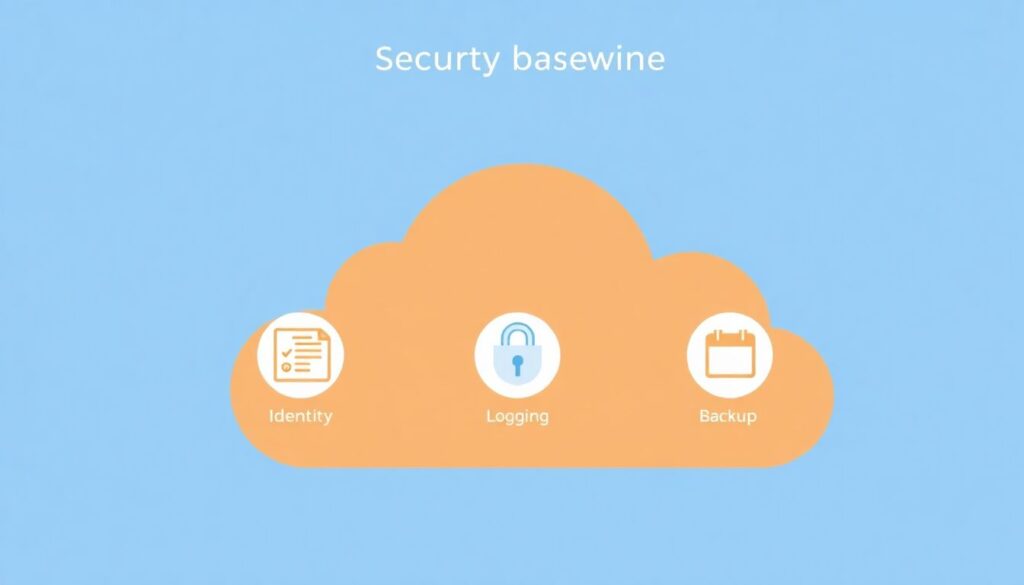
Build a single cloud security baseline (identity, encryption, logging, backup, incident response), then add only the attestations you need.
- Good for fast-growing startups and SMBs with limited resources.
- Start with LGPD and core ISO practices; add PCI or SOC 2 only if contracts require.
Control-to-provider mapping snapshot

The table below summarises how key controls typically map to providers and to your team. Use it as a navigation aid, not as a substitute for detailed analysis.
| Control Area | Typical Provider Responsibility | Typical Customer Responsibility | Relevant Frameworks |
|---|---|---|---|
| Physical and environmental security | Data centre access control, power, cooling, hardware disposal. | Office security, endpoint protection, local backups (if any). | ISO 27001, SOC 2 |
| Identity and access management | IAM service availability and core features (SSO, MFA, APIs). | Account structure, roles, least privilege, admin processes. | LGPD, ISO 27001, PCI-DSS, SOC 2 |
| Encryption and key management | KMS/Key Vault/Cloud KMS infrastructure, HSMs. | Key policies, rotation, which services use which keys. | LGPD, ISO 27001, PCI-DSS |
| Network security and segmentation | Underlying network isolation, routing backbone, DDoS capabilities. | VPC/VNET design, security groups, firewalls, peering, VPNs. | ISO 27001, PCI-DSS, SOC 2 |
| Logging, monitoring and SIEM | Log generation from managed services, API availability. | Log collection, retention, correlation and alert tuning. | LGPD, ISO 27001, PCI-DSS, SOC 2 |
| Backup, restore and DR | Backup features in managed services, regional redundancy options. | Backup strategy, RPO/RTO settings, periodic restore tests. | LGPD, ISO 27001, SOC 2 |
| Application and API security | Secure-by-default configurations and patches for managed runtimes. | Secure coding, API gateways, WAF rules, vulnerability management. | LGPD, PCI-DSS, SOC 2 |
Regardless of the option you choose, keep continuous monitoring simple and reliable: automate checks where possible and use clear, small dashboards that show your status for each framework.
Quick Answers for Common Implementation Hurdles
How do I decide which framework to start with in the cloud?
Start from regulatory musts and contract demands: LGPD obligations first, then ISO 27001 for governance, followed by PCI-DSS for any card data, and SOC 2 when customers request it. Build a single set of controls that can serve all.
Can I be LGPD-compliant if my data is stored outside Brazil?
Yes, as long as LGPD conditions for international transfer are met and documented. You must know which regions are used, what safeguards are in place, and how provider contracts address data processing and sub-processors.
Is using a PCI-compliant payment gateway enough to avoid PCI-DSS obligations?
Not necessarily. Responsibilities depend on your integration model. If you never see, process or store card data, your scope can be very small, but you still must validate this with a QSA or qualified PCI professional.
Do I need both ISO 27001 certification and SOC 2 for cloud services?
It depends on your clients and markets. ISO 27001 is often requested in Europe and Latin America, while SOC 2 is common for US-based B2B SaaS. Many companies pursue one first, then add the other if customer pressure grows.
How often should I review cloud configurations for compliance?
Implement continuous checks for high-risk items (internet exposure, admin access, logging) and a more detailed review quarterly. After major architecture changes, perform an ad-hoc review before going live.
What if my cloud provider does not offer all controls I need?
Look for alternative native services, third-party tools or architectural changes to achieve the control objective. If it is still not feasible, document the risk, implement compensating controls and consider changing provider for critical workloads.
Can small companies afford multi-framework compliance in the cloud?
Yes, if they prioritise. Focus on a strong baseline that covers LGPD and core ISO practices, then selectively add PCI-DSS or SOC 2 elements demanded by customers instead of trying to fully implement everything at once.