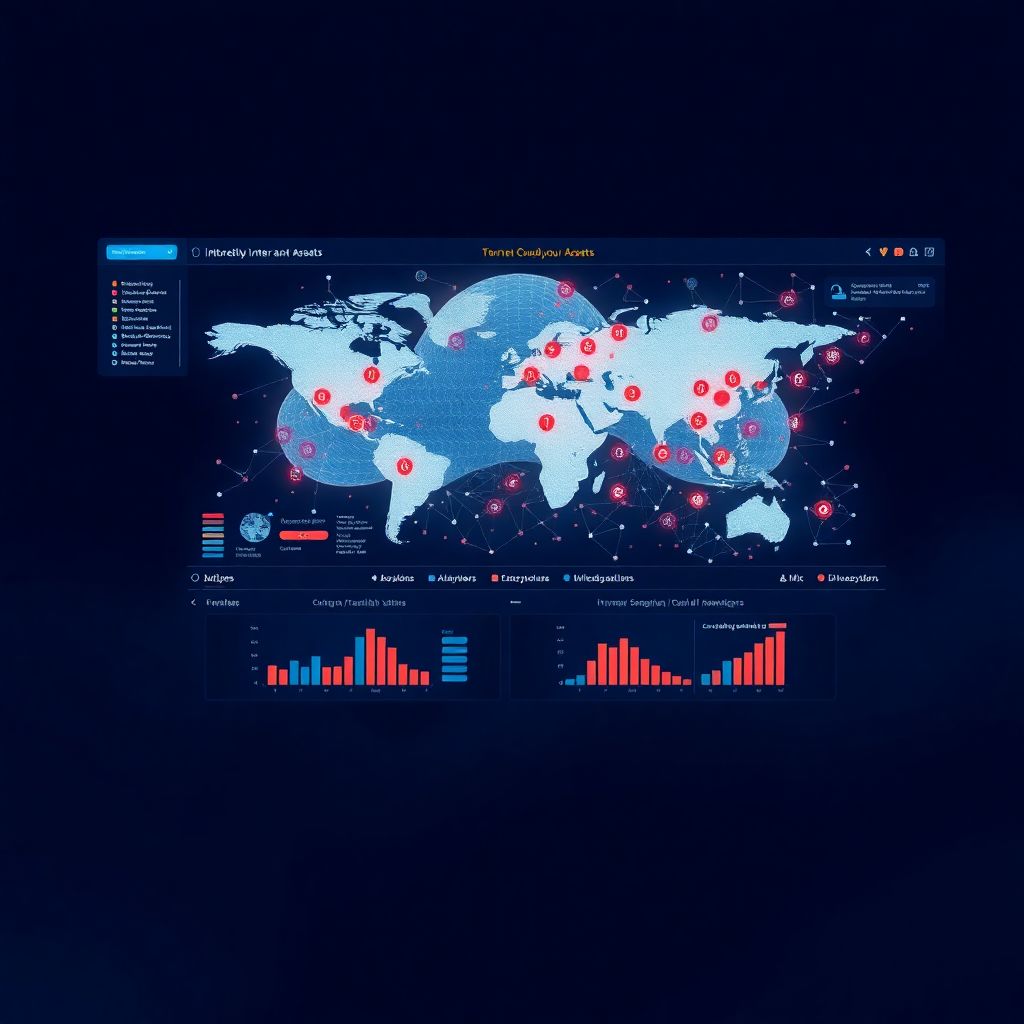
To safely assess the external attack surface of your cloud applications, deploy an external attack surface management (ASM) solution, map all internet‑facing assets, validate findings with non‑destructive tests, and integrate results into CI/CD and incident response. Focus on exploitable issues on critical assets and maintain continuous monitoring instead of one‑off scans.
Assessment highlights for external cloud attack surface
- Use at least one dedicated ferramenta asm cloud segurança plus cloud provider inventories to avoid blind spots.
- Continuously discover domains, IPs, APIs and cloud services exposed to the internet.
- Prioritize misconfigurations that enable direct compromise or data exposure.
- Validate findings with safe, read‑only techniques before remediation.
- Automate checks in CI/CD and change management for sustainable gestão de superfície de ataque em nuvem.
- Track coverage, time‑to‑fix and recurring issues as your main KPIs.
Mapping cloud-facing assets with ASM tools
This assessment is ideal for organizations running internet‑facing workloads on AWS, Azure, GCP or Brazilian local cloud providers, especially when teams manage multiple accounts, regions, or hybrid setups. If you already struggle with basic access control and backup hygiene, stabilize those foundations before rolling out full ASM.
An effective abordagem de ataque superfície externa cloud security combines an external viewpoint (how an attacker sees your cloud) with internal inventories. An solução external attack surface management should correlate DNS, IP ranges, TLS certificates, cloud tags and account data to build a unified external asset map.
Comparing common ASM tooling approaches
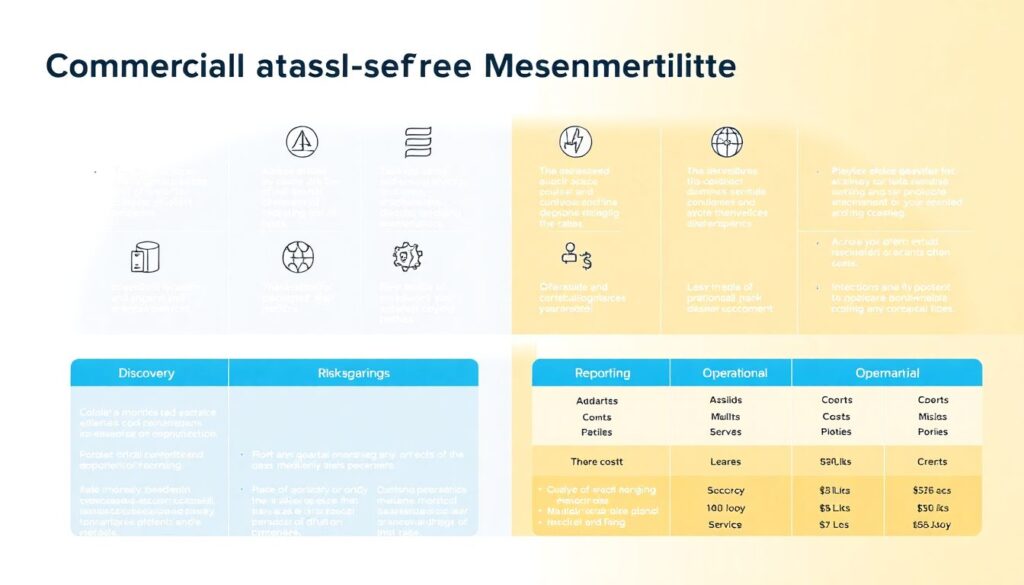
| ASM approach / example | Main capabilities | Detection focus | Typical operational cost | Best fit scenarios |
|---|---|---|---|---|
| Commercial ASM platform | Automated discovery, risk scoring, integrations, reporting | Domains, IPs, cloud services, APIs, leaked data | High subscription + engineer time | Medium/large orgs with multiple clouds and strict compliance |
| Cloud‑native ASM (from CSP or marketplace) | Cloud account integration, config checks, tagging | Managed services (storage, databases, load balancers) | Moderate, often usage‑based | Teams heavily standardized on a single cloud provider |
| Open‑source + custom scripts | Subdomain discovery, port scanning, basic inventory | Domains, IPs, TLS, limited service mapping | Low license cost, higher maintenance effort | Security‑mature small teams and labs in Brazil with strong scripting skills |
| MSSP‑operated ASM | Managed discovery, triage, and reporting by provider | Broad external footprint across clouds | Service fee, reduced internal workload | Lean security teams needing 24×7 monitoramento contínuo superfície de ataque cloud |
When choosing a ferramenta ASM cloud segurança, favor:
- Native integrations with your main clouds (IAM roles, APIs, tags).
- Ability to import existing CMDB, IaC repos and DNS data.
- Clear evidence for each finding (request/response, headers, metadata).
- Configurable risk scoring aligned with your business impact model.
Prioritizing external findings by exploitability and impact
To prioritize findings from any solução external attack surface management, you will need specific access and tools:
- Read‑only access to cloud accounts (AWS Organizations, Azure subscriptions, GCP projects) for validation.
- Access to DNS management and WAF/CDN consoles (e.g., Route 53, Cloudflare, Azure Front Door).
- A ticketing or ITSM system (Jira, ServiceNow, GLPI) to track remediation.
- Basic CLI tools installed on your workstation or pipeline agents (curl, nmap, dig, host, openssl).
- Security context: data classification policy, list of critical applications, and regulatory requirements relevant to Brazil.
Apply a simple risk‑first triage model for ataque superfície externa cloud security:
- Can the issue be exploited remotely and unauthenticated?
- Does it expose sensitive data or a control plane (admin panels, APIs)?
- Is the asset production, public‑facing and business‑critical?
- Is reliable exploitation known or trivial with common tools?
For each high‑risk combination, record: threat scenario, likelihood (easy vs. hard exploitation), and recommended action (isolate, harden, or decommission).
Validating ASM discoveries: safe verification methods
Before running any tests, consider these practical risks and limitations:
- Production impact: even simple port scans can stress fragile legacy services; limit concurrency and test windows.
- Legal boundaries: never test third‑party assets without written authorization, including shared SaaS subdomains.
- Logs and alerts: your verification may trigger SOC alerts; align with monitoring teams in advance.
- Data exposure: never pull down full sensitive datasets when confirming leaks; validate structure, not content.
- Rate limits: respect cloud provider and API rate limits to avoid throttling or automated bans.
-
Confirm asset ownership and environment
First validate that an asset discovered by ASM actually belongs to your organization and identify if it is prod, staging, or abandoned.
- Check DNS records and WHOIS for your domains or Brazilian registries (.br).
- Search internal CMDB, Git repos and cloud tags for matching names or IP ranges.
- Ask app owners before touching anything that may be shared with partners.
-
Use read‑only network probes
Start with low‑impact checks that identify service types without stressing applications.
- Run targeted port scans with sane limits, for example:
nmap -sV -Pn -T3 target-ip. - Use
curl -I https://app.example.comto retrieve only HTTP headers. - Leverage
openssl s_client -connect host:443 -servername hostto inspect TLS safely.
- Run targeted port scans with sane limits, for example:
-
Safely verify cloud storage exposures
For buckets or blobs, prove exposure without mass‑downloading data.
- List object names only, for example:
aws s3 ls s3://bucket-name --no-sign-requestwhen permitted. - Check access policies via cloud console or CLI rather than brute forcing URLs.
- Download only a trivial, non‑sensitive file if strictly needed to confirm read access.
- List object names only, for example:
-
Test external APIs with minimal, documented calls
When ASM flags an exposed API, verify authentication and authorization with a few well‑chosen requests.
- Use descriptive test users and headers, e.g.
X-Test: asm-validation. - Send the smallest valid payload; avoid destructive methods like DELETE or PUT unless explicitly allowed.
- Record request IDs and timestamps to support incident review if needed.
- Use descriptive test users and headers, e.g.
-
Correlate with application and cloud logs
Always cross‑check your tests against logs to ensure you fully understand behavior.
- Confirm that each probe appears in WAF, load balancer and application logs.
- Validate that security controls (e.g., WAF rules) are actually blocking malicious patterns.
- Note any assets with missing or incomplete logging for future hardening.
-
Document validated risks and agree on fixes
For every confirmed issue, capture enough data for reproducibility and clear remediation.
- Store minimal evidence: URL, headers, screenshots, command output.
- Describe the threat, credible attacker path, and business impact in plain language.
- Create or update tickets with owners, due dates and rollback plans.
Embedding ASM into CI/CD and cloud-native operations
Use this checklist to verify that ASM is effectively embedded into your cloud and DevOps workflows:
- New internet‑facing services created via IaC (Terraform, CloudFormation, Bicep) are automatically tagged and discovered by your ASM.
- CI/CD pipelines run basic external checks (e.g., open ports, default credentials) for preview and staging environments before promotion.
- Pull requests that modify DNS, WAF rules or API gateways trigger a lightweight external validation job.
- Security findings from ASM automatically create tickets in your ITSM with environment and owner pre‑filled.
- On‑call runbooks include a section on how to quickly query ASM data during incidents.
- Cloud account onboarding procedures for new AWS/Azure/GCP accounts include connecting them to the ASM platform.
- Dashboards visible to product owners summarize external risks for their specific services, not just for the whole company.
- Regular game‑days or incident simulations include “unknown exposed asset” scenarios discovered from ASM.
- Monitoring teams correlate WAF, CDN and firewall alerts with ASM asset inventories for faster triage.
Quantifying coverage and effectiveness: KPIs and metrics
When measuring gestão de superfície de ataque em nuvem, teams often misinterpret or misuse metrics. Avoid these common mistakes:
- Tracking only the raw number of findings without relating them to business‑critical assets.
- Celebrating decreased findings when it actually reflects reduced discovery scope, not better security.
- Measuring scan frequency but not how quickly validated high‑risk items are fixed.
- Ignoring recurring issues across different apps that indicate systemic problems in templates or IaC modules.
- Counting every exposed test environment as equal to a production data‑processing system.
- Relying purely on tool‑assigned severities instead of adjusting based on local threat models in Brazil.
- Failing to differentiate between transient exposures (minutes) and long‑lived ones (weeks or more).
- Not linking ASM metrics to wider cloud security goals like identity hygiene, logging coverage, and backup reliability.
Mitigation playbooks for exposed cloud services and APIs
Depending on your maturity, risk appetite, and available skills in Brazil, you can adopt several alternative mitigation playbooks for exposed cloud services and APIs:
-
WAF and network control‑first approach
Place WAFs, API gateways and cloud firewalls in front of critical workloads and enforce strict IP allow‑lists or geo‑controls. This is suitable when quick risk reduction is needed and application changes would take longer.
-
Architecture and identity‑centric hardening
Focus on redesigning app flows, enforcing strong authentication (OIDC, OAuth2), and locking down service‑to‑service access. Use this when you can invest time into durable changes and already have mature IAM practices.
-
Decommission and consolidation track
For abandoned or low‑value services, the safest mitigation is removal. Maintain a periodic campaign to retire unused domains, buckets and APIs that ASM discovers, reducing your overall external footprint.
-
Third‑party managed security operations
If you lack internal capacity for monitoramento contínuo superfície de ataque cloud, contract an MSSP to manage ASM triage and response with defined SLAs. This is effective for smaller teams needing 24×7 coverage.
Common implementation concerns and practical clarifications
Will ASM scans disrupt my production cloud applications?
Properly configured ASM tools use low‑impact techniques similar to regular user traffic. Start with limited scopes and time‑boxed windows, coordinate with operations, and avoid aggressive fuzzing or stress tests on critical paths without prior testing in staging.
How often should I reassess my external cloud attack surface?
Discovery should be continuous, with at least daily updates of asset inventories. Formal risk reviews on high‑impact findings can run on a weekly or sprint‑aligned cadence, with deeper reassessments when you introduce major new applications or cloud regions.
Do I still need penetration tests if I use ASM?

Yes. ASM focuses on breadth and continuous coverage, while penetration testing provides depth and creative attack paths. Use ASM to maintain an accurate asset map and feed targets to pen testers, improving the quality and efficiency of their engagements.
How can I start small with ASM in a Brazilian context?
Begin with a narrow scope: a single critical domain and its cloud accounts. Use free or low‑cost tools to build an initial inventory, validate a few key findings, and only then expand to other business units and regions once the process is stable.
Who should own ASM operations: security or DevOps?
Security should define policies, triage rules, and risk criteria, while DevOps and product teams own remediation. Ideally, create a shared workflow where ASM findings are visible in developer backlogs and security provides guidance, not just tickets.
What data from ASM is safe to share with external partners?
Share only what is necessary for remediation or risk communication: affected domains, high‑level issue descriptions and recommended fixes. Avoid exposing full inventories, internal IP mapping, or detailed exploitation steps unless under strict agreements.
Can I run ASM in a multi‑cloud environment without centralizing everything?

You can, but governance becomes harder. At minimum, standardize tagging, DNS patterns, and onboarding checklists across providers so your ASM solution can correlate assets. Over time, consider centralizing visibility while keeping operational autonomy.
Комментарии
Мы в прошлом году делали объект в регионе с довольно сложными грунтовыми условиями. Взяли подрядчика, который сделал полный цикл — предпроектное обследование, инженерные изыскания и проект. За счёт грамотных решений по фундаментам и планировке площадки сэкономили приличную сумму на лишних конструкциях и переработке проекта уже по ходу стройки.
Кому актуально по РФ (особенно промка, АЗС, нефтебазы) — посмотрите ребят отсюда: проектно-изыскательские работы под ключ. У них есть бесплатное предпроектное обследование при заключении договора на проектирование и достаточный опыт по объектам от Калининграда до Владивостока. Для тех, кто хочет минимизировать риски по подтоплению, перерасходу материалов и срывам сроков, это прям критично.