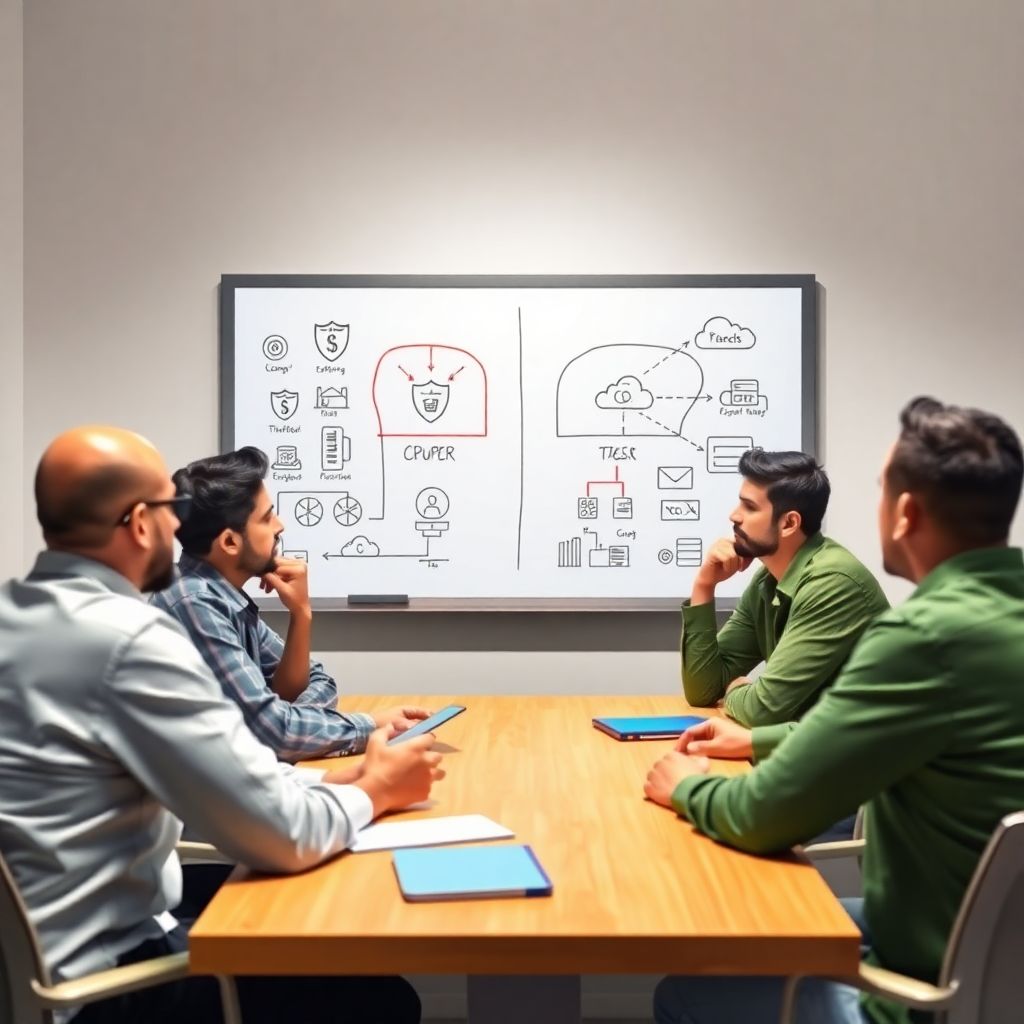
Containers give you more control but a wider attack surface; serverless shrinks the surface but increases reliance on the cloud provider. For most pt_BR teams, use containers for long‑running, stateful or latency‑sensitive workloads, and serverless for event‑driven, spiky traffic. Secure both with least‑privilege IAM, strong supply‑chain controls and runtime monitoring.
At-a-glance distinctions: attack surfaces and control priorities
- Containers: you manage OS, runtime and orchestration stack (Docker, Kubernetes); serverless: provider manages OS and runtime, you focus on functions and IAM.
- Containers expose a larger kernel and network surface; serverless concentrates risk in permissions, event sources and multi-tenant isolation.
- Containers fit complex microservices with custom networking; serverless fits short, stateless functions and high parallelism.
- Serverless offloads patching but requires tight IAM roles and event validation to avoid over-privileged functions.
- Containers benefit most from image hardening, network policy and node security; serverless from IAM minimization, secret hygiene and per-function policies.
- For Brazilian teams starting cloud native security, combine segurança em containers docker kubernetes melhores práticas with security baselines for funções serverless.
Threat-model contrast: where containers and serverless diverge
When doing a comparação segurança containers vs serverless modelo de ameaça, focus on how responsibilities and blast radius differ.
- Infrastructure responsibility
- Containers: you own host hardening, container runtime and orchestrator (Kubernetes, ECS, etc.).
- Serverless: provider owns OS and runtime; you own function code and configuration.
- Kernel and node exposure
- Containers: kernel exploits and noisy neighbors on the same node are key risks.
- Serverless: kernel is abstracted; isolation is platform-managed and less tunable.
- Network and ingress
- Containers: services, Ingress, service meshes and CNI define your network attack surface.
- Serverless: event sources (API Gateway, queues, buckets) and public endpoints are primary entry points.
- Identity and permissions
- Containers: pod or task roles, service accounts and sidecars.
- Serverless: per-function roles, resource policies, managed identities.
- Supply-chain exposure
- Containers: base images, package managers, Kubernetes YAML and Helm charts.
- Serverless: function dependencies, layers, deployment packages and CI/CD templates.
- Runtime profile
- Containers: long-lived processes; more lateral movement potential.
- Serverless: short-lived, ephemeral; more risk of bursty abuse and event injection.
- Multi-tenant isolation
- Containers: you manage isolation via namespaces, cgroups, network policies.
- Serverless: provider isolation model is opaque; your lever is strict IAM boundaries.
- Operational complexity
- Containers: more moving parts (cluster, nodes, registries) but mature ecosystems.
- Serverless: simpler infra but more integration risk across event sources and services.
Threat-to-control mapping by persona
| Threat | Developer | SecOps | Platform Engineer | SRE |
|---|---|---|---|---|
| Compromised container image | Use minimal base images, pin dependencies, add unit tests for security-sensitive paths. | Enforce registry scanning and block deployments with critical vulnerabilities. | Standardize approved base images and enforce via admission policies. | Monitor image pull failures and abnormal restart patterns. |
| Over-privileged serverless function | Request least-privilege IAM for each function and document permission needs. | Continuously audit IAM roles and flag privilege escalation paths. | Provide reusable least-privilege IAM templates or modules. | Alert on anomalous calls to sensitive APIs from functions. |
| Breakout from container/tenant | Avoid running containers as root, reduce capabilities. | Track kernel CVEs and enforce timely patch windows. | Harden nodes with security profiles, SELinux/AppArmor and sandboxing. | Detect unusual syscalls, kernel errors and pod churn. |
| Abuse of public endpoints | Add input validation and authentication checks in handlers. | Configure WAF rules and rate limiting policies. | Design API gateways, ingress controllers and service mesh policies. | Monitor 4xx/5xx spikes and latency anomalies. |
Persona-focused action item for threat modelling
- Developer: For each service or function, explicitly list data handled, entry points and required permissions; review this list during code review.
- SecOps: Maintain a shared threat-model template for containers and serverless, with checkboxes for data flows, IAM and network exposure.
- Platform Engineer: Translate common threats into cluster policies, namespaces and per-function IAM baselines.
- SRE: Align SLOs with security signals (error rates, throttling, auth failures) to detect active threats earlier.
Identity, authentication and secrets: different boundaries, different risks
Identity and secrets are where segurança em containers docker kubernetes melhores práticas intersects directly with segurança em aplicações serverless na AWS Lambda Azure Functions. The following patterns show how choices affect risk and operations.
| Variant | Who it fits | Pros | Cons | When to choose |
|---|---|---|---|---|
| Per-pod / per-function IAM role | Teams with solid IAM governance and moderate service count. | Strong isolation, least-privilege by design, clear blast radius per workload. | More roles to manage, requires good naming and lifecycle practices. | Prefer for critical workloads, multi-tenant clusters and sensitive data processing. |
| Shared IAM role per namespace or app | Smaller teams or legacy apps consolidating services. | Simpler to manage, fewer IAM entities, faster initial rollout. | Wider blast radius, hard to reason about which service needs which permission. | Use as a transitional model, then split into per-workload roles over time. |
| OIDC-based workload identity (Kubernetes to cloud IAM) | Teams running Kubernetes on managed clouds with modern CI/CD. | No node credentials, fine-grained mapping from service accounts to cloud roles. | Initial setup complexity, needs tight trust policy configuration. | Choose for production clusters accessing cloud APIs at scale. |
| Centralized secrets manager (API calls at runtime) | Security-conscious teams willing to pay some latency and complexity. | Strong auditing, rotation, minimal secret sprawl in configs and images. | More moving parts, network dependencies and potential throttling. | Prefer for database credentials, API keys and long-lived secrets. |
| Env vars or mounted secrets from orchestrator | Most container workloads and simple functions. | Easy to adopt, minimal code changes, integrates with Kubernetes Secrets. | Risk of exposure in logs or crash dumps, weaker rotation story without automation. | Use for non-critical secrets and as a bridge to full secrets management. |
Checklist: practical identity and secrets controls
- Enforce least-privilege roles for each containerized app and each function; avoid wildcards in permissions.
- Disallow long-lived static access keys inside images or code; prefer role-based access everywhere.
- Centralize secrets in a managed vault or secrets manager and automate rotation via CI/CD.
- Use Kubernetes service accounts and OIDC federation instead of node-level credentials.
- For serverless, assign distinct roles per AWS Lambda or Azure Functions group with clear separation of duties.
Persona-focused action item for identity and secrets
- Developer: Refactor code to consume secrets from environment variables or SDK calls to a secrets manager rather than hardcoding.
- SecOps: Define and enforce IAM baselines: no wildcard permissions, no embedded keys, mandatory secrets manager usage.
- Platform Engineer: Provide secure defaults via Helm charts, Terraform modules and function templates with pre-wired identities.
- SRE: Monitor for failed auth, throttling from secrets manager and IAM policy errors; feed patterns back to Dev and SecOps.
Isolation and network controls: kernel-level vs platform-managed
Isolation in containers is mostly kernel- and network-policy-driven, while serverless isolation is controlled by the cloud provider. Your scenarios should dictate which levers you emphasize.
- If you need custom networking (service mesh, mTLS, sidecars), favor containers with Kubernetes NetworkPolicies and mesh policies; serverless is more limited and integrations vary by provider.
- If strong tenant isolation is mandatory but you lack kernel-hardening expertise, managed serverless with strict IAM and per-tenant accounts can be safer than self-managed clusters.
- If workloads must run inside private networks with no direct internet, containers in private subnets and private registries are often easier than fully private serverless setups.
- If DDoS and edge attacks are your top concern, combine API gateways and managed WAF with both containers and serverless, but lean more on provider-managed serverless endpoints when capacity planning is hard.
- If lateral movement inside the cluster is a concern, enforce pod-level network policies, namespace isolation and avoid shared nodes between environments.
- If event-driven workloads mainly process data from queues or storage, serverless with VPC integration and tight resource policies reduces exposed network surface.
Persona-focused action item for isolation and networking
- Developer: Tag each service or function with required ingress sources (public, internal, specific services) to guide network policy creation.
- SecOps: Standardize baseline network controls: default deny policies for pods, WAF rules for HTTP APIs and private endpoints for admin paths.
- Platform Engineer: Provide reusable network policy and API gateway templates aligned with common app patterns.
- SRE: Instrument network error metrics (timeouts, connection resets) and correlate with security controls to avoid unnecessary outages.
Supply-chain and build-time defenses for images and functions
Supply-chain controls must cover both container images and serverless deployment packages, including dependencies and CI/CD templates.
- Inventory build pipelines:
- List all Dockerfiles, Kubernetes manifests, serverless templates and CI workflows.
- Standardize bases and runtimes:
- Adopt approved base images and function runtimes with known maintenance owners.
- Integrate scanners:
- Scan container images, dependencies and serverless artifacts in CI; block high-risk findings.
- Sign artifacts:
- Use image signing and function package signing; enforce signature checks at deploy time.
- Template secure defaults:
- Publish internal templates for Docker, Kubernetes and serverless with hardened defaults.
- Lock down CI/CD:
- Restrict who can modify pipelines; protect secrets used for signing and registry access.
- Continuously re-scan:
- Re-scan stored images and deployed functions as new vulnerabilities appear.
Persona-focused action item for supply-chain
- Developer: Adopt organization-approved Dockerfiles and serverless templates; avoid ad-hoc images or random dependencies.
- SecOps: Define severity thresholds and policies for blocking builds and deploys based on vulnerability scans.
- Platform Engineer: Integrate scanners, signing and policy checks into shared CI/CD pipelines and deployment platforms.
- SRE: Track deployment failures due to security policies and work with teams to reduce friction without weakening controls.
Runtime visibility, detection and incident response patterns
Visibility differs radically: containers offer deep host-level telemetry, while serverless emphasizes logs and provider metrics. Both need tuned detection and incident workflows.
- Choosing tools that only support containers or only serverless, instead of unified ferramentas de segurança para containers e funções serverless, leads to fragmented visibility.
- Relying solely on application logs and ignoring kernel or platform signals misses container escapes and noisy neighbor issues.
- Enabling logs but not defining retention, correlation and alert rules results in “log-only” security with no practical detection.
- Alerting on generic errors without context (service, tenant, function) makes triage slow and noisy.
- Not tagging logs and metrics with deployment identifiers (image digest, function version) complicates rollback and forensics.
- For serverless, ignoring cold start patterns and concurrency metrics hides abuse where attackers trigger massive parallel execution.
- For containers, skipping process and syscall visibility makes it hard to distinguish normal from malicious behavior in pods.
- Running incident response playbooks that assume static servers, not ephemeral pods or short-lived functions, wastes time during real incidents.
Persona-focused action item for runtime and IR
- Developer: Emit structured logs with security-relevant fields (user, tenant, action, resource, result) and avoid sensitive data in logs.
- SecOps: Build detection rules specifically for container and serverless contexts: anomalous API calls, privilege changes, unusual network flows.
- Platform Engineer: Standardize logging, metrics and tracing configuration across clusters and serverless platforms.
- SRE: Maintain joint playbooks for container and serverless incidents, including isolation steps and data collection procedures.
Operational trade-offs: compliance, cost, and platform ownership
Containers are usually better for regulated, complex, long-running services where you need granular network control and custom runtimes. Serverless is often better for bursty, event-driven workloads where operational overhead must stay low and patching should be offloaded. Mixed environments frequently benefit from consultoria em segurança cloud native containers e serverless to define clear decision criteria.
Operational concerns and quick answers for practitioners
How should a pt_BR team start securing existing Kubernetes clusters?
Begin with inventorying clusters and namespaces, then apply baseline policies: RBAC review, NetworkPolicies, non-root containers and image scanning in CI. Align this with segurança em containers docker kubernetes melhores práticas published by your cloud provider or CNCF-aligned guides.
When is serverless security on AWS Lambda or Azure Functions a better fit?
Prefer segurança em aplicações serverless na AWS Lambda Azure Functions when workloads are stateless, event-driven and do not require custom networking or OS-level tuning. You gain simplified patching and built-in scaling but must invest in IAM, event validation and secret management.
What kind of tooling should we prioritize for a mixed container and serverless estate?
Prioritize ferramentas de segurança para containers e funções serverless that can cover image and function scanning, IAM analysis and runtime visibility in one place. This reduces integration overhead and avoids blind spots between platforms.
How do cost and security interact when choosing between containers and serverless?
Serverless can reduce infrastructure and patching costs for spiky workloads, but high, steady traffic may be cheaper on containers. Factor in security operations cost: maintaining hardened clusters may be more expensive than leveraging provider-managed security controls.
Do we need external expertise to design our cloud-native security architecture?
If your team lacks experience with both models, short targeted consultoria em segurança cloud native containers e serverless can accelerate design decisions, tool selection and policy baselines. This is especially valuable before migrating critical workloads.
How do we decide deployment targets for a new microservice?
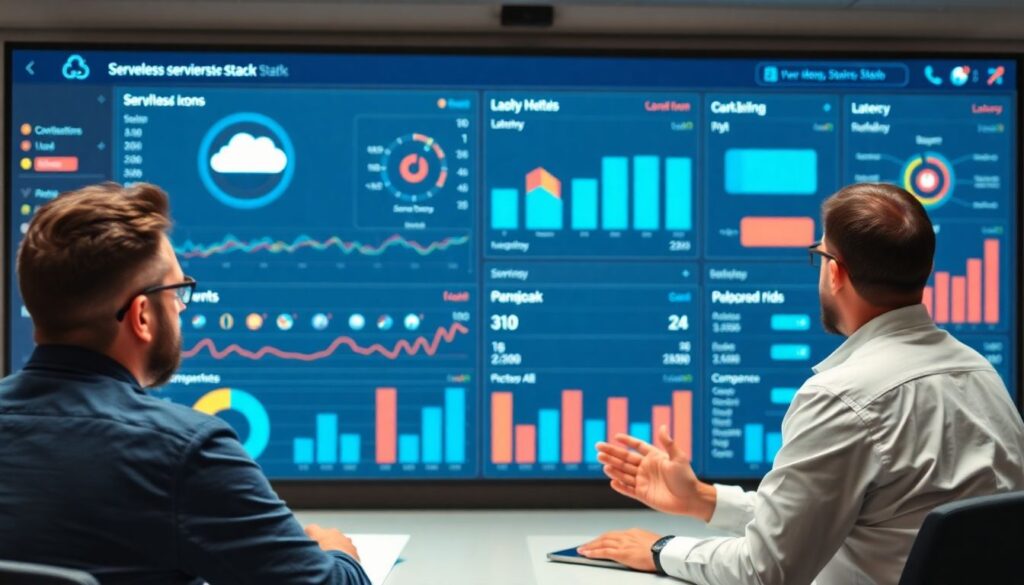
Check workload profile: if it needs low-latency, long-lived connections or custom networking, choose containers. If it is stateless, triggered by events and tolerant of cold starts, prefer serverless. Consider your current observability and compliance tooling before finalizing.
Can we apply the same threat model to both containers and serverless?
You can share high-level threats (data loss, account compromise, supply-chain issues), but specific abuse paths differ. Maintain a base model plus container-specific and serverless-specific extensions, reflecting their different isolation and identity boundaries.