
Effective threat modeling for cloud workloads means mapping your architectures, understanding cloud-native threats, ranking risks, and implementing practical mitigations that fit CI/CD and Infrastructure as Code. Focus on critical workloads first, document data flows and trust boundaries, choose a modeling method, then iterate models based on incidents, architecture changes, and new cloud services.
Essential Outcomes for Threat Models of Cloud Workloads
- Clear diagrams of cloud workloads, data flows, and trust boundaries across accounts, VPCs and regions.
- Documented catalog of threats tailored to containers, serverless, multi-tenant SaaS and managed services.
- Prioritized risk list for each workload, with impact, likelihood and exposure explicitly scored.
- Concrete mitigation backlog mapped to identity, network, storage and supply-chain controls.
- Automation hooks to keep models in sync with CI/CD, IaC and cloud configuration changes.
- Playbooks and validation checks that turn the threat model into daily operational practice.
Mapping Workloads, Data Flows and Trust Boundaries in Cloud Environments
This approach fits teams running Internet-facing APIs, data platforms and other cloud workloads em nuvem para workloads críticos in AWS, Azure or GCP. It is less useful for trivial demo environments or short-lived POCs that never touch production data or customer identities.
Checklist: what to map first
- Identify business-critical workloads and environments (prod, staging, DR) in each cloud account or subscription.
- List entry points: domains, APIs, VPNs, peering, direct connect, admin consoles.
- Draw data flows between services (VPCs, subnets, Lambdas/Functions, containers, databases, queues).
- Mark trust boundaries: Internet vs VPC, VPC vs on-prem, tenant vs shared control planes, IAM domains.
- Annotate each component with identity context (which roles, keys, service accounts can act there).
Example: Brazilian fintech API in AWS
A fintech in Brazil hosts APIs in Amazon EKS with RDS and S3. You map: Internet → API Gateway → NGINX Ingress → EKS services → RDS and S3, plus admin access via VPN and Bastion. Trust boundaries exist at Internet/VPC, VPC/on-prem, and between Kubernetes namespaces.
Cataloguing Threats Specific to Containers, Serverless and Multi‑tenant Platforms
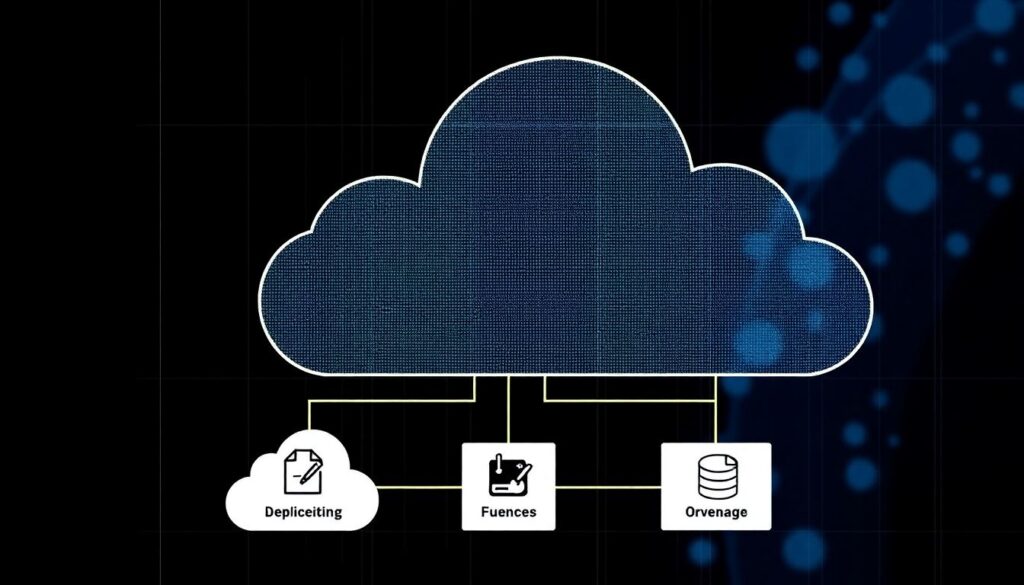
To make threat modeling em nuvem para workloads críticos effective, you must list threats that are specific to each execution model and shared control plane, not only generic OWASP issues.
Requirements, tools and accesses
- Access to IaC repositories (Terraform, CloudFormation, Bicep, Pulumi) and Kubernetes manifests.
- Read-only access to cloud consoles and APIs to inspect IAM, networking, logging and serverless configs.
- Cloud-native threat libraries or ferramentas de threat modeling para workloads em cloud (e.g. templates, checklists, open source tools).
- Container and serverless runtime telemetry (logs, traces) to understand real execution paths.
- Visibility into multi-tenant SaaS and managed services used as part of the workload.
Example: serverless and multi-tenant risks
For an AWS Lambda-based workload behind API Gateway using a multi-tenant SaaS queue, you catalog threats like function over-privilege, event injection, noisy neighbor in SaaS, misconfigured CORS, and log leakage. You then map each to possible controls in your cloud provider and SaaS configs.
Risk Prioritization: Combining Impact, Likelihood and Exposure Metrics
To show stakeholders como implementar threat modeling em arquiteturas modernas na nuvem, make risk ranking transparent and reproducible.
Step-by-step risk scoring workflow
-
Define a simple scale.
Use a 3- or 5-level scale for impact and likelihood (e.g. Low/Medium/High). Document what each level means in your organization to avoid endless debates.
-
Assess business impact per threat.
For each threat, rate impact based on data sensitivity, regulatory exposure (LGPD, PCI, banking norms in Brazil) and potential downtime. In doubt, align with business or compliance owners.
-
Estimate likelihood from current controls.
Rate likelihood by considering attacker capability and existing controls. A known misconfiguration with no monitoring should have higher likelihood than a theoretical, rare exploit with compensating controls.
-
Incorporate exposure factors.
Adjust the score by exposure: Internet-facing vs internal, cross-account trust, use of public buckets, secrets sprawl.
- Upgrade risk if the component is Internet-exposed without WAF or proper auth.
- Upgrade risk if blast radius crosses multiple accounts or tenants.
- Downgrade slightly if strong logging, monitoring and automated remediation exist.
-
Calculate and label the final risk.
Combine impact, likelihood and exposure into a numeric or qualitative risk (e.g. 1-5 or Low-Critical). Sort threats by this score to drive your backlog and to scope serviços de segurança em cloud para modelagem de ameaças or external audits.
-
Agree on thresholds and owners.
Define what must be fixed before go-live and who owns each risk. Critical items should have explicit deadlines and mitigation strategies documented.
Быстрый режим: compressed risk ranking flow
- Tag each threat with High/Medium/Low impact based on data and downtime.
- Tag likelihood as High/Medium/Low based on how easy exploitation seems today.
- Increase one level if asset is Internet-exposed or crosses tenants/accounts.
- Sort by combined score and create a top 10 mitigation list for the workload.
Example: prioritizing Kubernetes cluster threats
In a Brazilian ecommerce using GKE, you rate exposed dashboard access as High impact / Medium likelihood / High exposure, while an internal-only misconfigured liveness probe is Medium/Low/Low. The dashboard issue becomes priority one for remediation and for any consultoria de segurança para criação de modelos de ameaça em nuvem engagement.
Comparing modeling approaches for cloud workloads
| Approach | Strengths for cloud workloads | Limitations | When to use |
|---|---|---|---|
| STRIDE | Easy to learn, good for REST APIs, microservices and IAM-heavy designs; fits quick workshops and developer-driven threat modeling. | Can miss business abuse cases and complex kill chains; less focused on attacker motives. | Teams starting with ferramentas de threat modeling para workloads em cloud and needing a lightweight, repeatable method. |
| PASTA | Risk-driven, connects business impact to technical threats; detailed for regulated or high-risk environments. | Heavier process, needs more documentation and stakeholder time; harder to run inside tight sprints. | Critical financial, healthcare or government workloads, or when working with external serviços de segurança em cloud para modelagem de ameaças. |
| Custom cloud-centric model | Tailored to your cloud provider, region (such as pt_BR regulatory context) and tech stack; can integrate IaC and runtime data. | Requires internal expertise to maintain; risk of inconsistency if not clearly documented and automated. | Mature teams or organizations with in-house consultoria de segurança para criação de modelos de ameaça em nuvem looking for maximum fit. |
Mitigation Patterns for Identity, Network, Storage and Supply‑chain Risks
Verification checklist for implemented controls
- Identity: All human access goes through SSO/MFA; cloud roles and service accounts follow least privilege with periodic review.
- Network: Internet-facing endpoints are behind WAF, rate limiting and TLS; internal services use private networking and strict security groups.
- Storage: No public buckets for sensitive data; encryption at rest and in transit enforced via policies; lifecycle and backup policies defined.
- Secrets: No secrets in code or IaC; centralized secret manager with rotation; access logged and monitored.
- Supply chain: Images come from trusted registries; dependencies are scanned; build pipelines are signed and protected.
- Monitoring: Centralized logging, security alerts integrated to on-call; tests or policies that fail builds on critical misconfigurations.
Example: closing gaps in a multi-cloud data platform
A data team using AWS S3 and Azure Data Lake finds via the model that S3 buckets are private but logs show anonymous access attempts. They add organization-wide policies blocking public buckets, enforce encryption, and configure alerts on policy violations, reducing exposure across regions and accounts.
Embedding Threat Modeling in CI/CD and Infrastructure as Code
Common mistakes when automating threat modeling

- Relying only on scanners and linters without keeping a human-readable threat model document or diagram.
- Running security checks only in production pipelines, instead of at pull request time where developers can fix issues quickly.
- Ignoring changes to shared modules or Terraform stacks that affect many workloads at once.
- Not versioning threat models with the same Git repo and branch strategy as the IaC it describes.
- Skipping threat modeling for serverless or managed services because there is “no server” to manage.
- Failing to map pipeline identities (runners, agents) and their permissions inside the threat model.
Example: tying models to IaC repos
A team stores each workload threat model alongside its Terraform module. A GitHub Action turns diagrams and YAML risk registers into artifacts on every merge, and a simple policy-as-code step blocks deployments if security-critical variables (like public exposure flags) change without a reviewed threat model update.
Operationalizing: Validation, Incident Playbooks and Continuous Model Updates
Alternative implementation patterns and when they fit
- Security champion model: Each squad has a trained developer responsible for keeping the model updated; works well for product-focused teams with strong engineering culture.
- Central cloud security team: A specialized team maintains canonical models of core platforms (network, identity, Kubernetes); suitable for larger organizations or multi-cloud strategies.
- External security consultancy: Use consultoria de segurança para criação de modelos de ameaça em nuvem to bootstrap models for your top workloads, then hand over maintenance to internal teams.
- Hybrid approach: Start with external serviços de segurança em cloud для modelagem de ameaças, then train internal champions and integrate models into CI/CD and runbooks.
Example: using threat models in incident response
During a suspected credential leak, the on-call team opens the threat model diagram to quickly identify which workloads the role can access, which data stores hold sensitive information, and what containment steps the incident playbook prescribes, reducing guesswork and response time.
Practical Answers to Common Implementation Challenges
How often should I update cloud threat models?
Update them whenever you introduce a new public endpoint, change authentication flows, add a new managed service, or after major incidents. At minimum, review quarterly for critical workloads to keep alignment with actual architectures.
Who should own threat modeling in a mid-size Brazilian company?
Product and platform teams should co-own models, with a central security function providing methods, tooling and reviews. Security champions embedded in squads are an effective model for pt_BR organizations with multiple agile teams.
Which workloads should be modeled first?
Start with Internet-facing APIs, payment and identity systems, and any workloads processing personal or financial data. Then include shared platforms (Kubernetes, CI/CD, identity) that could increase blast radius across many services.
Do I need a specific tool to begin?
No. You can start with simple diagrams, spreadsheets and written scenarios. As you mature, add ferramentas de threat modeling para workloads em cloud that integrate with your architecture diagrams and IaC repos for scale and consistency.
How do I avoid slowing down developers?
Integrate lightweight checklists into design reviews, keep sessions time-boxed, and automate as many checks as possible in CI/CD. Focus modeling on real upcoming features instead of abstract exercises.
How does this work with managed Kubernetes and serverless?
The cloud provider handles parts of the stack, but you remain responsible for identity, configuration, network exposure, data, and business logic. Model these layers explicitly and use provider documentation to clarify shared-responsibility boundaries.
When should I involve external consultants?
Consider them when building your first models for high-risk workloads, after major incidents, or when regulators expect formal, independent assessment. Use them to transfer knowledge rather than fully outsourcing the practice.
Комментарии