
A practical Kubernetes hardening guide for Brazilian cloud production clusters: start by mapping threats and compliance needs, then standardize hardened node and control-plane baselines, lock down network paths, enforce strict RBAC and workload identities, add runtime protection and observability, and finally automate via CI/CD, policy-as-code and continuous security monitoring.
Critical controls overview for production clusters
- Define threat model, critical assets and regulatory scope before touching yaml.
- Adopt hardened OS images, CIS-aligned kubelet/api-server flags and immutable node baselines.
- Enforce default-deny network policies and protected ingress/egress paths.
- Apply least-privilege RBAC and workload identities; remove kubelet and container root where possible.
- Introduce admission control, runtime security and strong observability as a single defence-in-depth layer.
- Automate compliance checks in CI/CD and regularly run an independent auditoria de segurança para clusters kubernetes em produção.
| Control area | Priority | Typical tools / patterns | Fast remediation idea |
|---|---|---|---|
| API & RBAC | Critical | RBAC, OIDC, namespace isolation | Replace wide cluster-admin bindings with task-specific roles and scoped role bindings. |
| Network isolation | Critical | NetworkPolicy, CNI, service mesh | Apply a baseline default-deny NetworkPolicy and explicitly allow only necessary app flows. |
| Nodes & runtime | High | Hardened images, PodSecurity, seccomp | Block privileged pods and hostPath mounts using Pod Security Admission restricted policy. |
| Supply chain | High | Image signing, scanners, SBOM | Scan images in CI and block unscanned or unsigned images in admission. |
| Logging & detection | Medium | Central logs, IDS, SIEM | Forward audit logs and kubelet logs to a central platform with basic anomaly rules. |
Threat modeling, attack surface and compliance mapping
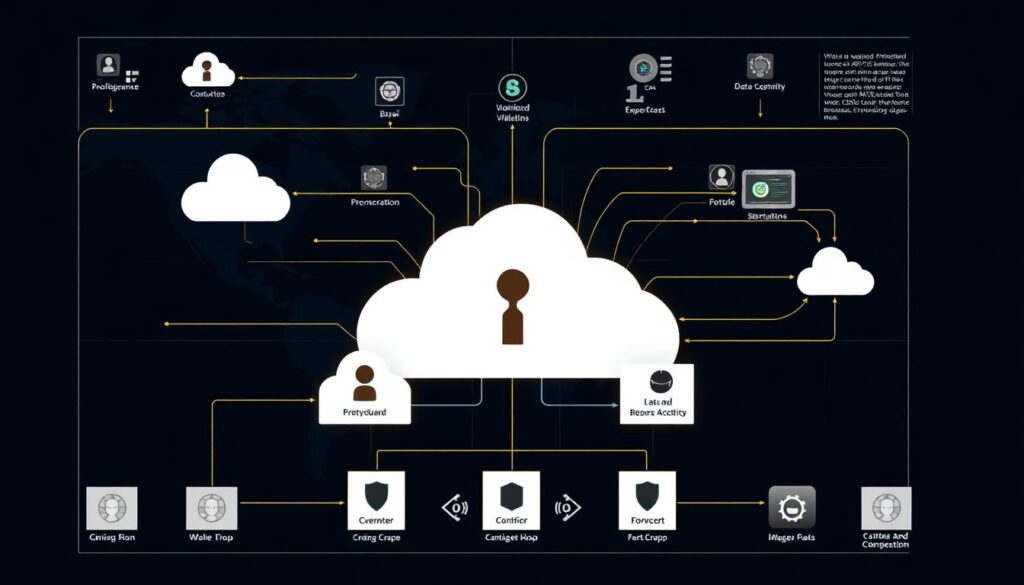
- Clarify business-critical workloads, data sensitivity and blast radius expectations per namespace and cluster.
- Identify entry points: cloud IAM, kube-apiserver, CI/CD, registries, and intra-cluster traffic.
- Map required controls to Brazilian and sector regulations rather than blindly copying CIS benchmarks.
Prevention focus for early design decisions
This section suits intermediate teams running or planning Kubernetes in AWS, GCP or Azure for revenue-impacting workloads, including SaaS platforms and internal systems with sensitive data. It is especially useful when justifying investimentos em serviços de segurança e hardening para clusters kubernetes em produção to management.
You should not over-invest in full-scale threat modeling if you operate only ephemeral non-production demo clusters, or if you are about to decommission a platform. For such cases, apply basic hardening templates and prioritize central cloud identity controls instead.
Detection-oriented mapping of attack surface
List every path an attacker could use:
- External: cloud console and API, CI/CD pipelines, container registry, exposed LoadBalancers and Ingresses.
- Internal: compromised developer laptops, leaked kubeconfig, over-privileged service accounts, misconfigured network routes.
- Third-party: operators, sidecars, and SaaS observability agents with broad RBAC.
For each path, define which logs and alerts would show misuse. This will drive logging and gestão e monitoramento de segurança kubernetes em nuvem later.
Response planning aligned with compliance
Map compliance requirements (for example Brazilian privacy expectations and your sector norms) onto Kubernetes layers: identity, network, data encryption, logging, backup and incident response. Decide when to call an external consultoria kubernetes segurança e compliance em nuvem, and document how cluster forensics, log preservation and rollback are performed.
Secure provisioning: hardened node and control plane baselines

- Standardize one hardened base per provider/OS and reuse via templates or blueprints.
- Automate cluster creation with Infrastructure as Code and version every security-relevant flag.
- Make configuration immutable: changes flow only through Git, never via manual console edits.
Prevention guidelines for node and control-plane setup
Prepare the following elements before provisioning any production cluster:
- Access and privileges
- Cloud IAM role to create and manage clusters but not touch unrelated resources.
- Separate IAM role for routine operations with fewer privileges.
- Hardened OS images
- Use provider-maintained hardened images when available, or apply CIS OS benchmarks via automation.
- Disable unnecessary services and password-based SSH; prefer short-lived, audited access solutions.
- Cluster provisioning tools
- Infrastructure as Code: Terraform, Pulumi, or native cloud templates.
- Cluster lifecycle tools: managed Kubernetes (EKS/GKE/AKS) or well-supported distributions.
- Baseline configuration choices
- Private control-plane endpoints whenever possible.
- Encryption at rest for etcd and node disks, with managed key services.
- Network plugin that supports NetworkPolicy from day one.
- Security validation tooling
- Cluster configuration scanners and CIS benchmark tools.
- Log shipping stack to centralize audit and system logs immediately after cluster creation.
Detection checks after provisioning
- Verify that control-plane audit logging is enabled and being ingested centrally.
- Confirm that nodes use the expected hardened images and that SSH is restricted.
- Ensure default security groups / firewalls do not expose kube-apiserver publicly without need.
Response readiness for provisioning drift
- Define a process to recreate nodes from templates when drift is detected instead of patching manually.
- Use IaC to roll back insecure configuration changes introduced by experiments in lower environments.
- Periodically run an independent empresa especializada em hardening de clusters kubernetes cloud review for template evolution.
Network policies, service mesh and perimeter controls
- Start with a safe default-deny NetworkPolicy in each namespace and open only required flows.
- Use a service mesh or mTLS-capable ingress when you need strong workload-to-workload encryption.
- Harden perimeter: WAF, rate limiting and DDoS protection in front of public entry points.
- Baseline your current traffic flows
Document how services communicate:- Group workloads by namespace and function: frontends, backends, databases, third-party.
- Capture typical traffic using existing monitoring or temporary flow-logging tools.
- Identify external dependencies: APIs, databases, SaaS endpoints.
- Introduce default-deny NetworkPolicy safely
Start in a non-critical namespace and:- Create a NetworkPolicy that allows DNS (to kube-dns/CoreDNS) and health checks only.
- Add allow rules for known app-to-app and app-to-database flows based on the baseline.
- Roll out the pattern to other namespaces once validated.
- Segregate ingress and egress paths
Separate responsibilities:- Use dedicated namespaces for ingress controllers and gateways.
- Restrict which namespaces can create LoadBalancers or public Ingress objects.
- Add cloud-side controls: security groups, firewall rules and, when needed, WAF policies.
- Add mutual TLS and service identity where needed
When you require strong service-to-service authentication:- Evaluate a lightweight service mesh or mTLS solution for east-west traffic.
- Start with a single critical application, validate latency impact, and standardize patterns.
- Integrate mesh identity with your broader PKI and secrets management strategy.
- Harden egress to the internet and third parties
Control outbound traffic:- Route egress through NAT gateways or egress gateways where you can apply policies and logging.
- Restrict which pods can talk to external addresses, especially for payment or identity providers.
- Log and alert on unusual egress destinations or volumes.
Быстрый режим
- Enable and test a default-deny NetworkPolicy template in one non-critical namespace.
- Explicitly allow only DNS, monitoring and known app flows; then replicate to other namespaces.
- Lock down which teams can expose services externally; add WAF and rate limiting to public ingress.
- Plan and pilot a minimal service mesh or mTLS for your most sensitive internal APIs.
Authentication, RBAC, and least-privilege workload identities
- Centralize human authentication with your existing IdP and short-lived kubeconfig credentials.
- Replace broad admin privileges with role-specific permissions and namespace boundaries.
- Use dedicated service accounts per workload and avoid cloud credentials in plain secrets.
Checklist to validate your access model
- All human users authenticate via the corporate identity provider; no shared static kubeconfig files remain.
- There are no generic
cluster-adminbindings for users or CI/CD; only tightly scoped technical break-glass roles exist. - Each team has its own namespaces and role bindings; cross-team access is explicit and reviewed.
- Every critical workload uses a dedicated Kubernetes service account instead of default service accounts.
- Cloud permissions are granted to workloads via identity-aware mechanisms, not embedded long-lived keys.
- Role definitions are version-controlled and reviewed during changes, just like application code.
- ClusterRole and Role objects are regularly scanned for wildcards and unnecessary verbs.
- Audit logs for authentication and authorization events are enabled, retained and periodically reviewed.
- Access to secrets and configmaps is limited to workloads and users that strictly need them.
- External automation (backup, observability, operators) runs with narrowly scoped technical identities.
Runtime defence: admission, runtime security and observability
- Use admission controls to block obviously risky workloads before they start.
- Deploy runtime security agents with carefully tuned rules instead of noisy defaults.
- Ensure logs, metrics and traces are complete enough for quick incident triage.
Common misconfigurations and anti-patterns
- Relying only on static scanning and skipping admission control, allowing unsafe pods to be scheduled.
- Running overly permissive PodSecurity or Pod Security Admission policies that still allow privileged or host-networked pods by default.
- Ignoring container runtime events and focusing solely on node-level logs, missing in-container anomalies.
- Deploying runtime agents to only a subset of nodes, leaving whole workloads invisible to detection.
- Forgetting to secure admission webhooks themselves with TLS, authentication and timeouts.
- Forwarding logs without a clear retention, search and alerting strategy for Kubernetes-specific signals.
- Failing to correlate cluster events with cloud logs, which hides full attack paths.
- Lack of tabletop exercises and runbooks, so teams do not know how to respond when alerts trigger.
- Running a single, huge cluster for all environments, making incident containment nearly impossible.
- Never revisiting rules and dashboards, causing alert fatigue and blind spots as applications evolve.
Automation: CI/CD hardening, policy-as-code and drift remediation
- Shift security left with policy-as-code and image scanning in CI pipelines.
- Use Git as the source of truth for cluster configuration and deploy via GitOps or similar flows.
- Continuously detect and reconcile drift between declared and actual state.
Alternative implementation paths and when to choose each
- Lightweight pipeline-centric approach
- Use your existing CI/CD to run linters, security scanners and simple policy checks on manifests.
- Good for smaller teams starting their journey who want quick wins without major platform changes.
- GitOps-first model with integrated security
- Adopt a GitOps tool to apply changes from version-controlled repositories only.
- Ideal when you already manage infrastructure as code and need strong change control and rollback.
- Managed security services and external review
- Engage a managed partner to run continuous gestão e monitoramento de segurança kubernetes em nuvem and periodic posture reviews.
- Suitable for organizations with limited in-house capabilities who still run critical workloads.
- Hybrid approach with periodic deep audits
- Combine internal automation with external consultoria kubernetes segurança e compliance em nuvem for design and annual reviews.
- Works well when regulators or customers expect an independent auditoria de segurança para clusters kubernetes em produção.
Practical troubleshooting and recurring pitfalls
How do I safely test NetworkPolicy changes in a live cluster?
Create a dedicated test namespace mirroring production labels and deploy a small test app. Apply your NetworkPolicy there first, validate connectivity with simple curl or readiness checks, then roll out to production namespaces incrementally with monitoring.
What is the quickest way to find dangerous RBAC permissions?
Export all Role and ClusterRole objects and search for wildcards in resources or verbs. Focus first on roles bound cluster-wide or in production namespaces, and replace them with narrower, task-specific roles reviewed in code.
How can I reduce noise from runtime security alerts?
Start with a small, well-understood set of high-value rules tied to real incidents or threat models. Tune or disable rules that trigger frequently without action, and always classify alerts by severity and ownership before expanding coverage.
When should I split one big cluster into several smaller ones?
Consider splitting when teams or environments require very different security postures, or when blast radius from a compromise becomes unacceptable. Use organizational, regulatory, or multi-tenant isolation requirements as primary drivers for separation.
How do I justify investment in Kubernetes hardening to leadership?
Link risks to concrete business impacts such as downtime, data disclosure or regulatory penalties. Present a phased hardening plan with clear milestones, and reference external benchmarks or results from an independent empresa especializada em hardening de clusters kubernetes cloud.
What should I prioritize first if everything looks insecure?
Secure identities and access to the Kubernetes API, then prevent new damage by locking down RBAC and public exposure. Next, introduce basic NetworkPolicy and PodSecurity defaults, and only then expand into deeper runtime and supply-chain controls.
How often should I review my Kubernetes security posture?
Run internal checks continuously via automation and plan a structured review at least once per year, or after major platform changes. Complement internal work with periodic external serviços de segurança e hardening para clusters kubernetes em produção when stakes or compliance needs are high.