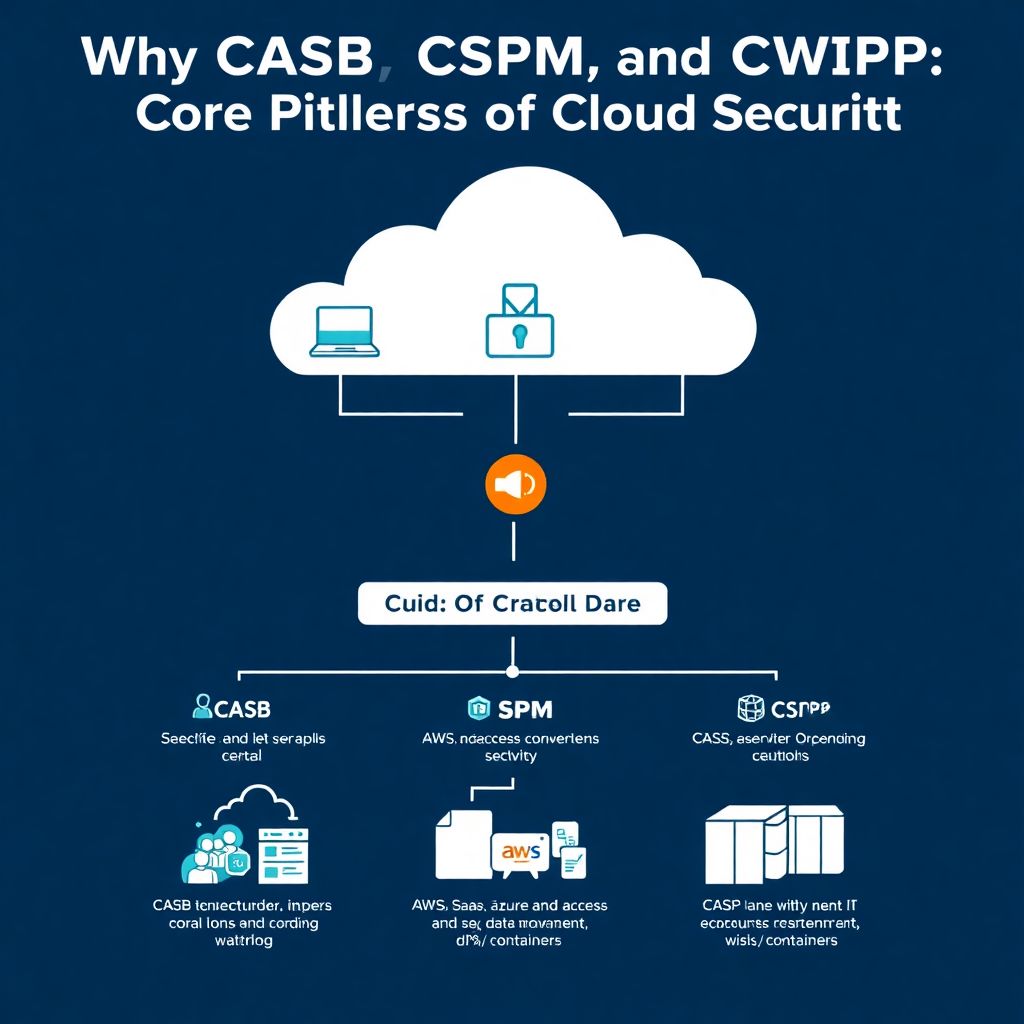
Why CASB, CSPM and CWPP became core to cloud security
The shared‑responsibility gap in the real world
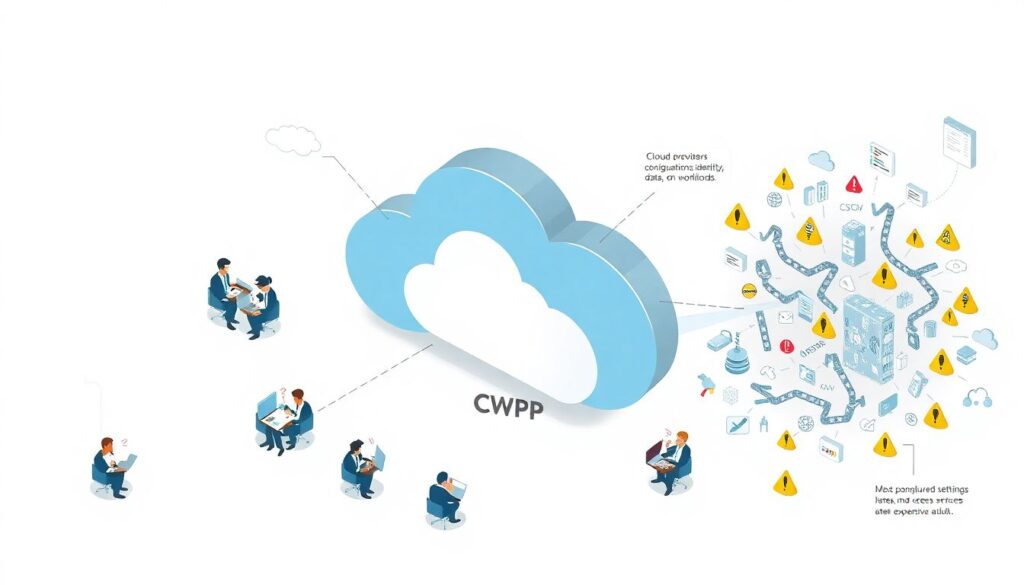
Most teams discover CASB, CSPM and CWPP the hard way: after a nasty incident or an expensive audit. Cloud providers protect their infrastructure, but you’re on the hook for configs, identities, data and workloads. That creates a wide “gray zone” where misconfigurations, sloppy access rules and exposed keys quietly accumulate. Traditional firewalls and endpoint agents barely see into this space. You need a solução casb cspm cwpp para segurança em nuvem that can observe SaaS usage, cloud control plane and runtime workloads together, rather than treating your environment as one big on‑prem network with a VPN taped on top.
Text diagram: who protects what
Imagine a simple diagram in one line:
[User] → [SaaS Apps] → [Cloud Control Plane] → [VMs / Containers]
Underneath we place the tools:
– CASB sits under SaaS Apps, inspecting who uses which app, from where, and with what data.
– CSPM sits below Cloud Control Plane, checking if your accounts, regions and services follow security baselines.
– CWPP hugs VMs / Containers, watching processes, network flows and vulnerabilities.
Visually, you get three overlapping zones rather than a single box labeled “cloud security”, clarifying why one tool cannot realistically cover all layers without blind spots.
Clear definitions: CASB, CSPM and CWPP without marketing fog
CASB: the SaaS and access watchdog
Cloud Access Security Broker (CASB) focuses on SaaS and user interaction with cloud apps. It discovers shadow IT, classifies apps by risk, inspects traffic and can block uploads or downloads based on policy. Picture CASB as a smart bouncer in front of Salesforce, Google Workspace or Microsoft 365, checking both IDs and what people try to carry in or out. Compared to a classic web proxy, it understands app context and user identity instead of only URLs. Used well, CASB becomes one of the melhores soluções casb cspm cwpp para proteção de dados na nuvem at the “front door” where data leaves your laptops and browsers.
CSPM: configuration and posture guardian
Cloud Security Posture Management (CSPM) lives in the control plane of AWS, Azure, GCP and others. It continuously scans accounts, projects and subscriptions for risky configs: open S3 buckets, permissive security groups, public databases, weak IAM policies. Think of it as an automated auditor that never sleeps, comparing your environment to frameworks like CIS, NIST or internal baselines. Where traditional vulnerability scanners look at hosts, CSPM looks at APIs and metadata. If CASB answers “who is doing what with SaaS”, CSPM answers “how is our cloud built and does it violate our own rules or industry standards”.
CWPP: runtime bodyguard for workloads

Cloud Workload Protection Platform (CWPP) protects what actually runs: virtual machines, containers, Kubernetes pods, sometimes serverless functions. It mixes several engines: vulnerability management, runtime behavior monitoring, network segmentation and often EDR‑style detection on Linux and Windows in the cloud. Visualize it as x‑ray goggles for every node in your cluster, watching processes, syscalls and connections rather than only open ports. CWPP fills a gap left by CSPM: even perfectly configured infrastructure can still run vulnerable images or get compromised at runtime, which only workload‑aware agents or sidecars can reliably spot and stop.
Comparing approaches: what each solves (and what it doesn’t)
Coverage, visibility and false expectations
It’s tempting to assume one product will “do it all”, but that’s where incidents usually start. CASB excels at user‑to‑SaaS flows and data movement, yet it knows nothing about a misconfigured IAM role that lets an attacker pivot through AWS APIs. CSPM is brilliant at catching those toxic combinations of permissions and network rules, but can’t see a crypto‑miner hiding inside a Kubernetes node. CWPP can block that miner but has zero idea whether the database it protects is accidentally exposed to the entire internet. When people ask como escolher entre casb cspm e cwpp para cloud security, the honest reply is: you choose coverage combinations, not a single magic bullet.
Pricing realities and ROI thinking
Behind the scenes, pricing models push you toward different architectures. CASB is usually licensed per user or per protected app, which aligns well with SaaS‑heavy organizations. CSPM often charges per cloud account, asset count or resource hours, making it attractive for large multi‑account setups. CWPP tends to be priced per workload, node or vCPU. When doing ferramentas casb cspm cwpp comparação de preços, the trick is to tie cost to risk reduction: where is your data, where are your compliance hot spots, and which type of breach would really hurt? A small SaaS‑centric startup might get most value from CASB+CSPM, while a Kubernetes‑driven fintech may prioritize deep CWPP features.
When to use each type of solution
Three typical scenarios
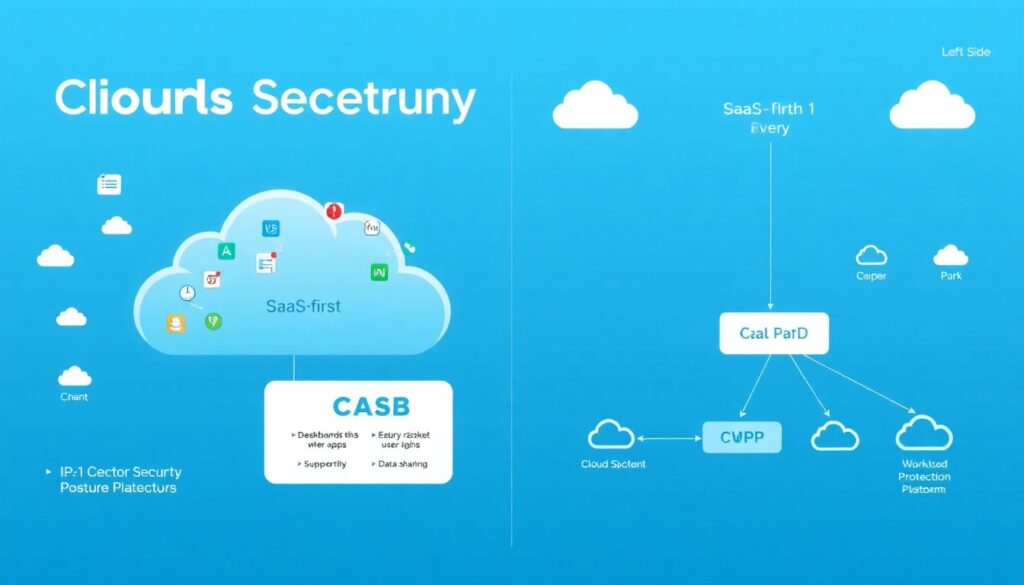
1. You are SaaS‑first, with minimal IaaS/PaaS. Here CASB is the workhorse, giving visibility into apps, risky logins and data sharing; CSPM plays a supporting role for a few cloud accounts, and CWPP might be optional.
2. You are multi‑cloud with lots of platform services. CSPM becomes critical to keep S3 buckets, storage accounts and IAM consistent, while CASB controls SaaS and CWPP focuses only on a subset of sensitive workloads.
3. You run heavy containers and microservices. CWPP and Kubernetes‑aware tooling are mandatory, CSPM keeps the control plane sane, and CASB protects the collaboration layer where people move data in and out.
Text diagram: decision flow
Imagine a decision tree in text form:
[Where is most critical data?] → SaaS → prioritize CASB
↓
IaaS/PaaS → prioritize CSPM
↓
Runtime / containers → prioritize CWPP
This doesn’t mean you choose only one, but you sequence deployments. Start where the blast radius is largest, then layer other controls. plataformas casb cspm cwpp integradas para empresas make this easier by sharing policies and alerts so you’re not building three parallel SOC workflows from scratch.
Integrating CASB, CSPM and CWPP into your stack
Practical integration patterns
In a modern stack, these platforms should talk to each other and to your SIEM, SOAR and IAM. A common pattern is: CASB feeds risky login and data‑exfil signals into the SIEM; CSPM sends misconfiguration findings; CWPP contributes runtime detections. SOAR playbooks then stitch actions together: quarantine a workload, revoke a token, open a ticket, or trigger MFA. The point of a solução casb cspm cwpp para segurança em nuvem isn’t three separate dashboards but a single narrative of “who did what, where, and on which resource”, with identity at the center.
A phased rollout that doesn’t break the team
Trying to deploy everything at once usually ends with alert fatigue and half‑baked policies. A saner path is iterative: start on read‑only, tune noise, then gradually enforce. Begin with a narrow scope (one business unit or cloud account), expand as you prove value. Balance security and usability: for example, first use CASB to only monitor shadow IT, then start blocking the riskiest categories. With CSPM, fix critical and high findings before worrying about cosmetic warnings. Over time, you’ll converge on plataformas casb cspm cwpp integradas para empresas that feel less like three tools and more like one adaptive control plane for your entire cloud footprint.