
If you’ve ever tried to compare CSPM tools side by side, you know the feeling: every vendor says they’re “AI‑driven”, “cloud‑native” and “context‑aware”. After the third demo, everything sounds the same.
So let’s strip away the marketing and look at what *really* matters when doing uma revisão comparativa de ferramentas CSPM — focusing on metrics, real‑world behavior and what actually improves segurança em cloud.
—
Why CSPM Metrics Matter More Than Feature Checklists
Most teams start with a “features vs. features” mindset:
“Does it support AWS + Azure + GCP?”
“Does it integrate with Jira?”
“Does it have dashboards?”
All important, but shallow.
In practice, the difference between an average CSPM and o melhor cspm para segurança em cloud está em métricas concretas:
– How fast it finds misconfigurations
– How accurately it prioritizes risks
– How many issues your team actually closes
– How much noise it generates
If your ferramentas CSPM comparação ignora esses números, você está avaliando marketing, não segurança.
—
Hiding in Plain Sight: The 4 Problems CSPM Must Solve
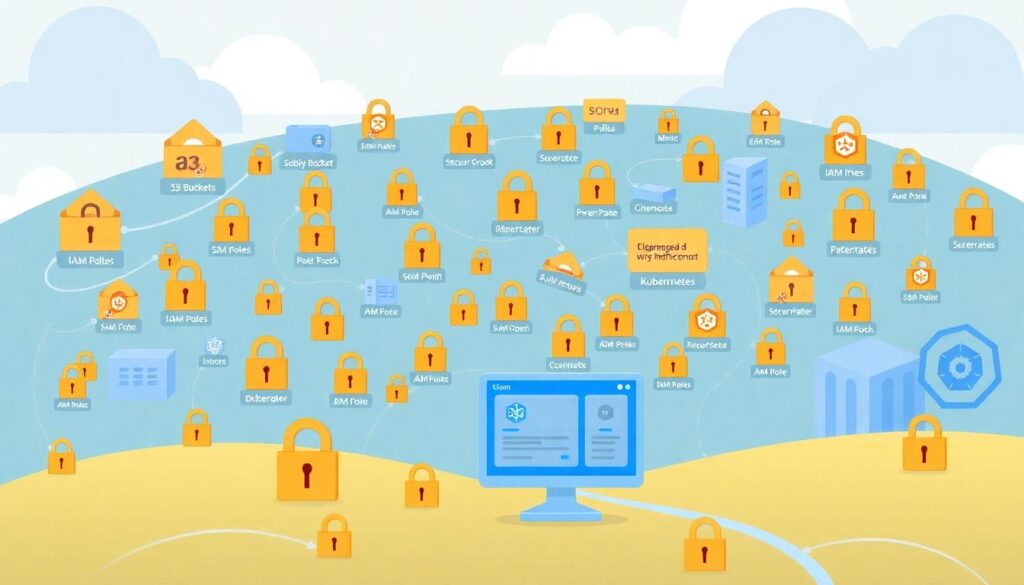
Before we talk metrics, it’s worth aligning on the core problems CSPM is supposed to solve:
1. Misconfigurations everywhere
Public S3 buckets, wide‑open security groups, permissive IAM roles, Kubernetes dashboards exposed to the internet.
In large environments it’s not *if* they exist, but *how many*.
2. Lack of visibility
Multi‑cloud + containers + serverless = thousands of resources spinning up and down daily. Manual review is impossible.
3. Compliance pressure
PCI DSS, ISO 27001, SOC 2, LGPD, GDPR… all demand continuous control over cloud configurations.
4. Alert fatigue
A CSPM that produces 10.000 alerts/mês sem ajudar a priorizar acaba sendo ignorado — e isso mata qualquer ganho de segurança.
Good CSPM tools attack all four. The only honest way to compare them is por meio de plataformas CSPM avaliação e métricas bem definidas.
—
Metric #1 – Time to Detect: “How Blind Are We?”
This is the most underused metric in CSPM comparisons.
Definition (practical):
Time between a risky configuration being created and the CSPM flagging it.
> Technical deep‑dive – How to measure it
> – Pick a few common risks (e.g., open S3 bucket, RDS without encryption, SSH open to 0.0.0.0/0).
> – Create them intentionally in a test account (tag them clearly).
> – Start a timer.
> – Measure how long each CSPM takes to show a HIGH‑severity alert.
Benchmarks from real environments:
– Good CSPM: ≤ 5 minutes for high‑priority risks in connected accounts
– Average CSPM: 15–30 minutes
– Weak CSPM: hours or “next daily scan”
In one Brazilian fintech I worked with, the legacy CSPM took up to 4 hours to detect an S3 bucket turned public. They switched to a tool with event‑driven scanning (listening to CloudTrail / EventBridge) and brought that down to under 3 minutes.
Impact: two actual incidents of data exposure in staging were contained same hour, instead of “found in weekly report”.
When you think sobre melhor cspm para segurança em cloud, this is non‑negotiable. Time to detect is more important than any pretty dashboard.
—
Metric #2 – Rules Coverage and Depth
Not all CSPM “rule sets” are equal. Two tools may both claim “we check S3 security”, but:
– Tool A checks only public ACLs
– Tool B checks ACLs, bucket policies, block public access flags, encryption, logging, and cross‑account sharing
> Technical deep‑dive – What to look for
> For each cloud provider:
> – AWS: S3, IAM, Security Groups, RDS, EKS, Lambda, KMS, CloudTrail
> – Azure: Storage Accounts, NSG, Key Vault, AKS, SQL, Activity Logs
> – GCP: Cloud Storage, IAM, Firewall, GKE, Cloud SQL, Audit Logs
> And then:
> – Are there mappings to CIS Benchmarks, NIST, PCI, ISO?
> – Are Kubernetes and serverless functions covered as first‑class citizens?
In a ferramentas CSPM comparação responsável, peça números concretos:
– “How many out‑of‑the‑box policies for AWS?”
– “How many are mapped to CIS AWS Foundations?”
– “How many checks are specific to Kubernetes?”
Good baselines you should expect in medium/enterprise tools today:
– 400–800 policies for AWS alone
– >100 specific to network exposure
– Dedicated sets for Kubernetes and containers
If a vendor dodges these questions or gives vague “hundreds” without detail, it’s a red flag.
—
Metric #3 – Signal‑to‑Noise Ratio (a.k.a. Your Sanity)
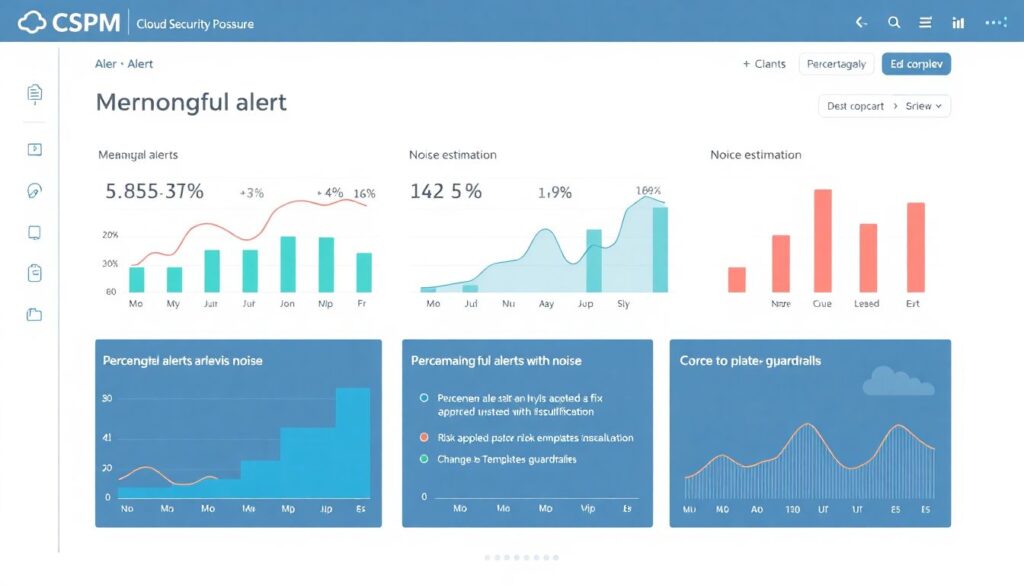
Every CSPM can generate alerts. The question is: how many of them do you actually care about?
Core metric: percentage of alerts that result in:
– A fix applied
– A risk accepted with justification
– A change to IaC templates / guardrails
> Technical deep‑dive – How to estimate noise
> 1. Run each CSPM in read‑only mode for 2–4 weeks.
> 2. Count:
> – Total alerts
> – HIGH + CRITICAL alerts
> – Alerts your team agreed are “real problems”
> 3. Calculate:
> – “Useful alert rate” = (real problems) / (total alerts) × 100%
Real‑world numbers I’ve seen:
– Poor tuning / weak prioritization: <5% of alerts considered useful
– Reasonable tool with good default policies: 10–20% useful
– Strong CSPM with context‑aware risk scoring: 30–40% useful
That 3–4× difference translates directly into:
– Less fatigue
– Faster reaction
– More trust in the tool
This is where os detalhes da cspm segurança em nuvem para empresas really matter: the ability to correlate data (e.g., “this public VM with SSH open also has a public IP and belongs to the ‘prod‑payments’ VPC”) to raise its score, not just scream about everything equally.
—
Metric #4 – MTTR for Misconfigurations
Finding issues is nice; fixing them is the goal.
Definition:
Mean Time To Remediate – average time between alert creation and issue being resolved (or accepted).
It’s not enough for a CSPM to tell you “this is wrong”. The best tools:
– Provide concrete fix recipes
– Offer auto‑remediation (with approval)
– Integrate with ITSM / issue trackers (Jira, ServiceNow, etc.)
– Generate IaC patches when possible
> Technical deep‑dive – Auto‑remediation in practice
> – Event rule triggered (e.g., S3 bucket becomes public)
> – Lambda / Function executes:
> – Applies stricter policy (block public access)
> – Notifies security channel (Slack / Teams)
> – Opens a ticket with details and context
In one SaaS startup migrating quickly to AWS, they measured:
– Before CSPM: high‑risk misconfigurations MTTR ~ 21 days (discovered manually or via audit)
– After CSPM, but without automation: 7–10 days
– After enabling guided auto‑remediation for “safe” cases: <24 hours for 70% of high‑severity issues
When comparing soluções CSPM preço vs. valor, MTTR reduction is one of the easiest ways to quantify ROI: less time exposed, fewer incidents, less rework.
—
Metric #5 – Coverage vs. Cost: Is It Worth the Price Tag?
CSPM pricing models vary a lot, and they can get ugly if you don’t pay attention.
Common models:
1. Per cloud asset/resource (most common)
2. Per account / subscription / project
3. Per workload (VM/container)
4. Hybrid (combination of the above)
When você avalia uma solução CSPM preço, look at:
– Total monthly bill at your current scale
– Growth projection for 12–24 months
– What’s included:
– All clouds or only one?
– Kubernetes? Container registries?
– API access? Custom rules?
Real example from a retail company in LATAM:
– Vendor A:
– $0.005 per cloud resource per month
– ~40.000 resources ⇒ ~$200/month (pilot)
– Projected growth to 200.000 resources in 18 months ⇒ $1.000/month
– Vendor B:
– Flat $2.500/month for up to 250.000 resources
– Similar features, slightly weaker dashboards
– Result: Vendor B cheaper at scale → chosen for production
The lesson: não analise apenas a solução cspm preço inicial. Simule cenários realistas de crescimento, especially if your cloud usage is exploding.
—
Different Approaches to CSPM: Agentless vs. Agent‑based vs. “Shift‑left”
When você faz ferramentas CSPM comparação, it’s not only vendors you’re comparing, but *architectural approaches*.
Let’s unpack the three big ones and where they shine.
1. Agentless CSPM (most common)
These tools connect via APIs (AWS, Azure, GCP) and read config and logs without agents.
Pros:
– Quick onboarding (hours/days)
– No agents to maintain
– Broad coverage across accounts/projects
Cons:
– Limited visibility inside workloads (OS level)
– Some delays depending on API or eventing
Best when: you need fast, wide coverage across multi‑cloud and want to improve posture quickly with minimal friction.
2. Agent‑based + CSPM
Some platforms blend CSPM with workload protection (CWPP) using agents.
Pros:
– Deep visibility inside VMs/containers
– File integrity, processes, vulnerabilities, runtime behavior
Cons:
– More operational effort (deploy/update agents)
– Higher cost and complexity
Best when: you want posture + runtime security in a single stack and have ops maturity to handle agents.
3. “Shift‑left” CSPM (IaC / CI integration)
These tools integrate with Git, CI/CD and IaC (Terraform, CloudFormation, ARM, etc.) to catch misconfigurations *before* deployment.
Pros:
– Prevents problems instead of just detecting them
– Educates developers with feedback right in the pipeline
– Reduces noise in production
Cons:
– Needs dev buy‑in
– Requires IaC adoption (or at least partial)
Best when: your engineering teams already “live in Git” and you want to embed cloud security in development.
In practice, o melhor cspm para segurança em cloud geralmente combina:
1. Agentless posture management for broad coverage
2. Some agent‑based or integration with CWPP for critical workloads
3. Shift‑left checks in CI to reduce future debt
—
How to Compare CSPM Platforms in the Real World (Step‑by‑Step)
Here’s a pragmatic way to run plataformas CSPM avaliação e métricas that goes beyond slides and demos:
1. Define your top 5–7 metrics upfront
– Time to detect (TtD)
– % of useful alerts
– MTTR per severity
– Policy coverage (per cloud & tech)
– Projected 24‑month cost
2. Pick 2–3 candidate tools
– One “big name”
– One challenger / newer vendor
– Optionally, one solution from your existing security stack
3. Run a 30‑day POC in *real* environments
– 1–2 production accounts (read‑only)
– 1 dev/stage account where you’re allowed to create test misconfigs
– Kubernetes cluster if that’s in scope
4. Inject known misconfigurations
– Public storage buckets
– Keys without rotation
– Open security groups
– Unencrypted databases
– Overly permissive IAM roles
5. Measure, don’t guess
– How fast each tool detects each issue
– How each one scores/prioritizes them
– How easy it is to navigate from alert → root cause → fix
– How much tuning is needed to reduce noise
6. Include dev and ops in the evaluation
– Can developers understand the findings?
– Do dashboards help SREs and platform teams?
– Are integrations (Slack, Jira, SIEM) smooth?
7. Decide based on numbers + usability
– A tool with slightly fewer features but 2× better signal‑to‑noise is usually the better choice.
—
Common Pitfalls When Choosing a CSPM
A few traps I see repeatedly:
– Over‑focusing on compliance checkboxes
Passing a CIS benchmark is good, but doesn’t replace threat‑driven prioritization.
– Ignoring operational reality
If your team is 3 people, you won’t manage 50 custom policies per week.
– Underestimating onboarding time
Some tools need weeks of tuning and role configuration; others work decently out‑of‑the‑box.
– No exit plan
Make sure you can export findings, policies and logs in open formats. Vendor lock‑in in security tooling hurts long‑term.
—
Making CSPM Actually Work Day‑to‑Day
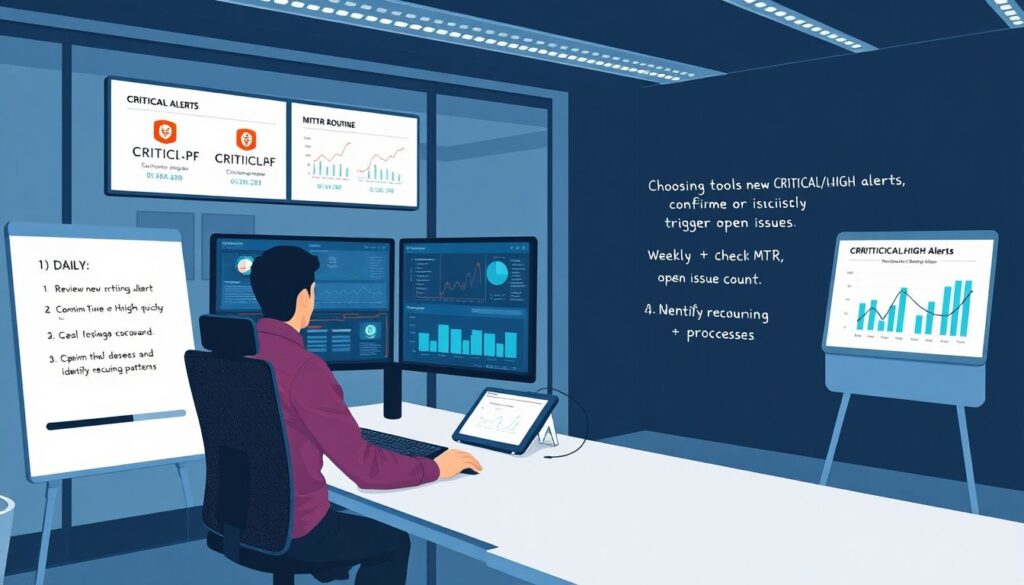
Selecting a tool is half the battle. Making it deliver value is about process.
A simple, effective routine:
1. Daily:
– Review new CRITICAL/HIGH alerts
– Confirm or dismiss them quickly
– Trigger remediation where appropriate
2. Weekly:
– Look at MTTR and count of open issues
– Identify recurring patterns (“same misconfig in every new VPC”)
– Feed that back into IaC modules / platform templates
3. Monthly:
– Review policy set (enable, disable, fine‑tune)
– Re‑check your ferramentas CSPM comparação metrics:
– Is useful alert rate improving?
– Are we closing more than we’re opening?
Over time, a good CSPM plus these routines will move you from “reactive firefighting” to “predictable, measurable cspm segurança em nuvem para empresas”.
—
Final Thoughts
When the buzzwords fade, a CSPM platform is just a tool. What matters is:
– Speed: how fast it sees problems
– Clarity: how well it prioritizes what truly matters
– Actionability: how easily your team can fix issues
– Economics: how cost scales with your cloud footprint
If you anchor your revisão comparativa de ferramentas CSPM nesses pontos — with real metrics, realistic tests and participation from security, ops and dev — você reduz o ruído, evita arrependimentos de compra e, principalmente, fortalece sua segurança em cloud de forma mensurável e sustentável.