
Why API security in cloud‑native environments suddenly matters so much
If you look at how we built systems 10–15 years ago, most APIs lived inside a data center, behind a big perimeter firewall, and exposed a few SOAP or early REST endpoints. Security was mostly about network segmentation and WAF rules. Around 2015, with Kubernetes, Docker and managed clouds going mainstream, architectures shifted to microservices talking over HTTP and gRPC. By 2020–2022, companies were exposing dozens or hundreds of public and partner APIs, and by 2026 segurança de apis em nuvem stopped being a “platform concern” and became a board‑level risk topic. The big change wasn’t just more traffic, but the explosion of machine‑to‑machine calls, mobile clients, IoT devices and third‑party integrations, all using APIs as their primary surface.
From perimeter mindset to zero‑trust API security
The old assumption “if it’s inside the VPC, it’s trusted” doesn’t hold in cloud‑native setups. Compromised pods, leaked credentials and misconfigured services turn internal traffic into an attack vector. Modern API security leans on zero‑trust: every call must be authenticated, authorized and validated, regardless of network location. That means short‑lived tokens, strong identity for workloads and humans, and tight scoping of privileges. It also means that the network path is no longer the only control point; identity, context and runtime behavior matter as much as IP addresses or subnets. This shift has redefined how we design gateways, service meshes and policy engines.
Core principles for securing cloud‑native APIs
Strong identity, least privilege and context‑aware access
At the heart of modern soluções de segurança para microservices e apis are three ideas: robust identity, least privilege and contextual decisions. Every caller—user, service account, job or device—needs a verifiable identity, typically via OAuth2/OIDC, mTLS or SPIFFE‑based identities inside the cluster. Least privilege means scoping tokens and credentials to the minimum set of APIs and operations they actually need, ideally with audience restrictions and short expirations. Context‑aware access goes further: evaluating device posture, request origin, time, rate patterns and even anomaly scores before granting or denying an API call, making authorization policies richer than simple role checks.
Defense in depth instead of one magic control point
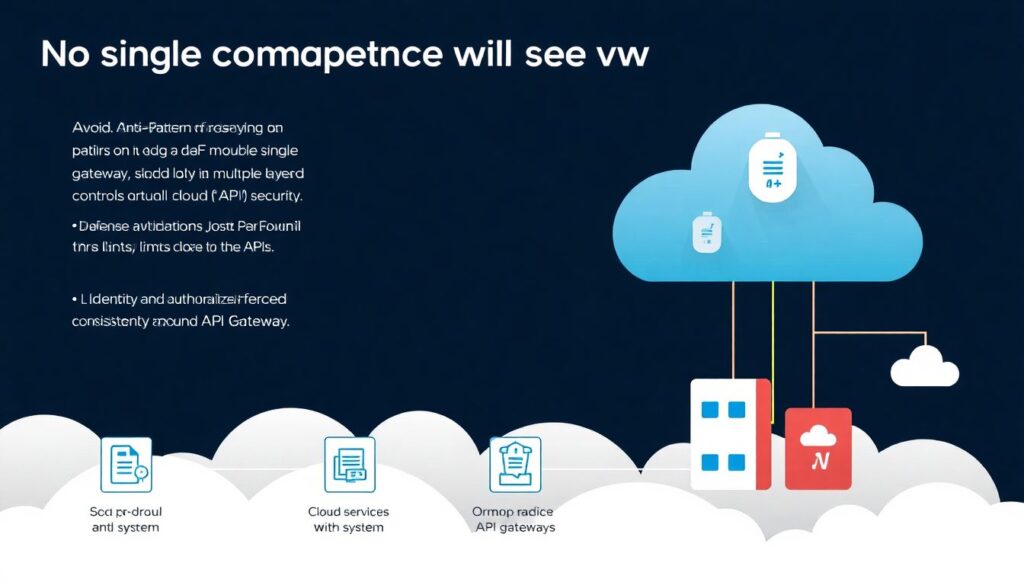
No single component will save you. A common anti‑pattern is assuming that an edge WAF or a single gateway can fully handle segurança de apis em nuvem. Defense in depth means layering controls: schema validation and payload size limits close to the API, identity and authorization enforced consistently, network policies isolating namespaces, and rate limits combined with behavioral analytics and threat intelligence at the edge. Service meshes add mTLS and traffic policies, while runtime security tools watch containers and pods for compromise. Each layer should be able to contain or at least slow down an attacker, even if another layer has been bypassed or misconfigured.
API gateways in a cloud‑native world
What an API gateway really does for Kubernetes
When people talk about an api gateway para kubernetes cloud native, they often picture just an ingress controller with some routes. In practice, a modern gateway is a control and enforcement plane that offloads authentication, authorization, rate limiting, quota management, header rewriting, and consistent logging from individual services. Running as sidecars, DaemonSets or dedicated gateway pods, it terminates TLS, validates tokens, enriches requests with identity claims and applies routing rules based on paths, headers or even payload content. For cross‑cluster and multi‑region setups, gateways also handle failover, traffic splitting and gradual rollouts using canary or blue‑green patterns tied to observability signals.
Gateways vs service meshes vs native cloud features
Over the last few years, the line between API gateways, service meshes and native cloud load balancers has blurred. A mesh focuses on east‑west traffic inside the cluster with mTLS, retries and circuit breaking, while gateways focus on north‑south traffic. However, many platforms de api management em ambiente cloud now embed mesh capabilities, and cloud providers extend their managed gateways with JWT validation, WAF and DDoS protection. The practical approach in 2026 is composability: use a lightweight gateway at the edge for exposure and cross‑tenant concerns, pair it with a mesh for internal service communication, and lean on cloud‑native L7 load balancers where it simplifies operations without locking you into opaque security models.
Patterns and standards that actually work
Standardized auth and policy: OAuth2, OIDC, JWT and beyond
The API security ecosystem has largely converged on a few standards. OAuth2 and OIDC are the default for end‑user and client‑app authentication, while JWT is the common token format used at gateways and services. The trick isn’t just “use OAuth”, but designing proper flows: PKCE for mobile and SPA, client credentials for backend‑to‑backend, token exchange for delegated access, all with minimal scope. Policy engines like OPA and authorization frameworks like Cedar bring fine‑grained, declarative access control that can be evaluated at gateways or sidecars. Combined with centralized identity providers, they let you express and audit complex rules without scattering logic across dozens of microservices.
Schema‑first design, validation and versioning
One of the most underrated padrões de segurança is strict schema control. Spec‑first APIs using OpenAPI or gRPC proto definitions make it easier to validate every request and response against a contract, block unknown fields, enforce type and length constraints, and catch malformed or over‑sized payloads early. In cloud‑native environments, this validation typically runs in the gateway or an Envoy filter, isolating fragile services from direct exposure. Strong versioning policies—like never reusing paths for incompatible changes and deprecating old versions predictably—also reduce the need for risky, backward‑incompatible handlers, which are frequent sources of logic flaws and access bypass bugs.
Mitigating API abuse and business‑logic attacks
Why API abuse is different from “classic” attacks
By 2026, many incidents aren’t about SQL injection or XSS anymore, but about API abuse: attackers using legitimate endpoints in malicious ways. They exploit business logic, lenient rate limits, or predictable identifiers to scrape data, enumerate accounts or chain small features into powerful exploits. ferramentas para proteção contra api abuse therefore look very different from traditional WAFs; they monitor behavior over time, track user and token reputation, correlate anomalies across endpoints and detect subtle patterns like low‑and‑slow scraping or distributed credential stuffing. The security challenge is that these requests look syntactically valid and authenticated, so only context and behavior can expose them.
Practical techniques against abuse in cloud‑native setups
Mitigating API abuse in a Kubernetes or serverless environment relies on granular controls tightly integrated with observability. Rate limits should be set per user, per token, per IP and sometimes per device fingerprint, with sliding windows instead of simple per‑minute caps. Gateways can enforce step‑up defenses—like requiring re‑auth, CAPTCHA on certain flows or additional claims—when anomalies are detected. Combining logs from gateways, service meshes and application metrics enables behavior models that trigger automated responses, such as throttling suspicious clients or isolating compromised tokens. Feature flags and progressive rollout tools let you quickly ship business‑logic fixes without full redeployments, reducing blast radius when new abuse vectors appear.
Examples of real‑world implementations
Multi‑cluster API exposure with layered security
Consider a company running multiple Kubernetes clusters across regions. At the edge, it uses a managed cloud gateway as the public entry point, with JWT validation, IP reputation checks and coarse WAF rules. Behind that, each cluster exposes an internal gateway responsible for routing to namespaces, injecting tenant context and applying stricter authentication and authorization policies. A service mesh enforces mTLS and traffic policies between microservices. Identity for workloads is handled via short‑lived service account tokens and SPIFFE IDs. This layered design exemplifies how soluções de segurança para microservices e apis can be composed rather than centralized in a single monolithic appliance.
API management platforms in hybrid environments
Many organizations still run hybrid setups in 2026, mixing on‑prem, VMs and containers. In these cases, plataformas de api management em ambiente cloud act as a unifying control plane. They provide a single catalog of APIs, developer portals, key issuance, analytics and policy distribution, while actual enforcement happens through gateways or sidecars close to workloads. This lets security and platform teams define global policies—like mandatory TLS versions, logging formats or baseline rate limits—yet adapt them to local constraints. The important detail is to avoid treating the management plane as merely an “API store”; it must be integrated with CI/CD, SSO, secrets management and incident response workflows to close the loop between discovery, deployment and protection.
Common misconceptions that cause real trouble
“Our APIs are internal, we don’t need strong security”
One of the most dangerous beliefs is that internal APIs, reachable only inside a cluster or VPC, can relax security. In a world of supply‑chain attacks, compromised CI/CD runners and stolen cloud credentials, internal boundaries are routinely crossed. Assuming trust inside the perimeter leads to missing authentication on internal endpoints, broad service account privileges and lack of monitoring. When an attacker gains a foothold in the cluster, these weaknesses turn into full environment compromise. Treating internal APIs with the same rigor as external ones—consistent auth, authorization, validation and observability—is no longer optional in a mature segurança de apis em nuvem program.
“The gateway or WAF will fix everything for us”
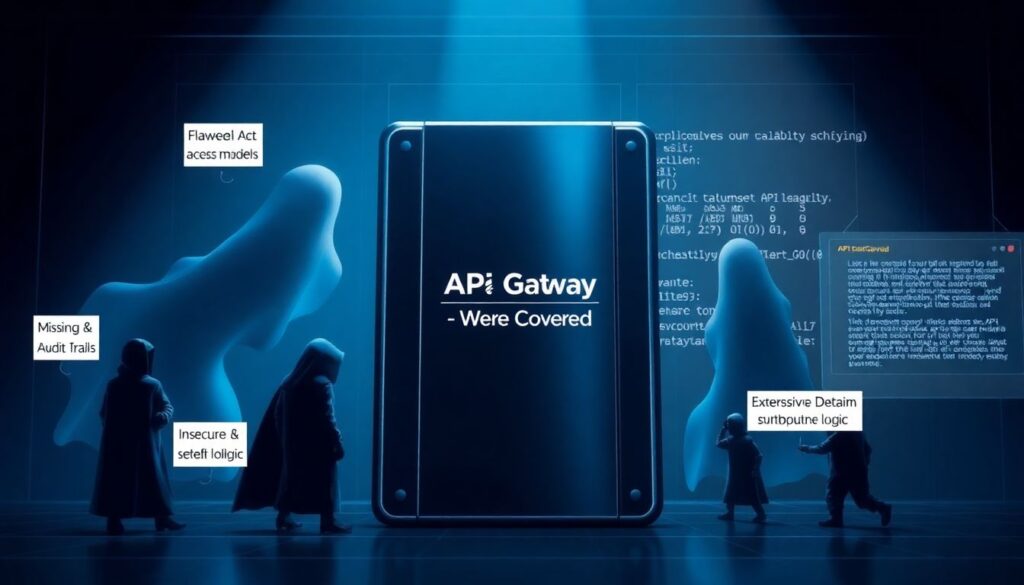
Another frequent myth is over‑reliance on a single technology: “We bought an enterprise API gateway, we’re covered.” A gateway is powerful, but it can’t compensate for fundamentally flawed access models, missing audit trails or insecure business logic. If an endpoint gives away too much data or ignores object‑level authorization, no generic WAF rule will fix that. Security has to be built into API design, coding, testing and operations. That means threat‑modelling critical flows, writing security‑focused tests, running dynamic and runtime assessments and using feedback from incidents to evolve standards. Tools and platforms de api management em ambiente cloud help, but they amplify your practices; they don’t create them from nothing.
Where API security is heading by and beyond 2026
Looking at current trends, API security in cloud‑native environments is moving toward more automation and tighter integration with developer workflows. Policy‑as‑code, automated discovery of shadow APIs, continuous inventory of exposed endpoints, and AI‑assisted anomaly detection are becoming normal capabilities rather than niche add‑ons. The organizations that fare best are those treating API security as a shared responsibility between developers, platform engineers and security teams, supported by well‑chosen tools rather than defined by them. In this landscape, investing in robust patterns, thoughtful gateway and mesh architectures, and serious abuse mitigation strategies is what keeps microservices‑driven products both agile and resilient.