
Cloud-Native Application Protection Platforms (CNAPP) unify visibility, misconfiguration management, vulnerability detection, and runtime protection across Kubernetes, containers, and cloud services. For Brazilian security teams, the priority is choosing ferramentas CNAPP para segurança em nuvem that plug into existing CI/CD, scale across multiple clouds, and provide clear, risk-based prioritization instead of noisy alerts.
Capabilities Snapshot for Security Leaders
- End-to-end coverage from code to cloud: IaC scanning, image analysis, CSPM, CWPP, and runtime controls in one console.
- Strong discovery across AWS, Azure, and GCP, including unmanaged and shadow assets commonly found in Brazilian environments.
- Risk-based prioritization that merges vulnerabilities, misconfigurations, exposure, and business context.
- Runtime protection for Kubernetes and containers with minimal performance overhead and clear operational playbooks.
- Native integrations with CI/CD, ticketing, SIEM, and ITSM tools used by mid-size enterprises in Brazil.
- Transparent CNAPP preço licenciamento para times de segurança, simple enough to forecast across squads and business units.
- Evidence-based evaluation path to select the melhor plataforma CNAPP para empresas, with repeatable test cases and metrics.
CNAPP fundamentals and attacker-centric threat model
A Cloud-Native Application Protection Platform (CNAPP) is a consolidated security solution that protects workloads, data, and identities across the full application lifecycle: from build pipelines and IaC templates to cloud runtime. It merges the capabilities of CSPM, CWPP, CIEM, container security, and often application security testing.
Instead of focusing on isolated scanners, a plataforma de proteção de aplicações nativas em nuvem CNAPP connects signals: a vulnerable container image, running in an exposed Kubernetes service, with an over-privileged identity and internet-facing data store. This attacker-centric view helps your team understand not just “what is weak” but “what is exploitable now.”
For an intermediate security team in Brazil (pt_BR context), the practical value is consolidation and triage. Good ferramentas CNAPP para segurança em nuvem reduce tool sprawl, normalize findings from multi-cloud environments, and provide workflows that security and DevOps can actually follow together. The result is less friction with development and clearer accountability.
When you review any comparativo de soluções CNAPP cloud native, verify that the threat model matches how real attackers move: abusing CI/CD credentials, pivoting via misconfigured IAM roles, chaining low-severity issues, and exploiting default Kubernetes settings. CNAPP should surface these attack paths, not just individual alerts.
Evaluation criteria: metrics, test cases and success thresholds
To select the melhor plataforma CNAPP para empresas, move beyond vendor demos and run short, focused evaluations with explicit metrics. Below is a practical, metric-driven checklist you can apply in a two to four-week proof-of-concept (PoC) for mid-size security teams.
-
Coverage and discovery accuracy
- Metric: percentage of known cloud accounts, clusters, and registries correctly discovered without manual hints.
- Test: onboard one account per cloud provider (AWS/Azure/GCP) and one Kubernetes cluster; compare CNAPP inventory to your own CMDB or Terraform state.
- Success threshold: only a small number of critical assets may be missing; all discrepancies should be explainable.
-
Noise, deduplication, and alert relevance
- Metric: number of unique, high-priority issues per environment after deduplication and risk weighting.
- Test: import a realistic environment and measure how many “P1/P2” issues the CNAPP highlights.
- Success threshold: the top 20-30 items should be clearly actionable, without obvious duplicates or low-risk items.
-
Developer and DevOps usability
- Metric: time for a developer to fix one finding using CNAPP guidance, from alert to merged pull request.
- Test: ask a non-security engineer to remediate an IaC or container finding using only the tool’s hints.
- Success threshold: the flow should be self-explanatory; minimal security team hand-holding is required.
-
Integration depth with existing tools
- Metric: number of integrations configured and operational (CI/CD, ticketing, SIEM, messaging) within your PoC window.
- Test: configure at least one CI pipeline, a ticketing system (e.g., Jira), and your primary SIEM; trigger end-to-end alerts.
- Success threshold: incidents created automatically with correct ownership and context, no manual re-typing of data.
-
Operational load and performance impact
- Metric: additional time added to builds and scanning windows; CPU/memory overhead on Kubernetes nodes or agents.
- Test: enable image scanning in CI and runtime agents in a staging cluster; monitor build times and cluster metrics.
- Success threshold: build and runtime overhead remains acceptable for your SLOs; no frequent pod restarts or throttling.
-
Licensing clarity and scalability
- Metric: transparency of CNAPP preço licenciamento para times de segurança as you scale clusters, namespaces, and accounts.
- Test: simulate a one-year growth plan (more squads, clusters, and clouds) and model the license cost with the vendor.
- Success threshold: predictable pricing dimensions (e.g., assets, workloads, or credits) without hidden surcharges.
Discovery and inventory: visibility across clouds and workloads
Discovery and asset inventory are the foundations of any CNAPP deployment. Without accurate, up-to-date maps of your cloud resources and workloads, every other feature-risk scoring, detection, compliance-will be incomplete or misleading.
When you review a comparativo de soluções CNAPP cloud native, validate whether the platform provides robust visibility for at least the following scenarios:
-
Multi-cloud account and subscription inventory
CNAPP should ingest APIs from multiple cloud providers, enumerate accounts, subscriptions, projects, and key services, and track changes continuously. For Brazilian companies that often mix AWS and Azure, mapping cross-cloud trust relationships is critical.
-
Kubernetes and container workload discovery
The tool needs deep Kubernetes awareness: clusters, namespaces, deployments, DaemonSets, services, and ingress objects. It should correlate running pods with the container images in your registries and the IaC templates used to deploy them.
-
Data stores and exposure paths
CNAPP must inventory databases, object storage buckets, and message queues, classifying their exposure (internet-facing, internal, private) and encryption posture. This directly impacts how you prioritize misconfigurations and vulnerabilities.
-
Identity and privilege mapping
Discover IAM users, roles, service accounts, and tokens, including those embedded in CI/CD or application code. Mapping which identities can access which resources is crucial for attacker path analysis.
-
Shadow assets and unmanaged workloads
Look for capabilities that detect assets created outside standard pipelines: labs accounts, personal projects, or “quick fixes” deployed directly in the console. Mature ferramentas CNAPP para segurança em nuvem surface these drifts as first-class risks.
-
Historical tracking and change timelines
The platform should maintain history: when a bucket became public, when a role gained new permissions, when a new cluster appeared. This is vital for incident response and root-cause analysis.
Risk scoring, vulnerability lifecycle and prioritization workflows
CNAPP tools generate many findings; the real value is their ability to prioritize what your team must fix first. This is where Brazilian security leads distinguish the melhor plataforma CNAPP para empresas from a simple scanner. Effective risk scoring merges technical severity with exploitability and business impact into practical workflows.
Advantages of CNAPP-centric risk and vulnerability management
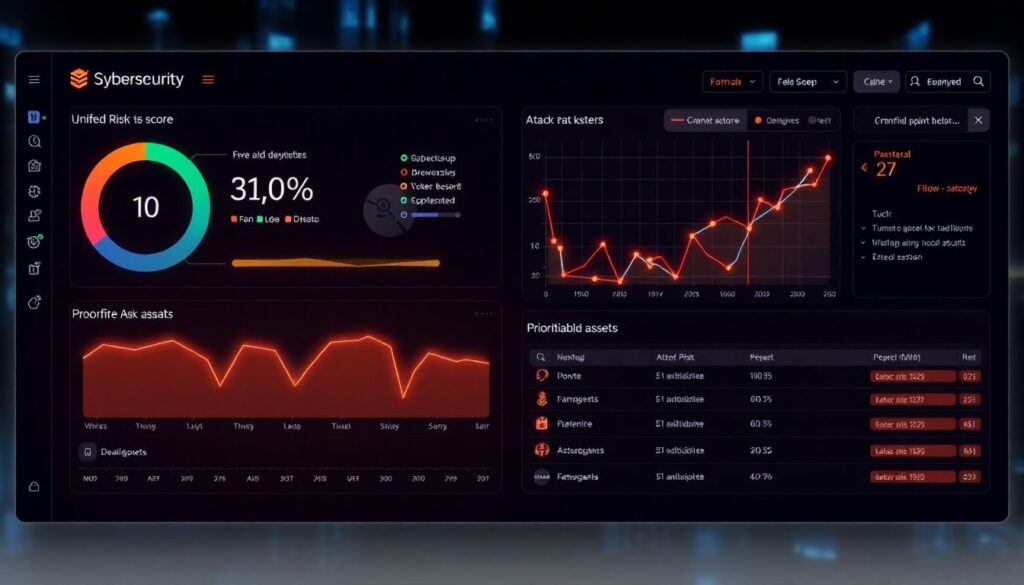
- Unified risk score that considers vulnerabilities, misconfigurations, network exposure, and identity misuse in a single model.
- Clear attack path visualizations that show how chained issues could lead to data exfiltration or privilege escalation.
- Context-aware prioritization: public-facing assets, production namespaces, and sensitive data stores float to the top automatically.
- Lifecycle tracking from detection to remediation, including SLAs, status changes, and evidence for audits or regulators.
- Automation hooks that open tickets, trigger CI/CD gates, or launch playbooks when high-risk conditions are detected.
Limitations and practical caveats you must plan for
- Risk scores are models, not truths; you still need human review for business context that the platform cannot infer.
- Out-of-the-box policies might not match Brazilian regulatory or sector requirements; customization is mandatory.
- Excessive policies in early stages can overwhelm teams and harm credibility; gradual rollout is safer.
- Vulnerability data quality depends on feeds and signatures; newly discovered threats may appear with a delay.
- Prioritization workflows require process integration: without clear ownership, even the best scoring engine will not reduce risk.
Runtime protection, detection engineering and automated response
Many teams first deploy CNAPP for visibility and only later enable runtime protections in Kubernetes and cloud workloads. This is sensible, but certain misunderstandings and mistakes create friction or false confidence.
- Assuming CNAPP replaces traditional EDR or WAF – runtime CNAPP sensors complement, not fully replace, host-based agents or application-layer protections. You still need layered defenses, especially for legacy workloads.
- Enabling blocking modes too early – jumping from monitoring to blocking without a tuning phase can break production traffic or CI/CD jobs. Start in observe mode, iterate on alerts, and only then enforce specific, high-confidence policies.
- Ignoring cloud-native attack techniques – default rules might miss abuse of metadata services, container escape attempts, or misuse of serverless permissions. Your detection engineering should include cloud-native TTPs based on modern threat scenarios.
- Over-automating response playbooks – automatic quarantine, scale-down, or credential revocation is powerful but risky. Overbroad conditions can disrupt business services; always pair automation with precise scoping, approvals, or staged rollout.
- Leaving DevOps out of runtime decisions – blocking policies that are not aligned with SRE/Platform teams will be disabled at the first incident. Co-design policies, SLO-aware thresholds, and emergency bypass procedures.
- Underestimating observability integration – CNAPP alerts must be correlated with logs and metrics from tools like Prometheus, Loki, or commercial stacks. Otherwise, detection triage is slow and depends solely on CNAPP context.
Deployment, CI/CD integration and operational scalability
Mid-size Brazilian companies typically adopt CNAPP in phases: first cloud account onboarding and CSPM, then container and Kubernetes visibility, then CI/CD integration and runtime detection. A structured rollout reduces friction and demonstrates value early.
Below is a simplified mini-case that illustrates a pragmatic deployment sequence for a team with a few squads and mixed AWS/Azure workloads.
-
Phase 1: Connect clouds and get quick wins
- Connect AWS and Azure accounts in read-only mode.
- Run baseline CSPM checks and tag findings by environment (prod, staging, dev).
- Close 3-5 high-impact misconfigurations (e.g., open storage buckets) to build credibility.
-
Phase 2: Onboard Kubernetes and registries
- Deploy lightweight agents or use cloud-managed integrations on one staging cluster.
- Connect the primary container registry and enable image scanning.
- Validate that running pods are correctly mapped to images and related IaC templates.
-
Phase 3: Embed into CI/CD
Integrate scanning into pipelines, for example:
stages: - build - security_scan - deploy security_scan: image: cnapp/scanner:latest script: - cnapp scan iac ./infra - cnapp scan image $CI_REGISTRY_IMAGE:$CI_COMMIT_SHA allow_failure: true artifacts: reports: sast: cnapp-scan-report.json- Start with “soft fail” (warnings) for non-critical issues, then progressively enforce for critical findings.
-
Phase 4: Integrate with ITSM and SIEM
- Configure automatic ticket creation for high-risk issues in production namespaces.
- Forward CNAPP alerts and logs to your SIEM for correlation with other security signals.
-
Phase 5: Gradual runtime enforcement
- Enable runtime rules in observe-only mode on staging, then limited production namespaces.
- Measure alert volume, false positive rates, and mean time to acknowledge.
- Only enable blocking for well-understood, high-confidence detections.
Compact self-assessment checklist for CNAPP adoption

- Have we validated discovery accuracy across all cloud accounts, clusters, and registries we care about?
- Do our evaluation metrics cover noise reduction, integration depth, and operational overhead, not just features?
- Is there a clear prioritization workflow with owners, SLAs, and ticketing integration for high-risk findings?
- Are runtime protections rolled out gradually, starting in observe-only mode with DevOps/SRE buy-in?
- Is CNAPP embedded into CI/CD so that new risks are caught before reaching production?
Practical deployment and procurement concerns
How should a mid-size security team scope the first CNAPP proof-of-concept?
Limit the PoC to one or two cloud accounts, one Kubernetes cluster, and a small set of CI pipelines. Focus on discovery accuracy, alert quality, and integration with your existing tools rather than testing every advanced feature at once.
What licensing dimensions matter most when comparing CNAPP vendors?
Understand whether pricing is based on assets, workloads, vCPUs, credits, or some hybrid. For Brazilian organizations, model how CNAPP preço licenciamento para times de segurança evolves as you add new squads, clusters, and cloud accounts over the next one to two years.
How do we avoid friction with development teams when introducing CNAPP?
Start with read-only visibility and CI/CD scans in “warn only” mode. Share early wins that reduced risk without blocking deployments, and co-create policies with tech leads so that enforcement thresholds are realistic for their services.
Can CNAPP replace existing vulnerability scanners and CSPM tools immediately?
In most cases you should run tools in parallel for a transition period. Gradually phase out overlapping scanners only after validating that the new CNAPP provides equivalent or better coverage, reporting, and compliance evidence.
What internal skills are required to run CNAPP effectively?
You need cloud platform fundamentals, Kubernetes basics, and someone comfortable with CI/CD pipelines. Detection engineering and automation skills help to fine-tune rules and playbooks, but these can mature over time as the team gains experience.
How long does a realistic CNAPP rollout take for a mid-size enterprise?
A phased rollout typically spans a few months: weeks for initial onboarding and visibility, then additional time to integrate CI/CD and runtime protections. The pace depends on the number of environments, internal approvals, and how quickly you can align with DevOps.
What are red flags when reviewing a CNAPP vendor proposal?
Be cautious if the vendor cannot clearly explain licensing, offers only generic demos with no hands-on PoC, or lacks integrations for your main CI/CD, ticketing, and SIEM tools. Overpromising full replacement of all existing tools in a short time is another warning sign.