Why CNAPP matters when you actually run stuff in the cloud
When you move from a couple of VMs to Kubernetes clusters, managed databases and serverless, you quickly discover that traditional security tools just do not see the full picture. That is where Cloud-Native Application Protection Platforms step in. Instead of splitting visibility between separate scanners and agents, CNAPP tries to map your full stack: IaC templates, containers, clusters, runtime behaviour and data exposures. In day‑to‑day work this means you open one console, see which workload is exploitable right now and why, and push a fix directly to the right repo or team. If you are tired of juggling CSPM, CWPP, container scanners and CI plug‑ins, CNAPP glues them together so security checks can follow the same delivery pipeline that your engineers already use, without forcing them to learn seven different tools.
Different CNAPP philosophies in real projects
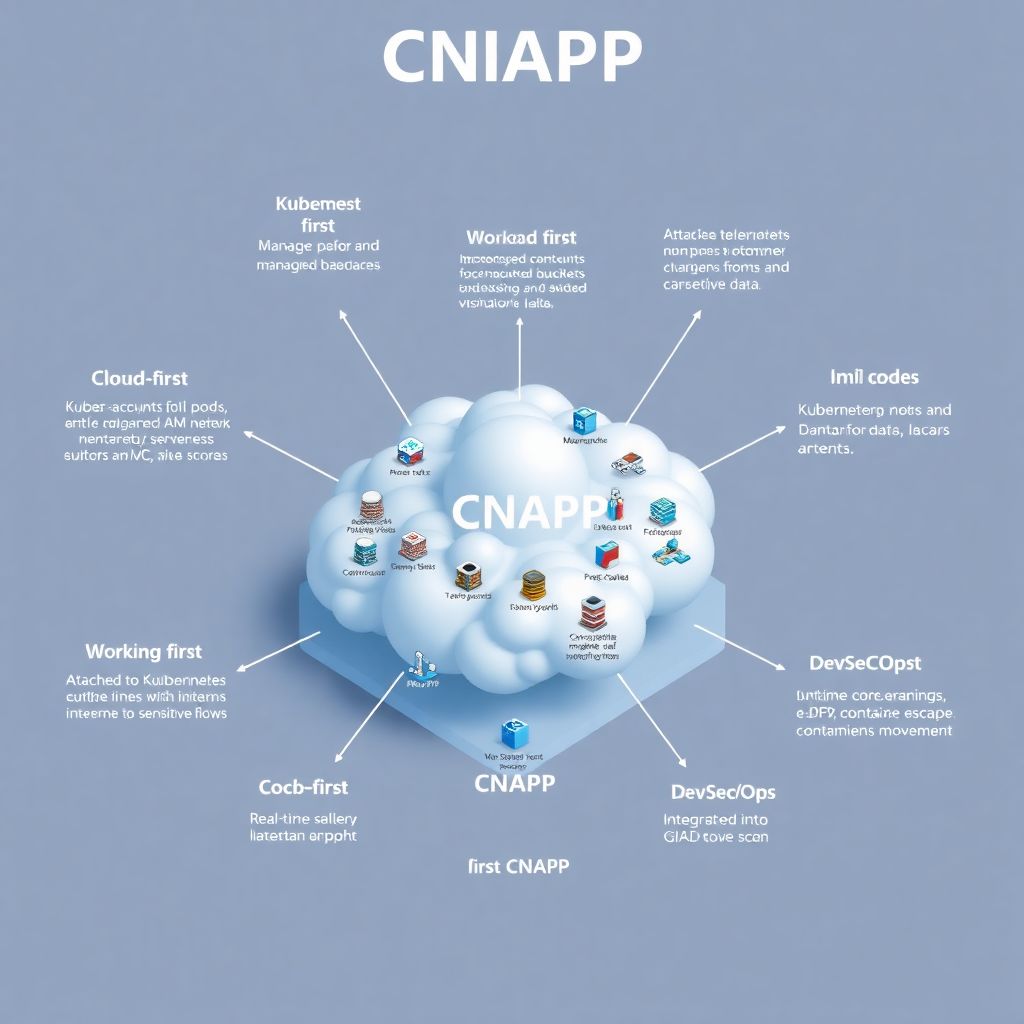
Behind the marketing, there are three dominant approaches you will meet when fizer uma ferramentas CNAPP comparação em um cenário real. First, there are “cloud‑first” platforms that grew out of CSPM: they are great at misconfiguration and identity risk in AWS, Azure and GCP, and later added container and workload protection. Second, you see “workload‑first” vendors that started with agent‑based CWPP and runtime protection, then expanded to IaC scanning and posture. Finally, some DevSecOps‑driven tools began in the CI/CD pipeline, focusing on code, IaC and container images, and only later attached cloud graph and runtime sensors. In practice the choice shapes your experience: cloud‑first tools shine for compliance and multi‑account visibility, workload‑first for production threat detection, pipeline‑first for developers who want fast feedback in pull requests.
How cloud‑first CNAPP feels in daily use

Cloud‑first CNAPP usually wins when your main headache is “what is exposed to the internet and who can touch what”. In a complex multi‑account setup, the platform ingests cloud configs, IAM policies, network paths and tags, then correlates them into attack paths. Day to day, security engineers use that graph to answer questions like whether a vulnerable container image actually sits on a public‑facing service with an over‑permissive role. The downside is that runtime details can be thinner: deep process‑level telemetry or in‑cluster networking may arrive later or require extra agents. For many organisations, though, especially in regulated industries, the clarity around misconfigurations, identities and data stores is exactly what unblocks cloud adoption while keeping auditors and risk officers relatively calm.
How workload‑first and DevSecOps‑first tools behave
Workload‑centric CNAPP platforms typically deploy DaemonSets or sidecars into Kubernetes, plus agents on VMs, giving you rich runtime information: processes, syscalls, network flows and sometimes eBPF‑level insight. That is extremely practical when you run critical production APIs and want to detect container escapes, crypto‑miners or lateral movement in real time. But because they started in runtime, their view of cloud posture and least‑privilege IAM can lag behind pure CSPM tools. DevSecOps‑first approaches live primarily in CI/CD: you wire them into GitHub Actions or GitLab, and developers see security feedback directly in merge requests. In practice, that reduces friction, yet some operations teams feel blind if the runtime, network and identity story is not equally mature, so many companies end up complementing them with a separate cloud‑graph engine.
Pros and cons you actually notice after rollout
Once the pilot is over, the trade‑offs become very concrete. Strongly integrated CNAPP solutions simplify onboarding and maintenance, because you run one collector framework and one policy engine. But they can feel opinionated: if your team wants to follow a different threat model or custom tagging strategy, you may fight the platform. Using a more modular stack gives you flexibility to pick the melhores plataformas CNAPP cloud native for each layer, yet you will inevitably spend more time stitching identities, namespaces and tags so alerts line up with owners. Another real‑world downside is noise: a “complete” CNAPP that scans code, IaC, cloud and runtime can easily drown engineers in findings unless you invest early into risk‑based prioritisation, suppression rules and a clear process for routing issues to the right product squads.
Technology advantages and hidden costs
Many teams are attracted by promises of a CNAPP ferramenta completa proteção aplicações cloud, covering everything from pre‑commit to production. The real win shows up when the tool can follow a single asset, like a microservice, through its full lifecycle: it starts as code in a repo, becomes a container image, is deployed into a cluster, gets an IAM role and then talks to data stores. Platforms that maintain that lineage allow you to ask which code change introduced a risky permission or vulnerable library. The trade‑off is complexity and data volume: collecting all these signals is not cheap, and you will notice infrastructure costs and data‑retention decisions appearing in your FinOps reviews. Under the hood, agentless approaches are simpler to operate but may miss runtime nuance, while rich agents demand closer collaboration with platform teams.
Practical criteria for choosing a CNAPP
In practice, the smartest way to choose is to start from two questions: where are your biggest incidents coming from, and how your teams already work. If most issues stem from misconfigured buckets and overly broad roles, lean toward cloud‑first soluções CNAPP para segurança em nuvem with strong identity and data discovery features. If past outages involved exploited runtime bugs or lateral movement inside clusters, runtime‑rich platforms will bring faster risk reduction. Then mirror your org structure: centralised security teams usually prefer powerful central consoles and policy‑as‑code, while product‑oriented organisations need tight integrations into backlog tools, chat and CI pipelines. Make vendors show a full flow: from a misconfiguration or CVE discovery to a merged fix, with real sample repos, not demo toy projects that hide integration gaps.
Thinking about pricing and licensing up front
Few teams plan enough time to dissect plataforma CNAPP preço e licenciamento, yet budget surprises are common. Some vendors price mostly by cloud asset count, which can explode when you aggressively scale microservices. Others bill per workload, vCPU or Kubernetes node, which looks fair at first but becomes painful for bursty, autoscaled workloads. You will also meet hybrids that combine a base platform fee with add‑ons for data security, CI integration or extended retention. From a practical standpoint, simulate at least two future states: your current footprint and a target architecture eighteen months ahead, including new regions and clusters. Also ask in detail how “shelf resources” are counted; in many environments, abandoned snapshots and forgotten test clusters quietly consume licenses and skew cost projections until someone audits them manually.
Embedding CNAPP into your delivery workflow
A CNAPP deployment only pays off when aligned with how code ships. For most teams, this means starting left with IaC and container scanning in CI, but gating production deployments only on a subset of high‑impact checks at first. Then you incrementally tighten policies as developers gain confidence and false‑positives drop. On the runtime side, begin in detect‑only mode so you can tune rules without breaking traffic, especially in legacy services with little documentation. Work with the platform team to standardise how clusters, namespaces and accounts are tagged, so CNAPP findings map clearly to owners. Over time, your goal is that engineers treat security findings like any other quality issue: they see them early, understand the context and can fix them with clear remediation snippets and sample pull requests.
Key CNAPP trends shaping 2026
Looking toward 2026, several trends are re‑defining what counts as melhores plataformas CNAPP cloud native. First is attack‑path analytics powered by graph and machine learning: instead of listing thousands of issues, tools show a handful of exploitable chains that start from the internet and end at sensitive data. Second, data‑aware CNAPP becomes the norm, linking workloads to specific datasets and classifying them by sensitivity. Third, we see deeper integration with developer platforms, where security policies become reusable building blocks in internal developer portals. Finally, as AI‑based assistants appear in consoles, expect more natural‑language investigations and auto‑generated remediation steps. Vendors that can combine these capabilities into soluções CNAPP para segurança em nuvem with predictable costs will dominate proofs of concept and long‑term renewals.
Pulling it together for your own environment
When all the buzzwords are stripped away, the useful question is which platform will help your particular teams ship safer changes faster. Use a ferramentas CNAPP comparação in a hands‑on pilot: define two or three realistic threat scenarios, mirror your actual CI/CD, include at least one messy legacy account and a production‑like Kubernetes cluster. Measure not just detections, but how quickly engineers understand and fix issues, how well the tool fits your tagging and RBAC model, and whether pricing stays sane under realistic growth. A CNAPP ferramenta completa proteção aplicações cloud will not remove the need for good architecture and disciplined operations, yet it can turn cloud‑native security from a scattered collection of ad‑hoc checks into a coherent, observable practice that scales with your product roadmap.