
Design hybrid and multi-cloud security by standardizing identity, network, and data controls across providers, centralizing visibility, and automating policy enforcement. Start with threat modeling, then build a minimal, repeatable architecture using provider-native controls plus carefully chosen third‑party tools. For teams in Brazil, align with corporate risk, local regulations, and realistic operational capacity.
Core security priorities for hybrid and multi-cloud
- Define a clear threat model, shared across teams, that covers on‑premises, IaaS, PaaS, and SaaS.
- Centralize identity, access, and entitlement management with strong authentication and least privilege.
- Design network segmentation and micro‑perimeters that are identical in every cloud.
- Classify data, encrypt everywhere, and control keys and lifecycle consistently.
- Unify logging, monitoring, and detection across providers with standard formats and labels.
- Automate policy enforcement, compliance checks, and drift remediation using code and pipelines.
Threat modeling and risk assessment tailored to hybrid/multi-cloud
Hybrid and multi-cloud security architecture is useful when you run workloads across data centers and at least two cloud providers (for example AWS + Azure, or Azure + GCP) and need consistent protection, especially for regulated workloads in Brazil.
You probably do not need a complex arquitetura de segurança em nuvem híbrida consultoria approach if:
- You have only one cloud provider and no on‑premises systems.
- Your workloads are low risk (no sensitive personal, financial, or strategic data).
- You lack basic security hygiene (no MFA, no backups, no logging); fix fundamentals first.
To start threat modeling that is realistic and safe for intermediate teams:
- Map business‑critical assets: list key applications, data stores, and identities across on‑prem, each cloud, and SaaS.
- Identify trust boundaries: note where traffic crosses from one environment to another (VPN, ExpressRoute, Direct Connect, SD‑WAN, public internet).
- List plausible threats: credential theft, misconfiguration, data exfiltration, ransomware, supply‑chain abuse, insider misuse.
- Prioritize by impact and feasibility: focus first on misconfigurations, exposed services, weak IAM, and unencrypted data.
- Translate into control requirements: for example, centralized logging, strong authentication, encryption standards, and approval workflows for changes.
Use this output to define a small, concrete scope for your first iteration of melhores práticas segurança nuvem híbrida e multi cloud, instead of trying to secure everything at once.
Unified identity, access and entitlement management across providers
Unifying identity is the highest‑leverage step in segurança em multi cloud serviços gerenciados, because it reduces duplicated permissions and inconsistent policies between providers.
Pre-requisites for identity unification
- Primary IdP: one central identity provider (for example Azure AD / Entra ID, Okta, or another standards‑based IdP).
- SSO and federation: support for SAML/OIDC for SaaS and cloud consoles, and for OIDC/OAuth2 for workloads.
- MFA across the board: preferably phishing‑resistant methods where possible (FIDO2, security keys, strong app‑based MFA).
Required tools and components
- Cloud IAM integrations:
- AWS: IAM Identity Center or IAM federation to your IdP.
- Azure: native integration with Azure AD / Entra ID.
- GCP: Workforce / Workload Identity Federation.
- Group-based access control: map cloud roles to IdP groups; no direct user‑to‑role binding.
- Privileged access management: just‑in‑time elevation for admin roles and emergency break‑glass accounts.
- Entitlement management: a plataforma de gestão de segurança multi cloud or CIEM tool to discover excessive privileges and unused roles.
Access management requirements and safe practices
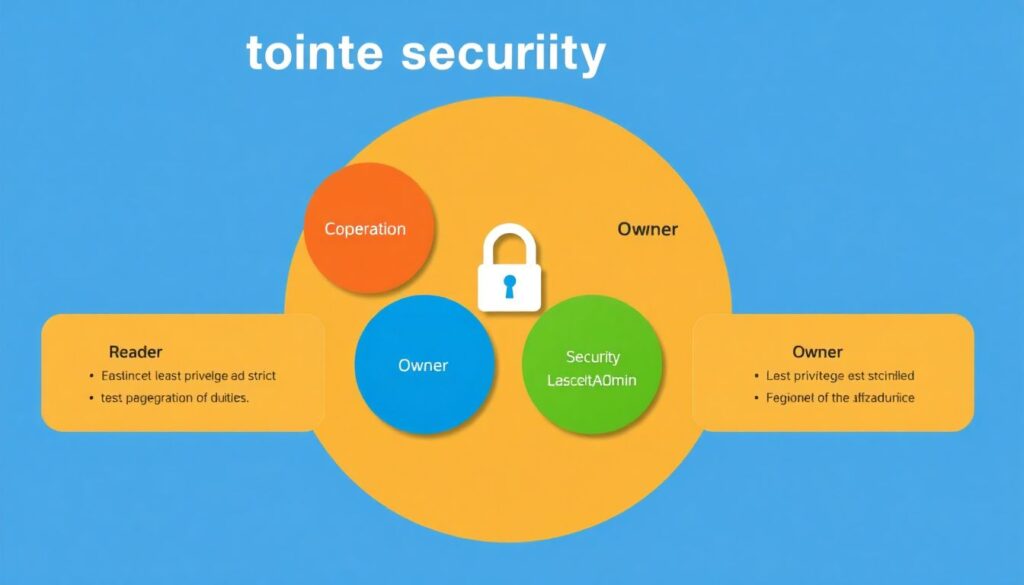
- Standard role catalog: define a small, reusable set of roles (for example, Reader, Operator, Owner, SecurityAdmin) that works across all providers.
- Least privilege by default: deny administrative roles to normal users; separate break‑glass accounts without email or normal SSO.
- Segregation of duties: different groups for deployment, security, and audit; do not mix them into one super‑admin group.
- Approval and logging: all high‑privilege grants require approval and are fully logged in a central audit trail.
- Regular entitlement reviews: at least quarterly, including automated detection of unused and high‑risk permissions.
Network architecture: segmentation, connectivity and micro‑perimeters

This section describes a step‑by‑step, safe method for designing consistent network security across hybrid and multi-cloud environments, including how to place micro‑perimeters and avoid accidental exposure.
-
Define standard network zones
Create a small set of zones that will exist in every environment: for example public edge, partner DMZ, application, and data.
- On‑prem: map existing VLANs or segments to the same names.
- Cloud: use VPCs/VNets and subnets to mirror the same structure.
-
Choose secure connectivity patterns
Select how environments connect, preferring private links and VPN over direct public exposure.
- Use site‑to‑site VPN or dedicated links (ExpressRoute, Direct Connect, Cloud Interconnect) between data centers and each cloud.
- Avoid full mesh; route traffic via a small number of controlled hubs.
- For Brazil branches, use SD‑WAN only if you can manage security policies centrally.
-
Implement hub-and-spoke per cloud
In each provider, create a central hub VPC/VNet for shared services (firewalls, proxies, inspection) and connect application spokes to it.
- Block direct internet access from application and data subnets.
- Force egress through managed appliances or cloud‑native firewalls.
-
Place micro-perimeters around critical workloads
For systems with sensitive data, add a tighter perimeter around the workload, not just around the subnet.
- Use security groups/NSGs to limit which ports and identities can talk to the workload.
- Expose only necessary ports and protocols; prefer private endpoints to public IPs.
-
Standardize network policies as code
Describe firewalls, routing, and security groups in code using Terraform, ARM/Bicep, or CloudFormation, and store them in version control.
- Apply the same templates to all regions and clouds to reduce drift.
- Review and test changes in a non‑production environment first.
-
Continuously validate exposure
Regularly verify that no unexpected services are internet‑exposed and that all traffic paths are intentional.
- Run external attack surface mapping against your domains and IP ranges.
- Use cloud‑native analyzers and ferramentas de segurança para ambientes multi cloud to detect open ports and misrouted traffic.
Fast-track mode for network security
- Create a minimal hub‑and‑spoke design in each cloud, blocking direct internet from application and data subnets.
- Allow only VPN or private links between on‑prem and cloud workloads.
- Lock down security groups/NSGs to necessary ports from specific subnets and service identities.
- Scan for public IPs and open ports weekly, and immediately remove anything not strictly required.
Data protection strategy: classification, encryption and lifecycle controls
Use this checklist to confirm that your data security controls are consistently applied across on‑premises, SaaS, and multiple clouds.
- You have a simple data classification (for example: Public, Internal, Confidential, Restricted) applied to major data stores in every environment.
- All storage for Confidential/Restricted data is encrypted at rest with cloud‑native or HSM‑backed keys that you manage.
- Transport encryption is enforced using TLS for all services, including internal APIs and database connections.
- Key management follows a uniform policy: defined key owners, rotation periods, and usage restrictions across providers.
- Backups are encrypted, stored in a separate account/subscription/project, and tested regularly for restore.
- Access to production data is separate from development/test; synthetic or masked data is used when possible.
- Data retention and deletion are implemented via automated policies for logs, object storage, and databases.
- Data residency requirements for Brazil and other relevant jurisdictions are documented and enforced in deployment templates.
- Critical SaaS services are covered: access reviews, export controls, and encryption settings are aligned with your cloud posture.
Visibility and detection: centralized logging, monitoring and IR playbooks
Centralizing observability and detection lets you correlate incidents across providers and react quickly.
| Approach | Description | Main advantages | Key trade-offs |
|---|---|---|---|
| Provider-native only | Use each cloud's SIEM/monitoring (for example, CloudWatch, Sentinel, Cloud Logging) with minimal integration. | Fast to start, low initial complexity, good for single‑cloud teams. | Poor cross‑cloud correlation, duplicated rules, harder to manage hybrid environments. |
| Central third-party SIEM | Ship logs from all clouds, on‑prem, and SaaS into one external SIEM. | Unified rules and dashboards; easier to build cross‑environment detection and reporting. | More cost and tuning work; must ensure secure log collection and privacy compliance. |
| Hybrid model | Use provider-native tools for first‑line alerts, forward key events to a central SIEM. | Balances depth of native detections with unified view for high‑priority events. | Requires clear ownership and runbooks for where to triage which alerts. |
Frequent mistakes to avoid when building visibility and detection for segurança em multi cloud serviços gerenciados:
- Relying on default log settings, which often exclude important audit or network events.
- Sending logs to storage without parsing or normalizing fields such as user, resource, and action.
- Lack of clear retention policies, leading either to missing data during incidents or uncontrolled growth and high cost.
- Not testing incident response playbooks for multi-cloud scenarios (for example, simultaneous alerts in AWS and Azure).
- Ignoring SaaS logs (identity provider, collaboration tools, code repositories) that often show early signs of compromise.
- Creating hundreds of detection rules without tuning, causing alert fatigue and ignored dashboards.
- Not tagging resources with environment, owner, and data classification, which complicates triage and containment.
Governance, compliance and automated policy enforcement
There are several viable ways to manage governance in hybrid and multi-cloud. Choose one that matches your size, expertise, and regulatory context in Brazil.
Option 1: Cloud-native governance with light integration
Use each provider's controls (for example, Azure Policy, AWS Organizations and SCPs, GCP Organization Policies) plus a minimal central view.
- Suitable when: most workloads live in a single primary cloud and others are small or experimental.
- Benefits: fast to implement, deep integration, low extra tooling cost.
- Risks: inconsistent controls across clouds if you do not actively align policies.
Option 2: Central policy-as-code layer
Define guardrails and checks (for example, Terraform policies, Open Policy Agent, or policy packs) that apply regardless of provider.
- Suitable when: you already deploy via infrastructure‑as‑code for most workloads.
- Benefits: one policy definition reused across environments; easier to prove consistency for audits.
- Risks: requires disciplined CI/CD pipelines and strong collaboration between security and platform teams.
Option 3: Managed multi-cloud security platforms
Adopt a plataforma de gestão de segurança multi cloud (CSPM/CNAPP) to discover resources, enforce baselines, and monitor compliance automatically.
- Suitable when: you have many accounts/subscriptions/projects and limited internal capacity.
- Benefits: fast visibility, built‑in benchmarks, and standardized melhores práticas segurança nuvem híbrida e multi cloud.
- Risks: vendor lock‑in, cost, and the need to tune findings to your risk appetite.
Option 4: External advisory and periodic reviews
Engage arquitetura de segurança em nuvem híbrida consultoria partners for design and periodic assessments, while keeping operations in‑house.
- Suitable when: you lack deep internal cloud security skills but have a stable environment.
- Benefits: external validation, updated knowledge of tools and regulations in pt_BR context.
- Risks: dependency on vendor schedules and quality; must retain enough internal knowledge to operate safely.
Operational gotchas and concise fixes
How do I start if my current environment is messy and undocumented?
Begin with inventory and logging: enable basic logs, tag resources, and map accounts/subscriptions/projects. Then pick one critical business application and apply the described identity, network, and data patterns there first, instead of trying to fix everything at once.
Is it realistic to use only native cloud tools for security?
It is realistic for small or single‑cloud environments, but in true multi-cloud you typically need at least one cross‑cloud tool for visibility or governance. Start native, then add external capabilities where you clearly hit limits, especially for correlation and unified policy.
How can I avoid creating shadow admin accounts across providers?
Centralize identity in your IdP, forbid local cloud users for administrators, and enforce group‑based access. Review accounts regularly and require just‑in‑time elevation for high‑privilege roles, with clear approvals and logging.
What is the safest way to expose services to the internet?
Place public‑facing services in a dedicated edge zone behind managed load balancers and web application firewalls. Use TLS everywhere, restrict source IPs where possible, and never expose admin interfaces, databases, or message queues directly to the internet.
How do I keep costs under control while improving security?
Prioritize high‑impact, low‑complexity controls: MFA, basic network segmentation, encryption at rest, and centralized logging with tuned retention. Use cost alerts, storage lifecycle rules, and periodic rule tuning to prevent SIEM and logging costs from growing without oversight.
How often should I review my hybrid and multi-cloud security architecture?
Review the overall architecture at least annually, and after major changes such as new providers, mergers, or regulatory updates. Run smaller quarterly reviews focused on access, exposed services, and detection coverage to ensure configurations match your intended design.
Do I need separate runbooks for each cloud provider?
Create unified, provider‑agnostic playbooks for common incident types, then add short provider‑specific sections with exact consoles, CLI commands, and resource names. This balances consistency with practical guidance during an incident.