
To run continuous vulnerability assessment in serverless without hurting performance, separate scanning from the hot request path, use agentless integrations, and rely on asynchronous analysis of code, dependencies, and configurations. Combine build-time checks, passive telemetry, and sampled runtime tests, then tune concurrency, timeouts, and exclusions until latency and cost stay within your SLOs.
Snapshot: goals for continuous, non‑intrusive serverless scanning
- Maintain continuous, automated vulnerability discovery without increasing cold starts or p95 latency for serverless functions.
- Use agentless ferramentas de segurança para aplicações serverless to avoid code changes and heavy sidecars.
- Offload heavy scans to asynchronous pipelines and out-of-band testing environments.
- Correlate IaC, code, and runtime findings to prioritize exploitable issues, not theoretical noise.
- Integrate approvals and blocks into CI/CD instead of adding manual review steps.
- Measure impact (invocation duration, memory, error rate, cost) and enforce clear SLOs for security overhead.
Mapping the serverless attack surface while honoring cold-start limits
Continuous assessment makes sense when you already run production on AWS Lambda, Azure Functions, Google Cloud Functions, or similar and you cannot afford visible performance regressions. The goal is to understand where you are exposed without turning every function invocation into a mini security scan.
You should use this approach if:
- Your workloads process sensitive data (PII, financial, health, internal business logic).
- You deploy frequently (daily/weekly) and need automated regression checks instead of sporadic pen tests.
- Your team is comfortable with CI/CD and basic observability (logs, metrics, traces).
- You must demonstrate due care to auditors or customers, but you have tight latency budgets.
You should not start here (or should simplify drastically) if:
- You have no basic monitoring; you do not yet track cold starts, p95 latency, or error rates.
- Your deployment is small, experimental, or temporary and manual scans are enough.
- You lack minimal IAM governance; giving scanners broad access would introduce more risk than value.
First stabilise your platform: implement basic alerts, logging, and least-privilege IAM. Only then introduce a serviço de avaliação contínua de vulnerabilidades em cloud that maps functions, triggers, roles, secrets, and networks without touching the hot path.
Choosing assessment modes: passive telemetry, asynchronous probes, and hybrid models
Continuous serverless assessment is a combination of modes. Before choosing, clarify what you can connect and what you must not touch in production.
Core access and environment requirements
- Cloud account with serverless workloads (e.g., AWS account with Lambda + API Gateway + DynamoDB/SQS; similar for Azure/GCP).
- IAM roles for read-only discovery of:
- Functions, IAM roles, policies, layers, environment variables, event sources.
- Storage, queues, APIs, VPCs, security groups, secrets managers.
- Access to CI/CD (GitHub Actions, GitLab, Bitbucket, Azure DevOps, Jenkins, etc.) for integrating scanners.
- Access to code repositories and IaC (Terraform, AWS SAM, Serverless Framework, CloudFormation, Pulumi, ARM/Bicep).
Tooling categories to combine
- Code and dependency analysis (shift-left)
- SAST and SCA tools that support serverless runtimes (Node.js, Python, Java, .NET, Go).
- IaC scanners for Terraform/CloudFormation/SAM/Serverless configurations.
- Cloud configuration and posture
- CSPM or dedicated plataforma de monitoramento de segurança e performance serverless with agentless integrations.
- Support for least-privilege analysis of IAM roles used by your functions.
- Passive telemetry and logs
- Cloud-native logging (CloudWatch Logs, Azure Monitor, Cloud Logging) and tracing (X-Ray, Application Insights, Cloud Trace, OpenTelemetry).
- SIEM or log analytics workspace to store and query events.
- Asynchronous probing and test harnesses
- Ability to invoke functions in:
- Dedicated test environments; or
- Production with synthetic events at low, controlled rates.
- Optional integration with DAST or API security tools running against API Gateway/Functions endpoints.
- Ability to invoke functions in:
Recommended setup patterns for intermediate teams
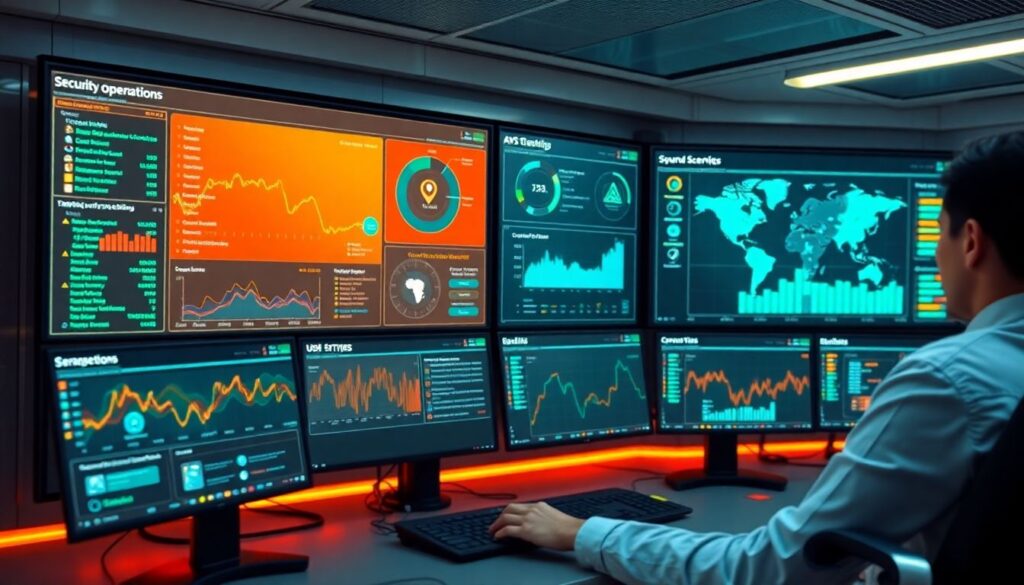
- For AWS: combine melhores soluções de segurança para AWS Lambda e serverless (agentless cloud security platforms, Lambda-aware scanners) with:
- Git-based SAST/SCA and IaC scanning on pull requests.
- CloudWatch/X-Ray/OpenTelemetry telemetry feeding into your SIEM.
- For Azure and GCP: use native security centers plus third-party ferramentas de segurança para aplicações serverless that read resource metadata, logs, and traces without agents.
Building agentless, event-driven vulnerability pipelines
This section provides a safe, step-by-step recipe for como fazer análise de vulnerabilidades em ambiente serverless continuously, using agentless and asynchronous techniques.
-
Inventory functions and classify sensitivity.
Map all functions, triggers, and data stores in each account and region, then tag them by environment (dev/stage/prod) and data sensitivity.- Use cloud-native tags/labels (e.g.,
env=prod,data=pii,owner=team-x). - Flag critical functions where latency SLOs are strict; these will get stricter scanning rules.
- Use cloud-native tags/labels (e.g.,
-
Connect an agentless cloud security platform.
Grant a read-only role to a serviço de avaliação contínua de vulnerabilidades em cloud that supports serverless discovery.- Use least privilege: start from vendor-provided policies, then remove unused permissions where possible.
- Validate that the platform only reads metadata, logs, and configuration; it must not modify resources.
-
Wire up CI/CD for code, dependencies, and IaC.
Add stages to your build pipelines for SAST, SCA, and IaC scanning before packaging serverless deployments.- Fail builds on high/critical findings; require security approval or fix before merge.
- Store scan results as build artifacts and send summaries to chat or issue trackers.
-
Create safe test harnesses for functions.
For each API or event type, define synthetic test events and staging endpoints.- Run DAST/API security tools against staging endpoints, not directly against production, whenever possible.
- If you must test in production, configure extremely low-frequency synthetic traffic and strict rate limits.
-
Enable passive runtime telemetry and anomaly rules.
Turn on tracing and structured logging for key functions, then integrate them with your security tooling.- Log input validation failures, authorization decisions, and unusual errors with clear identifiers.
- Create detection rules for anomalies: spikes in 4xx/5xx, timeouts, new error types, or unusual payload patterns.
-
Automate triage and remediation workflows.
Define how findings flow from scanners to developers and security engineers.- Send critical issues directly into Jira/Azure Boards/GitHub Issues with ownership tags.
- Set SLA targets (for example: fix high-risk issues in important functions before the next release window).
-
Guard production with non-blocking but visible checks.
Add validation in deployment pipelines that reads from the latest scan results.- Block new deployments if introducing high-risk vulnerabilities or misconfigurations.
- Allow low-risk findings with clear warnings and tracking tickets instead of silently ignoring them.
-
Tune coverage and load to respect latency budgets.
Start with conservative settings, then slowly increase coverage.- Limit synthetic security tests to off-peak hours and lower tiers (dev/stage) first.
- Exclude ultra-latency-sensitive functions from active probing; rely on static and passive checks only.
Fast-track mode: minimal setup for safe continuous scanning
- Connect an agentless cloud security platform with a read-only role to discover all serverless resources.
- Add SCA + IaC scanning to your main CI pipeline, blocking only high-risk findings at first.
- Enable logging and tracing on critical functions and send logs to a central place for anomaly detection.
- Create a small set of staging endpoints and run scheduled DAST/API scans only there.
- Review telemetry weekly; adjust exclusions and limits where latency or cost get close to your thresholds.
Low-overhead runtime observability: tracing, sampling and anomaly detection
Use this checklist to confirm that observability is giving you security value without hurting performance.
- Tracing is enabled only for key transactions and sampled at a rate that does not noticeably increase function duration.
- Structured logs are short, avoid sensitive data, and include identifiers that link to specific invocations and users.
- Error, timeout, and throttling rates are monitored with alerts for unusual spikes per function and per region.
- A baseline of normal invocation patterns (traffic by time, size, and source) exists for comparison.
- Anomaly rules detect unusual payload shapes, unexpected HTTP methods, or new error messages in logs.
- Any new security rule or detector is first tested in detect-only mode before enabling blocking actions.
- Log retention is configured to be long enough for forensic analysis but not so long that storage becomes a cost issue.
- Developers can easily correlate a vulnerability alert with traces and logs from the same timeframe.
- Tracing/telemetry libraries are updated and tested regularly to ensure they are compatible with your runtimes.
Shift-left integration: IaC, build-time and pre-deploy vulnerability gates
Common mistakes when integrating shift-left security with serverless can quietly undermine your efforts.
- Running IaC and dependency scans only on a nightly job instead of on every pull request and commit to main branches.
- Using scanners that do not understand serverless-specific resources, such as event source mappings, layers, and permissions.
- Blocking on long lists of low/medium findings, causing developers to bypass or ignore the gates.
- Failing builds without clear, actionable remediation guidance linked to each finding.
- Letting multiple tools create duplicate or conflicting alerts, overwhelming teams with noise.
- Not aligning vulnerability severity thresholds with business risk and data sensitivity of each function.
- Skipping automated checks for environment variables, secrets injection, and network egress restrictions in serverless configs.
- Hard-coding security rules instead of versioning them as code (e.g., shared policies or config files in the repo).
- Ignoring base images and layers for container-based serverless (e.g., Lambda container images) in dependency scanning.
Operational metrics and tuning: measuring scan impact and enforcing SLOs
If full continuous assessment feels too heavy, these alternative patterns may fit your stage and constraints better.
- Scheduled, off-peak vulnerability sweeps.
Run static and configuration scans frequently (per commit), but reserve runtime probing to scheduled windows (e.g., night or low-traffic periods) to avoid any impact on user experience. - Canary and blue/green security testing.
Route a small percentage of traffic to a canary or pre-production environment where more aggressive debugging, tracing, and active security tests run, while the majority of users see only the stable path. - Security-by-snapshot for low-criticality workloads.
For non-critical apps, perform periodic snapshots of configurations and code for scanning, instead of always-on assessment, and accept slower detection in exchange for lower operational complexity. - Managed security services for serverless.
Outsource part of the work to providers that operate a dedicated plataforma de monitoramento de segurança e performance serverless, especially if your team lacks in-house expertise or time.
Operational clarifications and rapid troubleshooting tips
How can I verify that scanning is not increasing my Lambda cold starts?
Compare cold start frequency and average duration before and after enabling security tools, using metrics from CloudWatch or your APM. If you see increases, reduce tracing/sample rates, disable any in-function agents, and move heavy checks to asynchronous pipelines.
What is the safest way to start DAST against serverless APIs?
Begin in a dedicated staging environment with realistic but non-production data. Use rate limits and time windows, then review logs and metrics for errors or slowdowns before considering limited, low-volume production testing.
How often should I scan dependencies for vulnerabilities in serverless projects?
Run dependency (SCA) scans on every pull request and on each merge to main, plus a scheduled scan of all repos. This keeps findings close to code changes and avoids large, infrequent remediation batches.
What if my team complains about too many vulnerability alerts?
First tune the tools: suppress duplicates, focus on exploitable issues, and adjust thresholds per environment. Then integrate alerts with issue trackers and define ownership so each team receives only relevant, actionable findings.
Can I run security tools inside the function runtime itself?
You technically can, but it often increases duration and memory usage. Prefer agentless and out-of-band techniques; only add in-function libraries when there is a clear benefit and after benchmarking their impact.
How do I prioritize vulnerabilities across many functions?
Combine vulnerability severity with business impact: data sensitivity, external exposure, and traffic volume. Use tags and metadata to sort issues so that internet-facing, high-traffic functions with sensitive data come first.
What metrics should I track to prove that security is not hurting performance?
Track p95 and p99 latency, error and timeout rates, cold start frequency, and cost per million invocations before and after enabling security features. Review these metrics regularly and adjust sampling, schedules, and exclusions when they drift.