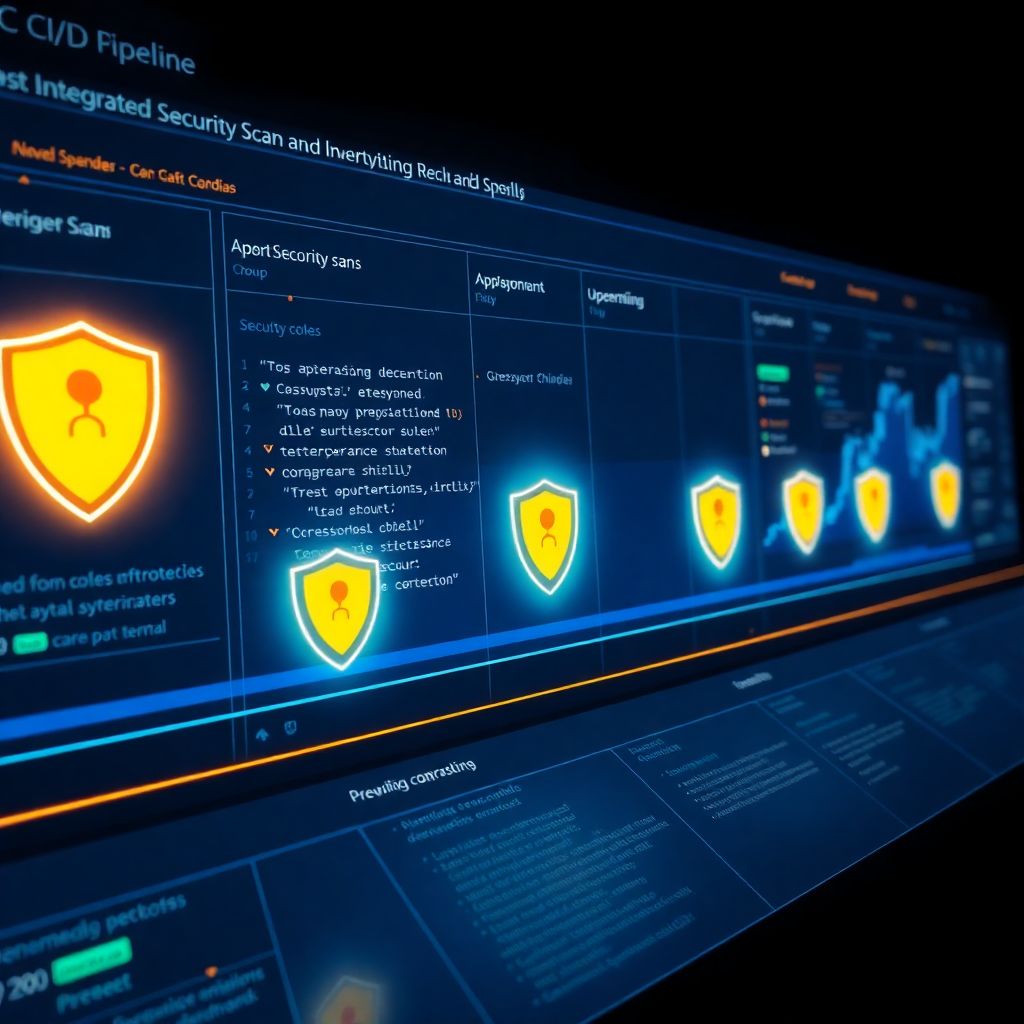
To secure DevOps and DevSecOps environments, embed security controls directly into your CI/CD pipeline. Start with threat modeling, then automate SAST, SCA, DAST and secrets scanning at appropriate stages. Use policy-as-code to enforce rules, monitor continuously, and keep the setup simple enough that teams actually maintain and improve it over time.
Critical security objectives for DevOps pipelines
- Identify and prioritize risks early using lightweight threat modeling aligned with each CI/CD pipeline.
- Automate repeatable checks: SAST, SCA, unit tests with security assertions and basic secrets scanning.
- Cover runtime behaviors with DAST, contract tests and environment hardening for all exposed services.
- Enforce guardrails through policy-as-code and clearly defined pipeline gates instead of ad hoc approvals.
- Protect secrets, rotate credentials reliably and verify software supply chain integrity end-to-end.
- Maintain continuous monitoring, alerting and feedback loops so teams can remediate quickly and learn.
- Align tooling and controls with team maturity, avoiding excessive false positives that block delivery.
Threat modeling and risk prioritization for CI/CD
Threat modeling for CI/CD focuses on how code, artifacts, secrets and infrastructure definitions flow across your pipeline. It is essential when you start designing a pipeline ci cd seguro melhores práticas approach and want to decide where each control belongs.
This approach fits well when:
- You have multiple services or microservices and different pipelines that share infrastructure.
- Regulated workloads (finance, health, government) run on your clusters or cloud accounts.
- You are planning to adopt new ferramentas de segurança para devops e devsecops and must justify their placement.
- Incidents or penetration tests already revealed issues related to CI/CD misconfigurations.
You should not over-invest in detailed, heavyweight threat modeling when:
- Your team is very small and still consolidating a basic CI/CD pipeline.
- There is no stable architecture yet (rapid prototyping, frequent tech-stack changes).
- You lack minimal observability, so you cannot validate whether controls are effective.
In these cases, start with a simple checklist:
- List repos, pipelines and environments (dev, test, staging, prod, shared tools).
- Map who or what can push code, artifacts and config into each environment.
- Identify where secrets are stored or passed (variables, files, vaults).
- Mark where you already run tests and where you can add security checks with minimal friction.
- Assign a risk level (low/medium/high) to each environment and connection.
Shift-left testing: automating SAST, SCA and unit-level checks
To deliver safe automation, you need a clear set of tools, permissions and minimum practices before starting integração de testes de segurança no ci cd. The following checklist covers typical requirements.
Tooling and access prerequisites
- Source code access for SAST:
- Read access to all repositories (app code, IaC, pipelines).
- Ability to run in MR/PR context to comment on findings.
- Dependency metadata for SCA:
- Access to lockfiles and manifests (package-lock, requirements, pom, go.mod, etc.).
- Connection to a vulnerability database or SaaS SCA engine.
- Build artifacts:
- Container images in registries.
- SBOM generation step where possible.
- Pipeline permissions:
- Rights to add new jobs/stages and required variables.
- Service accounts or tokens for scanners, scoped with least privilege.
- Developer workflow integration:
- IDE plugins or pre-commit hooks for SAST where feasible.
- Agreed SLAs for fixing findings per severity.
Typical tools by stage
Below is a qualitative comparison of common categories of ferramentas de segurança para devops e devsecops. Use it as a starting point when selecting or evaluating plataformas devsecops para empresas.
| Tool category | Example tools (open source / commercial) | Where to run in pipeline | Typical false-positive level |
|---|---|---|---|
| SAST | Semgrep, SonarQube, Checkmarx, Snyk Code | On pull/merge requests and nightly full scans | Medium to high, requires tuning and rule selection |
| SCA | OWASP Dependency-Check, Trivy, Snyk, Mend, GitHub Dependabot | On dependency change and scheduled baseline jobs | Medium, often inflated by unexploitable or indirect issues |
| Container and IaC scanning | Trivy, Grype, Checkov, Terraform Compliance | On image build and IaC plan/apply stages | Low to medium, depending on configuration strictness |
| DAST | OWASP ZAP, Burp Suite Enterprise, Netsparker | On deploy to test or ephemeral review environments | Medium, often related to non-critical anomalies |
| Secrets scanning | Gitleaks, TruffleHog, GitHub secret scanning | On commit, MR/PR, and periodic full history scans | Low to medium, improved by adding allowlists |
Example CI snippet for shift-left checks
The following pseudo-example illustrates how to wire SAST and SCA into a typical pipeline:
stages:
  - test
  - security

sast:
  stage: security
  script:
    - semgrep --config auto
  allow_failure: true  # start as soft-fail, later make it blocking
  artifacts:
    when: always
    paths: [reports/semgrep.json]

sca:
  stage: security
  script:
    - trivy fs --scanners vuln,secret .
  allow_failure: true
Risk tradeoff: allow_failure reduces friction initially, but vulnerabilities may reach production; define a clear date to switch to blocking for critical issues.
Runtime and integration security: DAST, IAST, and contract verification
This section provides a safe, step-by-step recipe to integrate runtime checks into your CI/CD pipeline without breaking environments.
-
Define safe targets and environments
Select non-production environments dedicated for security testing, such as ephemeral review apps or a staging namespace.
- Ensure test data does not contain real personal or financial information.
- Restrict network access so scanners cannot reach unrelated systems.
-
Prepare DAST configuration
Choose your DAST tool and configure safe defaults first.
- Limit attack strength and enable authentication using dedicated test accounts.
- Whitelist target URLs and disable dangerous payloads if your stack is sensitive.
-
Automate DAST in the pipeline
Add a DAST stage that runs only after a successful deploy to the test environment.
- Pass the application URL as a variable.
- Generate reports in machine-readable formats (JSON, SARIF) for later processing.
- Start with non-blocking mode and gradually introduce gates on critical findings.
-
Instrument IAST or runtime sensors
For complex apps, use an IAST agent or lightweight runtime sensor attached to the application process.
- Deploy agents in containers or application servers only in test/staging at first.
- Monitor performance impact during load tests and tune sampling rates.
-
Implement contract and integration verification
Use contract testing to ensure services exchange data safely and consistently.
- Define JSON or HTTP contracts for each API, including security-related headers.
- Run contract tests after each integration deploy to detect breaking changes early.
-
Add risk-based pipeline gates
Translate runtime scan results into clear pass/fail rules.
- Example: block promotion if any critical DAST issue appears on production-like endpoints.
- Send summaries to teams via chat or issue trackers instead of raw scan dumps.
Fast-track mode for runtime and integration security
When you need quick coverage with minimal risk, apply this shortened algorithm:
- Pick one safe staging environment and one DAST tool with recommended defaults.
- Add a single DAST job after deploy, non-blocking, just to generate reports.
- Enable basic API contract tests for your most critical service.
- After one or two sprints, convert critical DAST findings into a blocking gate.
Policy-as-code and pipeline gatekeeping: automated enforcement points
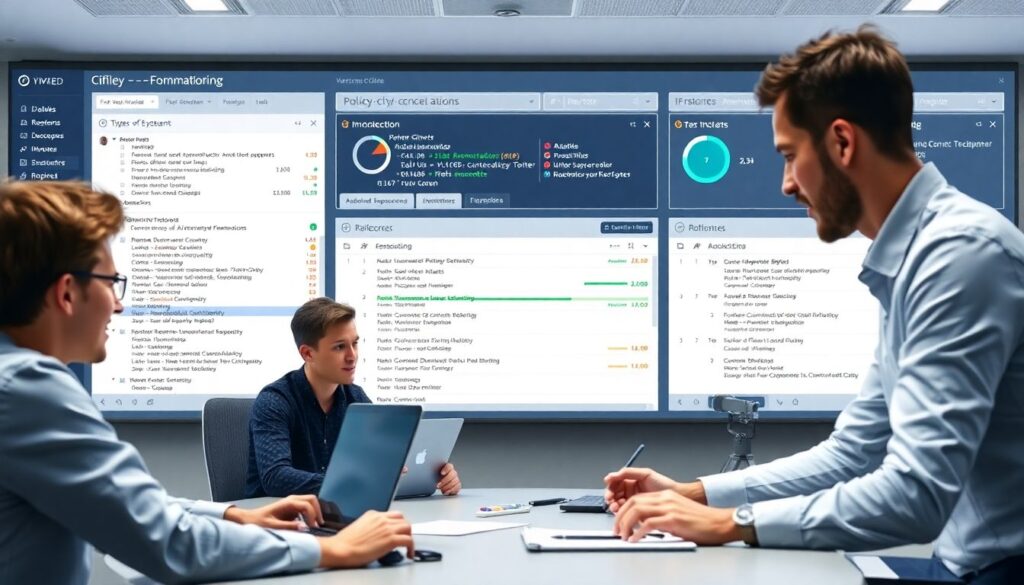
Use policy-as-code (for example with OPA or Conftest) to keep rules versioned and testable. The checklist below helps you validate that your enforcement setup works in practice.
- Policies for CI/CD configs are stored in a dedicated repository and reviewed through normal code review.
- Each critical policy has at least one automated test to avoid silent breakage.
- Pipeline runs fail when policies are violated, with clear error messages for developers.
- There is a documented process to request temporary exceptions, with expiration dates.
- Policies cover infrastructure as code (Terraform, Kubernetes manifests, cloud templates).
- Image promotion to production requires passing all policy checks on image provenance and signatures.
- Team members can run policy checks locally or in pre-commit hooks before pushing.
- Auditors or security leads can see a simple report of policy violations over time.
Risk tradeoff: overly strict policies can block delivery; start with logging-only mode, then selectively enforce rules tied to real incidents or compliance requirements.
Secrets management, credential rotation and software supply chain defenses
Secrets and supply chain controls are frequent weak spots. Avoid the following common mistakes:
- Storing API keys or passwords directly in repository files instead of using a secure vault.
- Sharing long-lived credentials among multiple services or teams, making incident response complex.
- Failing to rotate tokens and keys after staff changes, provider migrations or suspected leaks.
- Allowing CI runners broad cloud permissions instead of following least privilege for each pipeline.
- Skipping image signing and provenance checks, so untrusted images can be deployed.
- Not generating or storing SBOMs, making it hard to answer which components are affected by new CVEs.
- Blindly trusting third-party actions or pipeline plugins without reviewing their source and update policy.
- Running build tools from unpinned versions or unverified sources, increasing supply chain risk.
To mitigate these, consider using curated plataformas devsecops para empresas that integrate vaults, signing and SBOM management, or engage serviços de consultoria em segurança devops when internal expertise is limited.
Monitoring, alerting and feedback loops for continuous compliance
Continuous compliance depends on timely and actionable feedback. Different organizations can choose among these patterns:
- Security dashboards inside existing CI/CD or Git platforms:
- Best when teams already live inside the platform and prefer low context switching.
- Good for small to medium teams starting integração de testes de segurança no ci cd.
- Centralized security observability platform:
- Aggregates logs, metrics and alerts from pipelines, clusters and cloud accounts.
- Works well for larger organizations or regulated sectors that need cross-team visibility.
- ChatOps-driven feedback loops:
- Pipeline security events are posted to chat channels with short, actionable summaries.
- Useful for distributed teams and incident response workflows.
- Hybrid model with periodic reviews:
- Combines automated alerts with monthly or quarterly risk review meetings.
- Fits organizations that must balance agility with formal governance.
Practical implementation hurdles and quick fixes
How do I start securing pipelines without overwhelming my team?
Begin with one project and a minimal set of scanners: SAST, SCA and secrets scanning. Run them in non-blocking mode, fix high-risk issues, then expand to DAST and policy-as-code. Document the final pipeline as your reference template.
What if DAST breaks the test environment or causes instability?

Run DAST against isolated, disposable environments with synthetic or anonymized data. Use conservative scan profiles and limit concurrency. Monitor resource usage and adjust schedules so scans do not overlap with heavy load tests.
How can I manage false positives from multiple tools?
Prioritize tools that support tuning by rule or directory. Start with recommended rule sets, then maintain a shared suppression file reviewed by security. Regularly review top recurring false positives and either fix root causes or tune them out.
Do I need a dedicated DevSecOps platform to be secure?

No, but a good platform can simplify integration, especially for larger teams. Evaluate plataformas devsecops para empresas based on how well they connect to your existing CI/CD and cloud providers, not just on feature lists.
When should I involve external DevOps security consultants?
Consider serviços de consultoria em segurança devops when you have complex compliance requirements, frequent incidents or limited internal expertise. Use them to design reference architectures, assess risk and coach internal teams rather than fully outsourcing security.
How do I justify the cost of new security tools?
Map each tool to specific risks and incidents, such as leaked secrets or vulnerable images. Estimate time saved compared to manual reviews and demonstrate how controls support business goals like uptime, compliance and faster incident response.
What if developers resist stricter security gates?
Involve developers early in rule design, start with observability-only mode and share clear metrics. Show examples where early blocking would have prevented real production issues, and agree on gradual tightening of thresholds over time.