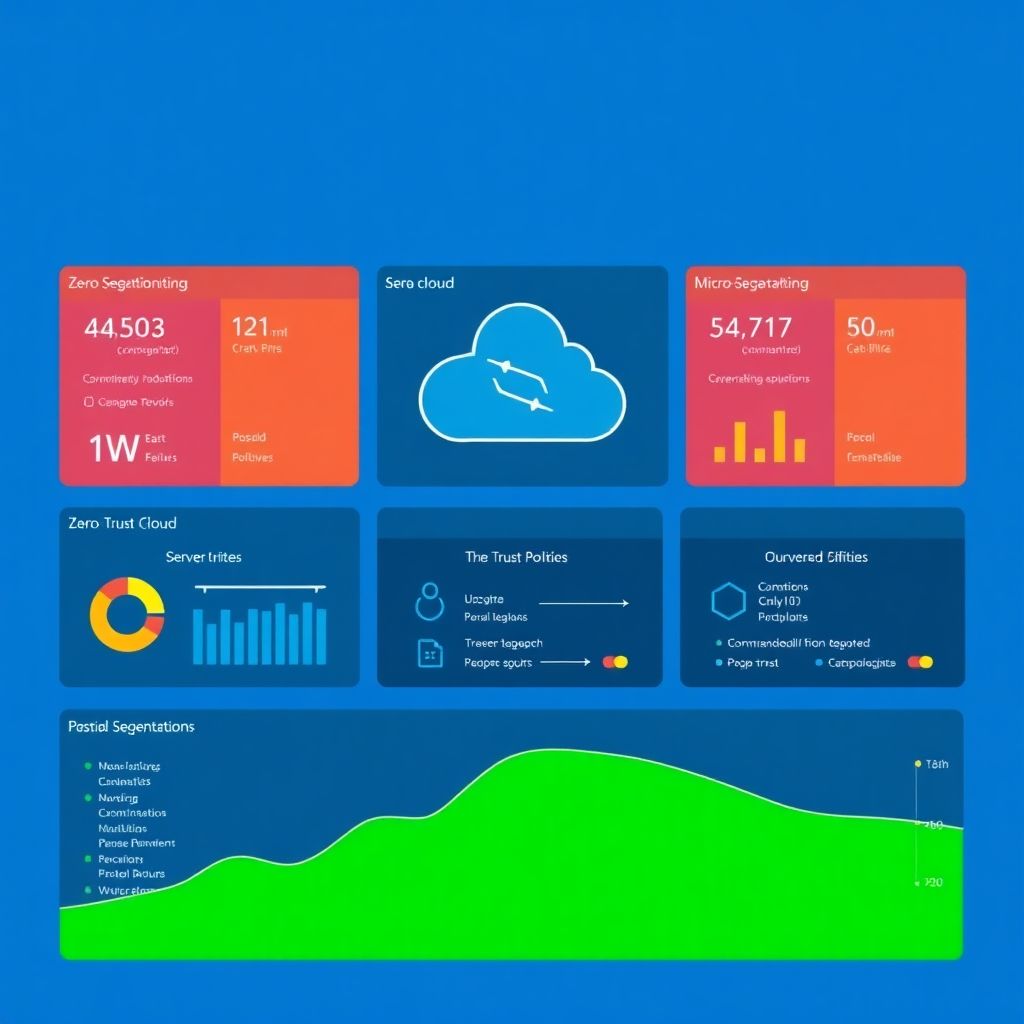
Network segmentation and microsegmentation in complex cloud environments start with clear domains, consistent labels, and policy automation that you can roll out safely in small increments. For pt_BR teams, focus on microsegmentação em nuvem híbrida, zero‑trust principles, and tooling that integrates with existing CI/CD, identity, and observability stacks.
Essential outcomes for cloud segmentation projects
- Consistent segmentation model that works across on‑prem, single cloud and microsegmentação em nuvem híbrida.
- Reduced blast radius for ransomware, lateral movement and privilege abuse.
- Repeatable templates and CI/CD workflows for segmentation policies.
- Clear mapping between business applications and network/security controls.
- Observable policies: logs, metrics and traces for every allow/deny decision.
- Safe rollout strategy with testing stages and automated rollback.
Designing segmentation domains for multi-cloud architectures
Segmentation domains are logical scopes where you apply consistent policies across platforms. In a Brazilian context with multi‑region and multi‑cloud data centers, they should span Kubernetes clusters, VMs, serverless functions and legacy workloads, not just traditional VLANs.
This approach is a good fit when:
- You run workloads across at least two clouds or cloud + on‑prem (typical in microsegmentação em nuvem híbrida).
- You already rely on central identity (IdP) and have basic network firewalls in place.
- You need segmentação de rede avançada para cloud for compliance or internal audit.
Consider not starting a full segmentation redesign yet if:
- You lack a reliable CMDB or service catalog; you do not know which workloads support which business processes.
- There is no basic observability (flow logs, HTTP logs) to understand existing traffic patterns.
- Your team is still stabilizing a major migration or replatforming; prioritise reliability first.
When conditions are right, define domains along stable boundaries:
- Business domains (payments, CRM, analytics, internal IT).
- Environment types (prod, staging, dev, sandbox).
- Data sensitivity levels (public, internal, restricted, highly restricted).
- Control planes vs. data planes (Kubernetes API, management networks, workload networks).
Use these domains as top‑level primitives for any soluções de microsegmentação para segurança em nuvem. Each domain should map to labels or tags that your cloud platforms and security tools understand (for example, VPC tags, Kubernetes namespaces, security groups, SDN segments).
Policy-driven microsegmentation: controllers, agents and intent

Policy‑driven microsegmentation in ambientes cloud complexos usually relies on a central controller plus lightweight agents or data‑plane integrations. The controller stores intent (what you want) and compiles it into concrete rules (security groups, iptables, eBPF filters, WAF rules).
Before you start, make sure you have:
- Organizational prerequisites
- Clear ownership for each application or workload group.
- An approval process for new segmentation policies (security + app owners).
- Defined emergency bypass process for outages caused by over‑restrictive rules.
- Technical foundations
- Access to cloud control planes and APIs to manage tags, security groups, and routing.
- Endpoint or node access to deploy agents (VMs, Kubernetes nodes, service mesh sidecars when applicable).
- Network flow logs or equivalent telemetry to baseline existing communication.
- Tooling and platforms
- One or more ferramentas de segmentação de rede em ambientes cloud complexos (native security groups, third‑party microsegmentation platforms, or service meshes).
- Identity provider (IdP) with roles and groups that can be reused for identity‑aware policies.
- CI/CD or Git‑based workflows to manage policy as code, with review and rollback.
- Access and permissions
- Cloud IAM roles to read and change network and security configurations.
- Read‑only access at first for flow data, then restricted write access for progressive enforcement.
- Service accounts or API tokens for your segmentation controller.
When considering serviços gerenciados de microsegmentação em ambiente multicloud, specify up front where enforcement will occur (hypervisor, host, container, service mesh) and where logs will be sent (SIEM, observability platform). This ensures safe, auditable steps from day one.
Traffic classification and labeling strategies for workload groups
Traffic classification and labels are the backbone of policy‑driven microsegmentation. Follow the steps below in a controlled, low‑risk way.
- Inventory workloads and group them logically
Start with a list of applications and services, not servers. Group workloads by business function and environment (for example, crm‑api‑prod, billing‑db‑stage).- Use existing tags in your clouds as a starting point.
- Align groups with teams and ownership to simplify approvals.
- Define a minimal label schema
Choose 3-5 label dimensions you will apply consistently in all clouds.- app (crm, billing, auth).
- tier (web, api, db, cache).
- env (prod, stage, dev).
- data_class (public, internal, restricted).
- region (sa‑east‑1, us‑east‑1, etc.).
- Apply labels safely and incrementally
Start with non‑production environments and a small set of services.- Use IaC (Terraform, CloudFormation, Bicep) or Kubernetes manifests to apply labels declaratively.
- Avoid manual tagging in consoles whenever possible to reduce drift.
- Capture and analyse traffic flows
Enable flow logs or equivalent in each cloud and export them to a central location.- Filter out obvious noise (health checks, backups) to see real app dependencies.
- Map flows between labeled groups: for example, app=crm, tier=web → app=crm, tier=api.
- Define baseline communication policies
Translate observed flows into high‑level rules between labels, not IPs.- Example:
allow env=prod, app=crm, tier=web -> env=prod, app=crm, tier=api on tcp/443 - Block or restrict unexpected flows, but initially in log‑only or alert mode.
- Example:
- Implement label‑aware policies in your tools
Configure your soluções de microsegmentação para segurança em nuvem to consume these labels directly.- In Kubernetes, use NetworkPolicies or service mesh authorization policies referencing labels.
- In cloud VMs, use security groups, firewall rules, or host‑based agents that match tags.
- Test in staging and introduce gradual enforcement
Never go to full enforcement in production without validation.- Run synthetic tests and user acceptance tests in staging.
- Enable enforcement per application or environment, with clear rollback procedures.
- Refine labels and policies based on feedback
Use logs and developer feedback to refine your schema, removing unused dimensions and clarifying naming.- Review label usage and policies at least once per quarter.
- Document patterns as templates in your internal wiki or platform portal.
Fast-track workflow for initial segmentation
- Pick one non‑critical application in staging and label its workloads using the minimal schema (app, tier, env).
- Enable flow logging, observe traffic for a few days, and draft 5-10 baseline label‑based rules.
- Configure your microsegmentation tool in log‑only mode for this app; verify no valid traffic is blocked.
- Switch to enforcement only for this app; monitor for a week, then reuse the same pattern for similar apps.
Implementing zero-trust segmentation with identity-aware controls
Zero‑trust segmentation strengthens traditional network boundaries by adding workload and user identity. Use this concise checklist to verify your implementation safely before broad rollout.
- All critical services require mutual TLS (mTLS) or equivalent strong authentication between workloads.
- Policies reference identities (service accounts, SPIFFE IDs, Kubernetes ServiceAccounts) instead of IP ranges wherever possible.
- Access from humans to workloads uses SSO and least‑privilege roles, not shared local accounts or static keys.
- Every allow rule has a specific business justification mapped to an owner and a ticket or documentation entry.
- Default policy is deny‑by‑default at least in staging, gradually extending to production for selected apps.
- Segmentation tools integrate with your IdP so that user groups and device posture can influence access decisions.
- All policy changes are version‑controlled, peer‑reviewed, and traceable (Git history, change tickets).
- There is a tested playbook for quickly relaxing policies in case of misconfiguration without disabling monitoring.
- Observability dashboards show which identities talk to which services, with drill‑down to individual decisions.
- Penetration tests or red‑team exercises confirm that lateral movement is significantly constrained by segmentation.
Automation, orchestration and CI/CD for segmentation policies
Automation brings consistency, but it also introduces new failure modes. Watch for these common mistakes when integrating segmentation with CI/CD in ambientes cloud complexos.
- Pushing policy changes directly to production from CI/CD without a staging gate or canary deployment.
- Mixing infrastructure code and security policy code in the same repository without clear ownership and review rules.
- Not validating policy syntax and semantics (linting, dry‑run) before applying changes in automated pipelines.
- Allowing developers to bypass segmentation pipelines by making manual changes in cloud consoles.
- Using different label schemas across clouds and clusters, breaking the portability of templates.
- Ignoring rollbacks: no automated mechanism to revert to last known good policy set during incidents.
- Over‑reliance on one vendor’s APIs without abstraction, which complicates future migrations or additional clouds.
- Embedding credentials or API tokens for segmentation controllers directly in pipeline configs instead of using secure secret stores.
- Lack of integration between segmentation changes and change‑management systems, making audits painful.
- No automated tests or smoke checks that validate basic connectivity paths after policy updates.
Monitoring, validation and incident response for segmented networks
Full microsegmentation is not the only option. Depending on your maturity and constraints, alternative models may be more pragmatic while still improving security.
| Model | When it fits | Main advantages | Key trade‑offs | Typical tools / approaches |
|---|---|---|---|---|
| Coarse‑grained network segmentation | Early stages, limited team capacity, legacy‑heavy environments. | Simple to deploy, uses existing firewalls/VPCs, quick reduction of obvious risks. | Limited visibility inside segments, weaker control over lateral movement. | VLANs, VPC/subnet isolation, basic security groups. |
| Application‑centric segmentation | Clear app boundaries and ownership; modern CI/CD in place. | Good balance of security and complexity; policies mapped to applications. | Still IP/port‑centric in many implementations; identity integration partial. | App‑aware firewalls, load balancers with ACLs, Kubernetes NetworkPolicies. |
| Full microsegmentation with identity‑aware policies | High compliance requirements; strong SRE/SecOps teams; multicloud. | Fine‑grained control, strong lateral movement protection, aligned with zero‑trust. | More complex deployment and operations; strong dependency on labels and identity hygiene. | Host agents, service mesh, third‑party microsegmentation platforms, serviços gerenciados de microsegmentação em ambiente multicloud. |
| Detection‑focused monitoring with limited enforcement | When you cannot enforce broadly yet but need visibility now. | Low risk of outages, fast insights for planning future segmentation. | Attacks may still propagate; relies on fast detection and response. | Network sensors, flow analytics, NDR, read‑only deployment of ferramentas de segmentação de rede em ambientes cloud complexos. |
Choose the model per domain or application. Many organizations run a mix: strict zero‑trust segmentation for critical workloads, application‑centric controls for medium‑risk systems, and monitoring‑only for complex legacy environments. This staged approach reduces operational risk while steadily increasing segmentation coverage.
Practical troubleshooting and common deployment dilemmas
How do I avoid breaking production traffic when enabling microsegmentation?
Start with log‑only or simulate mode, based on observed flows. Apply policies first in staging, then to a single low‑risk production app, with clear rollback. Always keep an emergency process to temporarily relax rules while you fix misconfigurations.
Which teams should own segmentation policies in a multicloud environment?
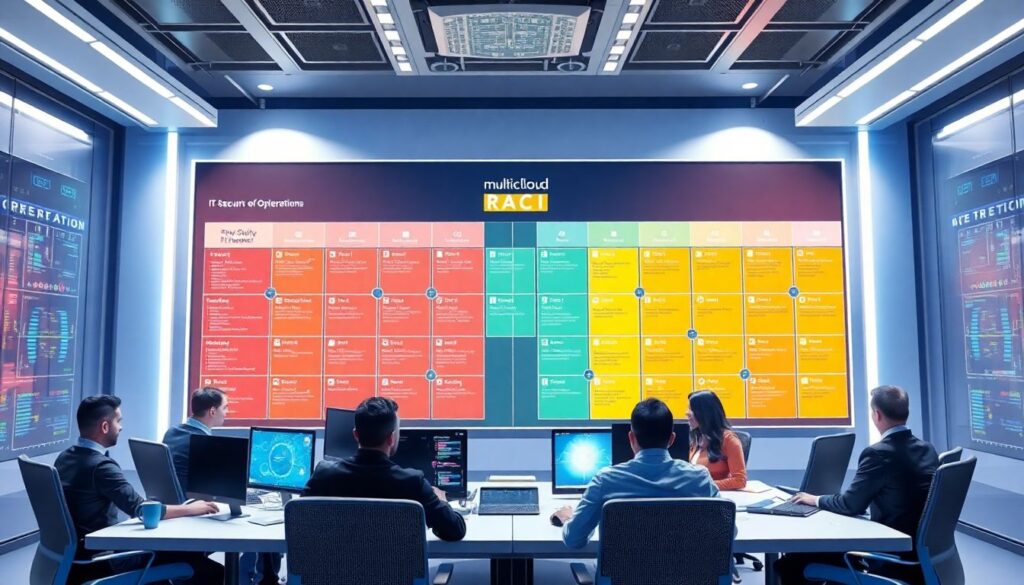
Security defines guardrails and global patterns, while platform/SRE teams implement reusable templates. Application teams own application‑specific exceptions. Define this RACI upfront, especially if you rely on serviços gerenciados de microsegmentação em ambiente multicloud.
How can I deal with legacy systems that cannot be easily labeled?
Place legacy workloads into clearly defined, coarse‑grained segments with tight egress rules. Use IP‑based or subnet‑based policies around them, and add monitoring to understand dependencies before you attempt more granular controls.
What if different clouds support different labeling or tagging models?
Define an abstract label schema (app, env, tier) and map it to each provider’s native tags. Keep a central catalog that tracks these mappings so that policy templates remain portable across microsegmentação em nuvem híbrida scenarios.
How do I choose between native cloud tools and third‑party microsegmentation platforms?
Evaluate integration effort, multicloud coverage, identity support, and operational complexity. Native tools are simpler and cheaper initially, while dedicated soluções de microsegmentação para segurança em nuvem can offer deeper visibility and consistent policy across providers.
How can I prove to auditors that segmentation is effective?
Maintain diagrams or inventories mapping applications to segments, keep versioned policy definitions, and export decision logs. Periodic access reviews and penetration test reports that show reduced lateral movement strengthen your evidence.
What metrics should I monitor to know if segmentation is working well?
Track allowed vs. denied flows, rule hit rates, number of emergency overrides, and time to remediate misconfigurations. Correlate these metrics with incident frequency and blast radius in your incident reports.