
Why cloud incident detection and response feels broken (and how modern SOCs fix it)
If you are running serious workloads in the cloud, you have probably felt that classic security operations do not quite fit anymore. The old “collect some logs, create a few alerts and pray” model fails as soon as you add multiple clouds, Kubernetes, serverless functions and dozens of SaaS apps. A soc em nuvem detecção e resposta a incidentes needs to behave more like a telemetry-driven control room than a traditional NOC with a SIEM bolted on. In this article we will walk through how a modern, log‑ and telemetry‑oriented SOC is built, where the big architectural decisions sit, and what tends to work in real life when incidents actually hit production systems instead of diagrams.
From classic SOC to cloud‑native SOC: what really changes
In a legacy environment, the SOC mostly watched perimeter firewalls, VPNs, Windows servers and maybe a couple of IDS appliances. Events were relatively predictable and infrastructure changed slowly. In a cloud‑native environment you have autoscaling groups creating and killing instances every minute, ephemeral containers that live 20 seconds, microservices talking over encrypted service meshes and workloads spanning several regions. Detection and response in this world must assume that assets are temporary, identities are primary, and telemetry is the single reliable source of truth. This shift forces a redesign of how you collect data, correlate it and trigger response actions.
Another important difference is that cloud security is extremely API‑driven. Every cloud provider exposes rich telemetry streams: CloudTrail‑like management events, VPC flow logs, DNS logs, Kubernetes audit logs, serverless execution traces and more. A traditional SIEM can ingest some of this, but a arquitetura moderna soc orientado a logs e telemetria uses these APIs as first‑class building blocks, automating not only ingestion, but also investigation and remediation steps. Instead of waiting for a human analyst to log in to consoles, the SOC orchestrates playbooks that call the same APIs the attackers are abusing, but to isolate, snapshot, tag and quarantine resources within seconds.
Case: The “vanishing containers” crypto‑miner
One real‑world example from a fintech client illustrates the shift. They ran a Kubernetes cluster on a major cloud provider and initially relied on simple alerts from the managed logging service. They kept seeing high CPU spikes on short‑lived pods, but by the time someone looked, the pods were already gone. Traditional signature‑based malware detection barely saw anything because the images were modified in memory. Once they redesigned their SOC pipeline around container runtime telemetry and Kubernetes audit logs, they could correlate image pulls from public registries, suspicious environment variables and unusual outbound connections to mining pools. A lightweight detection rule triggered an automated response that cordoned the node, dumped memory for forensic analysis and blocked the offending namespace in less than two minutes. The same pattern would have taken days to confirm in a classic SOC.
Key architectural building blocks of a log‑ and telemetry‑oriented SOC
At the heart of a modern cloud SOC sits a plataforma siem log telemetry para ambiente cloud, but the role of this platform is subtly different from the “big SIEM” of the on‑prem era. Instead of trying to be an all‑in‑one monolith, it becomes the correlation and compliance brain, while a separate data plane handles high‑volume observability streams. Logs, metrics and traces from microservices, network telemetry and identity events are normalized as early as possible, enriched with context (tags, business criticality, ownership) and routed according to their purpose: detection, troubleshooting, threat hunting or compliance storage. This separation helps control cost and lets you scale noisy technical telemetry without drowning analysts in irrelevant noise.
Another foundational piece is centralized identity and access telemetry. In cloud, identity is the new perimeter, so your SOC architecture must treat IAM events, SSO logs, privilege escalations and machine identities as high‑value signals. A dedicated pipeline ingests these events from cloud IAM, IdPs, PAM systems and Kubernetes RBAC logs, then correlates them with resource‑level telemetry. By doing so, the SOC can answer questions like “who did what, where, when, from which device, with which role, and against which data” in a few clicks. This kind of context is essential not only for detection, but also for fast scoping when incidents happen and executives are waiting for answers.
Detection logic and playbooks as “code”
In a cloud‑native SOC, detection rules and response playbooks are treated as versioned code, tested and deployed via CI/CD pipelines. This “Detection as Code” approach reduces the chaos of undocumented rules and half‑baked runbooks. Analysts can write detection logic in a query language or DSL, commit it to Git, run automated tests against example telemetry and roll it out in stages. Playbooks that isolate instances, revoke tokens or rotate keys are written as configuration for orchestration tools, with clear inputs, outputs and safety checks. In practice, this also encourages developers and SREs to contribute directly to security logic, shrinking the gap between those who build systems and those who defend them.
Comparing different approaches to cloud SOC design
Organizations typically face three main options when designing SOC capabilities for the cloud: extend their on‑prem SOC tooling, adopt a cloud‑native security stack, or rely heavily on managed providers. Each approach has trade‑offs in agility, visibility, cost and internal maturity. Extending legacy tools might seem cheaper up front because licenses already exist, but integration with cloud telemetry streams is often fragile, and performance issues appear quickly when ingesting large volumes of events from containers and serverless workloads. On the other hand, going fully cloud‑native introduces new tools and skills, and can be overwhelming without strong engineering support and governance.
Outsourcing to managed providers, often under the umbrella of serviços gerenciados soc cloud segurança 24×7, looks attractive for organizations that lack in‑house expertise, but it is not a silver bullet. Managed SOCs vary widely in how deeply they integrate with your specific architectures and how quickly they can automate tailored responses. Some focus on generic alert triage and escalate everything slightly suspicious, which may still leave you with too much noise. Others embed engineers who co‑design detections and runbooks with your teams, which can deliver far better results but demands tighter collaboration and clearer shared responsibilities. The best fit depends heavily on your culture, regulatory context and appetite for building internal capabilities.
Case: Hybrid SOC evolution in a regulated enterprise
A large healthcare organization with strict compliance requirements originally operated an on‑prem SOC focused on firewalls, EDR and VPN. As they moved patient‑facing apps to the cloud, the SOC was blind to API abuse, privilege escalation in managed databases and anomalous behavior inside Kubernetes clusters. Rather than replacing everything, they created a hybrid model: the legacy SOC handled endpoints and internal networks, while a new cloud SOC team took ownership of cloud telemetry pipelines, IaC scanning and CSPM tooling. Over 18 months they slowly integrated both operations, unifying identity telemetry and consolidating incident management. The key learning was that trying to stretch the old SOC architecture directly into cloud had produced more risk than benefit; only after they acknowledged the need for a dedicated telemetry‑centric design did the capability mature.
Pros and cons of core technologies
Cloud‑native logging and observability platforms bring strong advantages for incident detection. They are elastic by design, support schema‑on‑read for fast experimentation and expose powerful APIs for automation. This makes it easier to build pipelines that adapt to new services and data formats without months of engineering work. However, the downside is cost and complexity: poorly tuned retention policies and unlimited ingestion can generate massive bills, while over‑complicated schemas and dashboards confuse analysts. Balancing raw flexibility with structured governance is therefore a critical SOC design task. Without guardrails, a telemetry‑rich environment degenerates into chaos where important signals drown in uncurated data.
Traditional SIEMs, by contrast, usually offer mature compliance reporting, canned correlation rules and strong RBAC features. They integrate well with directory services and common enterprise tools. The drawback is that they struggle with the scale and variety of modern cloud telemetry: high‑cardinality metrics, distributed traces, container logs, serverless invocation details and SaaS audit logs often exceed their native design assumptions. Many organizations end up running two or more platforms in parallel, one optimized for compliance and classic log analytics, another for high‑volume observability. The trick is to clearly define what each system is for, to avoid duplicated ingestion and inconsistent detection logic.
Pros and cons of automation and SOAR layers
SOAR and automation layers are critical for turning detection into concrete, fast response actions, but they also introduce operational risks. On the positive side, automated playbooks that quarantine workloads, block IPs, revoke tokens and open tickets reduce mean time to response and free analysts from repetitive work. They also enforce consistency: the same incident category triggers the same workflow, reducing human error. On the negative side, badly designed playbooks can cause outages or security theater. Over‑aggressive auto‑blocking may disrupt business‑critical services, while purely cosmetic runbooks that only post messages to chat channels create an illusion of automation without tangible security impact. Careful testing, staged rollouts and strong change control are essential before giving playbooks real power.
How to choose the right model for your organization
Choosing a SOC model for cloud is mostly about aligning capabilities with your risk profile, speed of change and internal skills. Instead of shopping for tools first, map the flows that matter most: how code moves from idea to production, where sensitive data lives, which identities hold powerful privileges and which external dependencies you rely on. From there, evaluate how easily candidate tools can ingest telemetry across that landscape and support the incident response patterns you want. Focusing on the “top 20” most important detection use cases almost always leads to better architecture decisions than abstract feature comparisons between SIEM or SOAR vendors.
To structure the decision process, many teams find this simple sequence effective:
1. Define your critical assets and top cloud attack scenarios (data exfiltration, key theft, supply chain compromise, ransomware on backups, etc.).
2. Inventory existing telemetry sources and identify hard blind spots (for example, container runtime, identity federation, SaaS apps, data‑plane logs).
3. Select one primary detection and correlation engine and one or two supporting observability platforms, with clear responsibilities for each.
4. Decide which incident types you are comfortable automating, which require human approval, and which must stay fully manual due to regulatory or operational constraints.
5. Only then, choose whether you will run the SOC internally, partner with serviços gerenciados or apply a hybrid model, based on your ability to operate the chosen architecture 24×7.
Case: Startup vs. enterprise choices

A fast‑growing SaaS startup and a mature telecom operator will usually land in very different places with the same conceptual approach. The startup, with a small but highly technical team, opted for a lean stack: a cloud‑native observability platform as the primary telemetry hub, custom detections defined as code, and a lightweight SOAR integrated with chat tools. They outsourced only tier‑1 alert handling to a provider, keeping engineering‑heavy cases in‑house. Meanwhile, the telecom, overloaded with legacy systems and strict SLAs, selected a major MSSP to run a global SOC, but insisted on an internal cloud security engineering team. That team owned the log and telemetry architecture, feeding curated data into the provider’s tooling. In both cases, clarity about who owns telemetry and who owns response logic made the difference between success and endless finger‑pointing during incidents.
Tools and integrations that matter in practice
When you strip away marketing buzzwords, soc em nuvem detecção e resposta a incidentes comes down to how well you connect a few critical categories of tools. First, CSPM and Kubernetes security scanners surface misconfigurations and risky patterns before they become incidents. Second, runtime protections such as EDR for workloads, container sensors and WAFs provide high‑fidelity alerts when exploitation is attempted. Third, identity and access systems supply context about who is behind each action. The SOC’s job is to make these categories “talk” to each other through shared IDs, tags and correlation rules so that an analyst or playbook can see an attack as one coherent story instead of fragments scattered across dashboards.
On top of that, ferramentas de monitoramento e resposta a incidentes em nuvem must integrate deeply with developer workflows. Alerts that require code changes should open tickets in the same backlog used by engineering teams, with clear descriptions and impact. Runbooks should be documented as part of the platform’s internal docs, not as a separate “security binder” that nobody reads. Telemetry schemas need to be stable and well documented so that engineers can build their own queries for debugging performance issues, while security teams reuse the same signals for hunting threats. Aligning these experiences reduces friction and makes security part of daily operations instead of an external auditor.
Case: Turning “alert fatigue” into focused response
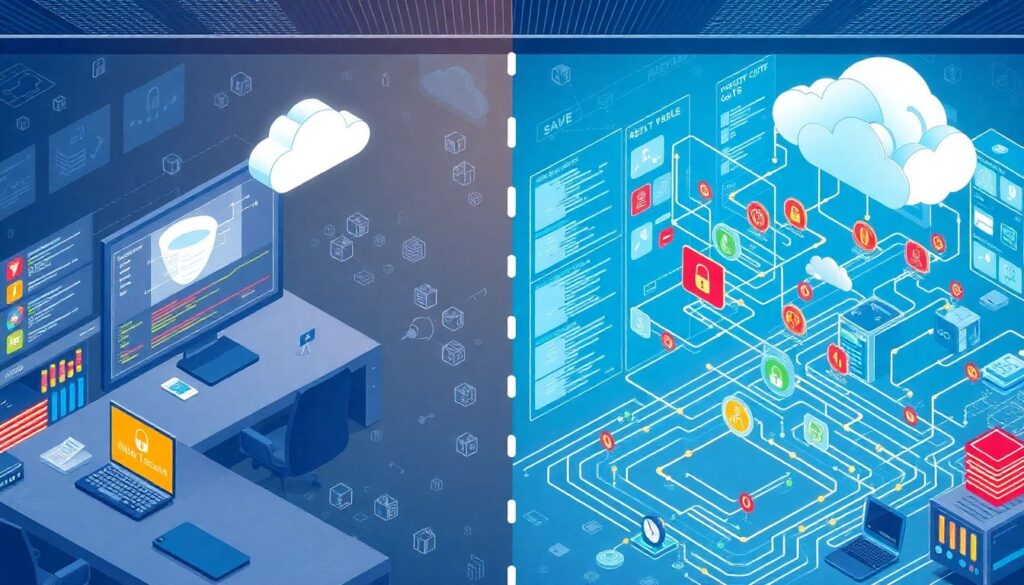
A retail company migrating to cloud suffered from classic alert fatigue: thousands of low‑value SIEM alerts each week, with only a handful involving real risk. The turning point came when they reorganized telemetry and detection around business transactions instead of isolated events. By tagging logs with order IDs, user IDs and application names, then correlating them in a modern observability platform, they could build detections like “multiple failed payment attempts from new devices, followed by account takeover signals and data access spikes.” When these patterns fired, an automated playbook temporarily locked the account, notified the customer and sent a condensed investigation package to analysts. Alert volume dropped by 80%, but the rate of genuine fraud detections increased significantly. This example shows how telemetry depth and context matter more than pure event counts.
Trends shaping cloud SOCs through 2026
Looking ahead to 2026, several trends are reshaping how organizations design detection and response in cloud. First, regulations and industry standards are catching up to cloud‑native paradigms, pushing for explicit logging of identity and data‑plane actions, and for demonstrable response automation for high‑impact incidents. This stimulates investment in more mature logging architectures and makes “evidence‑by‑design” a requirement rather than a nice‑to‑have. Second, AI‑assisted analysis is becoming more practical, not as magic “AI SOC”, but as copilots that help triage alerts, summarize incident timelines and suggest likely root causes based on historical patterns. Human analysts remain in charge, but they can move faster when routine correlation and enrichment is handled by machine learning models tuned to their environment.
Another trend is the convergence of observability and security telemetry. As platforms increasingly treat logs, metrics and traces as a unified data plane, the boundary between “monitoring” and “security analytics” blurs. Security teams are learning to use tracing data for lateral movement detection, while SREs leverage security logs for reliability analysis. This convergence reinforces the idea that a arquitetura moderna soc orientado a logs e telemetria is less a separate silo and more a specialized lens on top of shared infrastructure. Finally, managed services keep evolving: instead of generic MSSPs, more organizations choose niche partners that focus on cloud, Kubernetes or specific industries, often embedding engineers directly into product teams. These specialized serviços gerenciados soc cloud segurança 24×7 are pressured to show measurable impact, not just SLAs on ticket response time, which should lead to more opinionated, outcome‑oriented offerings.
Putting it all together

Detecção e resposta a incidentes em cloud ultimately comes down to making deliberate architectural choices: what telemetry you collect, how you structure it, who can act on it and how fast. Tooling matters, but only in service of clear objectives: shorten time to detect, shrink time to respond and reduce the blast radius of inevitable compromises. Whether you build your own SOC, rely on partners or mix both, treating detections, playbooks and telemetry pipelines as evolving products—with owners, roadmaps and feedback loops—will keep your defenses aligned with the way your cloud environment actually changes. If you keep that mindset, the SOC stops being a distant watcher and becomes an active, integrated part of how your organization builds and runs systems securely.