
Cloud incidents aren’t going away. But the teams who are winning in 2026 aren’t the ones with the biggest war room — they’re the ones who barely need a war room at all. They’ve wired their clouds so that detection, triage and most remediation run on rails: SOAR playbooks, APIs everywhere, GitOps pipelines and guardrails built as code. Instead of scrambling at 3 a.m., they watch automated runbooks close tickets, quarantine workloads and roll back misconfigurations while they focus on root cause and long‑term design. This isn’t sci‑fi anymore; it’s the everyday reality of organizations that treated cloud security like an engineering problem, not just an operations cost, mixing automation, curiosity and a bit of healthy impatience toward manual toil.
Why cloud incident response has to be automated now
In multi‑cloud environments, humans alone simply can’t keep up with the attack surface. One misconfigured storage bucket, one leaked access key, and an attacker can pivot across regions in minutes. By the time an analyst has read the first alert, the damage might be done. That’s why automatização de resposta a incidentes em nuvem moved from “nice idea” to “board‑level requirement” over the last three years. The only scalable answer is to standardize your reactions: define what “good” and “bad” look like, encode your decisions into playbooks and let a plataforma de orquestração e automação de segurança execute them at machine speed, with humans stepping in for the ambiguous, high‑impact calls.
Inspiring examples: from chaos to calm
One global SaaS company used to treat every suspicious IAM change as a mini‑crisis. Analysts jumped between consoles, copied logs into chats and prayed they didn’t miss anything. In 2024 they decided to industrialize the process: they mapped their top 20 incident types and implemented ferramentas soar para segurança em nuvem tightly integrated with their SIEM and ticketing system. A playbook now detects anomalous role escalations, snapshots the affected account, revokes risky tokens, notifies the owner and opens an investigation ticket with all context attached. Median response time for those incidents dropped from 2 hours to under 3 minutes, and the team reported something less visible but more powerful: a sense of calm, because every recurring scenario now had a predictable, testable path.
Another powerful story comes from a fintech startup that grew faster than its security headcount. They bet early on playbooks soar prontos para aws azure gcp instead of building everything from scratch. They started simple: automated isolation of compromised containers, automatic revocation of leaked keys spotted on public Git repositories, and rollbacks of dangerous security group changes. Within a quarter, they were closing more incidents with fewer analysts, and investors suddenly started asking them to present their approach at board meetings as a competitive differentiator, not just a cost center.
SOAR playbooks plus IaC: security as software, not ceremony

The real magic appears when SOAR meets infraestrutura como código segurança em nuvem. Most organizations first automate after‑the‑fact responses: detect, isolate, clean up, notify. That’s important, but it’s still reactive. When you embed the same logic into Terraform, CloudFormation or Bicep modules, the cloud starts preventing entire incident classes from ever existing. Every time a product team deploys a VPC, the IaC module wires in mandatory logging, least‑privilege IAM roles, baseline WAF rules and alert subscriptions that talk directly to your SOAR platform. Now, when something does go wrong, the playbook operates on infrastructure it understands intimately, because that infrastructure was created by the very code that defined the security contracts it’s trying to enforce.
Over 2025 and into 2026 we’ve seen a quiet shift: security engineers who can read and write IaC are becoming some of the most influential people in cloud‑first companies. They treat “incident response” as a feedback loop: every painful incident becomes a pull request that improves both the SOAR workflow and the underlying templates, gradually shrinking the attack surface and the manual workload at the same time.
How to grow your skills and your team’s capabilities
If you’re wondering where to start personally, think in small, repeatable wins. Pick a boring, noisy incident type that everyone hates handling — maybe public S3 buckets, unexpected open SSH ports, or suspicious login patterns. Document the current manual steps in brutal detail, then convert that list into a simple SOAR playbook: ingest alert, enrich with tags and owners, add logs, take a safe but reversible action, and notify the right people. As you gain confidence, add branching logic and better context, and gradually move from “suggested actions” to semi‑automatic and finally fully automatic responses in low‑risk scenarios. Every tiny piece you automate gives you time back to design the next improvement.
Along the way, develop your “integration literacy”. Learn how your SIEM formats alerts, how your cloud provider’s APIs behave under rate limits, how your ticketing system models status and ownership. The more smoothly data flows between these tools, the easier it becomes to trust your automations and to explain them to stakeholders who worry about “robots turning off production by accident”. Clear diagrams, dry‑runs in test environments and staged roll‑outs do wonders for building that trust.
Success cases: measurable outcomes, not just fancy diagrams
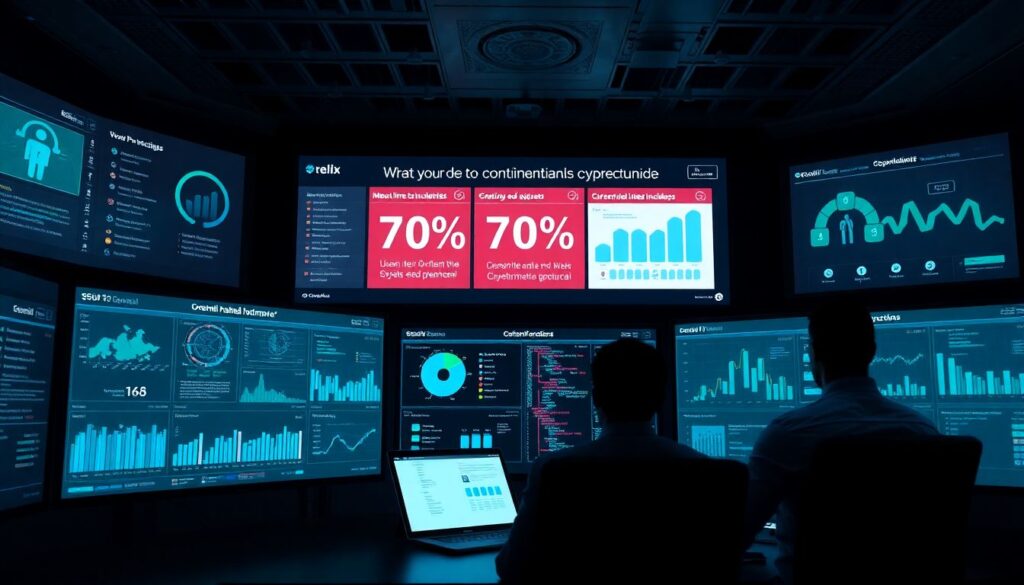
Some of the most successful projects in this space share a pattern: they start by defining what “good” looks like in numbers. A retail company set a goal to cut mean time to containment by 70% for credential‑related incidents. They chose a cloud‑native plataforma de orquestração e automação de segurança, wired it to their identity provider and cloud logs, and built a playbook that automatically compared suspicious logins against recent HR changes, device health and geo‑velocity models. Within six months, not only had they hit the 70% target, they’d also reduced false positives by half, because the playbook consistently applied richer context than tired analysts could at the end of a night shift.
Another organization measured success in developer happiness. Before their IaC and SOAR push, every security misconfiguration escalated into back‑and‑forth emails, approvals and tense meetings. After they embedded guardrails into code and used SOAR to auto‑open pull requests with suggested fixes, security stopped being a blockade and became more like an automated code‑review partner. Developers reported that “security incidents” felt less like shameful failures and more like normal parts of the delivery pipeline, which in turn made them more likely to report and collaborate early.
Learning resources that actually move the needle
In 2026 you have an embarrassment of riches when it comes to learning. Start with the cloud providers’ own security architectures: AWS Security Hub and Incident Manager, Azure Sentinel and Defender, Google Security Command Center. Most vendors now publish reference architectures that show end‑to‑end flows from detection to SOAR playbooks. Combine that with vendor‑agnostic content: community blogs on automatização de resposta a incidentes em nuvem, open‑source SOAR projects on GitHub, and hands‑on labs where you intentionally misconfigure resources in sandboxes and then watch your playbooks respond. The key is to bias toward doing rather than reading — nothing replaces the experience of wiring up a real alert, seeing it fire, and iterating until the noise becomes signal.
Don’t ignore soft skills either. Being able to explain to a non‑technical CISO how your automation reduces risk, or to a product manager why a specific playbook needs a rollback step before a hard shutdown, is just as valuable as knowing the right API calls. The best incident‑automation engineers in 2026 are translators: they turn business risk into technical workflows and then turn those workflows back into language decision‑makers can trust.
Looking ahead: where this is going by 2030

The next four years will be less about “can we automate?” and more about “what should we still do manually?”. With generative AI baked into most SOAR engines, we’re already seeing systems that propose new playbooks based on clusters of historical incidents, automatically suggesting steps and even writing the glue code to talk to obscure APIs. As regulations around cloud get stricter, we’ll also see compliance teams rely on automatização de resposta a incidentes em nuvem to demonstrate continuous control, not just annual audits. Your playbooks will double as living evidence: both your shield and your report. And as more organizations adopt playbooks soar prontos para aws azure gcp as their starting point, differentiation will shift to how elegantly you adapt them to your unique mix of risk, culture and architecture.
If there’s one prediction worth betting your career on, it’s this: by 2030, “manual first” incident response in large cloud environments will feel as outdated as racking servers by hand. The people who thrive will be those who treat SOAR and IaC as creative tools, design resilient systems that expect failure and respond gracefully, and keep human judgment exactly where it matters most — making sense of the unfamiliar. Everything else should, and will, be code.