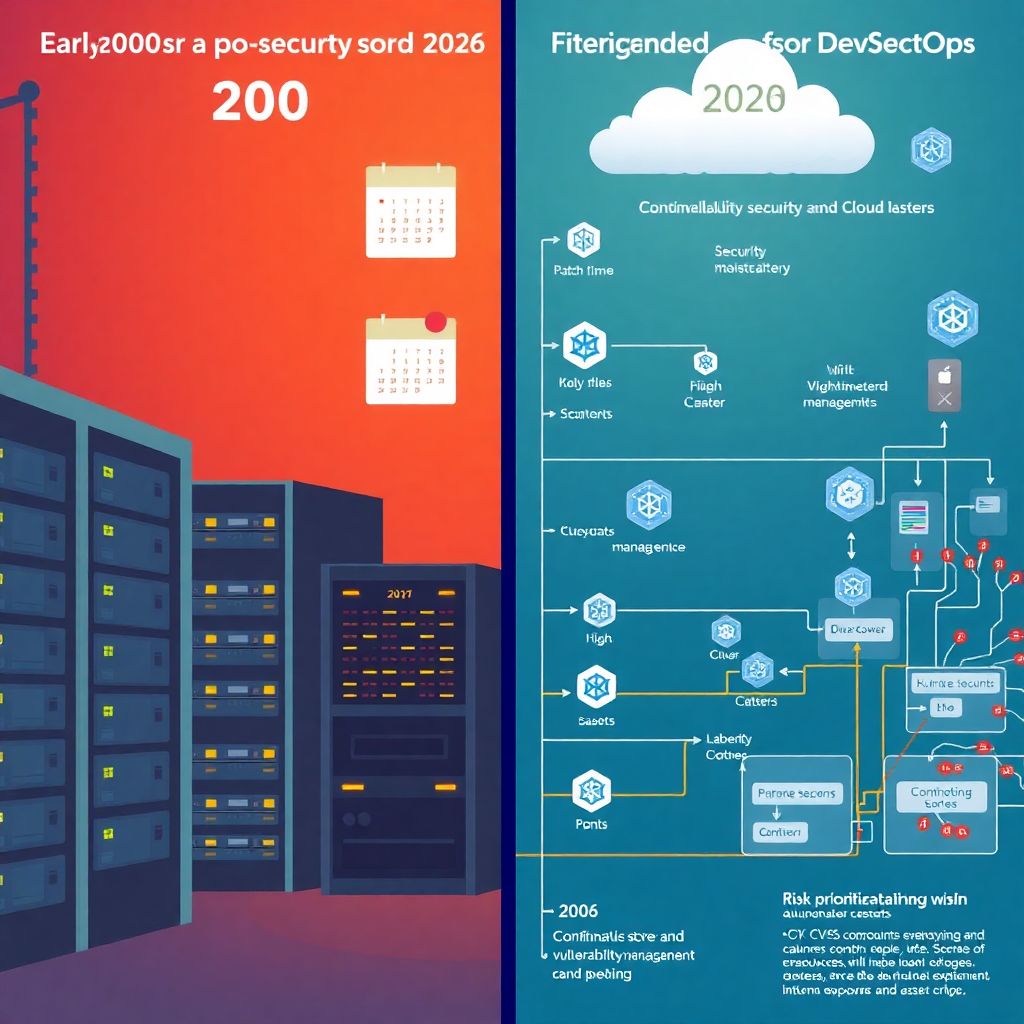
From “Patch Tuesday” to real‑time cloud defense

Back in the 2000s security meant “Patch Tuesday”, nightly maintenance windows and a couple of firewalls humming in the data center. Fast‑forward to 2026: apps are rebuilt dozens of times per day, infra is ephemeral and attackers use automation as aggressively as we do. In this world, tratamento de vulnerabilidades em cloud computing can’t be a quarterly audit ritual; it has to be a continuous, code‑driven habit. The good news: the same cloud and DevOps practices that made everything faster can also turn security into a repeatable pipeline, from discovery to correção automatizada, without burning out your team or freezing delivery.
Step 1: Seeing what really runs in your cloud (discovery)
You can’t protect what you don’t see, and in cloud that’s trickier than it sounds. Containers spin up for minutes, serverless functions appear only on demand, and test environments quietly become production. That’s why ferramentas de varredura e discovery de vulnerabilidades em nuvem are now as fundamental as version control. They continuously map your accounts, clusters and services, tagging each asset with context: which repo created it, which team owns it, what data it touches. Treat discovery as an engineering problem, not a one‑off inventory task, and wire it into your regular deployment flow instead of running scans “when we have time”.
What effective discovery looks like in practice
A mature discovery setup doesn’t just spit out IP lists; it tells a story about your environment. The best tools correlate cloud APIs, Kubernetes manifests, images in registries and even IaC templates to build a graph of how pieces connect. That makes it possible to spot vulnerable components before they ever go live. You can, for instance, block a Terraform change that would expose an S3 bucket or flag a container image that includes a critical OpenSSL bug. Treat these checks as guardrails, not gates: they guide engineers early instead of punishing them late, keeping velocity while quietly raising your security baseline.
Step 2: Turning findings into actionable risk
Raw scan results are noisy. If you just forward them to Slack, people will mute the channel in a week. The turning point in melhores práticas de segurança e gestão de vulnerabilidades em ambiente cloud came when teams stopped chasing every CVE and started ranking by real impact. In 2026, smart platforms merge CVSS, exploit data, asset criticality and exposure to decide what truly matters. A low‑score bug on an internet‑facing API might outrank a high‑score issue buried in an offline batch job. Your goal is not “zero findings”, but a clear, shared logic for what gets fixed first and what is consciously accepted.
Prioritization habits that actually scale
To make prioritization stick, move it out of security slides and into engineering workflows. Link vulnerabilities directly to backlog items, repos and owners, so the right squad sees “their” issues in their own tools. Define SLO‑style targets: for example, “critical bugs on public endpoints fixed in 48 hours, highs in 7 days”. Then measure them as you would latency or uptime. Over time, this turns treatment of vulnerabilities into an operational metric instead of a guilt‑driven afterthought. Teams learn that ignoring alerts has visible consequences, while prompt fixes are recognized and even celebrated in internal reviews.
Step 3: CI/CD as the engine of automatic remediation

The real magic happens when your pipeline stops just shouting about problems and starts fixing them. A well‑designed pipeline CI/CD para correção automatizada de vulnerabilidades can enforce secure base images, auto‑patch dependencies, update IaC modules and even roll back risky releases without human drama. Think of CI/CD as the conveyor belt on which every change rides: if you embed security tests, policy checks and remediation steps there, you get consistent treatment for everything from a tiny config tweak to a full microservice refactor. The goal isn’t zero engineers involved, but engineers focusing on edge cases instead of repetitive patch work.
Examples of automation you can wire in
– Auto‑fail builds that use container images missing recent critical patches, and suggest a secure replacement tag
– Automatically open pull requests that bump vulnerable libraries to safe versions after tests pass
– Enforce security policies in IaC (like blocking public storage buckets) using policy‑as‑code tools in the pipeline
Each of these reduces “time to fix” by turning yesterday’s manual checklist into today’s standard pipeline step.
Inspiring real‑world stories from 2018 to 2026
Motivation grows when you see others pull this off. One fintech in Latin America moved from monthly manual scans to fully automated tratamento de vulnerabilidades em ambientes cloud in under a year. They started small: scanning container images on push, failing builds only for critical issues. As trust grew, they added more checks, then remediation bots that proposed patches. Incident volume dropped by 40%, and compliance audits became a formality. Another story: a global SaaS provider used soluções de segurança DevSecOps para automação de correção em nuvem to reduce mean time to remediate from weeks to hours, without adding a single dedicated “security operator” role.
What these teams did differently
Successful teams didn’t start with buying tools; they started with clear ownership and tiny experiments. They made product squads accountable for their own risk, gave them good guardrails and avoided blaming culture when scans broke builds. They also treated security pipelines like any other product: with backlog, metrics and regular retros. That mindset shift matters more than yet another shiny scanner. By 2026 the pattern is obvious: organizations that integrate security into the way they build software stay out of the breach headlines and ship faster than competitors still relying on ticket queues and manual patch sprints.
How to grow your skills in 2026
If you want to work with tratamento de vulnerabilidades em cloud computing today, you don’t need a decade of pure security background. You need curiosity about infra‑as‑code, automation and how attackers think. Start by learning how your own CI pipelines work, then add security checks incrementally. Explore open‑source scanners, policy engines and cloud‑native tools in a personal lab account; break things safely and see how alerts look from both sides. Pair with cloud engineers to understand their pain points, so your future controls feel like an upgrade, not an obstacle. That mix of empathy and technical depth is your real competitive advantage.
Core skills worth investing in
– Cloud architecture basics for at least one major provider (IAM, networking, storage, managed services)
– CI/CD tooling and scripting: how to plug extra checks into existing pipelines without slowing them to a crawl
– Vulnerability fundamentals: CVSS, exploitability, common misconfigurations and how they map to real attacks
With these in place, adding specific platforms or certifications becomes much easier and more meaningful.
Practical recommendations you can start this month
To avoid getting overwhelmed, treat cloud security automation like any other refactor: iterative and visible. Pick one critical service and one type of issue, such as outdated container images. Automate detection in CI, define a clear rule when to fail builds and measure the impact for a sprint. Once that works, layer on policy‑as‑code for IaC, then runtime checks in your clusters. Document every new guardrail so teams know why it exists and how to work with it. Over time you build a living framework of melhores práticas de segurança e gestão de vulnerabilidades em ambiente cloud tailored to your stack, not a random checklist from the internet.
Learning resources to go deeper
In 2026 the challenge isn’t finding material, it’s filtering it. Focus on resources that combine cloud, automation and security instead of treating them as silos. Look for hands‑on labs that let you experiment with ferramentas de varredura e discovery de vulnerabilidades em nuvem inside real‑looking environments. Join communities around DevSecOps and cloud native security; conference talks and working groups often share war stories that never make it into official docs. When you evaluate a new book or course, ask one thing: does it teach you how to wire practices into pipelines and code, or just into PowerPoint?
How to structure your learning journey
– Start with a cloud provider’s free security workshops and labs to grasp foundational controls
– Add a course or series on DevSecOps that covers building a pipeline CI/CD para correção automatizada de vulnerabilidades end‑to‑end
– Contribute to or study open‑source проектов that implement soluções de segurança DevSecOps para automação de correção em nuvem, reading their code and CI configs
By combining theory, practice and real community examples, you’ll be ready not just to follow today’s security trends, but to help shape how we defend cloud systems in the decade after 2026.