Ransomware in the cloud stopped being an exotic problem a long time ago. Today it hits startups on Kubernetes, legacy workloads simply “lift‑and‑shifted” to IaaS, and even highly regulated enterprises with mature SOCs. The good news: cloud gives you far more visibility and control than a classic data center, but only if you design for it. Below we will walk through how these attacks evolved, what really works for detection and mitigation, and how to build a pragmatic response plan that your team can actually execute at 3 a.m., with a few grounded examples from real incidents.
—
Historical background of ransomware in cloud environments
From on‑prem lockers to cloud‑aware extortion
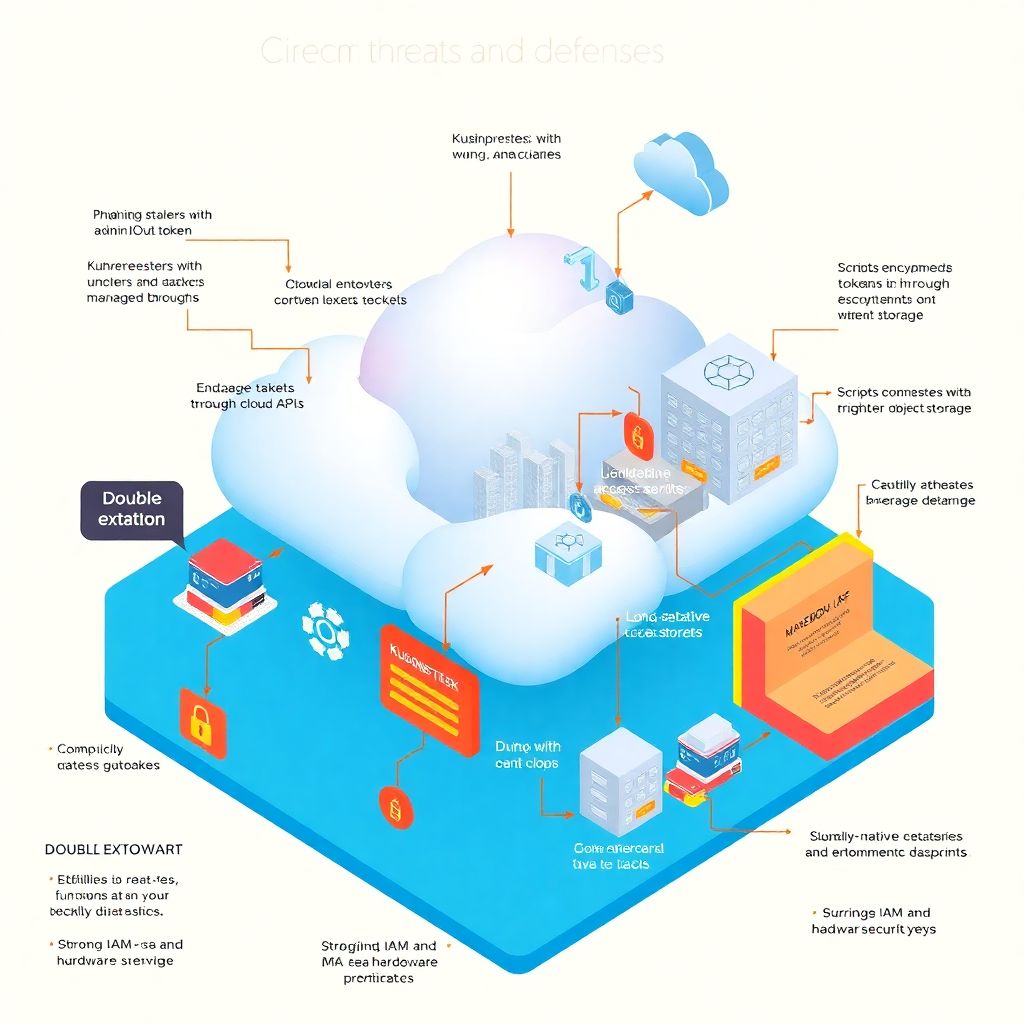
Early ransomware families like CryptoLocker and WannaCry were glorified file lockers, focused on local disks and SMB shares. When companies started migrating to the cloud, attackers initially treated it just as another backup target to encrypt. The turning point came when they realized that compromising a single cloud IAM credential could unlock terabytes of data and dozens of services. Modern campaigns chain phishing, OAuth abuse and misconfigured APIs to hit cloud resources directly, often skipping the endpoint stage. The ransomware binary is no longer always the star; sometimes the whole “encryption” process is implemented via cloud-native scripts and mass key rotation.
Double extortion meets cloud storage
Once cloud storage became a primary data hub, extortion tactics changed. Groups like REvil and Conti popularized double extortion: first exfiltrate data from S3, Blob or other object stores, then encrypt what’s left, and finally threaten to leak it. In multi‑tenant SaaS platforms attackers exploit over‑privileged integrations to pull customer datasets at scale. Cloud logging shows this clearly: long-lived access tokens pulling massive volumes from a narrow set of buckets or databases. Because backups are also in the cloud, naive replication can simply sync encrypted or deleted data across regions. This forced defenders to rethink “proteção contra ransomware em cloud para empresas” beyond simple snapshots and to focus on identity, isolation and resilient recovery patterns.
—
Basic principles of defending cloud workloads
Shared responsibility and identity as the new perimeter
Cloud providers secure the underlying infrastructure, but you still own identities, configurations and data. Most serious cloud ransomware incidents start from weak IAM design: a CI/CD role that can read and write all buckets, a break-glass admin account without MFA, or unused service principals with permanent keys. Treat IAM as your real perimeter. Minimize standing privileges, lean on just‑in‑time elevation and scrutinize cross‑account access. A compromised cloud admin account is the closest thing attackers have to a “crypto bomb”: they can rotate keys, alter KMS policies and neutralize defenses before triggering encryption, making classical endpoint‑centric controls largely irrelevant.
Zero trust and blast radius reduction
Instead of thinking “how do I keep ransomware out entirely?”, assume breach and ask “how far can it go?”. Zero trust in cloud means strong workload identity (e.g., managed identities, SPIFFE), strict network policies, and service‑to‑service authorization based on verified identities and least privilege. Micro‑segmentation between microservices, separate accounts or subscriptions per environment, and dedicated projects per team dramatically reduce blast radius. If an attacker lands in one namespace or account, they should not be able to touch production backups or management plane APIs. This design mindset transforms mitigation from a heroic incident response effort into mechanical isolation of a confined segment.
Observability as an early warning system
You cannot mitigate what you cannot see. Cloud-native logs (CloudTrail, Activity Log, audit logs), container telemetry and application traces are your early-warning sensors. Patterns like sudden mass encryption of blobs, large-scale KMS key usage spikes, or automated policy changes are visible if you aggregate and correlate them. A practical approach is to define a small set of high‑fidelity detections tied to ransomware behavior instead of chasing endless IOCs: anomalous data access, unusual IAM changes, and rapid file rewrite rates. Align these signals with your SIEM and SOAR, and rehearse how alerts escalate, because a delayed response of even 30 minutes can be the difference between a single compromised bucket and a fully encrypted data lake.
—
Preventive strategies and security controls
Hardening strategies that actually work
Preventive controls in cloud must cover identity, configuration and data. Focus first on eliminating trivial paths in: require phishing‑resistant MFA for admins, enforce hardware-backed keys where possible, and block legacy protocols. Then tackle misconfigurations with continuous posture management, treating every open storage bucket or public admin port as a potential ransomware entry point. Data plane protections matter just as much: default-encrypted storage, tight KMS policies and immutable logging. Finally, restrict automation tools and CI/CD pipelines so they cannot directly manipulate backups or KMS keys without additional approvals, breaking the “one credential to rule them all” pattern that many attackers rely on.
Leveraging cloud security services and managed offerings
Most providers now offer “soluções de segurança cloud para prevenção de ransomware” that plug into your accounts with minimal friction. CSPM platforms continuously scan for risky configs, while CWPP agents monitor host-level activity in VMs and containers, catching ransomware-like behavior. XDR tools correlate endpoint, identity and cloud signals to surface campaigns rather than individual alerts. For many teams, a “serviço gerenciado de detecção de ransomware em nuvem” run by an MSSP or the provider’s own SOC can be a realistic option, especially where 24/7 monitoring is otherwise impossible. The key is to integrate these services into your own runbooks so findings translate directly into containment actions.
Practical checklist for prevention
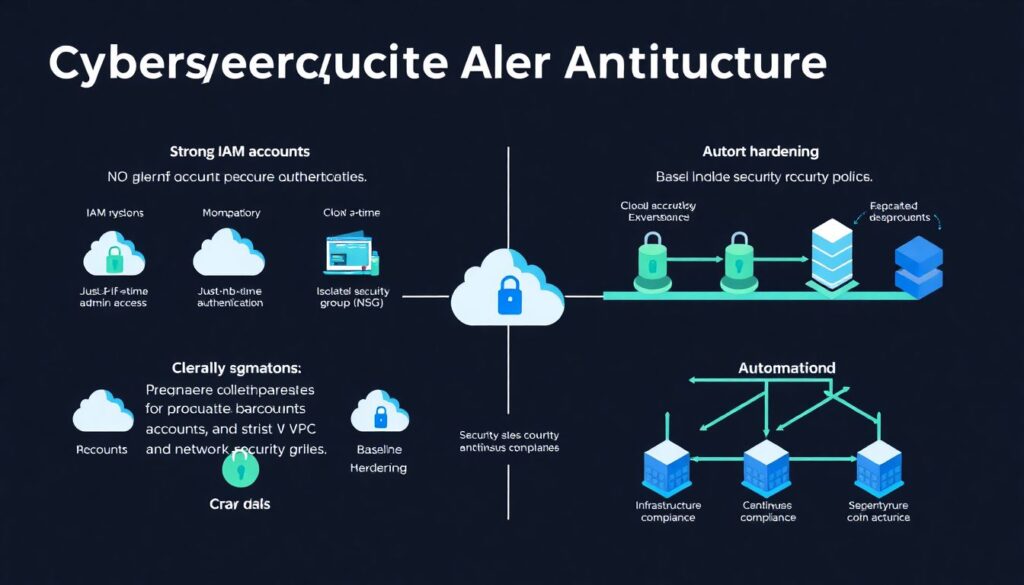
– Enforce strong IAM hygiene: no shared accounts, mandatory MFA, just‑in‑time admin access.
– Segment environments: separate accounts for prod/non-prod, isolated backup accounts, and strict VPC/NSG rules.
– Automate hardening: baseline policies, infrastructure as code with security guardrails, continuous compliance scans.
—
Incident response: from detection to recovery
Designing a cloud-specific response plan
A solid “plano de resposta a incidentes de ransomware em ambiente cloud” must differ from your legacy on‑prem playbook. You are dealing with APIs, roles and services, not just servers. Start by defining what “ransomware incident” means for you: file encryption, data theft, mass key rotation or destructive policy changes. Map these to triggers from your SIEM and cloud-native alerts. For each trigger, document concrete actions: which roles are disabled, which networks are locked down, what gets snapshotted for forensics, and where communication channels move if your main collaboration tools are impacted. Store these procedures in an out‑of‑band system so they stay available under adverse conditions.
Triage, containment and eradication
When detection fires, the first 15 minutes are about triage and blast radius assessment. Identify which accounts, regions and services are involved and whether attackers still have active control. Containment in cloud usually means: disabling suspicious credentials, restricting IAM policies at the organization level, and segregating compromised resources into quarantine networks. For workloads, you may snapshot and shut down affected VMs or containers instead of trying to clean them live. Eradication involves revoking all tokens, rotating keys, purging malicious automation (Lambda, Functions, runbooks) and re‑deploying from trusted IaC templates. Throughout, maintain a precise timeline; regulators and insurers will ask for it, and it is invaluable for post‑incident hardening.
Actionable response steps
– Immediately freeze high‑risk IAM entities and apply organization-wide service control policies where supported.
– Capture forensic artifacts (snapshots, logs, container images) before making disruptive changes.
– Communicate internally with clear status updates and decision points; assign a single incident commander.
—
Backup, resilience and data recovery
Designing backups that survive ransomware
Many organizations believe that “we are safe because we have snapshots in the same account and region.” That is wishful thinking. Attackers targeting cloud deliberately go after backup control planes: deleting vaults, expiring recovery points or altering lifecycle rules. Effective “ferramentas de backup e recuperação de dados na nuvem contra ransomware” rely on logical and administrative separation. Use dedicated backup accounts with limited trust, immutable storage (WORM, object lock) and time‑locked deletion. Versioning and cross‑region replication help, but only if governed by roles that are not exposed to day‑to‑day operations. Regularly test recovery scenarios with realistic volumes and RTO/RPO objectives rather than theoretical designs.
Recovery without amplifying damage
When you do need to restore, the biggest risk is reintroducing compromised configurations or binaries. Recover data into a clean, hardened landing zone, not into the same compromised environment. Validate integrity where possible using checksums or application-level consistency checks, and keep old copies until business owners confirm correctness. Resist pressure to rush everything back online: staged recovery, starting from the most critical services, helps you spot anomalies early. After each restoration wave, re‑run security baselines and vulnerability scans, ensuring that opportunistic malware or web shells did not hitch a ride. Document who approves each step to avoid ad‑hoc shortcuts that re-open the same holes.
—
Real-world cases from practice
Case 1: DevOps token, S3 data lake and quiet extortion
A SaaS company running its analytics stack entirely in the cloud learned about its compromise from an extortion email, not from its tools. Attackers phished a senior DevOps engineer, stealing an OAuth token granting broad API access. Instead of dropping classic ransomware, they wrote a script using the cloud SDK to enumerate all object storage buckets, exfiltrate sensitive data and then overwrite a subset of objects with encrypted blobs. Because it was all API-driven, EDR never saw a binary. Post‑mortem showed no separate backup account and over‑privileged CI/CD roles. The fix included OAuth app hygiene, role redesign and dedicated immutable backups in a segregated account.
Case 2: Misconfigured Kubernetes and encrypted persistent volumes
Another incident involved a fintech’s Kubernetes cluster running in a managed cloud service. The cluster API server was not publicly exposed, but a misconfigured bastion host and weak SSH key hygiene gave attackers a foothold. They deployed a container image disguised as a monitoring agent, which then enumerated mounted persistent volumes and performed multi-threaded encryption, while also attempting lateral movement using cloud metadata APIs. The attack was caught when application latency spiked, triggering SLO alerts, not security rules. Recovery proved painful because snapshots were taken from the same cluster context with compromised IAM roles. In the aftermath, the team introduced workload identity, network policies, and out-of-band backups.
—
Common misconceptions and pitfalls
“Cloud provider handles ransomware for us”
One of the most dangerous beliefs is that using a major cloud vendor automatically shields you from ransomware. Providers secure the platform, but they cannot design your IAM model or your network segmentation. Over-reliance on default settings often means flat networks, admin accounts with broad rights and storage buckets exposed via weak policies. Another misconception: enabling default encryption magically solves data theft; in reality, if attackers impersonate your workloads, they use the same keys legitimately. Treat built‑in controls as building blocks that require careful assembly, not as turnkey security. Governance, secure coding and robust operational practices remain your responsibility.
Overconfidence in traditional endpoint and perimeter tools
Many organizations extend their on‑prem mindset into the cloud, assuming that if endpoints are covered by EDR and there is a VPN in front, ransomware risk is under control. Modern cloud ransomware frequently operates entirely within managed services: serverless functions, managed databases and storage APIs. There may be no “endpoint” to protect in the classical sense. Similarly, perimeter firewalls do little when attackers authenticate via stolen SSO tokens and operate through legitimate control planes. Failing to adjust visibility and controls to this reality leads to blind spots. Align your defenses with identities, APIs and workloads rather than just IP addresses and operating systems.