Why hardening containers and Kubernetes matters so much in 2026
Threat landscape: why “just encrypting” is not enough

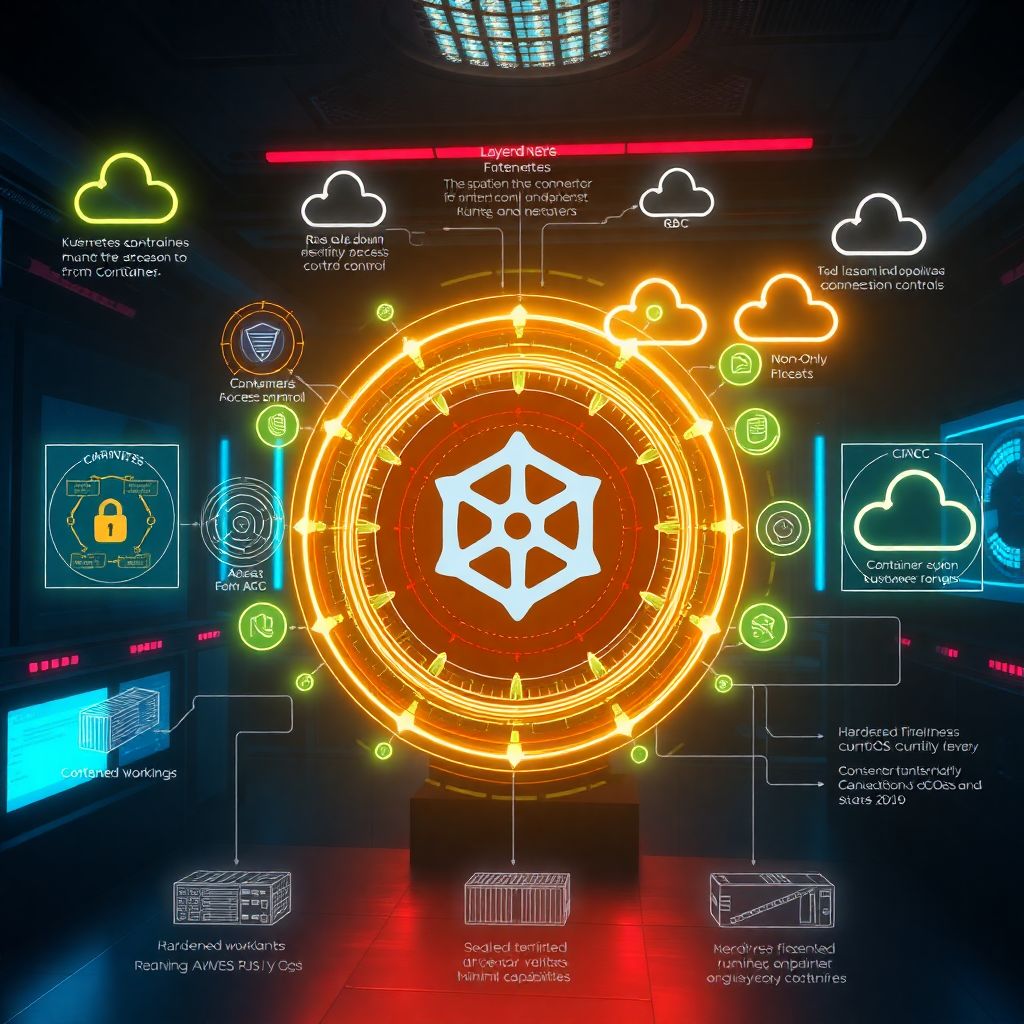
In 2026, containers and Kubernetes stopped being “modern toys” and quietly became the default runtime for business‑critical systems. According to CNCF surveys, the vast majority of enterprises already run production workloads in Kubernetes, and incident reports show that misconfiguration is now a more common root cause than pure software bugs. Attackers love this stack because it’s fast, standardized and often poorly locked down. Weak RBAC, exposed dashboards, permissive network policies and over‑privileged service accounts are turning into textbook entry points. In this context, segurança em containers kubernetes na nuvem is less about one product and more about a disciplined, layered way of thinking about risk.
The economic stakes of getting hardening wrong
The money side is brutal. A single breach of a containerized payment or healthcare platform can easily evaporate years of Kubernetes cost savings: downtime, ransom, regulatory fines, legal costs and churned customers pile up quickly. Insurers have started asking pointed questions about cluster hardening before agreeing to cyber‑policies or discounts. Boards, in turn, now expect clear evidence of hardening kubernetes melhores práticas: admission controls, supply‑chain checks, zero‑trust networking, and continuous posture assessments. Analysts estimate that by the late 2020s, security misconfigurations in cloud‑native stacks will account for the majority of avoidable cyber losses, but also note that organizations implementing strong hardening can cut incident probability and impact dramatically, improving both resilience and valuation.
Core principles of hardening Kubernetes in 2026
Locking down the control plane and the cluster baseline
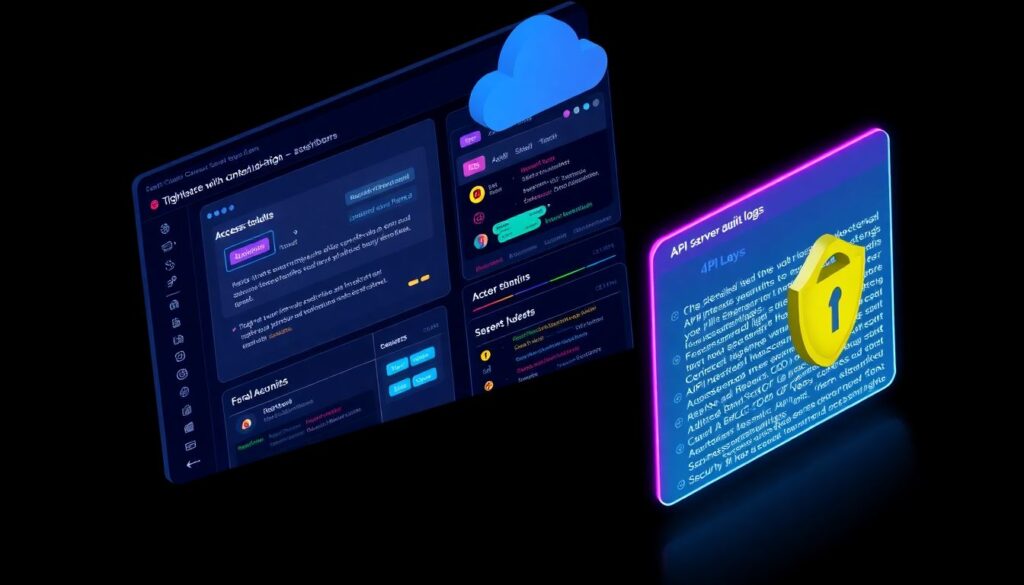
Modern hardening starts with the boring but critical basics: the control plane. You want tight authentication and SSO integration, short‑lived credentials, and RBAC based explicitly on business roles, not “cluster‑admin for everyone in DevOps.” API server audit logging should be verbose enough to reconstruct attack paths but filtered to avoid noise. Etcd needs encryption at rest and strict network isolation. On worker nodes, minimal OS images and kernel hardening (Seccomp, AppArmor, SELinux profiles) are now default expectations rather than nice‑to‑haves. Benchmarking against frameworks like CIS Kubernetes Benchmark and automating remediation closes the loop, turning once‑a‑year audits into daily posture checks that actually keep up with agile release cycles.
Workload‑level hardening: least privilege by design
Once the cluster skeleton is solid, attention shifts to workloads. Containers should run as non‑root, with read‑only file systems wherever practical and explicit Linux capabilities instead of blanket privileges. Namespaces and network policies define who can talk to whom; in a hardened cluster, “allow all egress” or “flat east‑west” becomes a red flag. Image provenance is tied to signatures and SBOMs, and admission controllers block anything untrusted from ever reaching the cluster. Ingress is protected by Web Application Firewalls and DDoS controls, while secrets stay in external vaults, not ConfigMaps. This focus on least privilege and explicit intent massively shrinks the blast radius of any compromise and aligns nicely with regulatory expectations around data separation and access control.
Practical guide: from laptop to production cluster
A realistic hardening workflow for teams
To make it actionable, think of hardening as a pipeline, not a one‑off project. A simple flow could look like this:
1. Threat‑model your critical workloads and map data flows.
2. Define cluster and namespace baselines using policies as code.
3. Integrate image scanning, SBOMs and signing into CI/CD.
4. Enforce admission controls and runtime protections in all clusters.
5. Continuously monitor posture and test with red‑team exercises.
This workflow fits nicely into existing DevOps practices. Security engineers codify rules; platform teams enforce them; developers get fast feedback in their pull requests instead of a security gate appearing a week before release, when it’s already too late to fix architectural issues.
Supply chain, runtime and observability in 2026
The headline breaches of the last few years pushed software supply chain security from niche to mainstream. Today, hardening without SBOMs, signed artifacts and provenance metadata feels incomplete. Build systems are increasingly isolated, with ephemeral runners and strong identity for build steps. At runtime, tools watch system calls, container drift and network patterns, flagging suspicious behavior in near real time. Observability stacks correlate logs, metrics and traces with security context so that “pod restarted” is seen together with “suspicious outbound traffic.” Over time, this shared telemetry enables more nuanced policies: you can confidently lock down rarely used paths instead of blanket‑blocking and then firefighting false positives in the middle of the night.
Tools and automation: choosing what actually helps
The evolving ecosystem of security tools
The market for ferramentas de segurança para kubernetes e containers exploded, and by 2026 it’s finally maturing. Rather than buying a separate tool for every problem, organizations gravitate toward platforms that can handle posture management, image scanning, workload runtime protection and compliance reporting as one integrated surface. Open source remains central: projects like Falco, Kyverno, OPA and Trivy power many commercial offerings and allow teams to experiment without huge upfront investment. The winning setups typically blend cloud‑provider features with these tools, using GitOps for policy management. The key is ruthless simplicity: fewer dashboards, strong APIs and automation first. Otherwise, “security” quietly becomes another unmaintainable stack that nobody fully understands.
Multi‑cloud realities: AWS, Azure and GCP
Different clouds, same hardening mindset
Most large companies now run Kubernetes in at least two major providers, so teams keep asking como proteger workloads críticos na nuvem aws azure gcp without tripling the work. The trick is to standardize at the Kubernetes layer—policies, RBAC patterns, admission controls—while treating each cloud’s identity, networking and key management as adapters. You rely on IAM for node and control‑plane identity, managed load balancers and private endpoints for ingress, and cloud‑native KMS for secrets. Workload identity is mapped cleanly to cloud roles, avoiding long‑lived keys. This approach keeps your hardening model portable: auditors can review one coherent framework, and your team avoids re‑learning security every time a new region or provider appears in the strategy deck.
People, processes and the consulting wave
Why skills and services became a strategic factor
As clusters, tools and regulations all grow more complex, demand for consultoria de segurança kubernetes e containers is booming. Many enterprises simply don’t have enough in‑house specialists who understand both deep Kubernetes internals and business risk. Consulting firms now offer threat modeling, policy‑as‑code libraries, reference architectures and even “security blueprints” for specific industries like fintech or healthcare. Economically, this is shifting budgets from ad‑hoc firefighting to proactive capability building: training, playbooks, automated runbooks and regular game days. The impact on the industry is substantial: vendors are pushed toward interoperability, standards gain real teeth, and security best practices travel faster between sectors. In the long run, this collective learning curve is what will make hardening feel routine instead of heroic.