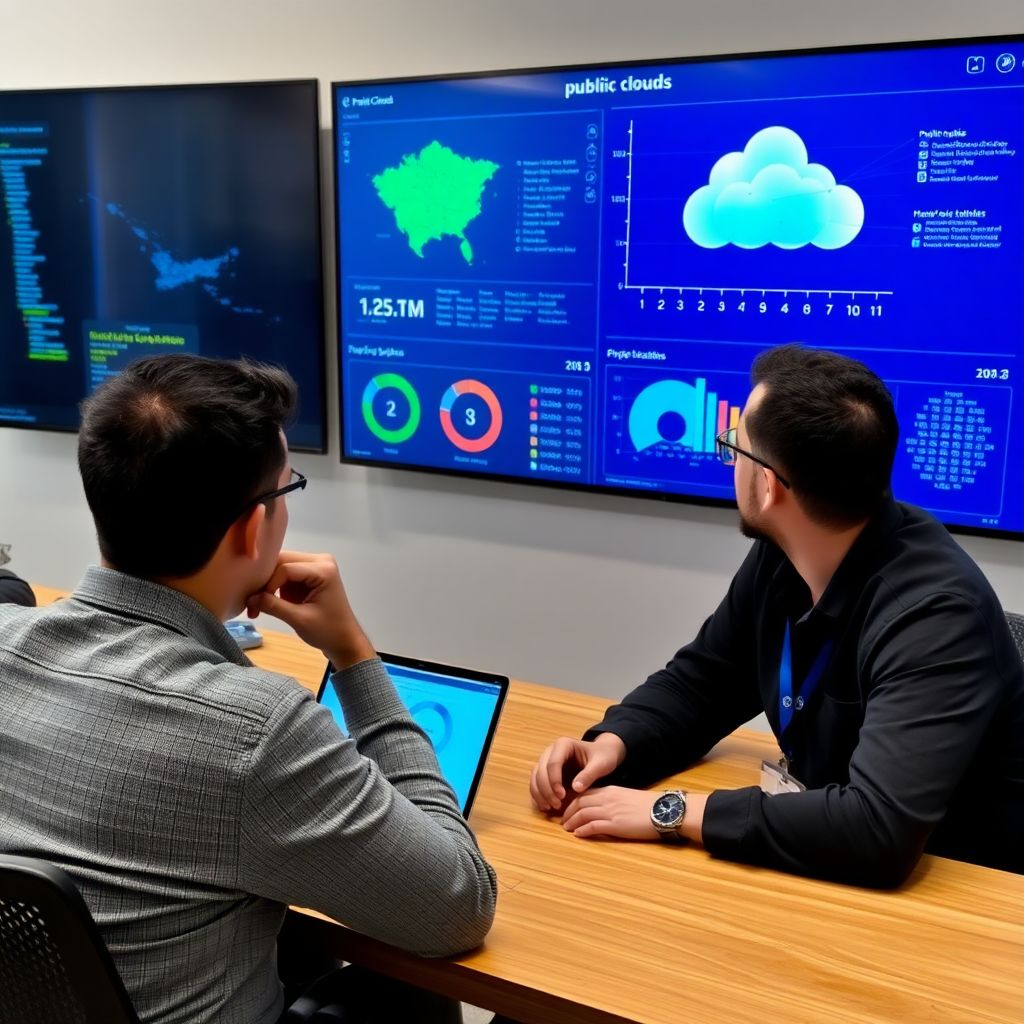
Recent attacks on cloud providers show that tenant security depends on both provider controls and your own configuration. Focus on reducing blast radius, hardening identities and control planes, validating vendor promises, and rehearsing incident response for provider‑side failures. This guide gives concrete, safe steps for Brazilian companies using public cloud.
Immediate lessons from recent supply‑chain and cloud intrusions
- Your cloud account is only as safe as its identities, keys and permissions, not as safe as the brand name of the provider.
- Cross‑tenant and supply‑chain abuse can bypass traditional perimeter tools and land directly inside your workloads.
- Strong governance and melhores práticas de segurança para infraestrutura em nuvem matter more than any single product.
- You must plan specifically for proteção contra ataques cibernéticos em provedores de nuvem, not only for app‑level incidents.
- Contracts, logs and runbooks need to be ready before an incident, not drafted while the attack is unfolding.
- Specialized serviços de segurança cloud para empresas or consultoria em segurança de dados na nuvem are useful, but cannot replace internal ownership.
Attack vectors that have compromised cloud providers in the last 24 months
This section is relevant if your company in Brazil depends on IaaS, PaaS or SaaS for core operations, especially multi‑tenant environments. It matters even more if you store regulated or high‑value data, or if you offer services to other businesses from within a public cloud.
It is less useful as a primary guide if you run only small, low‑risk test workloads in the cloud, or if you are still at the planning stage without any production data or identities created. In those cases, start with baseline segurança em nuvem para empresas and basic governance first.
Main provider‑level attack vectors to understand
- Abuse of control‑plane APIs and management consoles: Attackers obtain staff or tenant credentials, then abuse high‑privilege APIs (e.g., account migration, identity sync, key management) to pivot across tenants.
- Compromise of identity and federation services: Weak MFA, phishing, or exploitation of identity plugins/extensions lets attackers issue tokens or elevate roles across multiple customer accounts.
- Supply‑chain and update channels: Malicious or compromised updates to agents, extensions, or management tools deployed broadly into tenant environments.
- Shared service components: Vulnerabilities in metadata services, shared storage back‑ends or orchestration layers that could, in worst cases, lead to cross‑tenant data access.
- Third‑party marketplace images and add‑ons: Insecure or backdoored appliances from marketplaces that run with high privileges in your VPC/VNet.
Quick checklist: are you in the risk path?
- You rely on provider‑hosted identity, key management or secrets for critical workloads.
- You install agents, extensions or marketplace images from the provider into production VMs or containers.
- Your team grants broad account‑level roles to automation, CI/CD or external support partners.
- You depend heavily on a single provider region or service without a tested failover plan.
Real incident patterns: what attackers targeted and why

To prepare effectively, you need visibility into how real attacks against cloud providers and large SaaS platforms unfolded. The patterns below describe common attacker goals, techniques and opportunities, helping you prioritize defenses and evaluate serviços de segurança cloud para empresas more critically.
What you need before analyzing patterns
- Access to cloud logs
- Control‑plane logs (API calls, console sign‑ins, IAM changes).
- Data‑plane logs (object storage access, database queries where available).
- Network logs (flow logs, WAF logs, load balancer access logs).
- Inventory of identities and trust relationships
- Human identities (employees, contractors, support vendors).
- Service accounts, workload identities, API keys, access tokens.
- Federation and SSO mappings (IdP to cloud roles/groups).
- Basic tooling
- Cloud provider security center or equivalent native tools.
- SIEM or log analytics workspace receiving cloud logs.
- Ticketing system (Jira, ServiceNow, etc.) for tracking risks and actions.
- Governance context
- List of critical workloads and data classifications.
- Existing contracts and SLAs with cloud and key SaaS providers.
- Incident response policy that includes cloud‑specific scenarios.
Common attacker objectives against providers
- Token theft and impersonation: Steal refresh tokens or session cookies to impersonate privileged users or service accounts without triggering password changes.
- Backdoor into update channels: Compromise build or distribution systems so that malicious code is delivered as a trusted update into many tenants.
- Data exfiltration at scale: Target central data stores, backup systems or monitoring pipelines to access large volumes of tenant data at once.
- Persistence inside management layers: Create hidden admin accounts, rogue OAuth apps or undocumented roles to maintain long‑term access.
Why your organization is attractive
- You are part of a valuable supply chain (e.g., fintech, healthcare, government suppliers in Brazil).
- You hold regulated personal data, payment data or intellectual property.
- You run multi‑tenant workloads where compromise of your environment propagates to your own customers.
Assessing your exposure: mapping assets, trust boundaries and blast radius
The goal of this section is a concrete, safe exercise any intermediate team in Brazil can run to understand how a provider‑level breach could impact their environment and where to strengthen segurança em nuvem для empresas.
- Define scenarios for provider‑level attacks – identify a few realistic situations instead of vague "cloud hack" fears.
- Example scenarios: compromised cloud console for your tenant, malicious update of a monitoring agent, leakage of provider‑hosted backup data.
- For each scenario, note primary goals: data theft, ransomware, disruption, lateral movement to on‑prem.
- List cloud assets and critical workloads – build an inventory focused on business impact.
- For each subscription/account/project, list: critical apps, databases, object storage buckets, queues and secrets stores.
- Tag assets with owners, data type (personal, financial, internal, public) and business criticality (high/medium/low).
- Map identities, trust boundaries and entry points – understand who and what can reach those assets.
- Identify admin groups, break‑glass accounts and service principals with tenant‑wide roles.
- Document federations (IdP to cloud, cloud to SaaS) and connections to on‑prem (VPN, Direct Connect, ExpressRoute etc.).
- List third‑party access: managed services, outsourced SOC, consultoria em segurança de dados na nuvem, and vendors with support accounts.
- Estimate blast radius for each scenario – reason about "what could be hit" if the provider side fails.
- For each scenario, mark which identities or services would be abused first (e.g., monitoring agent, backup account, SSO integration).
- For each abused identity, list reachable assets: subscriptions, data stores, production vs. non‑production.
- Highlight cross‑environment impacts, such as on‑prem AD, other clouds, or your own customer tenants.
- Identify control gaps and quick wins – convert findings into a prioritized improvement list.
- Look for overly broad roles, long‑lived keys, missing MFA, and absence of logging around high‑risk APIs.
- Mark "quick wins" (config changes, policy updates) separately from structural projects (network redesign, identity refactoring).
- Assign owners and deadlines – ensure follow‑through instead of a one‑time workshop.
- For each quick win and project, assign a named owner, target date and tracking ticket.
- Schedule a follow‑up review in 3-6 months to revisit blast radius after improvements.
Fast‑track mode: 30-60 minute exposure snapshot
When time is short, run this compressed algorithm to at least understand your biggest risks:
- Pick two realistic provider‑level scenarios (e.g., compromised monitoring agent, stolen tenant admin token).
- List your top 10 most critical cloud assets and the admin or service identities that can control them.
- For each identity, check whether MFA is enforced, keys are rotated and high‑risk actions are logged.
- Note the single largest blast‑radius concern and open one ticket to reduce it within the next sprint.
Practical mitigations: hardening cloud control planes and service accounts
Once you understand exposure, apply targeted mitigations to your control planes and non‑human identities. These improvements are central to proteção contra ataques cibernéticos em provedores de nuvem and align well with melhores práticas de segurança para infraestrutura em nuvem in pt_BR environments.
Configuration focus areas
- Identity and access: Enforce strong MFA for admins, minimize use of global admin roles, favour just‑in‑time elevation and role‑based access control.
- Service accounts and keys: Replace static keys with managed identities where possible, rotate remaining keys, and tighten scopes and lifetimes.
- Network and private access: Use private endpoints, service endpoints or equivalent to limit exposure of management interfaces and data services.
- Control‑plane logging: Ensure all management APIs are logged to a centralized location with retention aligned to your regulatory needs.
- Tenant isolation and segregation: Separate production from non‑production accounts and strongly restrict cross‑environment roles.
Mitigation verification checklist
- All privileged human accounts use phishing‑resistant MFA where possible, or at least strong app‑based MFA.
- Break‑glass accounts exist, are monitored, and are stored securely offline with strict access procedures.
- Service accounts have only the minimum necessary permissions for their tasks and no broad owner/admin roles.
- Long‑lived access keys are inventoried, rotated regularly, and removed when no longer needed.
- Control‑plane logging is enabled for all subscriptions/accounts/projects and ingested into a central SIEM.
- Alerts exist for risky actions: new admin creation, role elevation, key creation, disabling of logging, changes to SSO/MFA settings.
- Production and non‑production workloads are separated into distinct accounts or projects with limited trust relationships.
- Remote management (SSH/RDP) to production is only possible via hardened bastion hosts or privileged access workstations.
- At least one independent backup of critical data is stored with immutability and separate credentials.
Detection and response playbook for provider-level incidents
Even with strong prevention, you must assume that incidents can involve your cloud provider or shared services. Build a lightweight but specific playbook so teams know how to detect and respond quickly, including when using external serviços de segurança cloud para empresas or SOCs.
Common mistakes to avoid
- Relying only on provider "trust us" statements instead of verifying logs, indicators and impact in your own environment.
- Not having cloud logs centralized and searchable, causing delays in assessing whether your tenant was affected.
- Treating a provider‑side issue as "their incident, not ours" and failing to activate internal incident response.
- Ignoring identity artifacts (tokens, OAuth apps, service principals) and focusing only on VMs and networks.
- Allowing third‑party vendors wide emergency access during incidents without time limits, approvals or post‑incident review.
- Communicating externally (clients, regulators, media) before you have at least a preliminary, evidence‑based impact assessment.
- Failing to update detections and playbooks after learning from each incident or major public cloud compromise.
- Not rehearsing incident response with realistic tabletop exercises involving provider‑level failures.
Minimal response runbook when a provider breach is announced
- Confirm whether your specific regions, services, or tenants are in scope based on official advisories.
- Increase monitoring of cloud admin sign‑ins, token issuance and high‑risk API calls for the potentially affected period.
- Rotate high‑privilege credentials and keys related to impacted services, prioritizing admin and automation accounts.
- Search for known indicators of compromise (IoCs) in your logs; document and preserve evidence if you find anomalies.
- Inform internal stakeholders (IT, legal, business) with a concise, factual status and next review time.
Recovery, legal and vendor‑management steps after a provider compromise
After the immediate response, you need structured recovery and vendor actions. For Brazilian organizations this often also connects to sector regulators and local privacy requirements, making disciplined follow‑up essential.
Post‑incident recovery themes
- Technical recovery: re‑hardening identities and control planes, rebuilding compromised workloads, restoring clean data from backups.
- Assurance: validating that attack paths have been closed, re‑running exposure assessments, and adjusting blast‑radius assumptions.
- Governance: updating policies, architectures and melhores práticas de segurança para infraestrutura em nuvem based on lessons learned.
Vendor‑management and legal alternatives
Depending on impact and your risk appetite, several strategic options exist; often a mix is appropriate.
- Stay with the same provider, stronger guardrails
- Use the incident as leverage to improve SLAs, logging, and incident transparency.
- Introduce stricter internal controls around identity, keys, and cross‑tenant trust.
- Suitable when impact was limited and provider response was transparent and prompt.
- Multi‑cloud or hybrid diversification
- Move selected critical workloads or backups to a second provider or on‑prem to reduce dependency.
- Adds complexity but can lower systemic risk for essential services.
- Useful for organizations with strong engineering capacity and regulatory pressure for resilience.
- Provider migration for specific workloads
- Gradually move the highest‑risk or most regulated workloads to another provider with better alignment to your needs.
- Requires careful cost, skills and portability assessment to avoid rushed decisions.
- Consider when there is repeated provider failure or weak cooperation during incidents.
- Enhanced external support and assurance
- Engage specialized consultoria em segurança de dados na nuvem or independent auditors to validate provider claims.
- Combine with internal training to keep ownership of strategy while leveraging external expertise.
- Appropriate when internal teams are small but business dependence on cloud is high.
Practical answers for common preparedness and response doubts
How often should we reassess our cloud blast radius?
Reassess at least annually and after major architecture changes, provider incidents, or new regulatory requirements. Tie the exercise to strategic planning so identified risks map to funded initiatives.
Is multi-cloud always the best defense against provider attacks?
No. Multi‑cloud adds resilience but also complexity and more attack surface. For many intermediate teams in Brazil, stronger identity, logging and backup practices on a single provider give more benefit than poorly executed multi‑cloud.
Which logs are mandatory to detect provider-related incidents?
Enable and retain control‑plane logs, admin sign‑in logs, key and secret access logs, and data‑plane logs for critical storage and databases. Centralize them into a SIEM or analytics workspace for correlation.
Do we need external cloud security services or can we do everything in-house?
You can start in‑house with basic governance and monitoring, adding serviços de segurança cloud para empresas or SOC support as complexity grows. External help is valuable for 24×7 monitoring and specialized expertise, but internal ownership of risk decisions is essential.
What is the safest way to handle cloud admin accounts?

Use individual named accounts with strong MFA, just‑in‑time elevation, and no standing global admin rights. Monitor all admin actions, keep break‑glass accounts offline, and avoid shared admin passwords.
How do we explain provider-related risks to business leadership?
Describe realistic scenarios in business terms: data exposure, downtime, regulatory impact and customer trust. Show a simple blast‑radius diagram, your current safeguards, and the small number of prioritized improvements you need funded.
When is it worth involving legal and regulators after a cloud incident?
Involve legal early whenever there is potential personal‑data exposure, contract breach, or sector‑specific regulation. They can determine notification duties to customers, partners and regulators, and help manage communication with providers.