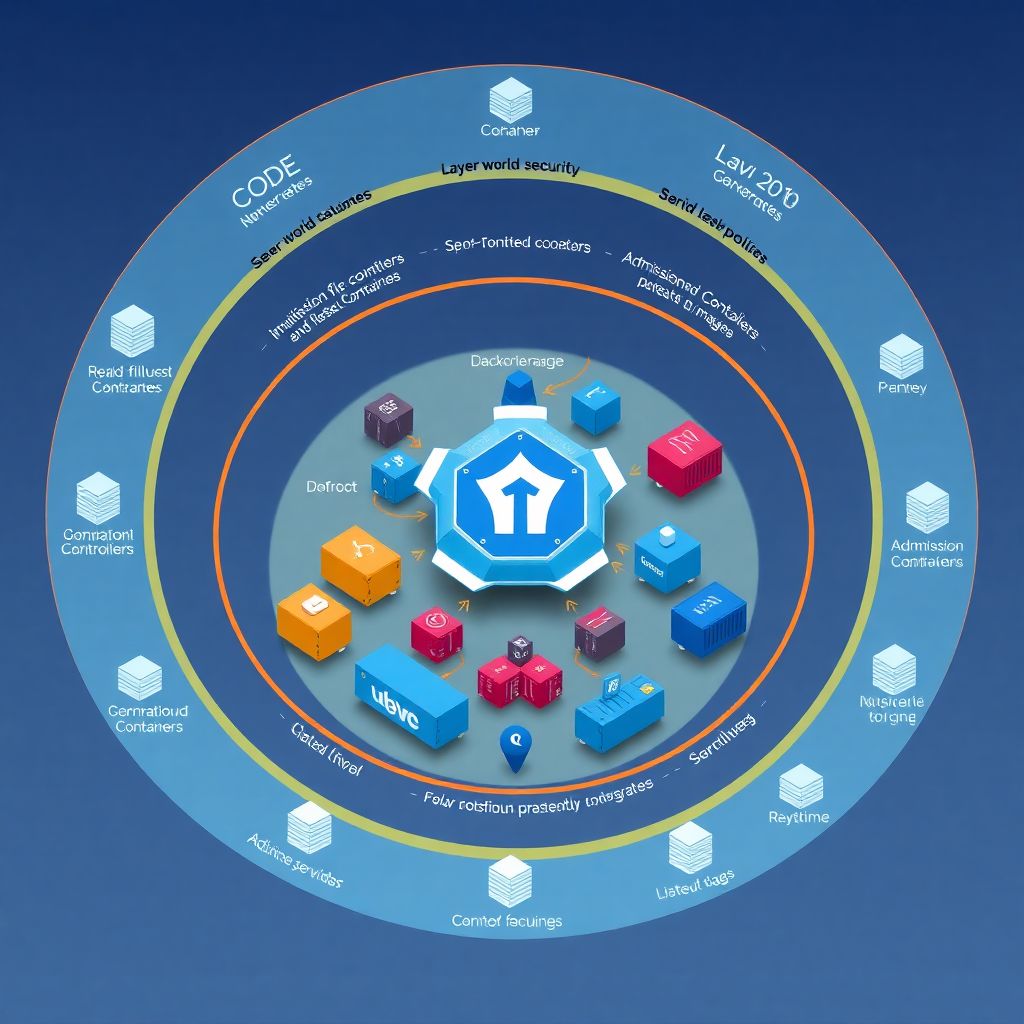
Segurança em containers e Kubernetes: contexto real
Por que isso virou assunto de sobrevivência
When you move from pets (VMs) to cattle (containers), your attack surface explodes sideways. Studies from multiple cloud providers show that over 60–70% of successful cloud breaches in the last years envolveram algum tipo de erro em configuração de identidade, rede ou imagem de container. Add to that the fact that average time from public PoC exploit to mass scanning is now counted in hours, not weeks. In other words: if you publish a vulnerable image today and expose it on the internet, someone will poke it before your morning coffee gets cold. That’s why segurança em containers na nuvem is less about “installing an antivirus” and more about building repeatable, testable guardrails around everything that runs, talks, or stores data in your clusters.
Do “docker run” ao primeiro cluster que não te deixa dormir
Most teams start with Kubernetes the same way: a couple of Dockerfiles, a managed cluster in a major cloud, maybe an Ingress, and that nagging feeling that “we’ll harden it later”. The problem is that “later” usually arrives right after the first security review or an incident. A sane baseline begins before the first pod: design namespaces by trust level, block direct access to the control plane from the public internet, and enforce strong RBAC instead of giving everyone cluster-admin. From there, lock down admission with policies that ban privileged containers, hostPath mounts, and latest tags. This sounds strict, but if those controls break your workloads, you’ve just discovered tech debt that would have surfaced in a much uglier way under real attack.
Do básico ao nível “produção crítica”
Endurecer o cluster sem virar burocracia
To reach something close to segurança em kubernetes em produção, imagine your cluster as hostile by default—even to your own services. Every pod should get just enough CPU, memory, filesystem and network to do its job. That means mandatory resource limits, read‑only roots when possible, non‑root users in Dockerfiles, and network policies that default to deny and then open only required flows. Instead of trying to remember all this manually, codify it: use Git to store security policies, run automated checks in CI, and treat SecurityContext and PodSecurityStandards as non‑negotiable. The trick is to wire these rules into developer workflows so that failing a policy is as normal as failing a unit test, not an exotic “security exception”.
Camadas de defesa: do código ao runtime
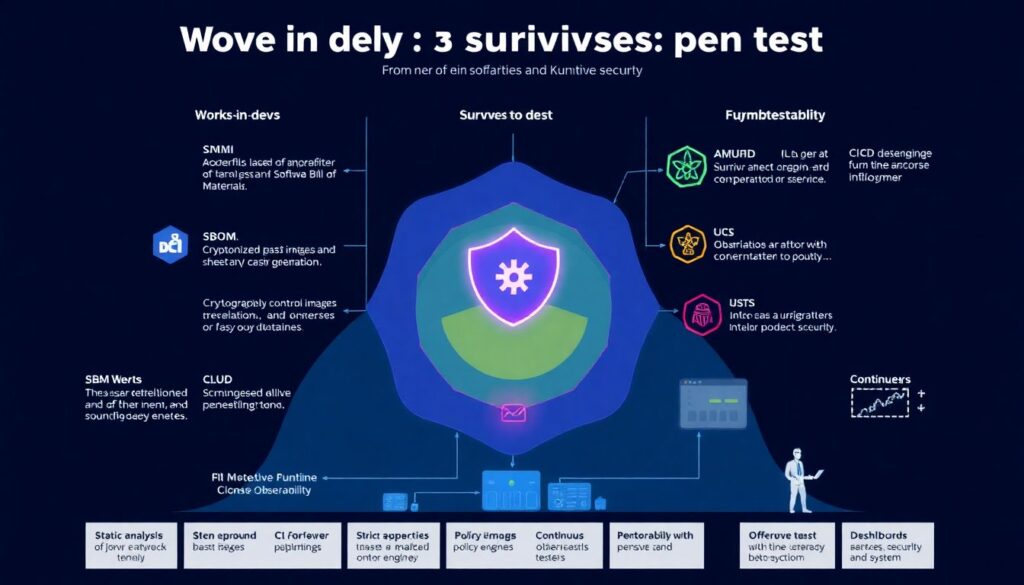
Going from “works in dev” to “sobrevive a pen test” requires multiple layers that overlap. You want static analysis of Dockerfiles, scanning of base images, SBOM generation, signed images, admission control, and continuous runtime observability. But that still leaves one big gap: what happens when something slips through? Here, think like an attacker. Assume a compromised pod and ask how far it can move: can it reach the metadata API, the database, the service mesh control plane? If the answer is “yes, easily”, your cluster is one phishing email away from a full takeover. The non‑obvious move is to treat every namespace as a semi‑isolated mini‑tenant, with its own network isolation, IAM boundaries, and secrets domain, even if all the apps belong to your own team.
Ferramentas e automação que realmente ajudam
Usando o ecossistema a seu favor
The market is flooded with ferramentas de segurança para containers docker e kubernetes, from open source to very opinionated commercial platforms. Instead of chasing feature checklists, design a pipeline and pick tools to fill specific gaps. For build time, think image scanners and linters that enforce minimal base images and no hard‑coded secrets. For deploy time, use admission controllers that reject manifests violating your baseline. At runtime, focus on anomaly detection on syscalls and network flows rather than just “agent installed = secure”. A practical pattern is to start with open tools to build your muscle—Trivy, kube‑bench, Kyverno, Falco—then, only when you understand your threat model, consider consolidating with a platform to reduce operational friction.
Não subestime o valor de outsiders técnicos
Many teams wait too long before bringing in external brains. A good consultoria segurança kubernetes e cloud doesn’t just run a scanner and send you a PDF; they map how your org ships software and then propose control points that won’t be ignored in three months. One unconventional angle is to ask them explicitly to break at least one of your production‑like clusters under controlled conditions and to pair with your engineers while doing it. This “red‑pairing” tends to surface systemic issues—like over‑privileged service accounts or leaky CI credentials—much faster than traditional reviews. Afterwards, make the findings part of an internal playbook so the expertise doesn’t disappear when the consultants leave.
Melhores práticas que não parecem “checklist”
Transformando recomendações em defaults inteligentes
Everyone talks about melhores práticas de segurança kubernetes, but the real win is turning them into boring defaults. Instead of publishing a hardening guide that nobody reads, bake best practices into templates and generators: Helm charts, Kustomize bases, internal CLIs. Developers shouldn’t need to remember PodSecurityPolicies (or their successors), seccomp, or AppArmor profiles; those should be pre‑wired into the base charts, and deviations should require an explicit, auditable justification. Another non‑obvious move is to tie security posture to performance SLOs: unstable workloads caused by resource misconfigurations are often a sign of poor isolation, which is both a reliability and a security smell. This linkage gets SREs and security folks on the same side of the argument.
Economizando ao reforçar o que já existe
Security is usually sold as “extra cost”, but a lot of gains come from using what you’re already paying for. Managed cloud Kubernetes gives you native IAM, load balancers, KMS, and logging; wiring these properly often beats buying yet another box. From an economic angle, the biggest savings come from reducing blast radius: a compromised low‑value service should never be able to reach crown‑jewel data. Segmenting by sensitivity and enforcing independent credentials, keys, and quotas means a single breach translates into limited, measurable loss instead of an existential event. If you need a metric to convince stakeholders, model expected loss per incident and then simulate how namespace isolation, strict identities, and secret rotation shrink that number.
Futuro, previsões e impacto na indústria
Para onde está indo a segurança em nuvem nativa
Over the next 3–5 years, security for cloud‑native stacks will lean heavily on eBPF‑based observability, pervasive signing/verification (from source to image to deployment), and policy engines sitting close to the control plane. The line between networking, platform, and security teams will blur even further: service meshes will enforce zero‑trust defaults, and supply‑chain security frameworks like SLSA will become table stakes for regulated sectors. As empresas que hoje tratam segurança em kubernetes em produção como diferencial competitivo vão, em breve, considerá‑la apenas requisito mínimo para permanecer no mercado. Industries with strict compliance—fintech, health, critical infrastructure—will pressure vendors to make secure configs the most convenient path, not an add‑on buried behind advanced toggles.
E se você quiser ir além do “padrão do mercado”
If you want non‑standard moves, start by embracing radical transparency: publish your container and cluster hardening standards internally like you would a product API, and invite feedback from dev teams as “users”. Consider building a “secure‑by‑construction” internal PaaS on top of Kubernetes where app teams can’t even express insecure states in their manifests. Another unconventional but powerful approach is to gamify attacks: run regular capture‑the‑flag events in a clone of your real environment, with prizes for engineers who discover privilege escalations or path‑of‑least‑resistance misconfigurations. Over time, you’ll grow a culture where segurança em containers na nuvem is not a checkbox, but a shared engineering challenge that smart people are excited to solve.