
Choosing a CSPM tool is about matching risk, cloud scale, and budget. For most small and mid-size Brazilian companies, a cloud-native CSPM plus focused hardening is often enough. Multi-cloud or regulated environments usually need an enterprise multi-cloud CSPM, while developer-centric or open-source options fit teams that can invest more engineering time than cash.
Top-line takeaways for budget-conscious security teams

- Start with a clear inventory of cloud accounts, regions, and critical workloads before doing any ferramentas CSPM comparação.
- Cloud-native CSPM is usually the cheapest, but multi-cloud coverage and advanced analytics are limited.
- Enterprise CSPM platforms bring richer detection and governance, at the cost of higher license and operational effort.
- Open-source or DIY CSPM cloud security posture management ferramentas save license cost but demand strong internal skills.
- Developer-centric CSPM fits teams practicing IaC and DevSecOps, shifting misconfiguration detection earlier.
- Map plataformas CSPM cloud security preço against the value of each protected workload, not the number of accounts alone.
Technical evaluation framework for CSPM
Use this evaluation checklist to compare options and arrive at the melhor solução CSPM para empresas in your context.
- Cloud coverage and depth – Which cloud providers (AWS, Azure, GCP, others) are supported, and how deep are the checks (IaaS, PaaS, containers, serverless)?
- Compliance and benchmarks – Out-of-the-box policies for CIS, PCI, LGPD-aligned controls, and ability to customize or add your own control sets.
- Detection quality – Breadth of misconfigurations covered, context-awareness (public + sensitive + internet-exposed), and how effectively false positives are reduced.
- Remediation workflows – Native auto-remediation, guided runbooks, integration with ticketing and CI/CD, and support for approvals and exceptions.
- Integration footprint – How the CSPM connects (read-only roles, agents, APIs), minimum privileges required, and impact on existing guardrails.
- Scalability and performance – Ability to handle many accounts, subscriptions, and projects; latency from change to detection; stability with growing environments.
- Usability for mixed teams – Dashboards and reports understandable by both SecOps and cloud engineers; support for multi-language environments common in pt_BR teams.
- Cost structure and predictability – Pricing by resource, account, vCPU, or flat tiers; how easy it is to forecast cost as you onboard more workloads.
- Vendor ecosystem and lock-in – Availability of APIs, export formats, and integration adapters to avoid being locked into a single security or cloud vendor.
Deep dive: strengths of leading CSPM solutions
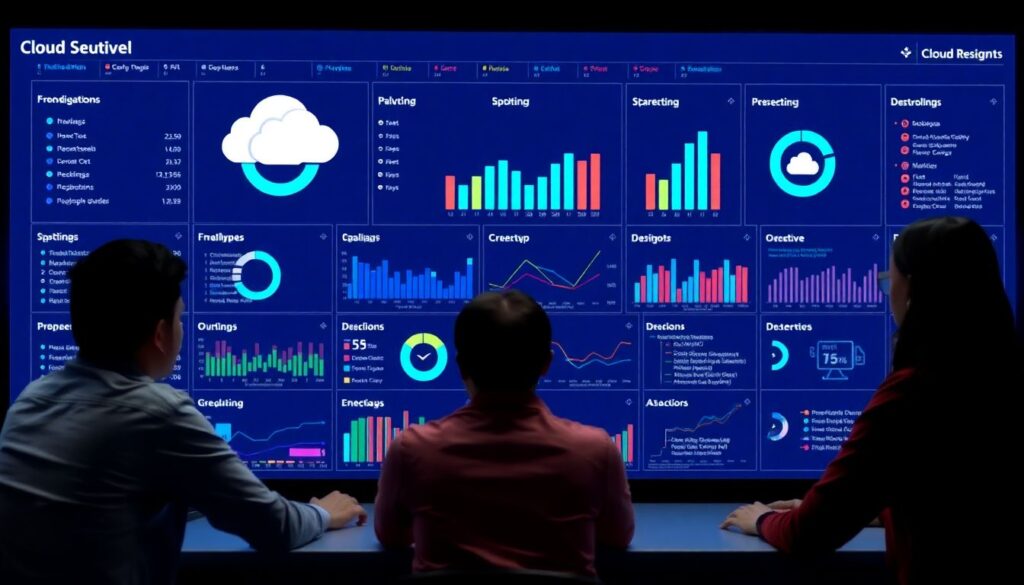
The table below compares common CSPM approaches rather than specific brands, helping answer cspm quais são as melhores ferramentas for different maturity and budget levels.
| Variant | Best fit | Strengths | Limitations | When to choose it |
|---|---|---|---|---|
| Cloud-native CSPM (AWS, Azure, GCP built-ins) | Small to mid-size, single-cloud, cost-sensitive teams | Low additional license cost; tight integration with the cloud console; easy onboarding via built-in roles; good baseline policies for common risks. | Limited multi-cloud views; less flexible reporting; advanced analytics and attack-path modeling usually absent; remediation may be basic. | Choose when you mainly run on one provider and want a quick win without adding another security vendor or complex deployment. |
| Enterprise multi-cloud CSPM platforms | Regulated or large multi-cloud organizations | Unified view across multiple clouds; rich policy engines; strong compliance mapping; mature integrations with SIEM, ITSM, and SOAR. | Higher license and onboarding cost; may require dedicated admins; complexity can overwhelm smaller teams if not scoped carefully. | Choose when you need consistent posture management and reporting across clouds and business units, especially with auditors involved. |
| Developer-centric / IaC-focused CSPM | DevOps-heavy teams using Terraform, CloudFormation, or similar | Detects issues in code before deployment; integrates into CI/CD; promotes security as part of the developer workflow; supports policy-as-code. | Runtime posture gaps if not combined with production scanning; developers must adopt and maintain checks in pipelines. | Choose when you want to shift-left misconfiguration detection and already have strong CI/CD practices in place. |
| Open-source / DIY CSPM stacks | Technically strong teams with tight budgets | No or low license fees; high flexibility; inspectable code; possibility to combine multiple scanners and custom dashboards. | Requires engineering time for deployment, tuning, and maintenance; support is community-based; gaps in compliance content must be filled in-house. | Choose when you are ready to trade money for time, and you can assign engineers to own the CSPM solution as a product. |
| Managed security service CSPM (MSSP-led) | Teams with minimal in-house security capacity | Outsourced operations; experts tune and triage alerts; predictable monthly service charge; often includes incident response guidance. | Less direct control; visibility and customization depend on the provider; changing MSSP can be slow; data residency must be reviewed. | Choose when you need CSPM outcomes quickly but cannot hire or assign internal staff to run the platform day-to-day. |
For many Brazilian organizations, the practical caminho is hybrid: start from cloud-native capabilities, then layer a focused enterprise or developer-centric CSPM where risk is higher and platforms CSPM cloud security preço is easier to justify.
Limitations and blind spots to watch for
The scenarios below highlight where each CSPM variant can fail, with a specific note on budget versus premium approaches.
- If you only enable cloud-native CSPM, then multi-cloud drift remains invisible. On a budget, mitigate by at least exporting findings to a central dashboard; with a premium platform, configure cross-cloud policies and reporting.
- If you rely solely on enterprise CSPM dashboards, then misconfigurations defined in IaC may slip through until runtime. A low-cost improvement is to add open-source IaC scanning; a premium improvement is a fully integrated policy-as-code engine.
- If you focus on IaC-only CSPM, then manual console changes (hotfixes) are a blind spot. Budget-conscious teams can script periodic drift detection; premium suites may offer continuous agentless scanning of live environments.
- If you adopt open-source CSPM toolchains, then coverage of niche services and managed PaaS offerings can lag. With limited funds, prioritize the most critical services; with a higher budget, backfill gaps using targeted commercial scanners.
- If you depend on an MSSP for CSPM, then context about business impact may be shallow. Maintain a simple, shared asset criticality list internally so the provider can tune alerts without overspending on premium features you do not need.
- If you never tune built-in policies, then noise will grow and hide real risk. Both budget and premium paths need a small recurring process: review top noisy rules, disable or customize them, and focus on misconfigurations that truly matter.
Integration, deployment, and operational overhead
Use this short algorithm when comparing CSPM cloud security posture management ferramentas to keep operational overhead manageable.
- List all cloud accounts, subscriptions, and projects, grouped by environment (dev, staging, production) and business unit.
- Decide where you prefer to integrate: directly into cloud accounts (read-only roles), into CI/CD pipelines, or through an MSSP.
- For each candidate tool, map required permissions and setup steps; discard options that require broad write access for basic posture checks.
- Estimate onboarding time: number of accounts multiplied by average connection time, plus policy-tuning sessions with app owners.
- Check existing tools: SIEM, ticketing, chat, and code repositories; prioritize CSPM platforms that have native connectors for your current stack.
- Define who owns daily triage and monthly tuning; if you cannot assign people, prefer managed service models or simpler, cloud-native solutions.
- Test with a limited-scope pilot (for example, one critical application stack) and measure noise, useful findings, and time-to-remediation before expanding.
As a minimal example of IaC integration, many developer-centric tools can be wired into a pipeline step like:
# Pseudo-example, adapt to your tool
cspm-scan --path infra/terraform --format sarif --fail-on-high
Cost vs coverage: budget-first comparative matrix
These are frequent mistakes teams make when balancing price and coverage while searching for the melhor solução CSPM para empresas of different sizes.
- Comparing license prices without considering people cost – A “cheap” open-source approach that consumes a full-time engineer can be more expensive than a modest commercial subscription.
- Buying premium features for low-risk workloads – Paying for advanced attack-path visualization on short-lived, non-sensitive test environments offers poor return.
- Ignoring scale effects – Some tools price per resource or per account; as cloud usage grows, plataformas CSPM cloud security preço can rise faster than planned if you do not simulate future scale.
- Over-focusing on compliance checklists – Choosing the tool with more predefined controls, instead of validating whether those controls match your real threats and services.
- Deploying CSPM everywhere at once – Rolling out broadly before tuning policies leads to alert fatigue and wasted time; start with critical workloads, then expand.
- Underestimating integration cost – A platform without native connectors for your SIEM, ITSM, and CI/CD can trigger hidden integration projects.
- Not planning for multi-cloud early – Even if you are single-cloud today, ignoring potential multi-cloud needs may force an expensive migration to another CSPM later.
- Accepting opaque pricing models – If you cannot easily predict cost based on usage, push vendors for clearer tiers or consider alternatives with transparent metering.
- Skipping proof-of-value pilots – Choosing a tool from a slide deck instead of running a short, realistic pilot makes it easy to overpay for features you will not use.
Selecting the right CSPM for constrained budgets
For small, mostly single-cloud Brazilian teams, cloud-native CSPM plus targeted open-source scanners is usually the best-value starting point. For fast-growing or regulated multi-cloud organizations, an enterprise multi-cloud CSPM delivers better governance. Developer-centric tools fit teams with strong DevOps culture, while MSSP-led CSPM serves companies lacking in-house security capacity.
Practitioners’ quick questions and concise answers
Which CSPM approach is most cost-effective for a small company on AWS only?
Start with AWS’s native CSPM capabilities and add a lightweight IaC or open-source scanner for higher-risk workloads. This combination keeps license cost low while still addressing the most common misconfigurations.
How do I compare CSPM tools quickly without a long proof-of-concept?
Define three to five critical misconfiguration scenarios, connect only one representative environment, and measure time to onboard, volume of useful alerts, and ease of remediation. Use this as your primary ferramentas CSPM comparação baseline.
Do I need both runtime CSPM and IaC scanning?
Ideally yes: IaC scanning prevents new issues, while runtime CSPM catches manual changes and legacy setups. If budget is tight, start with runtime CSPM for production and gradually introduce IaC checks into your main pipelines.
When does an enterprise multi-cloud CSPM make sense in Brazil?
It becomes attractive once you operate critical workloads across at least two major clouds or face strict regulatory reporting. At that point, unified policies and dashboards can justify higher platforms CSPM cloud security preço.
Can open-source CSPM tools replace commercial platforms?
They can, if your team has time and skills to integrate, tune, and maintain them. For many organizations, a mixed model works better: open-source for IaC and targeted checks, plus a modest commercial CSPM for centralized views.
How often should I tune CSPM policies and alerts?
Plan an initial tuning cycle in the first month of rollout, then review noisy rules and exceptions at least quarterly. Major architectural changes, such as adding a new cloud provider, should always trigger an extra review.
Is an MSSP-led CSPM a good option for startups?
It can be, especially if you lack security staff and need outcomes fast. Ensure the MSSP provides transparent reporting and is willing to work within your tooling and budget constraints.