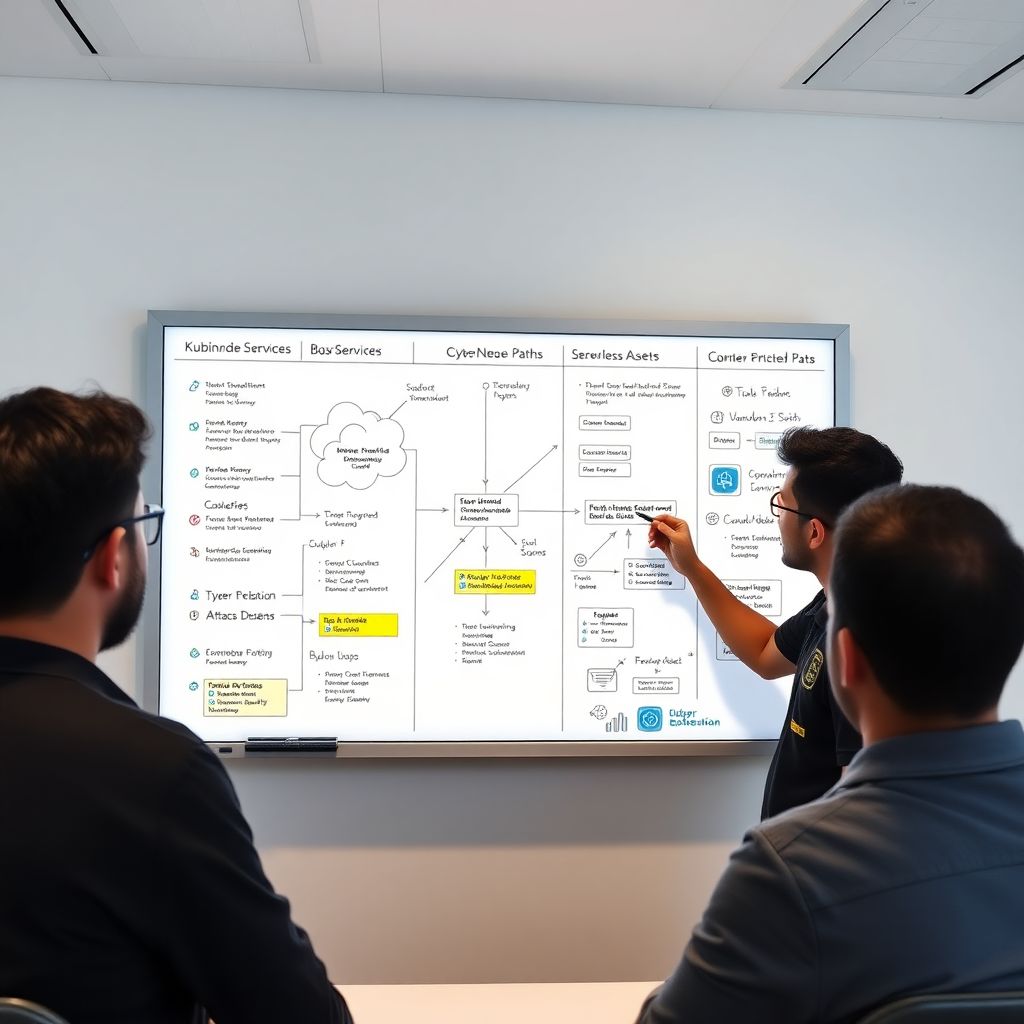
Cloud-native threat modeling is a structured way to map your Kubernetes, microservices and serverless assets, identify how data really flows, uncover attack paths, and rank risks by likelihood × impact. This guide gives a safe, concrete, risk‑oriented step‑by‑step, suitable for intermediate teams in Brazil working with modern cloud platforms.
Risk-focused summary for cloud-native threat modeling
- Start from business-critical assets, then define trust boundaries across clusters, VPCs, accounts and external integrations.
- Map both data planes and control planes so you can see where attackers would pivot in cloud-native environments.
- Focus threat discovery on containers, service mesh, serverless and CI/CD, not only on external APIs.
- Use a simple likelihood × impact scale and keep a living risk register linked to owners and mitigations.
- Prefer mitigations aligned with cloud-native primitives: policies, identities, network controls and workload hardening.
- Turn threat modeling into a repeatable, light-weight practice that runs with delivery, not a one-time project.
Scoping cloud-native assets and trust boundaries
This approach suits product and platform teams already running Kubernetes, microservices or serverless in production, who need segurança em arquiteturas cloud-native without heavy bureaucracy. It works well when you can pull people from dev, ops and security into the same discussion for short, focused sessions.
Avoid doing a full cloud-native threat modeling exercise when:
- You have no stable architecture at all (everything is still experimental PoC).
- There is no sponsorship to act on findings; start by securing quick wins instead.
- The team has zero visibility into runtime (no logs, metrics, traces); fix observability first.
To define scope safely and clearly:
- Pick one system or value stream (for example, an internet-facing SaaS API) instead of the whole company.
- List core assets: user data, payment flows, secrets, admin functions, availability of critical services.
- Draw trust boundaries: where authentication changes, where networks or accounts change, and where third parties start.
- Note dependencies: managed databases, message brokers, storage buckets, CI/CD, identity providers.
Example: For a payments microservice, scope includes the API gateway, the Kubernetes namespace that hosts payment pods, the database, the message queue to billing, the cloud KMS, and the external PSP gateway.
Mapping runtime data flows and control planes
To build a realistic picture you need both people and tooling. Modern serviços de modelagem de ameaças em nuvem or internal practices should require at least the following inputs.
Access and information required:
- High-level architecture diagram: components, namespaces, clusters, accounts, regions.
- Runtime topology from your platform: Kubernetes resources, service mesh graphs, ingress definitions.
- Cloud account structure: projects, subscriptions, VPCs/VNets, peering, on-prem connections.
- Identity view: IAM roles, service accounts, federated identities, API keys usage.
- Deployment view: CI/CD pipelines, artifact repositories, infrastructure as code repos.
Recommended tools for safe, practical modeling (non-exhaustive):
- Diagramming: Draw.io, Excalidraw, Lucidchart, or whiteboard snapshots.
- Cloud-native topology: service mesh UI, Kubernetes dashboards, cloud network visualizers.
- Tracing and logs: distributed tracing tools, centralized logging (to validate real data flows).
When choosing ferramentas de threat modeling para aplicações em nuvem, prioritize options that integrate with code or pipelines (model-as-code or repo-based diagrams) and that let you tag assets, threats and mitigations in a consistent way.
Include both planes in your mapping:
- Data plane: end-user requests, internal API calls, message queues, databases, caches.
- Control plane: Kubernetes API server, cloud control APIs, CI/CD, IaC deployment tools, admin consoles.
Example: Show how a mobile client hits the API gateway, which routes into multiple microservices, then to a database, while DevOps manages the same services via kubectl and GitOps pipelines touching the Kubernetes API and cloud control plane.
Identifying threat surfaces in service mesh, containers and serverless
This is the core step-by-step procedure. It is designed to be safe, repeatable and understandable by intermediate engineers, including teams working with melhores práticas de segurança para microserviços e kubernetes.
-
Prepare a simple, shared architecture view
Freeze one diagram for the exercise so everyone talks about the same system. Mark trust boundaries and label each component as user-facing, internal, third-party or management.
- Highlight namespaces, clusters, VPCs and accounts.
- Mark any cross-region or cross-cloud links.
-
List container and pod-level threat surfaces
For each workload, think about how an attacker could reach or abuse it. Stay technical but concrete, avoiding speculative scenarios detached from your stack.
- Ingress and API endpoints exposed from pods or services.
- Container images, base images, and supply chain sources.
- Runtime permissions (hostPath, privileged, CAP_SYS_ADMIN, root user).
- Network policies (or absence of them) between pods and namespaces.
- Access to secrets (Kubernetes Secrets, environment variables, mounted volumes).
-
Analyze service mesh and internal communication paths
For meshes like Istio or Linkerd, look at how traffic policies can be misused or bypassed. Treat the mesh itself as a critical security component.
- mTLS configuration and certificate management between services.
- Authorization policies for service-to-service calls.
- Ingress and egress gateways, including allowed external destinations.
- Observability endpoints exposed by the mesh (dashboards, APIs).
-
Evaluate serverless functions and event sources
For FaaS components, map all triggers and data paths. Keep an eye on over-privileged identities and unvalidated events.
- HTTP endpoints, queue subscriptions, storage events, cron jobs.
- Execution roles and access to databases, queues, secrets, internal services.
- Input validation for messages and files, especially from multi-tenant sources.
-
Include CI/CD, registries and infrastructure as code
Treat build and deployment systems as part of your attack surface, since compromising them often bypasses perimeter defenses.
- Pipeline access to production clusters and cloud accounts.
- Container registries (public vs private, image signing, promotion flows).
- IaC repositories, approvals and drift detection.
-
Map attacker goals to your assets
Translate generic threats into concrete attacker goals against your system. Use simple categories and stay close to business language.
- Data theft (PII, financial data, credentials, tokens).
- Service disruption (DoS against specific APIs, node exhaustion, scaling abuse).
- Account or container takeover (persistence in cluster, crypto-mining, lateral movement).
- Integrity loss (tampering with transactions, configuration, or code artifacts).
-
Derive concrete threat statements
Write short, specific threat sentences, each linking an attacker, an action and a target. This makes later prioritization and mitigation straightforward.
- Format example: “An external attacker abuses misconfigured ingress to call internal admin APIs.”
- Avoid vague items like “API may be insecure” without a clear action or consequence.
Быстрый режим: minimal threat surface pass
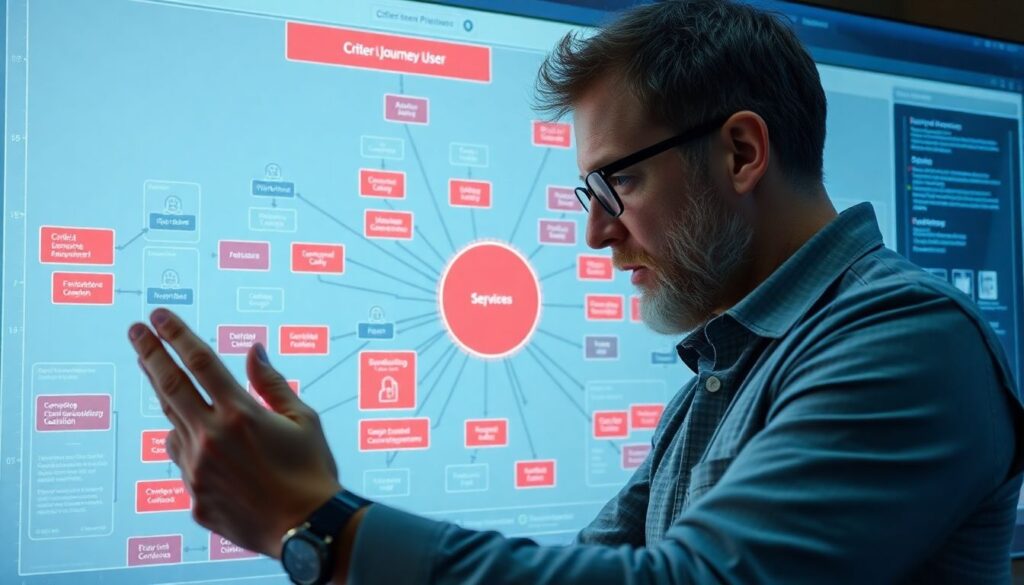
- Pick one critical user journey and its main microservices or functions.
- List all entry points: public endpoints, event triggers, admin interfaces.
- For each entry, write one sentence on what a realistic attacker could try and why it matters.
- Tag each threat with high/medium/low impact and move high-impact items into your risk register.
Prioritizing risks with a likelihood × impact framework
After you identify threats, confirm that your prioritization is solid and repeatable. Use this checklist as a quick validation of your likelihood × impact effort.
- Each risk entry combines a clear threat description, an affected asset and a consequence.
- Likelihood and impact use a simple, shared scale (for example: low, medium, high) documented for your team.
- Likelihood estimates consider existing controls, not a theoretical empty environment.
- Impact reflects business damage (legal, financial, availability, reputation), not only technical severity.
- High-impact, low-effort mitigations are clearly visible so they can be picked first.
- Dependencies between risks are documented (for example, one compromise unlocks several paths).
- Assumptions are written down: attacker skill, access level, and what you consider out of scope.
- At least one person from business or product reviewed the impact ratings.
- Risks link to concrete architecture components (services, clusters, accounts) so owners are obvious.
- The risk list is small enough to act on (you can focus on a top slice in the next quarter).
| ID | Asset / Component | Threat | Likelihood | Impact | Mitigation (idea) | Owner |
|---|---|---|---|---|---|---|
| R-01 | Public API Gateway | Abuse of missing rate limits causing resource exhaustion | Medium | High | Add rate limiting, WAF rules and autoscaling guardrails | API Platform Team |
| R-02 | Kubernetes Namespace “payments” | Lateral movement via overly permissive NetworkPolicy | Medium | High | Apply default-deny network policies, segment by workload | Cluster SRE |
| R-03 | Serverless Function “invoice-processor” | Data exfiltration using over-privileged execution role | Low | High | Restrict IAM role to minimal data stores required | Payments Squad |
| R-04 | CI/CD Pipeline | Pipeline compromise leading to image tampering | Medium | High | Enforce signed images, harden runners, require approvals | DevOps Team |
Selecting mitigations tied to cloud-native primitives

When moving from risks to actions, teams commonly fall into predictable traps. Avoid these mistakes to keep mitigations effective and aligned with cloud-native capabilities.
- Trying to solve every risk only at the perimeter instead of using Kubernetes, mesh and cloud IAM properly.
- Ignoring identity and access design and focusing only on container hardening or network controls.
- Using generic checklists from other environments that do not fit cloud-native patterns in Brazil or your specific providers.
- Relying on manual processes where automation is available (for example, policy-as-code, admission controllers).
- Not mapping mitigations to owners and sprints, causing a backlog of “security debt” without delivery.
- Deploying complex solutions (like a service mesh) but leaving default, insecure configurations in place.
- Skipping validation: assuming that a mitigation is working without tests, chaos experiments or security scans.
- Over-fitting to tools from consultoria de segurança cloud-native для empresas without making sure your internal team can operate them.
- Failing to retire obsolete controls, leaving overlapping and confusing policies that hide real gaps.
As a rule, prioritize mitigations that leverage:
- Cloud IAM and resource policies for fine-grained access control.
- Kubernetes RBAC, namespaces, pod security and network policies.
- Service mesh for mTLS, authorization and traffic policies.
- Secure defaults in serverless triggers and function configurations.
Operationalizing: validation, testing and continuous threat modeling
Different organizations will operationalize threat modeling differently. Choose an approach that matches your maturity, culture and available time.
-
Lightweight, sprint-based reviews
Add a short threat modeling checkpoint to design or refinement for changes touching critical flows. This suits product teams that ship frequently and need minimal overhead.
-
Centralized platform-led practice
Have a platform or security engineering group maintain patterns, templates and reusable mitigations, while squads adopt them. This works well when you have many product teams on a shared cloud-native platform.
-
Tooling-driven model-as-code
Represent architecture and threats in code or configuration stored in Git. CI pipelines validate changes to the model and enforce policy. This is effective when your team is comfortable with IaC and automation.
-
External partnership with internal ownership
Leverage external consultoria de segurança cloud-native para empresas or serviços de modelagem de ameaças em nuvem for initial setup, but keep decision power and daily operations in-house. This is useful when starting from scratch but wanting to remain independent long term.
Regardless of the variant, ensure that risks, decisions and mitigations are documented in your risk register and revisited regularly, especially after major architectural or business changes.
Common obstacles and practical answers
How often should we run cloud-native threat modeling?
Run a full exercise for new systems and after major architectural changes. For ongoing work, keep a light version in design or sprint reviews when you add new external integrations, change authentication or modify critical data paths.
Who must be in the room for an effective session?
Include at least one engineer who knows the runtime architecture, one person with security responsibility and, ideally, someone representing product or business. For complex systems, invite platform or Kubernetes specialists familiar with melhores práticas de segurança para microserviços e kubernetes.
Which tools are mandatory to start?
You can begin with a whiteboard and shared document. As you mature, adopt ferramentas de threat modeling para aplicações em nuvem that integrate with your repos or diagrams, and complement them with observability tools to confirm real data flows.
How detailed should our diagrams and threat lists be?
Capture enough detail to show trust boundaries, main services, control planes and data stores. If the model becomes too complex to explain in a few minutes, split it into smaller, focused diagrams aligned with individual value streams or domains.
How do we avoid the process becoming purely theoretical?
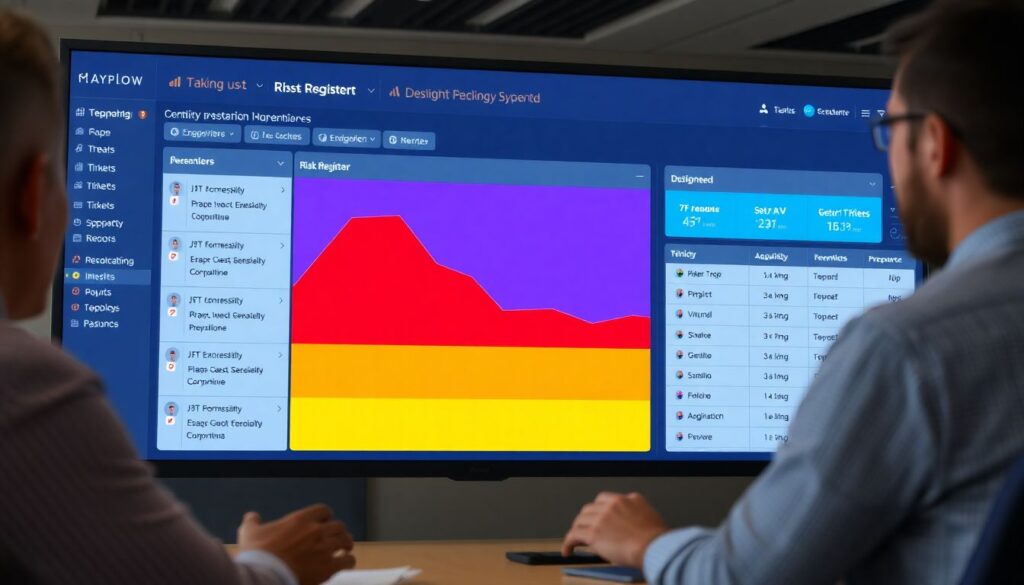
Always link threats to specific actions: create or update tickets, policies, tests or controls. Keep your risk register visible to engineering leadership and track mitigation progress as part of normal planning, not as a separate security-only backlog.
What if we lack senior security specialists?
Start simple: focus on assets, entry points and attacker goals, and use community guidance for segurança em arquiteturas cloud-native from your cloud providers. When needed, bring in targeted external help but keep ownership of the process and documentation internally.
How do we handle multi-cloud and hybrid environments?
Model per platform first, then add diagrams for the links between them. Reuse common patterns across providers and concentrate on identity, network connectivity and shared control planes where compromise would have the widest impact.