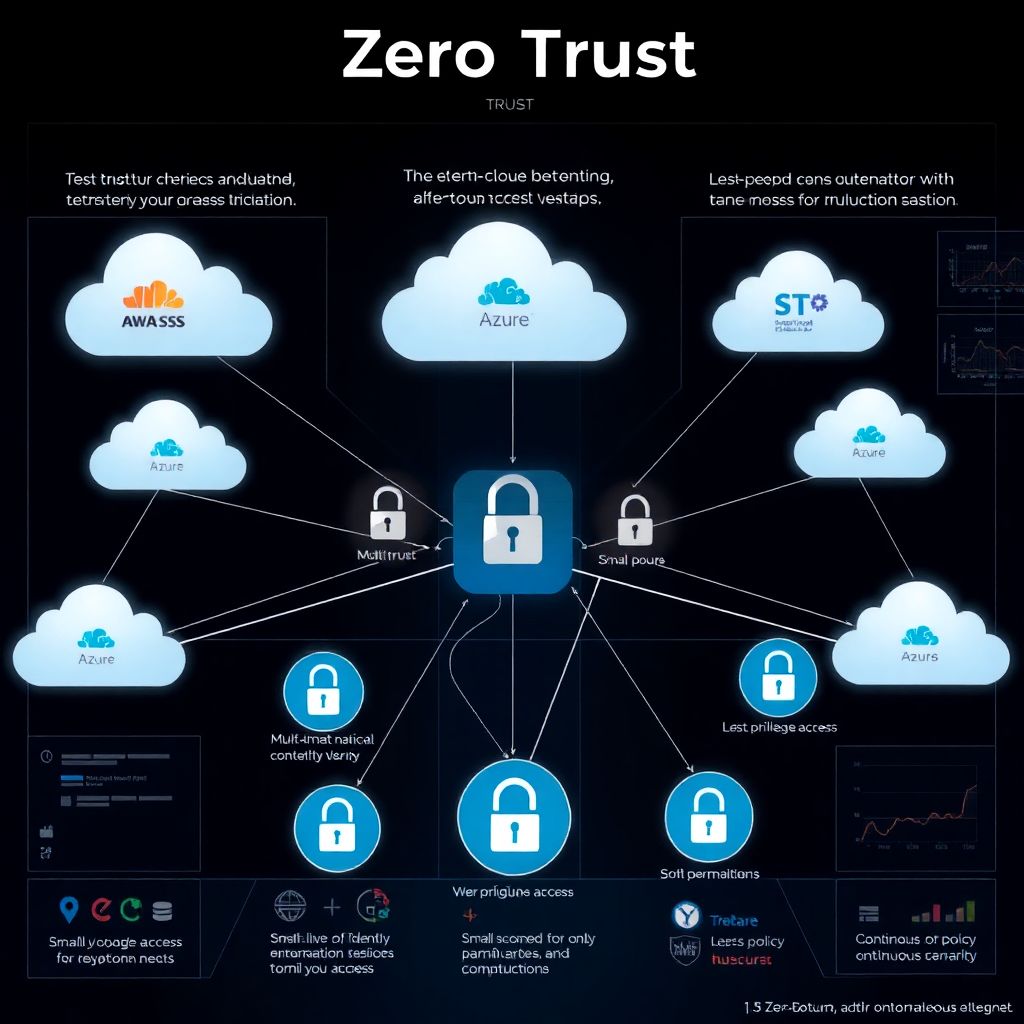
Why Zero Trust in Multi‑Cloud Isn’t Optional Anymore

If your company is running workloads in AWS, Azure, GCP and maybe a SaaS or two, you’re already in a zero trust multi cloud reality — whether you planned it or not. Users connect from everywhere, apps talk to each other across regions, and attackers only need one misconfigured role to slip in. That’s why “trust the internal network” is now a dangerous fantasy. Zero Trust isn’t a product you buy, it’s a way of thinking: always verify, always minimize access, always assume compromise. The good news? You don’t need a huge budget to start. You need clarity, discipline and a willingness to break with “we’ve always done it this way”.
The Core Mindset: Minimal Access or Nothing
At the heart of a política de acesso mínimo zero trust is a simple principle: every identity — human, service, device — gets only the exact permissions it needs, for the shortest time possible, and nothing more. No shared admin accounts, no “temporary” full-access roles that magically become permanent, no mysterious service users nobody remembers creating. In multi‑cloud environments, this minimalism is your best armor. When an attacker inevitably gets in, tightly scoped rights turn a potential disaster into a contained incident, and your “blast radius” shrinks dramatically.
Frequent Beginner Mistakes You Want to Avoid
New teams diving into segurança zero trust em nuvem often fall into the same traps. They hear vendors talk and believe Zero Trust is just a firewall plus MFA. Or they flip all the “security” switches at once, break half the applications, and then roll everything back in panic. Another classic error is copy‑pasting on‑prem roles into the cloud, keeping broad admin profiles “just in case”. And of course, there’s the famous spreadsheet‑driven access control, where no one actually updates the spreadsheet. These mistakes don’t mean you’re not capable — they simply show you’re trying to transport old habits into a new world.
Step by Step: How to Implement Least Privilege in Multi‑Cloud
Many people ask como implementar zero trust em ambiente multi cloud without drowning in complexity. The answer is to start narrow and iterate. First, map your identities: employees, contractors, CI/CD pipelines, microservices, bots. Then identify high‑value assets: production databases, customer data, payment systems. Draw the lines that connect them. Now you can design access policies around those flows, instead of granting generic “admin” everywhere. Begin with one critical app, lock it down, learn from the issues, then replicate your approach across other stacks and clouds.
– Start from critical apps, not from “everything”
– Define explicit allowed paths (who can talk to what, when)
– Automate policy deployment early to avoid drift
Inspiring Example: Turning Chaos into Controlled Access
Imagine a fast‑growing fintech with teams deploying to multiple clouds on Friday nights. At first, they granted wide permissions “to move fast”. Incidents started piling up: leaked keys on GitHub, misconfigured buckets, over‑privileged service accounts. Instead of blaming engineers, the security lead proposed a new game: “Let’s see how far we can go with less access, not more.” They introduced scoped roles per service, short‑lived credentials for admins, and automated checks in the CI pipeline. In six months, they cut high‑risk permissions by 70%, and the number of security incidents dropped sharply — without slowing releases.
Practical Patterns for Strong Zero Trust Policies
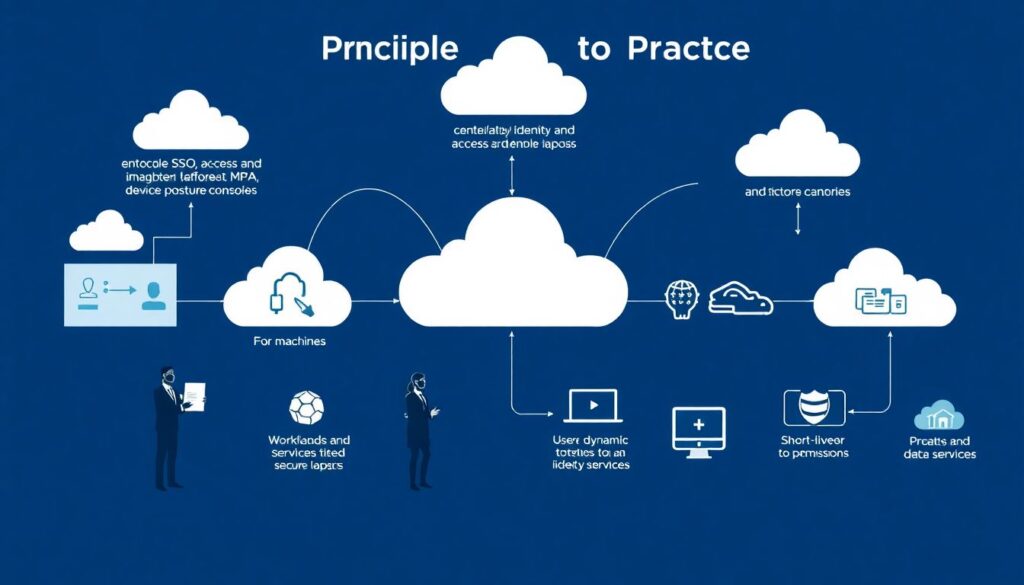
To turn принцип into practice, use repeatable patterns. Start with identity‑centric controls: enforce SSO, MFA and device checks before anyone even touches a cloud console. For machines, rely on workload identity rather than static keys whenever possible. Then, for each cloud, define standardized role templates: “read‑only analytics”, “deployment bot for service X”, “break‑glass incident responder”. Link them to groups, not to individual users, so you can manage access through group membership. Over time, review these patterns regularly and prune everything that’s not clearly justified.
– Prefer short‑lived tokens over long‑lived keys
– Separate duties: deployment, operations, security reviews
– Require justification and approvals for all high‑privilege roles
Common Missteps When Defining Policies
Beginners often design perfect‑looking policies that are impossible to live with. Overly strict rules that block deployments at 2 a.m. make engineers look for shortcuts — screenshotting credentials, sharing accounts, or disabling controls “temporarily”. Another frequent error is ignoring machine‑to‑machine communication: microservices end up with “*:*” permissions because “they’re internal”. There’s also the temptation to clone roles between clouds, even though each provider has its own model and quirks. Effective Zero Trust isn’t about punishment; it’s about creating guardrails that are secure and actually usable.
Real‑World Case: A Multi‑Cloud Platform that Got It Right
Consider a SaaS company offering analytics across AWS, Azure and GCP for enterprise clients. Initially, they had one “super admin” role in each cloud, used by several engineers. Audits were a nightmare. After a near‑miss incident, they decided to implement soluções zero trust para ambientes multi cloud with a strong focus on least privilege. They built a central identity layer, mapped all engineering tasks and created narrow, time‑bounded roles accessible only via an approval workflow. They added continuous monitoring for anomalous access patterns. The outcome: audit times were cut in half, and customers started citing their access model as a reason for closing new deals.
Recommendations for Growing Your Zero Trust Skills
Developing serious chops in zero trust multi cloud security is a career‑boosting move. Don’t wait for a big project to learn. Start by experimenting in a personal lab account: design IAM roles, simulate compromised credentials, observe what an attacker could do. Take notes on the patterns that actually block abuse without breaking things. Inside your company, volunteer to improve access control for one small service. Document the before/after, metrics, and pain points. This concrete experience is worth more than any buzzword‑heavy certification, and it builds your credibility with both engineers and leadership.
Resources to Learn and Stay Sharp
You don’t need to reinvent the wheel. Many top‑tier resources describe segurança zero trust em nuvem in a practical, vendor‑neutral way. Look for cloud provider reference architectures specifically dedicated to Zero Trust and least privilege — AWS, Azure and GCP all maintain living documents and sample policies. Security communities and meetups are also powerful: people share real war stories and post‑mortems you won’t find in slick marketing PDFs. Finally, subscribe to incident reports and breach analyses; every breach is a free lesson in how overly broad access turns small flaws into catastrophic failures.
– Cloud provider security blogs and reference architectures
– Open‑source policy‑as‑code tools and example repositories
– Security conferences and local meetups focused on cloud and Zero Trust
Bringing It All Together: Start Small, But Start Now
Zero Trust can feel intimidating, especially when you’re juggling multiple clouds, legacy systems and constant delivery pressure. Yet the path forward is surprisingly down‑to‑earth: understand your identities, minimize their access, verify continuously and assume every layer can fail. Don’t wait for the mythical “big program” to begin; pick one application, one team, one sensitive data store. Fix it properly, measure the impact, share the story. Every small, well‑designed política de acesso mínimo zero trust you deploy is both a shield for your company and a stepping stone for your own growth as a security professional.