
APIs are the new perimeter, and in 2026 that perimeter mostly lives in the cloud. Microservices, serverless, public SDKs, partner integrations, AI plugins – all of them talk over HTTP, often directly exposed to the Internet. If a few years ago you could “hide” behind a WAF and some IP whitelists, now segurança de apis na nuvem is about designing for zero trust, assuming every call might be malicious, and still letting business move fast. Let’s walk through what actually works today, using real cases, non‑obvious patterns and some battle‑tested tricks from production environments.
Why cloud‑exposed APIs are a different beast in 2026
In 2026, the typical API landscape is a mesh of gateways, service meshes, edge functions and AI‑driven clients you don’t fully control. Attackers use LLMs to reverse‑engineer your API contract, fuzz parameters and chain subtle misconfigurations across cloud accounts. Rate limiting by IP and a basic WAF rule set stopped being enough once botnets started rotating residential IPs and abusing legitimate OAuth tokens. The main problem is that your “surface” is no longer a single gateway but a combination of API gateways, GraphQL endpoints, WebSockets, event‑driven callbacks and vendor webhooks. Any weak link becomes an entry point, and proteção de apis rest na nuvem owasp turns into a continuous practice, not a one‑time checklist. Designing with the OWASP API Top 10 in mind means looking at identity, object boundaries and business logic – not only SQL injection filters.
Real‑world incidents: what actually goes wrong
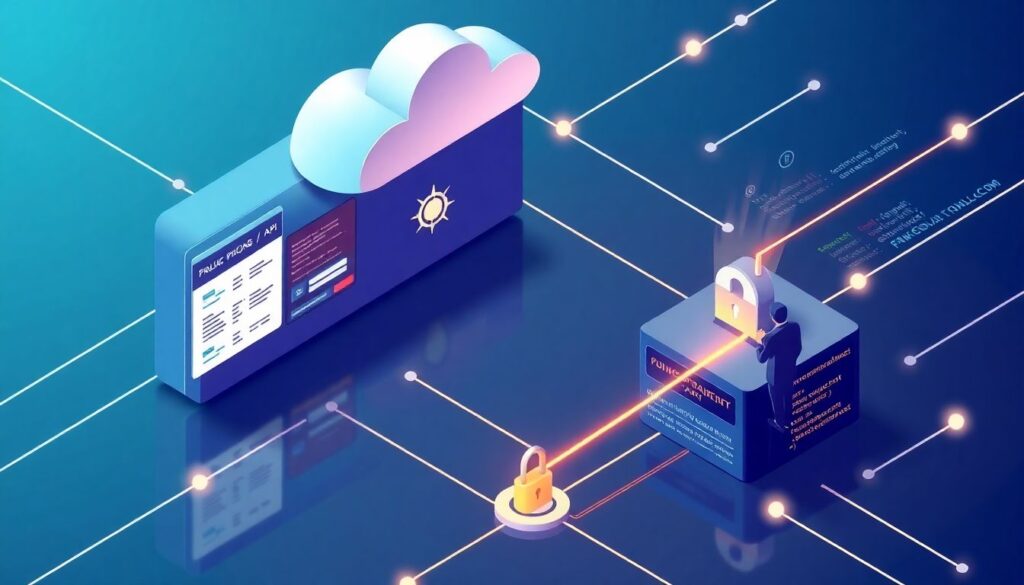
One real case from 2025: a fintech exposed a “public” pricing API behind a cloud gateway and assumed there was no sensitive data. The same microservice, however, also served authenticated customer endpoints, and due to an insecure direct object reference bug, a crafted query parameter leaked partial transaction metadata. No CVE, no exotic zero‑day – just a classic OWASP API1: Broken Object Level Authorization, amplified by cloud scale and aggressive caching at the edge. Another story: a SaaS company used a serverless function to process webhooks from several partners. They validated the signature from Partner A but forgot to enforce the check on the newer Partner B endpoint; an attacker replayed old payloads and triggered account‑level configuration changes, neatly bypassing UI‑based MFA. These cases show that in the cloud, tiny authorization gaps in “boring” endpoints are more dangerous than flashy injection flaws, because they’re easy to exploit via automation and hard to detect in noisy logs.
Modern patterns for cloud API security: design before defense
Today, the strongest teams treat API security as an architecture topic, not just a gateway configuration. They start by mapping each capability to a bounded context and a clear owner, then design resource‑level policies up front. Instead of one monolithic gateway, they might use layered enforcement: edge gateway for coarse controls, service mesh for mutual TLS, and per‑service policy engines for fine‑grained authorization. Versioning is handled with security in mind: older versions are automatically downgraded in privileges or shut down by policy, not just left running “for compatibility”. A non‑obvious but powerful pattern is to separate “read‑only public metadata APIs” from “state‑changing APIs” at the DNS level, using distinct domains, credentials and network paths. That way, if keys for a catalog API are leaked, lateral movement to payment or admin APIs is physically harder, even within the same cloud region and provider.
Strong authentication in 2026: beyond static secrets
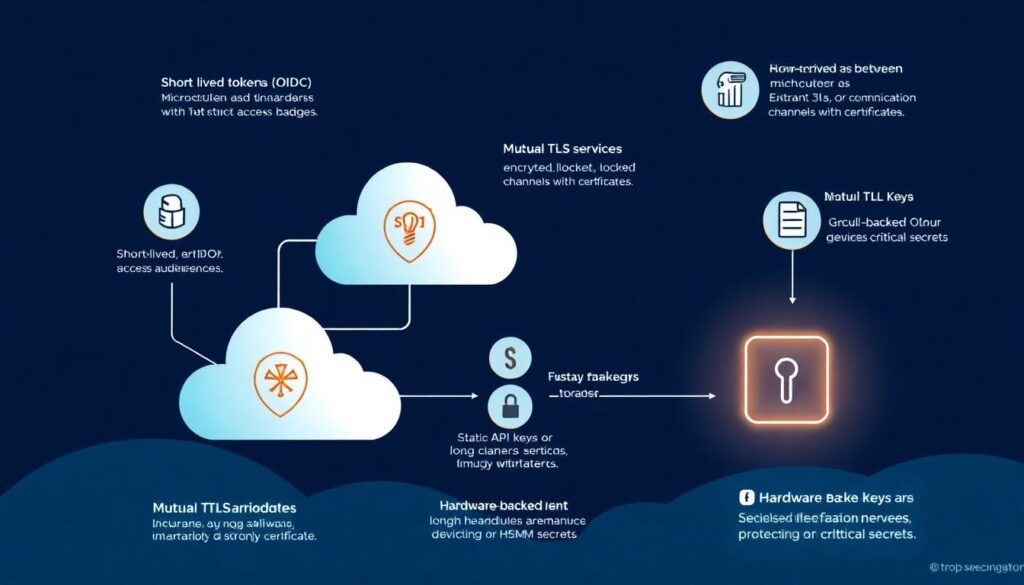
If your strategy for autenticação forte para apis na nuvem still relies on static API keys or long‑lived OAuth client secrets, you’re behind the curve. Modern deployments combine short‑lived tokens (OIDC, JWT with strict audiences), mutual TLS between services, and hardware‑backed keys for critical machine identities. In bigger organizations, SPIFFE/SPIRE‑style identities or cloud‑native workload identities tie tokens to the specific pod, function or VM instance. One subtle but important improvement is token binding to context: the same user token cannot be reused from a different ASN, device fingerprint or cloud account without triggering step‑up checks. Another non‑obvious trick: treat your CI/CD pipeline as a first‑class API client. Use the same policies and just‑in‑time credentials for automation that you would for external partners; many breaches in 2024–2025 came from over‑permissive “deployment bots” calling internal APIs with god‑mode tokens.
How to actually mitigate OWASP API Top 10 in cloud setups
When teams ask como proteger api contra ataques owasp api top 10 in a cloud‑heavy environment, the mistake is to throw a generic WAF at the problem and declare victory. A far more effective approach is to map each OWASP category to concrete controls in your stack. Broken Object and Function Level Authorization map to centralized, testable authorization policies; mass assignment turns into strict input whitelisting and schema validation; excessive data exposure is addressed by default‑deny serialization and field‑level filters. Modern gateways and service meshes now support policy‑as‑code, so you can codify rules like “this endpoint can only be called by service X with scope Y and risk score below Z” and push them through the same review and deployment pipeline as application code. The key is to run negative tests in CI that simulate abuse scenarios, including over‑fetching, privilege escalation and weird pagination attacks, not just “bad passwords”.
Tools that actually help: from scanners to runtime shields
In 2026, the landscape of ferramentas para segurança de apis na nuvem is very different from the early days of manual pen‑tests. API discovery tools hook into gateways, service meshes and code repos to generate live inventories and detect shadow APIs before attackers do. Dynamic testing tools leverage AI to mutate requests, chain endpoints and look for business logic flaws rather than simple XSS. On the runtime side, API‑aware firewalls analyze JSON and GraphQL payloads, enforce schema contracts and correlate behavior across tenants. A useful non‑obvious tactic is to combine these tools with your observability stack: treat security signals as first‑class metrics, with SLOs like “max allowed unauthorized 403 spikes per endpoint”. That way, when an anomaly shows up – say, a sudden burst of 401s from one country or weird nested filters on a search endpoint – alerts go to both SREs and security engineers, shortening detection time.
Alternatives and layered defenses: beyond the obvious gateway
The gateway is not the only place to enforce security, and relying on it alone can be risky when multiple teams deploy their own API entry points. Some organizations in 2026 are pushing more logic to the client edge, constraining what the browser or mobile app can even attempt to call, using signed request descriptors and pre‑negotiated capabilities. Others embed policy engines like Open Policy Agent directly next to business logic, so decisions are evaluated with full context, not only HTTP metadata. For internal traffic, service meshes enforce mTLS and request‑level authorization, acting as a safety net when developers misconfigure route rules. An alternative that’s gaining traction is hosted “secure by default” backends for common functions – instead of building your own auth or file upload APIs, you offload them to providers that already implement tight controls, rate limits and audit logs. This reduces your attack surface, provided you integrate them with your own identity and logging strategy.
Practical tips and “pro” lifehacks for API defenders
To make this concrete, here is a compact, practice‑driven checklist that teams use in mature environments today:
1. Model abuse, not just features: for every new endpoint, write down how a malicious user would try to over‑enumerate, exfiltrate or escalate, and add tests for those scenarios.
2. Separate identities by risk: use distinct credentials and scopes for public, partner and internal traffic, and rotate them automatically with extremely short TTLs.
3. Instrument everything: log not only errors but key request attributes (subject, resource, action, tenant, risk factors), then build dashboards around “unexpected but successful” calls.
4. Fail safely under load: when your rate limiters and anti‑abuse systems trigger, degrade gracefully – cap heavy operations, return partial data – instead of turning off checks “just for peak hours”.
5. Use feature flags for defenses: deploy new protection rules in shadow mode, observe impact and only then enforce; this minimizes false positives and avoids midnight rollbacks. Applied consistently, these habits move you from reactive firefighting to a posture where proteção de apis rest na nuvem owasp is part of everyday development work, not a quarterly panic before audits.
Closing the loop: continuous security for cloud APIs
By 2026, secure APIs in the cloud are less about a magical product and more about continuous alignment between architecture, development and operations. Treat each new integration or public endpoint as a long‑lived contract that needs hard guarantees around identity, authorization and behavior, not a side effect of shipping features. Revisit your threat model whenever you add a new gateway, vendor webhook or AI agent that can call your services. Periodically re‑scan for forgotten test endpoints, unsanitized debug parameters and over‑permissive tokens – most real breaches still come from these mundane mistakes. If you bake these practices into your pipelines and culture, segurança de apis na nuvem stops being a blocker and becomes a competitive advantage: you can expose more functionality, move faster with partners, and still sleep at night knowing that your defenses evolve at the same pace as the threats.