From flat LANs to cloud microsegments: how we got here
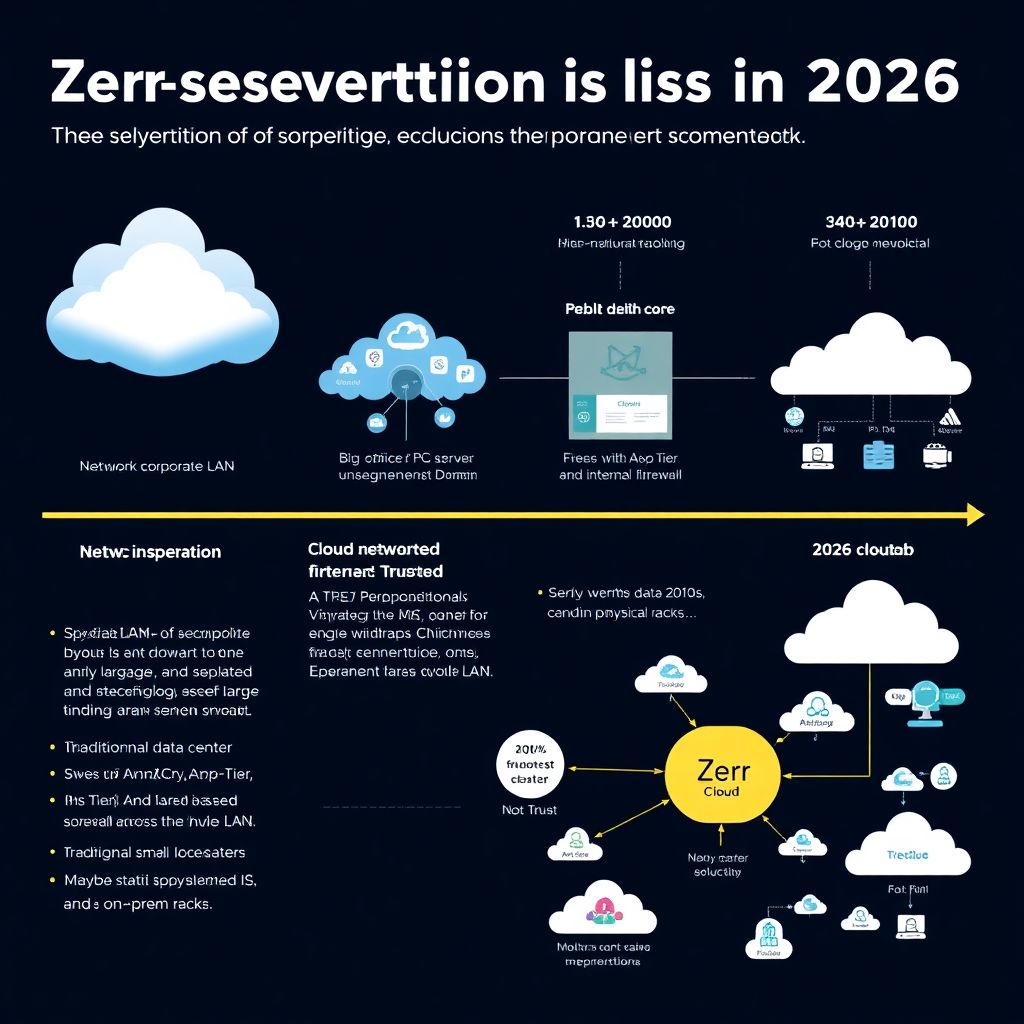
If you look back, network segmentation started as something almost crude. In the 90s, most corporate networks were huge flat LANs, where a single broadcast domain covered entire offices. Firewalls guarded only the edge, because everyone assumed “inside = trusted”. Worms like WannaCry and NotPetya brutally showed how dangerous that model was: once inside, malware could move laterally with almost no friction. The response was classic VLAN segmentation, DMZs and internal firewalls, but all of that was built around static IPs and physical data centers. When public cloud exploded in the 2010s, those old models simply didn’t scale or adapt. Virtual machines, containers, serverless and dynamic scaling demanded something more granular and identity‑aware, and that’s exactly where modern segmentação de rede em cloud para segurança and microsegmentation came in.
Fast forward to 2026, and very few mature organizations still rely on a simple “north‑south firewall and pray” pattern. Enterprises have learned, often the hard way, that attackers don’t care about your perimeter; they care about how easily they can pivot from one compromised workload to another. Regulatory pressure, ransomware campaigns and supply‑chain attacks pushed the industry towards Zero Trust Network Access and identity‑centric controls. Microsegmentation became the practical way to embed those ideas directly into network flows inside the cloud. Instead of trusting entire subnets, we now talk about trusted workloads, verified identities, and explicitly authorized flows between them, even when they live in different clouds or Kubernetes clusters.
Core principles of segmentation and microsegmentation in the cloud
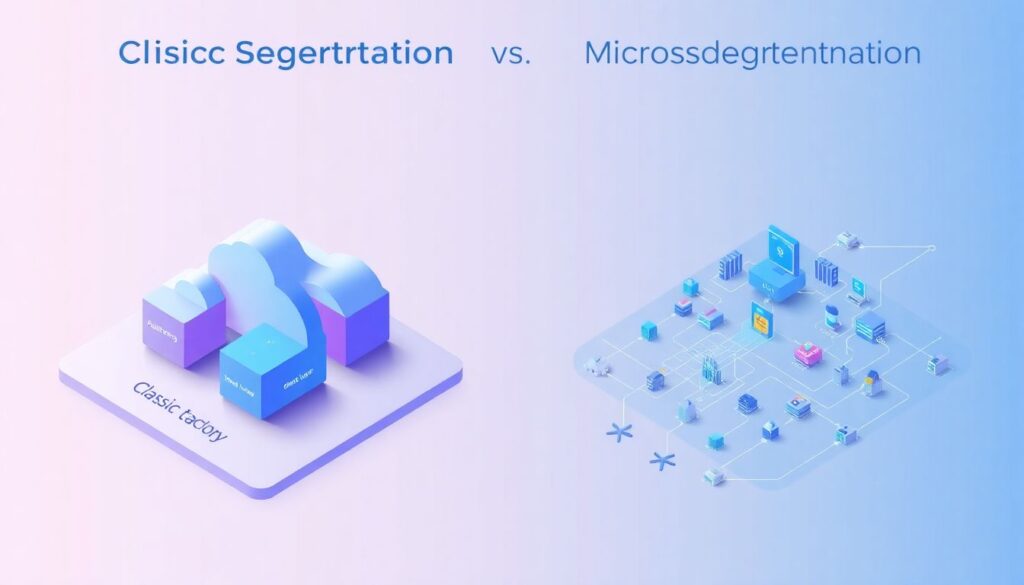
At a high level, classic segmentation in the cloud is about carving your environment into security zones with clear purposes: public‑facing, internal services, data layers, management networks, and so on. Microsegmentation goes much deeper by controlling which specific workloads, identities or even processes can talk to each other, usually based on application‑level or identity‑based policies instead of raw IP addresses. While traditional segmentation reduces the blast radius of a compromise at a coarse level, microsegmentação em nuvem para prevenir movimentação lateral aims to shrink that blast radius down to the individual service or container. The key mindset is simple: assume breach and design your network so that compromise of one node does not automatically endanger everything nearby.
From a practical perspective, melhores práticas de segmentação de rede na nuvem revolve around a few recurring principles. First, define zones and microsegments around business functions and data sensitivity, not around arbitrary subnet boundaries. Second, enforce least privilege for every connection: if a web front‑end only needs to talk to a single API on a single port, do not allow anything more. Third, move away from static, IP‑centric rules towards tags, labels and identities, so that auto‑scaling and ephemeral containers do not break your policies. Finally, your segmentation posture must be observable: logging, flow visualization and continuous validation are non‑negotiable if you truly want to spot abnormal lateral movement before it turns into a full‑blown incident.
How to actually design for lateral‑movement resistance

To build effective segmentação de rede em cloud para segurança, you need to start with visibility, not firewalls. Map out your applications, dependencies and data flows in detail; most teams discover “shadow” connections and forgotten services at this stage. Once you understand who talks to whom, you can group workloads into logical segments: for instance, public APIs in one zone, internal microservices in another, and databases in tightly controlled data zones. On top of that, microsegmentation policies define exactly which workloads can cross those boundaries and under which conditions. This is where identity‑aware controls, service meshes and host‑based agents shine, because they can enforce rules even when IPs and ports keep changing underneath. Over time, you iteratively tighten those rules, eliminating unnecessary paths that attackers could abuse for lateral movement.
To make this less abstract, imagine a typical three‑tier app moved to the cloud. Without segmentation, any compromised web VM might freely probe the entire VPC, discovering other services, CI/CD runners or data stores. With robust segmentation and microsegmentação em nuvem para prevenir movimentação lateral, that same web tier could be allowed to reach only a specific application tier over HTTPS, with zero permission to scan other subnets or management networks. Even if an attacker drops a remote shell on that VM, they hit a wall when trying to pivot. Multiply this by dozens of applications and you can see why microsegmentation has become a core building block in modern Zero Trust architectures, rather than a “nice to have” network tweak.
Concrete examples of cloud segmentation and microsegmentation
In real‑world environments, soluções de microsegmentação para segurança em cloud come in many flavors. Some organizations lean on cloud‑native constructs like security groups, network security groups and firewall policies, layering them with identity‑based rules via IAM and service accounts. Others implement host‑based microsegmentation using agents that inspect and enforce policies directly on each VM or container node, regardless of underlying network topology. A growing number of teams combine these with service meshes that control traffic at the sidecar level inside Kubernetes, enabling policies such as “only service A with workload identity X can call service B on API path /payments”. These examples show that microsegmentation is less about a particular product and more about consistent, fine‑grained control across all paths where traffic can flow.
Cross‑cloud and hybrid deployments illustrate the value even more. Picture a company running legacy workloads on‑prem, modern microservices in multiple clouds, and shared identity via an enterprise IdP. Here, como implementar segmentação de rede e microsegmentação na nuvem becomes a matter of unifying policy logic across these platforms. You might use VPNs or private links to connect environments, but real protection comes from defining global policies—based on tags, identities and labels—then enforcing them locally through each platform’s controls. That way, a compromised on‑prem server cannot freely explore your cloud VPCs, and a breached test cluster in one region cannot simply “walk” into production in another. The consistency of policy, not the homogeneity of infrastructure, is what blocks lateral movement.
Step‑by‑step approach to getting started
If you want a concrete roadmap rather than abstract advice, you can think in terms of a phased rollout. The idea is to gain control without breaking everything on day one, which is a common fear. A structured sequence might look like this:
1. Inventory and map flows: collect traffic data, build dependency maps and identify critical assets that must be protected first.
2. Define zones and labels: decide how to group workloads logically (by app, environment, sensitivity) and encode that with tags or labels.
3. Start with “observe” mode: deploy segmentation or microsegmentation tools in monitoring‑only mode to see what policies would block.
4. Enforce on non‑critical paths: turn on enforcement for less risky segments first, validating that apps still work and tuning policies.
5. Lock down crown jewels: apply strict microsegmentation around high‑value data stores, management interfaces and CI/CD systems.
This phased method dramatically reduces the risk of outages and builds organizational confidence. Along the way, it also exposes legacy protocols, hard‑coded IP dependencies and unnecessary open ports that attackers would love to use. By treating each step as both a security and reliability exercise, you end up with a cleaner architecture that is easier to maintain, not just harder to hack.
Common myths and misconceptions you should ignore
One of the most persistent myths is that segmentation is “already handled by the cloud provider”. While hyperscalers do give you strong primitives, they do not design your security architecture or automatically build the logical barriers you need. Another misconception is that microsegmentation is only necessary for highly regulated sectors; in reality, any organization that runs internet‑facing workloads now faces automated scans and opportunistic exploitation. Ransomware operators and initial‑access brokers live off lateral movement: they compromise one low‑value asset, then pivot until they find something worth extorting. Without deliberate segmentação de rede em cloud para segurança, you are effectively betting that the first machine they land on is not connected to anything important, which history shows is a bad bet.
A second, equally dangerous myth claims that microsegmentation is too complex to manage at scale. In 2016, that was sometimes true; tools were immature and policies were brittle. By 2026, however, melhores práticas de segmentação de rede na nuvem strongly rely on automation, intent‑based policies and integration with CI/CD. Instead of writing thousands of firewall rules by hand, you describe high‑level intents like “all production web services tagged env=prod may call only the payment API on port 443”, and your platform compiles that into low‑level controls. The complexity doesn’t disappear, but it becomes tractable. Teams that start gradually, invest in good observability, and bake policies into their deployment pipelines consistently report that the security gains far outweigh the operational cost.
Bringing it all together: making segmentation a continuous practice
The final point to internalize is that segmentation and microsegmentation are not “set and forget” projects. Cloud environments, especially those built around DevOps and rapid delivery, change weekly or even daily. New services appear, dependencies evolve, and third‑party components come and go. If your policies don’t keep up, gaps inevitably emerge and attackers will find them. The organizations that successfully contain lateral movement are those that treat segmentation as a continuous discipline, tightly integrated with change management, infrastructure‑as‑code and security monitoring. Every new workload gets the right labels from the start; every pipeline includes checks that ensure it lands in the correct segment with the right micro‑policies attached.
In that sense, como implementar segmentação de rede e microsegmentação na nuvem in 2026 is as much about culture and process as it is about technology. Yes, you need robust tools, from cloud‑native controls to soluções de microsegmentação para segurança em cloud and maybe a service mesh. But you also need product teams that understand why least privilege matters, platform teams that provide guardrails instead of ad‑hoc exceptions, and security teams that speak in terms of business risk rather than just ports and protocols. When these pieces align, segmentation stops being a painful constraint and becomes an enabler: it lets you adopt new cloud services, ship faster and still sleep at night, knowing that a single foothold won’t let an attacker roam freely across your entire estate.