
Major cloud security incidents at large providers usually start with basic weaknesses: exposed management interfaces, over‑permissive IAM, forgotten test workloads, or unpatched software. To troubleshoot and prevent similar issues in your own environment, focus on read‑only log and configuration reviews first, then tighten identity, network boundaries, monitoring, and automated response.
Incident snapshot and critical indicators
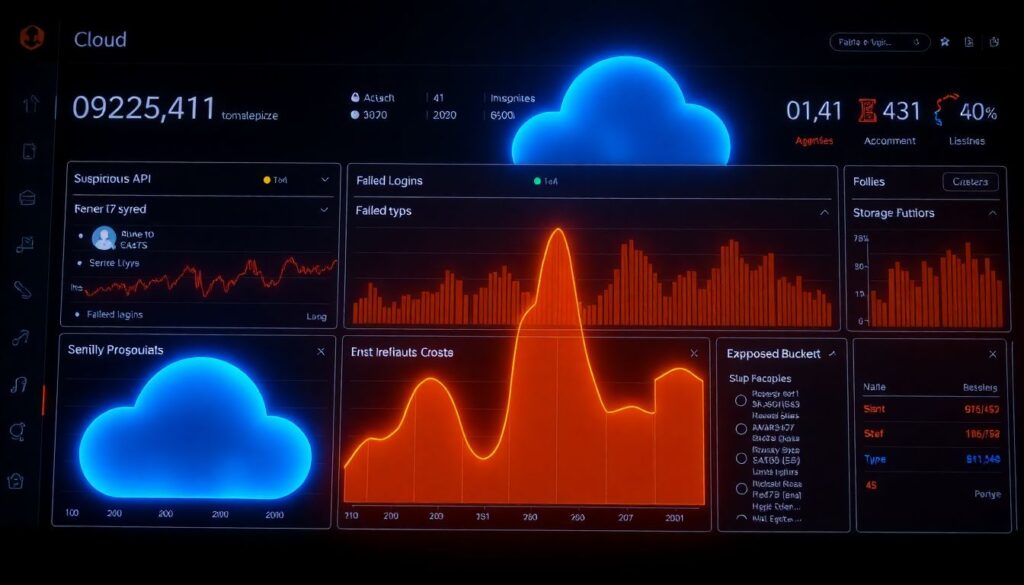
- Unusual spikes in API calls, authentication failures, or object storage reads in a single region or tenant.
- New IAM roles, access keys, or service principals created without a corresponding approved change.
- Public exposure of buckets, snapshots, debug endpoints, or management consoles that should be private.
- Data exfiltration patterns: large outbound transfers, atypical destinations, or off‑hours activity.
- Persistence artifacts such as backdoored images, startup scripts, or modified CI/CD pipelines.
- Gaps in logging, retention, or tamper‑evident storage that block reliable incident timelines.
Attack vectors and initial access pathways

What teams typically see when an incident that resembles those from large cloud providers is unfolding:
- Alerts from SIEM or CSPM about suddenly public storage buckets or security group changes exposing admin ports.
- Security emails from the provider warning about abusive activity originating from your tenant or account.
- Unrecognized login locations, especially to the cloud console or identity provider, sometimes with MFA prompts skipped via legacy protocols.
- Unexpected Kubernetes pods, serverless functions, or VMs spinning up, often consuming high CPU for cryptomining.
- API throttling or quota exhaustion on core services, affecting production availability.
- Integrity warnings from EDR/antivirus agents inside cloud workloads about new binaries or suspicious scripts.
- Configuration drift detected by IaC tools (Terraform/CloudFormation) showing changes that were not applied through pipelines.
Before changing anything in production, stick to read‑only observations: dashboards, logs, configuration descriptions, and resource inventories. This aligns with safe troubleshooting practices used in consultoria em segurança cloud para grandes empresas and avoids accidentally destroying evidence.
Root cause analysis: misconfigurations, software defects, and service design
Use this read‑only checklist to rapidly triage root causes without breaking production.
- Identity and access:
- List IAM users, roles, and service principals created or modified in the incident window.
- Check for wildcards in permissions (e.g.,
"Action": "*","Principal": "*") and cross‑account trusts. - Validate MFA enforcement, hardware tokens, and conditional access rules for admins.
- Network exposure:
- Export current security groups, firewall rules, and load balancer listeners.
- Search for rules exposing SSH/RDP/DB ports to
0.0.0.0/0or large CIDR ranges. - Review public IP assignments and DNS records pointing to internal services.
- Data surfaces:
- List all object storage buckets, snapshots, and data lakes; mark which are publicly accessible.
- Check encryption settings at rest and in transit, and where keys are managed.
- Software and supply chain:
- Identify images, runtimes, or libraries with known issues such as CVE-2021-44228 (Log4Shell) or CVE-2019-5736 (runc).
- Review build pipelines for injected steps, modified images, or unpinned dependencies.
- Control plane and management:
- Audit access to the cloud console, managed Kubernetes control planes, and managed database consoles.
- Look for API keys or access tokens embedded in code repositories, CI logs, or configuration files.
- Detection and logging:
- Confirm that cloud audit logs, flow logs, and DNS logs are enabled and retained long enough.
- Verify that logs are centralized and immutable (or tamper‑evident).
- Check alert coverage for brute force, privilege escalation, and anomalous data access.
- Third‑party and provider‑side services:
- Document all managed services, add‑ons, and security serviços de segurança em nuvem para provedores that have access to your data plane.
- Check whether any provider‑side maintenance or incident notifications match your timeline.
Data exposure patterns, impact scope, and risk quantification
Incidents at scale often follow repeatable data exposure patterns: overly broad roles tied to automation, public storage created by developers, debug features accidentally left enabled, or exploitation of widely known vulnerabilities before patching. Use the table below to map what you see in your environment to probable causes and safe remediations.
| Symptom | Possible causes | How to check (read‑only first) | How to fix (after impact assessment) |
|---|---|---|---|
| Public object storage bucket with sensitive data |
|
|
|
| Cryptomining or strange processes inside cloud workloads |
|
|
|
| Unexpected cross‑account or cross‑tenant access |
|
|
|
| Loss of reliable logs around the incident time |
|
|
|
| Mass data exfiltration to unknown destinations |
|
|
|
Comparative overview of typical large‑scale cloud incidents
| Category | Likely root cause | Impact pattern | Mitigation focus | Typical timeline shape |
|---|---|---|---|---|
| Control plane compromise | Phished admin, weak MFA, legacy protocols, or unmonitored access tokens. | Account‑wide changes, new roles, new keys, lateral movement across services. | Strengthen identity, conditional access, and privileged access workstations. | Fast compromise, slow detection, long‑tail clean‑up of credentials and roles. |
| Data storage misconfiguration | Public bucket, open snapshot, or mis‑scoped sharing link. | Bulk unauthorized reads, possible indexing by scanners and bots. | Central policies to block public access, strong governance on data classification. | Silent exposure for long periods, discovered suddenly via external report. |
| Workload exploitation | Unpatched CVEs, default passwords, or vulnerable management APIs. | Compromise of specific clusters or services, probable cryptomining or data theft. | Patch automation, hardened images, runtime protection, and egress control. | Exploit runs quickly; detection relies on behavior analytics and anomaly alerts. |
| Supply chain and third‑party | Compromised CI/CD, malicious package, or over‑privileged integration. | Widespread deployment of backdoored artifacts or misused privileges. | SBOM, signature verification, minimal scopes for third‑party access. | Latent presence, triggered later, discovered via unusual outbound activity. |
Containment, eradication, and recovery: tactical timelines
Apply these steps in order, prioritizing read‑only checks and isolation before destructive changes, in line with segurança em cloud para empresas best practices and the rule of not breaking production.
- Stabilize and observe (read‑only)
- Freeze non‑urgent deployments and configuration changes in the affected accounts.
- Snapshot current configurations: IAM, network, storage policies, and running workloads.
- Enable or verify logging for audit, network, and DNS where safe to do so.
- Isolate suspicious activity
- Use network rules or security groups to restrict outbound access from compromised workloads.
- Quarantine suspicious instances into dedicated subnets without terminating them.
- Temporarily disable suspicious access keys, starting with least critical ones.
- Preserve evidence before cleanup
- Create snapshots of disks and volumes involved in the incident.
- Export relevant logs to a separate, write‑restricted account for analysis.
- Document the current state of IAM roles, policies, and trust relationships.
- Block ongoing attacker access
- Rotate credentials: admin passwords, access keys, database users, and tokens.
- Invalidate application sessions and OAuth refresh tokens where applicable.
- Harden console and API access with enforced MFA and updated conditional access rules.
- Remove persistence and malicious artifacts
- Review startup scripts, container init hooks, and cron jobs for backdoors.
- Delete or disable unauthorized IAM roles, keys, and service principals.
- Clean up rogue images or packages from registries once forensics is complete.
- Rebuild from trusted sources
- Recreate workloads from known‑good, patched images and infrastructure‑as‑code templates.
- Apply patches for relevant CVEs and configuration baselines before redeploying.
- Gradually reintroduce traffic using canary or blue/green strategies.
- Verify recovery and strengthen monitoring
- Confirm that suspicious behaviors have stopped and that monitoring is covering key attack paths.
- Tune alerts to focus on high‑signal events like privilege escalations and mass data access.
- Integrate monitoramento e resposta a incidentes de segurança em cloud into your regular operations.
- Communicate and document lessons learned
- Summarize root cause, impact, and fixed controls for leadership and auditors.
- Update playbooks and runbooks to reflect what worked and what failed.
- Align future investments in soluções de proteção contra incidentes de segurança em nuvem with the gaps observed.
Forensic methods, evidence handling, and reproducible timelines
Comprehensive analysis of incidents reminiscent of large cloud provider breaches requires disciplined forensics, chain‑of‑custody, and often specialized expertise. Prioritize non‑destructive techniques until you are sure that sufficient evidence has been collected to support both technical remediation and potential legal or regulatory obligations.
- Log‑centric reconstruction
- Aggregate audit, network flow, DNS, and application logs into a single timeline.
- Tag key events: initial access, privilege escalation, lateral movement, exfiltration attempts.
- Preserve raw logs in immutable storage; work from copies for analysis.
- System and image analysis
- Perform disk and memory acquisitions from isolated instances using provider‑recommended methods.
- Analyze images in a separate forensic account, never attaching them back to production.
- Look for indicators of compromise such as unusual binaries, new users, or modified configuration files.
- Identity and access timeline
- Correlate identity provider logs with cloud control plane events to track actor movement.
- Identify the first suspicious successful login or role assumption.
- Trace all changes made by that identity, especially to IAM, network, and logging.
- Supply chain and third‑party review
- Inspect CI/CD pipelines for unexpected scripts, tokens, or environment variables.
- Review SaaS and marketplace integrations for over‑privileged access scopes.
- Coordinate with third parties if their environment may be the initial compromise point.
- When to escalate to specialists
- Involvement of regulated or highly sensitive data where legal exposure is likely.
- Evidence suggesting provider control plane or hypervisor involvement, beyond your tenancy boundary.
- Signs of a sophisticated, persistent adversary (living‑off‑the‑land techniques, anti‑forensic behavior).
In these scenarios, engaging external incident response or consultoria em segurança cloud para grandes empresas is often justified. Many providers and partners offer serviços de segurança em nuvem para provedores and enterprises that include dedicated forensic support, breach coaching, and regulatory guidance.
Hardening recommendations: architecture, IAM, and detection controls
Use these measures to reduce the chance that your organization will face the same classes of incidents that affect major cloud providers, while respecting production stability and the principle of minimal, reversible changes.
- Architectural isolation
- Segment workloads by environment (prod/dev/test) and data sensitivity across accounts or projects.
- Use separate tenants or accounts for logging, security tooling, and break‑glass administration.
- Apply strict egress controls, especially for data‑rich services.
- Robust identity and access management
- Adopt least privilege by default and enforce periodic review of roles and policies.
- Require phishing‑resistant MFA for administrators and service owners.
- Implement just‑in‑time access for high‑risk operations and time‑bound elevation.
- Secure configuration baselines
- Codify cloud resources with IaC and enforce policy‑as‑code to prevent drift.
- Block public access to storage and admin services at the organization level unless explicitly approved.
- Standardize hardened images with patched software and minimal services.
- Comprehensive detection and monitoring
- Deploy cloud‑native security tools and SIEM integration for continuous visibility.
- Build detections for common large‑scale attack paths: credential theft, role abuse, public data exposure.
- Regularly test alerting with red team or purple team exercises.
- Incident‑ready operations
- Maintain runbooks for typical cloud incidents and rehearse them via tabletop exercises.
- Pre‑define isolation strategies (quarantine subnets, emergency ACLs) that can be applied safely.
- Ensure kontakt paths with cloud provider security teams are tested and documented.
- Vendor and provider alignment
- Clarify shared responsibility boundaries for each managed service you use.
- Leverage provider offerings for monitoramento e resposta a incidentes de segurança em cloud, ensuring integration with your SOC.
- Periodically review provider security whitepapers and incident post‑mortems to update your controls.
- Governance and business alignment
- Integrate segurança em cloud para empresas into risk management and board‑level reporting.
- Map critical applications and data flows to specific cloud controls and owners.
- Align budget and staffing with the real exposure discovered during incident reviews.
Practical questions, quick clarifications, and next steps
How do I analyze news about large cloud incidents without overreacting?
Focus on the techniques used, not the brand names. Translate each reported weakness into a control check in your own environment, starting with IAM, network exposure, logging, and data classification. Avoid rushed, large‑scale changes in production until you have validated real exposure.
Which logs should I enable first to mirror big‑provider investigation capabilities?
Prioritize cloud audit logs for control plane actions, network flow logs for egress and lateral movement, and DNS logs for tracking exfiltration domains. Ensure they are centralized, retained for long enough, and stored in an account or project separate from day‑to‑day operations.
When should I involve my cloud provider in an incident?
Escalate to the provider when indicators point beyond your tenant, such as suspected hypervisor issues, unexplained control plane behavior, or when mandated by contracts or regulations. Provide clear timestamps, resource IDs, and a concise summary of what you have already observed.
How can I apply these lessons in a small or mid‑size Brazilian company?
Start with a narrow scope: one critical workload and its data. Implement basic hardening, logging, and response for that scope, then expand. Use local partners that offer consultoria em segurança cloud para grandes empresas but can tailor services to your current maturity and budget.
Are third‑party cloud security tools mandatory if the provider already offers built‑ins?
They are not mandatory but often helpful. Many organizações combine provider‑native controls with independent ferramentas that offer cross‑cloud visibility, compliance checks, and advanced detection. Evaluate gaps in your current stack before buying new tools.
How can I test my readiness without waiting for a real attack?

Run controlled exercises: simulate a leaked key, a public bucket, or a compromised admin account in a test environment. Validate whether alerts fire, playbooks are followed, and who needs to be involved. Adjust runbooks and tooling based on what you learn.
What is the safest first step if I suspect compromise right now?
Do not start by deleting resources or revoking everything. First, increase logging where safe, take notes, and capture snapshots of configurations and critical systems. Then isolate suspicious workloads and rotate credentials in a controlled, documented manner.