
Por que a segurança de cloud em 2026 não é mais “checklist de ISO”
In 2026, cloud risk looks very different from five years ago. Ransomware gangs now buy zero‑days as a service, AI makes phishing almost indistinguishable from real internal email, and deep integration between SaaS, PaaS and on‑prem means a single bad token can jump across half your stack. That’s why talking about segurança em provedores de cloud computing only in terms of “they have ISO 27001 and a SOC” is outdated. Today you need to judge providers almost like you would judge a critical business partner: how they think about threats, how fast they react, which compromises they admit, and whether their roadmap for security matches where attacks are actually going, not where they were in 2019.
Technical detail: Since 2023, the average “time to exploit” for public cloud misconfigurations dropped from months to minutes: several honeypot studies show exposed S3‑like buckets or open Kubernetes dashboards being scanned and probed in under 120 seconds after going live. This compresses the margin of error; manual quarterly reviews are no longer enough. Modern vendors should demonstrate automated continuous controls on identity, network segmentation and data exposure, with machine‑readable evidence you can plug into your own monitoring and GRC tools instead of just sending PDFs once a year.
Perguntas críticas sobre identidade: quem realmente pode tocar nos seus dados?
If you want to understand como avaliar a segurança de provedores de nuvem, start with identity, not firewalls. In practice, almost every serious cloud incident since 2020 had a human or machine identity at the center: leaked access keys in CI pipelines, over‑privileged service accounts, or contractors keeping old tokens on personal laptops. Ask your provider very concretely how they manage and isolate identities: Do they enforce MFA for all admin actions? Do they support phishing‑resistant methods like FIDO2 security keys? How do they rotate internal credentials for their own staff and automation bots? Vague answers like “we encourage strong passwords” are a red flag; you want to hear about conditional access, Just‑in‑Time elevation and hard blocks against legacy auth.
Technical detail: In 2025, Microsoft reported that 99.6% of cloud account takeover attempts would have failed if MFA had been active, but only about 34% of enterprise tenants had phishing‑resistant MFA enabled by default. For critical admins, check whether the provider supports hardware‑backed keys (WebAuthn/FIDO2), step‑up verification for sensitive actions (e.g., key deletion, KMS changes) and separate “break‑glass” accounts stored offline. Also push for immutable logs of every privilege escalation, sent to your own SIEM within seconds, not “available on portal” after an incident.
Segurança por design: arquitetura, isolamento e falhas reais
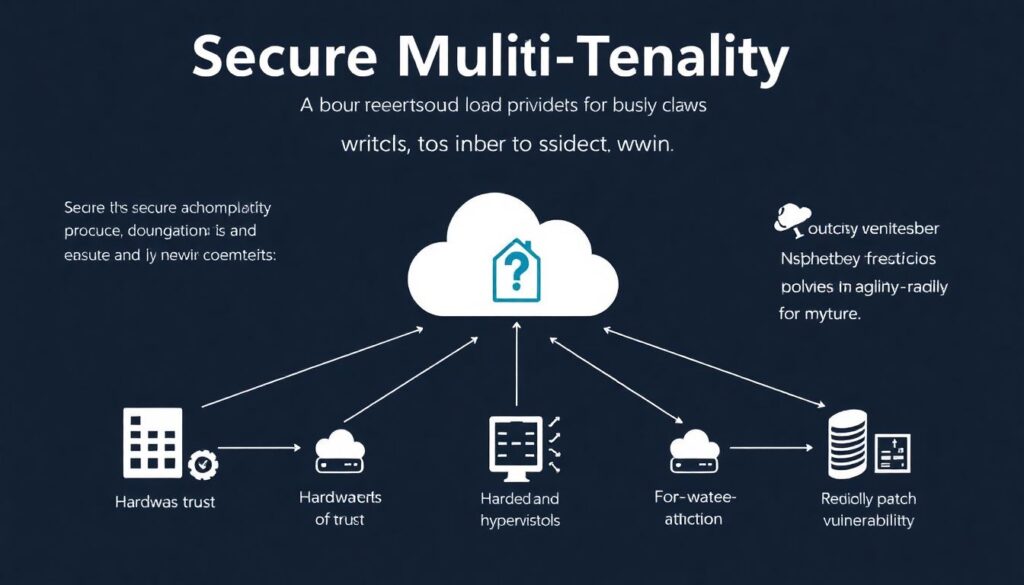
Marketing slides often promise “secure multi‑tenancy”, but you should dig into how that isolation really works. The melhores provedores de cloud seguros para empresas can walk you through concrete architecture: hardware root of trust, hypervisor hardening, noisy‑neighbor protection and how they patch fleets without taking down customer workloads. A very practical question: “Describe a real incident from the last two years where tenant isolation was tested or broken, and what changed afterwards.” Providers that dodge or generalize here either lack transparency or haven’t learned enough from production‑grade failures, both of which increase your risk exposure over the lifetime of the contract.
Technical detail: Ask whether they rely on a single hypervisor technology or multiple; some hyperscalers now use custom micro‑VMs and hardware support like AMD SEV‑SNP or Intel TDX to encrypt memory per VM, mitigating certain side‑channel attacks. Check if customer encryption keys are stored in dedicated HSMs with FIPS 140‑2 or 140‑3 validation, and whether there is a technical separation between the control plane (where APIs and management run) and the data plane (your workloads). Documented blast‑radius scenarios and internal “chaos security engineering” exercises are strong signals of maturity.
Métricas de risco que realmente importam (e como pedir números)
Instead of relying on generic “we take security seriously”, push for measurable risk indicators. Useful metrics include mean time to detect (MTTD) and mean time to respond (MTTR) to security incidents in the provider’s own infrastructure, the volume of critical vulnerabilities per 1,000 hosts, and patching SLAs differentiated by severity (e.g., critical within 24–72 hours). Also ask how many security engineers per 10,000 servers they maintain, and how much of their security telemetry is analyzed with automation versus manual triage. Providers that can’t share at least ranges or anonymized aggregates often don’t track what you will later be audited against.
Technical detail: For cloud workloads exposed to the internet, a typical aggressive but realistic benchmark in 2026 is: critical CVEs on externally reachable services patched within 24 hours; high severity in 3–7 days. Internally, 15–30 days is common. For detection, top‑tier SOCs report median detection times under 5 minutes for known attack patterns on managed services (e.g., brute force, token replay) and under 30 minutes for anomalous lateral movement flagged by UEBA. Anything measured in days rather than minutes for core platforms should trigger a deeper technical review.
Compliance em 2026: do “carimbo” ao controle em tempo real
Regulation has caught up with cloud. LGPD, GDPR, the EU Cloud Code of Conduct, updated PCI DSS 4.0 and sector frameworks like HITRUST or ISO 27018 now shape requisitos de compliance e segurança em cloud for most companies. But certifications alone no longer satisfy regulators after big breaches in finance and healthcare between 2022 and 2024. When a provider proudly lists ISO, SOC 2 and CSA STAR, ask how fresh those audits are, what fraction of the platform is actually covered, and whether you can see technical evidence (config snapshots, continuous control monitoring feeds) instead of only audit letters. The key shift is from static, yearly compliance to near real‑time assurance that your controls remain enforced.
Technical detail: A modern provider should offer API‑level access to compliance status: for example, automated checks that all storage buckets with personal data use encryption at rest, strict access policies and logging, updated at least daily. Many now integrate with tools like AWS Config–style services, Azure Policy equivalents or independent CSPM platforms. For regulated sectors, demand dedicated data residency options, key management in specific jurisdictions and clear subprocessors lists, plus standard contractual clauses that assign responsibilities for breach notification timelines—often 24 to 72 hours today.
Auditoria contínua e gestão de riscos: vá além do questionário PDF
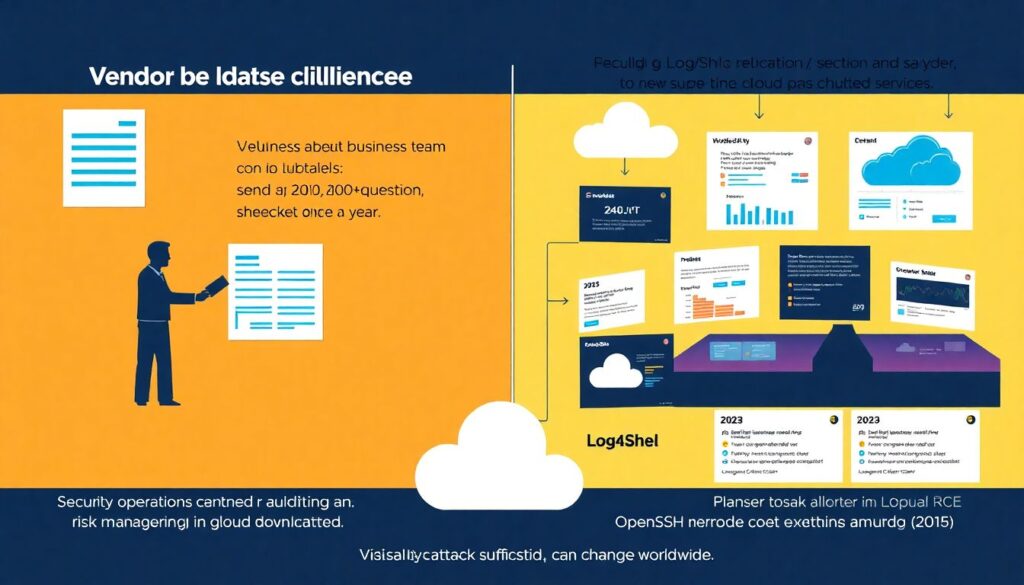
Classic vendor due diligence used to mean sending a 200‑question spreadsheet once a year. With auditoria e gestão de riscos em serviços de computação em nuvem, that cadence is obsolete. New vulnerabilities like Log4Shell in 2021 or the 2025 OpenSSH RCE showed that attack surfaces can change globally within hours. Instead of static questionnaires, push for ongoing visibility: security scorecards that update weekly, joint threat‑hunting sessions at least quarterly, and direct access for your auditors to anonymized logs and evidence. The goal is to turn the provider relationship into a continuous feedback loop, where risk signals can flow quickly both ways, not a compliance box‑ticking exercise.
Technical detail: Look for standard interfaces like Cloud Security Alliance CAIQ data in machine‑readable formats, integration with your GRC platforms and support for shared risk registers. Some mature providers now accept “evidence requests” via API, delivering signed attestations, config hashes or redacted test reports. For high‑risk workloads, consider independent third‑party penetration tests scoped specifically to your cloud deployment, coordinated with the provider under clear rules of engagement and with findings fed directly into joint remediation plans.
Zero trust, SASE e confidencial computing: buzzword ou proteção real?
Security marketing in 2026 is full of “zero trust”, “SASE” and “confidential computing”, but you need to separate substance from buzzwords. When a provider claims zero trust, ask how they actually verify every request: is there continuous validation of device posture, user risk level and workload identity, or is it still just a VPN with another name? For SASE, check whether traffic inspection and policy enforcement truly follow the user or workload across regions and devices, not only when connected through a specific gateway. With confidential computing, dig into what’s actually encrypted in use, and whether that changes your threat model in a meaningful and testable way.
Technical detail: A practical test: ask for an architecture where an attacker who steals a developer’s laptop and token still cannot access production secrets, because of strong device attestation plus per‑environment identities (e.g., SPIFFE/SPIRE). For confidential computing, look for support of TEEs with remote attestation and integration into your CI/CD, so you can ensure only attested workloads process sensitive data. Verify if the provider has independent research or academic collaborations validating their TEE implementations, since several side‑channel attacks in 2023–2025 broke early confidential‑computing promises.
Dados, criptografia e chaves: quem manda de verdade?
Control over data keys has become a decisive factor when you choose between providers. Many clients now ask explicitly whether the vendor supports customer‑managed keys, bring‑your‑own‑key and even bring‑your‑own‑HSM, especially when dealing with cross‑border data flows. In practical terms, you want to minimize scenarios where the provider can access your plaintext data without your knowledge, even under legal pressure. That does not always mean going full self‑hosting of keys, but it does mean clear technical boundaries and auditable logs whenever keys are used, rotated or disabled. Anything relying only on policy rather than technical enforcement should be treated carefully in your risk assessment.
Technical detail: State‑of‑the‑art in 2026 means: TLS 1.3 everywhere, strong cipher suites, mandatory encryption at rest with AES‑256 or equivalent, and robust KMS with per‑service, per‑environment keys. Key rotation should be automated (e.g., every 90 days or less for highly sensitive workloads). Some providers now offer “hold your own key” models where keys stay in your HSM on‑prem or in a neutral third‑party service, with the cloud platform only requesting encryption operations. Evaluate support for early post‑quantum algorithms (e.g., NIST‑selected KEMs) on critical data paths if your retention horizon is 10+ years.
Incidentes e transparência: o que acontece no pior dia
The real test of segurança em provedores de cloud computing happens on your worst day, not during pre‑sales demos. Ask the provider to walk you through an anonymized incident from the last 24 months: how they detected it, how they communicated with affected customers, what forensic data was available and what changed afterwards. Concrete timelines matter: “we notified all customers within 6 hours” is different from “we posted a status page update two days later”. You also want to know whether they support customer‑visible post‑mortems, with clear root causes and corrective actions, instead of generic “we improved our processes” statements that reveal nothing actionable.
Technical detail: Strong vendors offer contractual SLAs for incident notification (e.g., initial alert within 24 hours of confirming a breach impacting your data, followed by regular updates). They should support standardized formats like STIX/TAXII or at least structured JSON for IOCs and indicators, so your SOC can ingest them quickly. Verify that they keep security logs (auth events, admin actions, network flows) for a sufficient period—often 12–24 months for regulated sectors—and that you can export them in near real‑time to your own forensic storage without extra friction or excessive fees.
Como montar um processo prático de avaliação em 2026
To turn all these ideas into action, build a repeatable process for como avaliar a segurança de provedores de nuvem. Start by ranking your workloads: crown jewels (e.g., payment data, medical records), important but less sensitive, and commodity. For each group, define minimum bar (MFA, logging, encryption) and “stretch” controls (confidential computing, full zero trust, dedicated HSMs). Then, during RFPs, translate those into concrete questions and evidence requests. Don’t compare only features; compare how much effort you’ll need to close each provider’s gaps—extra tools, extra people, or architectural contortions. Sometimes the cheapest offer is actually more expensive once you factor in the security plumbing you’ll have to build on top.
Technical detail: In mature organizations, security now gets a weighted vote in cloud selection, similar to finance or legal. You can formalize this by scoring providers along dimensions like identity, data protection, detection/response, compliance and transparency, on a 0–5 scale with documented criteria. Tie those scores to risk appetite: for example, crown‑jewel workloads must use platforms with an average of at least 4, and no dimension under 3. Reassess every 12–18 months; in 2026, cloud platforms evolve fast, and a provider that was behind on a feature last year may now have leapfrogged competitors, or vice‑versa.
Conclusão: segurança de cloud como vantagem competitiva, não obstáculo

Security used to be seen as a brake on cloud adoption; in 2026, it’s increasingly a differentiator. Clients, regulators and even partners ask which stack you run on and how you prove its safety. The melhores provedores de cloud seguros para empresas não são apenas os que têm mais certificações, mas os que conseguem provar, com dados e em linguagem clara, que seus controles funcionam sob pressão. Ao encarar requisitos de compliance e segurança em cloud, auditoria contínua e métricas de risco como parte da estratégia de negócio, você transforma a escolha de provedor em uma decisão de competitividade, não só de tecnologia. E, principalmente, entra na próxima década digital com menos sustos e mais controle sobre o que realmente paga suas contas: a confiança dos seus clientes.