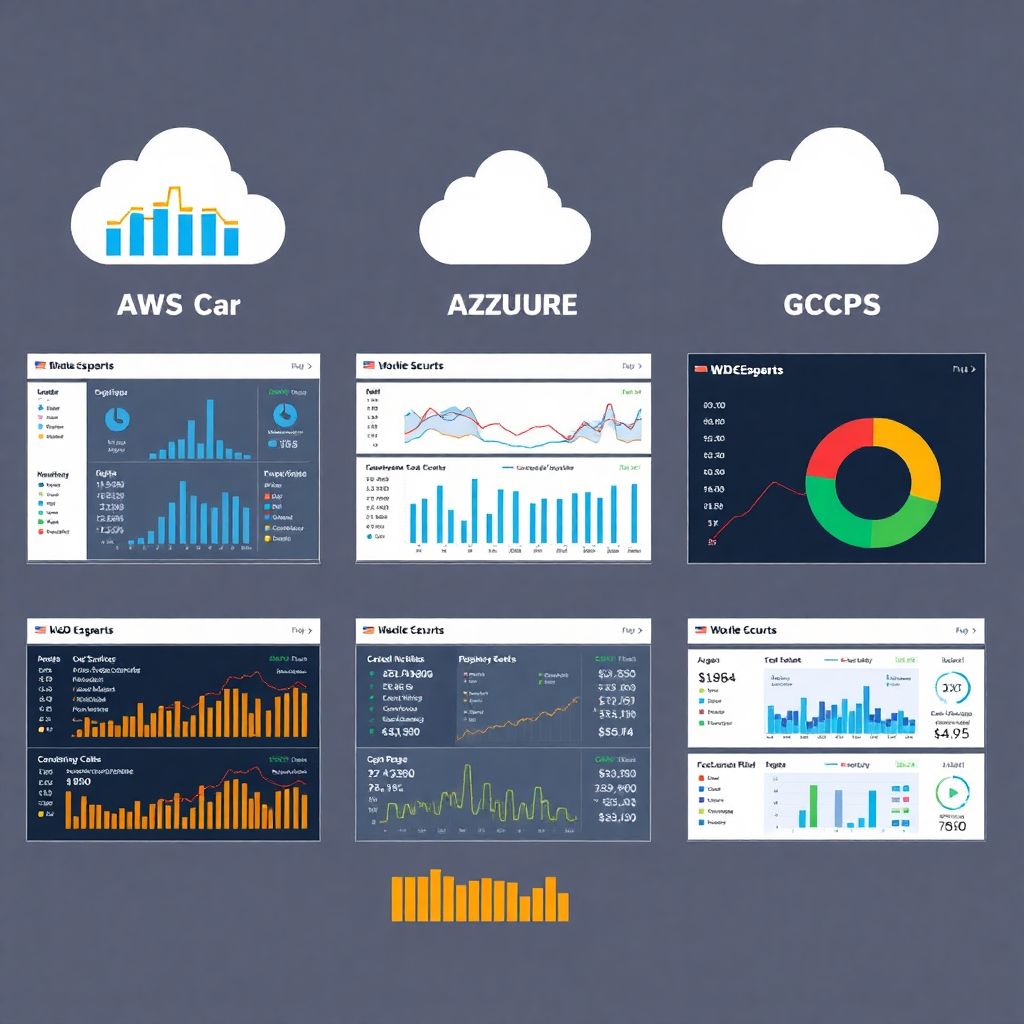
To choose the best Cloud Security Posture Management platform, start from your clouds (AWS, Azure, GCP), required compliance reports, and how deeply you need to integrate with CI/CD and SOC tools. Compare coverage, noise level, report quality and total cost instead of only licenses, using trials and a structured CSPM evaluation checklist.
CSPM evaluation – concise decision snapshot
- Define scope: which accounts, regions and workloads (including containers and serverless) must be covered in the first 90 days.
- Use a clear matrix of technical, security and business criteria instead of relying on generic vendor pitches.
- Prefer platforms CSPM with strong, ready-made compliance reports when LGPD, PCI DSS or ISO 27001 evidence is a priority.
- Test alert quality and integration with your ticketing/SIEM before signing: noise level affects real operating cost more than licenses.
- For Brazil-based teams, include support quality, local partner presence and moedas-reais pricing in your ferramentas CSPM comparação preços.
- Shortlist 2-3 vendors, request software CSPM corporativo demonstração grátis, and run side-by-side tests using the same accounts and policies.
Selection criteria matrix: technical, security and business filters
Use this criteria list as your baseline evaluation grid when comparing any melhor solução Cloud Security Posture Management for your environment.
- Cloud coverage and depth
- Does the CSPM support AWS, Azure and GCP equally, or is one cloud clearly better covered?
- Check specific services you use (EKS/AKS/GKE, serverless, managed DBs) for each provider: true CSPM para AWS Azure GCP avaliação features must include these, not only basic compute/storage.
- Integration with existing tooling
- Ticketing: Jira, ServiceNow, Azure DevOps.
- SOC/SIEM: Splunk, Elastic, QRadar, Chronicle, native cloud logging.
- DevSecOps: CI/CD, code repos, IaC scanners.
- Policy engine and customization
- Ability to create or customize rules in a structured policy language (for example, based on tags, environments or business impact).
- Support for multi-tenant or multi-business-unit environments with different policies per OU, subscription or project.
- Risk scoring and prioritization
- Clear risk scores per asset and per misconfiguration, combining exposure, exploitability and business criticality.
- Built-in playbooks for remediation, so teams know exactly what to fix, in which order.
- Compliance and reporting capabilities
- Ready-made policy packs and dashboards for LGPD, ISO 27001, PCI DSS, SOC 2, CIS Benchmarks.
- Export options (PDF, CSV, APIs) and scheduling, especially for plataformas CSPM com relatórios de compliance requested by auditors.
- Scalability and performance
- How fast the tool discovers new assets and detects drift in large environments.
- Support for multiple accounts/subscriptions/projects and cross-account views.
- Operational model and usability
- Time for initial onboarding, typical admin workload, and learning curve for security and DevOps teams.
- Quality of dashboards, filtering, and APIs for automation.
- Cost structure and licensing
- Understand if pricing is per asset, per account, per cloud, or per feature package.
- Include internal effort (triage, tuning, integration) in your ferramentas CSPM comparação preços, not only vendor invoices.
- Vendor risk and support
- Vendor financial health, roadmap transparency, and security practices.
- Support SLAs, local-language availability (Portuguese for pt_BR teams) and quality of documentation.
Integration pathways: onboarding, agents, APIs and IaC scanners
Choose the integration model that matches your architecture and operational maturity. Most modern CSPM platforms support a mix of these variants.
| Variant | Best for | Pros | Cons | When to choose |
|---|---|---|---|---|
| Agentless via cloud APIs | Multi-account AWS, Azure, GCP with fast onboarding needs |
|
|
Default choice for most CSPM para AWS Azure GCP avaliação features where you want coverage in hours, not weeks. |
| Agent-based on workloads | Highly regulated or critical workloads needing deep inspection |
|
|
Select when compliance or security teams need workload-level evidence beyond pure cloud config. |
| IaC template scanning | Teams using Terraform, CloudFormation, Bicep, Helm charts |
|
|
Choose when you have infrastructure-as-code pipelines and want security gates before merge/deploy steps. |
| Kubernetes and container integration | AKS/EKS/GKE and on-premises Kubernetes clusters |
|
|
Pick if containers are strategic and you need a unified posture view, but validate integration depth carefully. |
| Cloud-native security service integration | Organizations already using AWS Security Hub, Azure Defender, GCP SCC |
|
|
Use when you want CSPM as an aggregation and normalization layer over existing cloud-native security tooling. |
Detection coverage: asset discovery, misconfigurations and drift
Align required detection scenarios with platform capabilities using simple decision rules.
- If you struggle to even list all accounts, subscriptions and projects, then prioritize CSPM products with strong cross-account asset discovery and inventory views before advanced analytics.
- If your incidents often involve open storage buckets, permissive security groups or exposed management ports, then demand rich misconfiguration libraries and contextual network exposure analysis.
- If drift between IaC templates and reality is a recurring problem, then select a tool that correlates runtime resources with their source templates, highlighting unmanaged or manually changed assets.
- If you run short-lived workloads (auto-scaling groups, ephemeral containers), then check how frequently the CSPM scans and whether it can capture transient resources for audit trails.
- If your main risk is excessive privileges and weak segregation of duties, then require detailed IAM analysis (role trust relationships, unused permissions, privilege escalation paths).
- If you must reconcile findings with vulnerability management and EDR, then favor CSPM platforms that enrich posture findings with asset tags, owners and integration hooks for your existing tools.
Criteria-to-action decision table for coverage
| Primary concern | Key CSPM capability to require | Recommended evaluation action |
|---|---|---|
| Unknown cloud scope and shadow accounts | Automated asset discovery across all clouds and orgs | Connect a non-production org, verify whether orphan accounts and unused regions appear within the first scan. |
| Frequent high-impact misconfigurations | Rich, updated rule library with context-aware detection | Replay 3-5 past incidents and check if the CSPM would have detected and prioritized them correctly. |
| Configuration drift after audits | Drift detection and change history per resource | Perform controlled changes in test accounts and validate how quickly and clearly drift is reported. |
| Limited SOC capacity | Noise reduction and risk-based prioritization | Measure alert volume for a week in trial, then tune policies; avoid tools that stay noisy even after tuning. |
Alerting, prioritization and SOC workflow alignment
Use this checklist to align CSPM alerts with your SOC processes and avoid unmanageable noise.
- Define incident categories: map CSPM findings (public exposure, IAM risk, logging gaps, encryption issues) to your existing incident categories and playbooks.
- Standardize severities: align CSPM severity levels with your SIEM or ticketing severities, so analysts understand impact without translation.
- Integrate with case management: ensure findings can open and update tickets automatically in your chosen tool, with bidirectional status sync.
- Set routing rules: route network-related posture alerts to network/SRE teams, data-access issues to data owners, and IAM risks to identity teams, instead of sending everything to a generic queue.
- Define tuning and review cadence: assign owners to review noisy rules weekly in the first month, then monthly; document which policies are disabled or customized and why.
- Measure effectiveness: track metrics such as time-to-triage, percentage of false positives and percentage of findings closed with actual remediation, not just ticket closure.
- Plan escalation: establish clear paths when a CSPM alert correlates with SIEM events, ensuring fast escalation to incident response if exploitation is suspected.
Reporting deliverables: compliance templates and executive dashboards
Reporting is where many CSPM implementations fail to deliver value, even when detection is strong. Avoid these frequent mistakes.
- Relying only on default dashboards without tailoring them to your control framework, business units or critical applications.
- Assuming that generic CIS-based reports are enough for audits, instead of configuring specific evidence for LGPD and sector regulations relevant in Brazil.
- Not validating whether plataformas CSPM com relatórios de compliance can schedule, export and version reports in formats auditors actually accept.
- Ignoring the needs of executives and boards, and sharing raw technical findings instead of summarized risk trends and remediation progress.
- Failing to include asset ownership and tagging in reports, which makes remediation follow-up slow and increases friction between security and delivery teams.
- Overcomplicating dashboards with dozens of widgets, rather than focusing on a short set of posture KPIs (coverage, open high-risk issues, time to remediate).
- Not testing language and localization needs, such as providing management summaries in Portuguese for Brazilian leadership while keeping technical detail in English if needed.
- Skipping report validation during proofs of concept; many teams focus on detection but only realize reporting gaps when the first real audit comes.
Example snippet: compliance posture report
LGPD & ISO 27001 Cloud Posture Summary (Quarterly)
Scope: AWS production accounts (Brasil), Azure subscriptions (Finance, HR)
Overall compliance alignment (control-level): Partially aligned
Key gaps:
12 S3 buckets with public read access and personal data tags (LGPD Art. 46).8 databases without encryption at rest enabled (ISO 27001 A.10).Logging disabled in 5 critical management APIs.
Example snippet: incident-oriented posture report
Critical Exposure Findings & Actions (Last 7 Days)
Finding: Publicly exposed RDP port (TCP/3389) on 3 VMs (Azure Prod Subscription).Risk: High - direct administrative access from the internet.Action taken: NSG updated to restrict to corporate VPN IP ranges; just-in-time access policy enabled.Owner: Cloud Operations - Team Alpha.
Total cost of ownership, scalability and vendor risk
Mini decision path for quick vendor shortlisting
- If you need fast coverage across multiple clouds and limited engineering time, prioritize agentless-first CSPM with strong default policies and simple pricing.
- If your main driver is regulated workloads and deep evidence, select a platform that combines CSPM with workload-level visibility and advanced reporting.
- If you are heavily IaC-driven and cloud-native, prefer vendors with robust CI/CD and Terraform/CloudFormation integration over legacy agent-centric tools.
- If budget is constrained, shortlist tools that offer a software CSPM corporativo demonstração grátis and transparent pricing tiers, and then negotiate based on asset volume and support.
The best choice for lean teams needing broad, quick coverage is usually an agentless-first CSPM tightly integrated with ticketing and SIEM. The best choice for compliance-driven enterprises is a CSPM with mature reporting packs and deep evidence collection. The best fit for DevOps-centric organizations is a CSPM that embeds posture checks into code and pipelines by default.
Typical selection and deployment concerns
How many clouds should a CSPM support for a Brazilian mid-size company?
Start with the clouds you actually use in production; adding unused providers only adds noise. For most organizations this means one or two of AWS, Azure or GCP. Ensure the vendor can scale to multi-cloud later, but do not overcomplicate your first rollout.
Can native cloud security tools replace a dedicated CSPM?
Native tools are a good starting point, especially for single-cloud environments, but they are usually fragmented and provider-specific. A dedicated CSPM helps normalize findings across clouds, adds richer policy engines and offers centralized reporting, which becomes important as your environment and requirements grow.
How long should we run a CSPM proof of concept?
Plan for at least a few weeks, ideally spanning one full change cycle in your environment. This allows you to evaluate onboarding, detection quality, integration with SOC tools and the usefulness of reports, instead of only the first-day discovery impression.
What data access concerns should we clarify with CSPM vendors?
Clarify which permissions and cloud roles are required, where data is stored geographically and how long posture data and logs are retained. For Brazilian organizations, confirm how the vendor supports LGPD obligations, such as data subject rights and incident notification.
How do we avoid being overwhelmed by CSPM alerts after go-live?
Start with high and critical severity policies only, integrate with your ticketing tool and establish a tuning routine in the first month. Assign clear ownership for each policy category and gradually enable additional rules once teams can handle the baseline volume.
What should we check in contracts beyond price?
Look at service levels, support response times, data processing terms, security certifications and exit options. In addition to pricing, these factors strongly influence long-term total cost and risk of relying on a single CSPM provider.
Is it realistic to manage CSPM without dedicated security engineers?
Yes, if you keep scope focused and integrate CSPM into existing DevOps and operations workflows. Choose a tool with simple workflows, good defaults and automation options, so infrastructure and platform teams can share responsibility without excessive overhead.