
To run cloud pentests and vulnerability assessments safely and compliant in pt_BR contexts, you must obtain explicit written authorization, align with provider policies (AWS, Azure, GCP), define a narrow scope, use non-destructive techniques, protect production data, and document every action. When in doubt, involve legal, compliance, and a specialized cloud security consultancy.
Pre-engagement essentials and permissions checklist
- Written authorization from data owner and cloud account owner, covering dates, hours and locations (regions, subscriptions, projects).
- Documented scope: in-scope accounts, services, environments (dev/homolog/prod), data sensitivity and business-critical systems.
- Signed rules of engagement: allowed techniques, forbidden actions, monitoring, communication channels and escalation paths.
- Compliance mapping: LGPD, contractual clauses, internal policies and cloud provider acceptable use policies.
- Segregated tester accounts and keys with least privilege and time-bounded access.
- Defined backout and recovery plan, including notification triggers and rollback procedures.
- Evidence handling rules: log retention, report classification and secure storage.
| Item | Owner | Status | Notes / Links |
|---|---|---|---|
| Written legal authorization (email or document) | Security / Legal | Planned / In progress / Approved | Attach signed scope and rules of engagement |
| Cloud provider policy review (AWS/Azure/GCP) | Cloud Engineer | Not started / Done | Check pentest guidelines and prohibited actions |
| Tester accounts and credentials prepared | Cloud Admin | Not started / Done | Use dedicated, auditable identities and roles |
| Monitoring and alerting tuned for tests | SecOps / NOC | Not started / Done | Exclude tester IPs from auto-block where needed |
| Backout and rollback plan validated | Ops / App Owners | Not started / Tested | Define stop conditions and on-call contacts |
Scoping, legal authorization and compliance boundaries

Cloud pentesting is suitable when your workloads are stable, you have owner approval, and you already follow basic hardening practices. It is not recommended during major migrations, unstable releases, or when you cannot isolate production impact, such as highly fragile legacy systems without robust backup and recovery.
Before contracting serviços de pentest em cloud or starting internal tests, align the business need: new regulatory requirement, internal risk assessment, incident lessons learned or due diligence during mergers and acquisitions. For regulated sectors in Brazil, include LGPD, BACEN, ANS or sectoral guidance when defining timing and scope.
Quick scoping checklist
- Identify data owners and cloud account owners for each environment.
- Classify data processed (personal, sensitive, financial, health, etc.).
- Decide which environments are in scope: dev, QA, staging, production.
- Confirm legal basis and purpose under LGPD for each test activity.
- Review contracts with customers and providers for pentest clauses.
Example: when you should postpone a cloud pentest
Imagine a core banking application recently migrated to AWS with unstable performance. Running a full production pentest now increases the chance of outages and false positives. Instead, focus on staging environments plus targeted configuration reviews, and schedule a production pentest later, once stability and observability improve.
Comprehensive attack-surface mapping for cloud architectures
Attack-surface mapping reveals all reachable assets, identities and data paths in your cloud landscape. This step is crucial both when you test internally and when you hire an empresa de segurança para avaliação de vulnerabilidades em nuvem, because it prevents blind spots and uncontrolled collateral impact.
Information and access you will typically need
- High-level architecture diagrams for each major application and environment.
- Inventory of accounts, subscriptions, projects, VPCs/VNets, regions and peering.
- List of internet-exposed endpoints: load balancers, APIs, WAFs, VPNs, bastions.
- IAM model overview: identity providers, roles, groups, cross-account trusts.
- Data storage map: object storage buckets, databases, secrets managers, queues.
- Baseline security controls: firewalls, WAF rules, EDR, vulnerability scanners, SIEM.
Cloud-native tools and metadata for mapping
- AWS: AWS Config, AWS Systems Manager Inventory, Resource Explorer, Security Hub, IAM Access Analyzer.
- Azure: Azure Resource Graph, Azure Policy, Azure Security Center, Azure AD sign-in and audit logs.
- GCP: Cloud Asset Inventory, Security Command Center, IAM Recommender, Cloud Logging.
When engaging consultoria em conformidade e segurança cloud, provide at least read-only reports from these tools and a short written narrative of typical data flows (user to app, app to database, app to external API). This enables a test plan aligned to real risks, not only to generic checklists.
Example: mapping a simple three-tier app in multi-cloud
Consider a web frontend in Azure, business logic in AWS and analytics in GCP. Mapping should document exposed Azure Application Gateway endpoints, AWS API Gateway and ALB, GCP public IPs, all peered networks, shared identity providers (for example, Azure AD) and how data transits between providers and on-premises.
Safe exploitation practices and non-disruptive validation
Before the detailed steps, use this mini preparation checklist to keep tests safe and traceable.
Mini preparation checklist for safe exploitation
- Confirm monitoring teams are informed, with tester IPs and expected time window.
- Tag test resources and log streams for easy correlation in SIEM.
- Enable fine-grained logging (CloudTrail, Activity Logs, Admin Activity, etc.).
- Validate backups and snapshots for critical workloads in scope.
- Define clear stop conditions (latency spikes, error rates, CPU thresholds).
Stepwise procedure for non-disruptive cloud testing
-
Start with read-only discovery
Use only read/list/describe APIs and passive network discovery to understand resources, IAM, network paths and configurations. Avoid any configuration change, load generation or exploit traffic during this phase. -
Validate in a non-production twin first
Reproduce key production configurations in a staging environment where possible. Execute aggressive scans, exploit proof-of-concepts and misconfiguration tests there first to observe performance and functional impact.- Clone representative data with anonymization or masking for privacy.
- Simulate access patterns similar to production traffic volumes.
-
Use rate-limited scanning and whitelisted sources
In production, limit concurrency and request rates on scanners and scripts. Use fixed, whitelisted source IPs or VPN endpoints, and coordinate with WAF and intrusion prevention teams to avoid automatic blocking that may cause cascading failures. -
Favor logic and configuration flaws over brute force
Focus on privilege escalation paths, overly permissive IAM roles, misconfigured storage, insecure CI/CD pipelines and secrets exposure instead of large password spraying or denial-of-service style traffic.- Review role assumption chains and cross-account trusts.
- Check storage buckets and databases for public or cross-tenant exposure.
-
Apply controlled exploitation with clear success criteria
When exploiting a vulnerability, stop immediately after proving impact with minimal data or action. Capture screenshots, minimal output and timestamps, then restore any altered configuration to its original state as soon as safely possible. -
Continuously monitor for side effects
During testing, watch application metrics (latency, error rate), infrastructure metrics (CPU, memory, disk, I/O) and security alerts. Pause tests when anomalies exceed agreed thresholds, investigate and only resume after risk is understood. -
Debrief and clean up test artefacts
After finishing, remove temporary accounts, keys, test instances and any public exposure created for the pentest. Export and safely store logs and evidence needed for the final report and for future auditoria de segurança e compliance em ambientes de nuvem.
Example: validating an S3 bucket misconfiguration
Instead of bulk-downloading all objects from a misconfigured bucket, list a small sample, download a single non-sensitive file to prove impact, document access level and immediately notify the owner. Coordinate remediation and re-test only with owner confirmation.
Automated and manual vulnerability assessment workflows
Combining automated scanning with focused manual analysis is essential for realistic and compliant outcomes. The checklist below helps verify your workflow is balanced and repeatable.
Workflow verification checklist
- Automated external scans cover all public endpoints discovered during attack-surface mapping.
- Cloud configuration scanners are enabled for key services (compute, storage, IAM, networking, managed DBs, serverless, containers).
- Authentication and session handling are manually verified for at least critical user flows (login, password reset, multi-factor, token refresh).
- Privilege escalation scenarios in IAM are manually reviewed, including role assumption, service principals and workload identities.
- CI/CD pipelines and artifact repositories are checked for exposed credentials, tokens and insecure build steps.
- At least one manual review pass focuses on business-logic flaws (abuse of workflow, bypass of approvals, financial manipulation risks).
- False positives from automated tools are triaged and confirmed, not blindly forwarded to development teams.
- All findings are mapped to business impact levels relevant to the Brazilian context (for example, LGPD data leakage, financial fraud, service unavailability).
- Retests after remediation use the same tools and scopes to verify fixes and avoid regression.
Example: combining tools in a single sprint
You can schedule external scans overnight, run cloud configuration checks early in the morning, then spend the rest of the day on manual validation of high-risk findings. This avoids alert fatigue while giving time for deep inspection of genuinely critical issues.
Cloud-native tooling and provider-specific considerations
Selecting the right ferramentas de pentest para ambientes cloud AWS Azure GCP requires understanding native capabilities and gaps. The table below maps common tool types to major providers and typical features.
| Tool / Service Type | AWS | Azure | GCP | Typical Use in Cloud Pentest |
|---|---|---|---|---|
| Cloud configuration security center | Security Hub, Inspector | Defender for Cloud | Security Command Center | Baseline misconfigurations, CIS benchmarks, continuous posture management. |
| Asset inventory and graph | Config, Resource Explorer | Resource Graph | Cloud Asset Inventory | Attack-surface mapping, dependency analysis, blast-radius estimation. |
| Identity and access analysis | IAM Access Analyzer | Entra ID (Azure AD) tools | IAM Recommender | Privilege escalation paths, cross-account trust analysis, least-privilege review. |
| Network security testing | VPC Reachability Analyzer | NSG Flow Logs, Azure Firewall | VPC Service Controls, Firewall | Validate segmentation, unexpected exposure, and control-plane enforcement. |
| Third-party DAST/SAST/IAST tools | Marketplace integrations | Marketplace integrations | Marketplace integrations | Application-level vulnerabilities, code issues, API security testing. |
Common mistakes specific to cloud providers
- Assuming pentest rules for on-premises apply unchanged to shared-responsibility cloud models, ignoring provider restrictions on DDoS-like traffic and port scanning.
- Testing only virtual machines and ignoring serverless, managed Kubernetes, PaaS databases and data pipelines that hold sensitive data.
- Running unauthenticated external scans without considering WAF behavior, CDN caching and regional routing, leading to incomplete results.
- Misinterpreting provider security scores as complete pentest coverage, instead of a posture baseline that still needs manual validation.
- Omitting logs and telemetry configuration from the test plan, resulting in untraceable actions and gaps during forensic review.
- Using over-privileged tester roles (for example, Owner/Administrator) that hide real-world privilege escalation and access control weaknesses.
- Failing to coordinate with managed service providers or outsourcers that operate part of the environment, creating contractual or operational conflicts.
- Ignoring multi-cloud interconnections, leaving trust relationships between AWS, Azure and GCP out of scope while attackers exploit them as primary vectors.
- Not aligning pentesting cadence with broader auditoria de segurança e compliance em ambientes de nuvem, producing duplicated or conflicting findings.
Example: adapting methodology to a serverless-heavy environment
For an architecture dominated by serverless and managed services, focus more on IAM policies, event sources, environment variables, secret management and CI/CD integration than on classic port scanning. Exploit paths often come from over-permissive roles or insecure triggers rather than exposed ports.
Prioritization, remediation tracking and evidence-based reporting
After testing, results must be prioritized, tracked and communicated in a structured and auditable way. Depending on your maturity and internal capacity, consider different models to manage this phase effectively.
Alternative approaches for managing remediation
-
Internal remediation ownership with external guidance
Engineering and cloud platform teams own fixes, while an external consultoria em conformidade e segurança cloud helps interpret findings, map them to LGPD and corporate policies, and define risk-based priorities. Suitable when you have strong internal technical capacity but limited regulatory expertise. -
Fully managed remediation program by a security partner
A specialized empresa de segurança para avaliação de vulnerabilidades em nuvem not only executes tests but also coordinates remediation sprints, prepares evidence for auditors and supports board-level reporting. Appropriate for organizations starting their cloud journey or with small security teams. -
Hybrid model integrated with DevSecOps pipelines
Findings are pushed into issue trackers and CI/CD gates, with automated checks enforcing critical controls, while periodic serviços de pentest em cloud validate deeper, complex scenarios. This model fits teams with established DevOps practices wanting continuous visibility and quick feedback cycles. -
Assessment-only mode for strict separation of duties
The pentest provider delivers evidence-based reports and risk ratings; internal teams or separate vendors handle remediation. This can be needed for independence in regulated industries or when multiple suppliers share responsibilities in the same cloud environment.
Example: evidence-focused reporting for auditors
Structure the final report into executive summary, methodology, scoped assets, findings grouped by risk, remediation recommendations, and appendices with logs, screenshots and configuration snippets. This organization simplifies future regulatory reviews and supports recurring auditoria de segurança e compliance em ambientes de nuvem without repeating tests unnecessarily.
Common operational and compliance dilemmas in cloud testing
Can I pentest production cloud environments without breaking SLAs?
Yes, but only with strict limits on test intensity, coordinated schedules and clear stop conditions. Use rate-limited scans, staged exploit attempts and real-time monitoring of key metrics to avoid SLA breaches and customer impact.
How does LGPD affect my cloud pentest scope and data handling?
LGPD requires a clear legal basis, purpose limitation and data minimization. During tests, avoid unnecessary access to personal data, mask or anonymize where possible and protect logs and evidence as sensitive information with proper access control and retention policies.
Do I need explicit approval from cloud providers like AWS, Azure and GCP?
Most providers allow many pentest activities without prior approval but restrict certain techniques, such as DDoS simulations. Always review current provider policies and, if needed, submit required forms or adjust your plan to stay compliant.
What if a vulnerability is found in another tenant or third-party service?
Stop testing that path immediately and document only minimal technical details. Follow coordinated disclosure practices, usually via the provider or vendor security contact, and avoid collecting or storing data from other tenants or external customers.
How often should I repeat cloud pentests and vulnerability assessments?
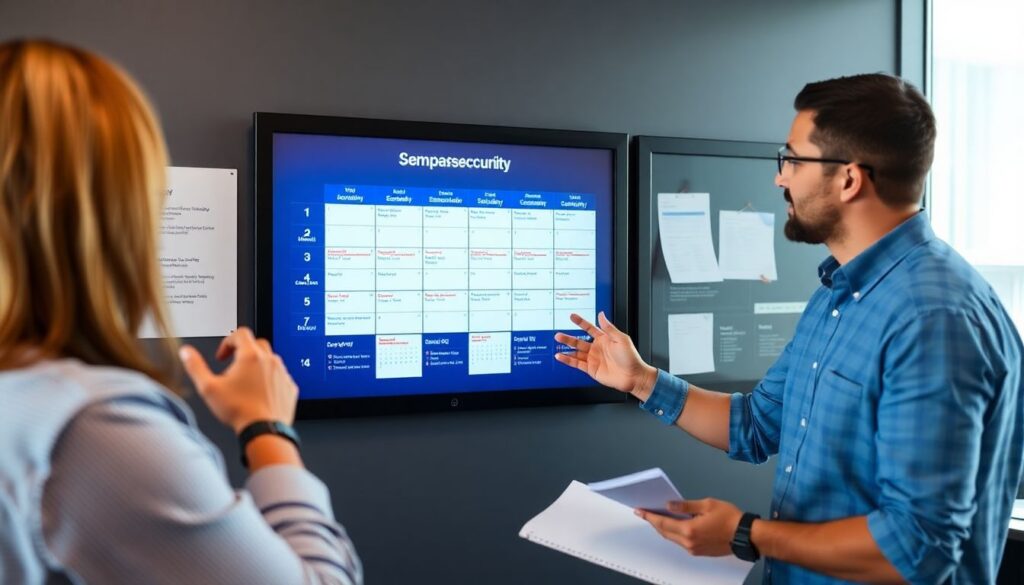
Frequency depends on change rate, regulatory requirements and risk appetite. Many organizations run annual or semi-annual comprehensive tests plus focused assessments after major architectural changes, new high-risk features or significant security incidents.
Can automated scanners replace manual cloud pentesting?
No. Automated scanners are essential for scale and coverage, but they miss business-logic flaws, complex privilege escalation chains and context-specific misconfigurations. A hybrid approach combining automation and focused manual work is necessary for realistic risk visibility.
How do I justify pentest costs to non-technical stakeholders?
Translate findings and scenarios into business outcomes: potential downtime, regulatory fines, fraud, reputational damage and contractual penalties. Show how targeted investment in remediation reduces those tangible risks and aligns with corporate governance and compliance expectations.