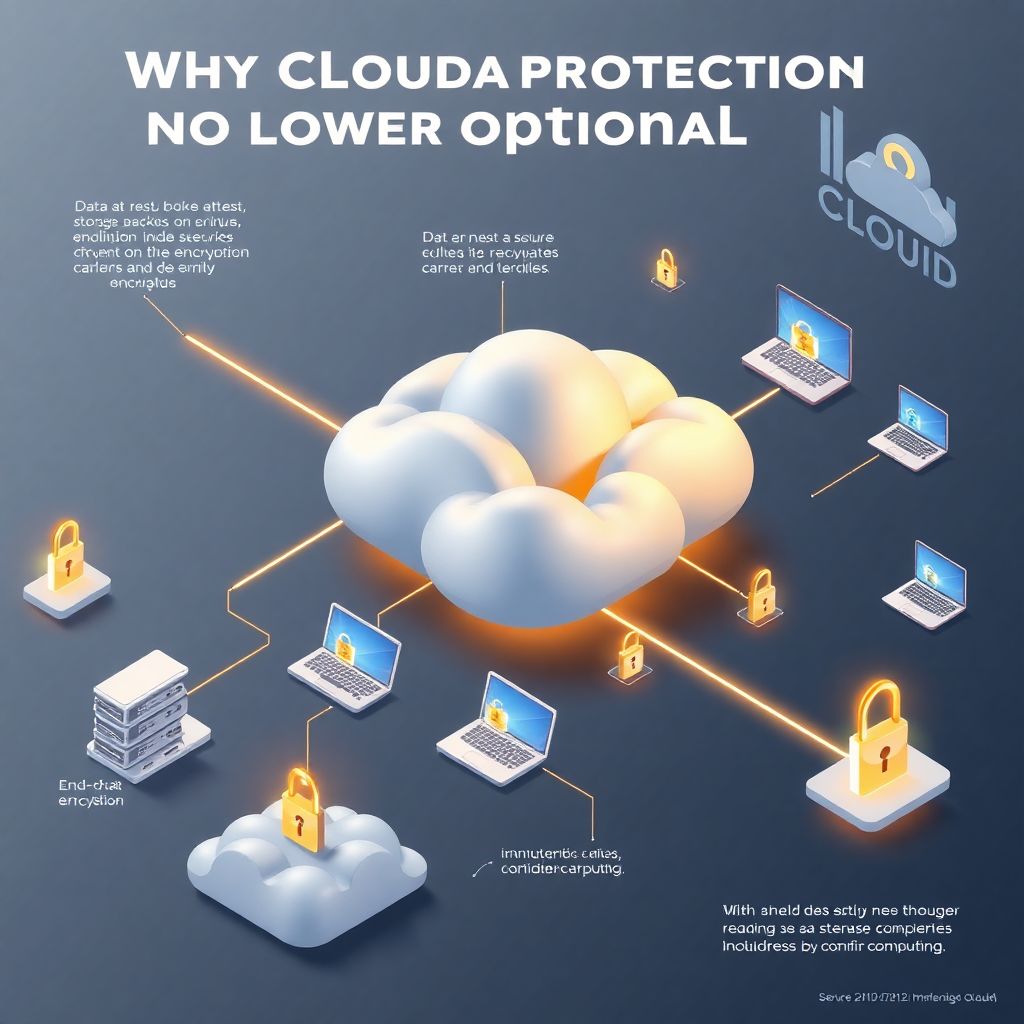
Why data protection in the cloud is no longer optional
When companies move everything to the cloud, they don’t just move servers; they move their risks. Files, logs, backups, analytics data – all of this lives either “at rest” in storage or “in transit” moving between services. Both states are attack surfaces. Over the last few years, regulators, customers and cybercriminals have collectively forced a mindset shift: proteção de dados em repouso e em trânsito cloud is now a board‑level topic, not just an IT problem. And the most practical, battle‑tested way to reduce risk is end‑to‑end encryption used consistently, instead of sporadically.
Data at rest vs data in transit: what actually needs protection?
Data at rest is everything stored “parked” somewhere: object storage buckets, database files, virtual machine disks, backups, snapshots, even log archives kept for compliance. Data in transit is the same information as it moves – API calls, sync between regions, user sessions in the browser, replication to a backup provider. Many breaches happen because organizations only think about the transit piece (TLS on the website) and forget the rest: unencrypted backups, misconfigured storage, or keys left on a shared drive. Real security appears only when these two states are treated together, with consistent cryptography and key management that spans the entire data lifecycle.
Why end-to-end encryption changes the risk equation
In simple terms, criptografia ponta a ponta na nuvem means data is encrypted before it leaves the client’s controlled environment and is only decrypted where it’s actually used, not somewhere in the middle “because it’s convenient”. If properly implemented, even the cloud provider cannot read the content. This fundamentally reduces the blast radius of any compromise: a stolen database without keys is just expensive noise. It also changes negotiations with auditors and regulators, because you can show that access to raw data requires both system control and cryptographic control, usually split across different teams or even organizations.
Case 1: Ransomware vs end-to-end encrypted backups
A European mid‑size retailer was hit by ransomware in 2022. Their production environment went down, but the real question was: are backups safe? Two years earlier they had migrated to a cloud backup solution with end‑to‑end encryption, where keys stayed inside a dedicated hardware security module on their side. The attackers managed to get access to cloud console credentials and even tried to wipe snapshots, but could not read or alter encrypted archives. Recovery took three days and cost them an estimated €450k in lost sales and overtime. Without criptografia ponta a ponta na nuvem and immutable encrypted backups, internal estimates suggested downtime of several weeks and losses exceeding €5 million.
Numbers that explain why encryption is now mainstream
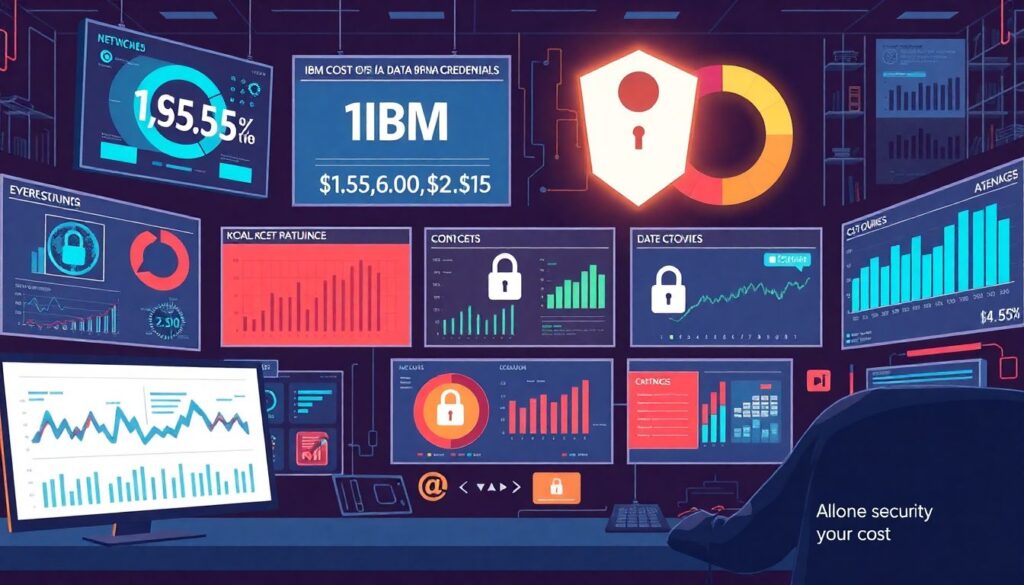
Security decisions are usually justified by numbers, not fear. According to IBM’s “Cost of a Data Breach Report 2024”, the average cost of a data breach reached around US$4.45 million globally, with incidents involving lost or stolen credentials remaining one of the top drivers. At the same time, cloud misconfigurations continue to show up in more than 15–20% of documented breaches, often involving storage buckets or databases left accessible and unencrypted. Vendors report that more than 80% of their enterprise customers now enable encryption at rest by default, but fewer than half implement consistent, application‑level encryption for sensitive fields, which leaves gaps precisely where attackers look.
Forecasts: where cloud encryption is headed in the next 3–5 years
Looking ahead, several trends stand out. Analysts expect double‑digit annual growth for serviços de criptografia para armazenamento em nuvem, driven by regulated industries, cross‑border data flows and the explosion of AI training datasets. We are also seeing early, but serious, investment into post‑quantum cryptography, especially for long‑term archives that must remain confidential for 10–20 years. Another vector is confidential computing, where data stays encrypted even during processing inside trusted execution environments. Over the next five years, the baseline expectation will likely be: everything encrypted by default, with explicit justification required to keep any dataset in plaintext, instead of the other way around.
Economic aspects: encryption as cost centre and revenue enabler
From a CFO’s point of view, security is traditionally a cost line. Hardware security modules, licenses for key management systems, and compliance audits all look like overhead. Yet when you match these costs against average breach impact, the equation flips. Regulatory fines under GDPR or LGPD, class‑action settlements, incident response, reputational damage and customer churn easily outweigh multi‑year investments into robust encryption. There is also a positive side: being able to show strong proteção de dados em repouso e em trânsito cloud can shorten sales cycles in B2B, enable entry into financial or healthcare sectors, and support higher‑margin “premium” editions of products for strictly regulated customers.
Case 2: Fintech closing deals faster with strong encryption story
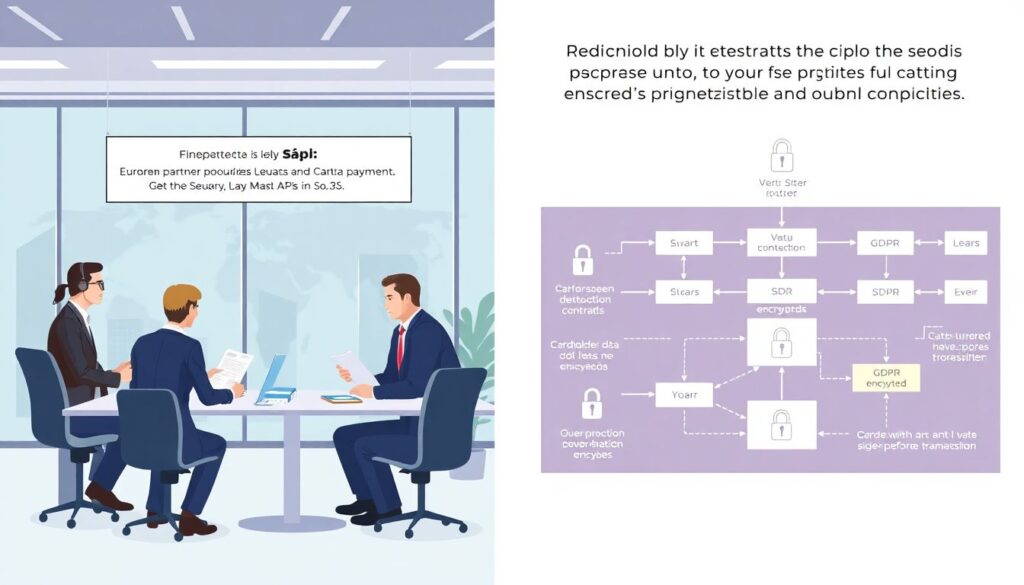
A Brazilian fintech providing payment APIs struggled to close deals with European partners. Legal teams on the customer side kept pushing back on data protection clauses. After a security review, the company redesigned its architecture: cardholder data was encrypted at the SDK level on the client side, with tokenization in their backend and keys managed by an external KMS integrated with their cloud provider. They also added detailed documentation describing como proteger dados sensíveis na cloud com criptografia using their platform. Within a year, sales reported a 30% reduction in security‑related objections and landed two major EU clients specifically because of the improved encryption posture and documented controls.
How to think about “data in use” in an encrypted world
Even when data is safely encrypted at rest and in transit, there is an uncomfortable reality: at some point, it must be decrypted to be processed. This “data in use” phase is increasingly recognized as the next weak point. Modern architectures try to minimize this window by decrypting only specific fields in memory, using isolated execution environments, and re‑encrypting immediately after processing. For high‑value workloads, confidential VMs and enclaves offer hardware‑level protection against even privileged attackers. The more sensitive the data, the more the architecture resembles a pipeline of short, controlled decryptions, instead of long‑lived plaintext databases sitting on shared infrastructure.
Practical building blocks: layers of cloud encryption
To move from theory to practice, it helps to think in layers. Network encryption with TLS (or QUIC) is table stakes for all public endpoints and internal services exposed over the internet. Storage‑level encryption, usually provided by the cloud platform, handles disks, snapshots and backups. Application‑level encryption protects specific fields – like IDs, tokens or medical attributes – before they ever hit logs or analytics systems. On top of that, key management, rotation, access policies and monitoring create the governance layer. All these components must work together; a single unencrypted logging stream can undermine an otherwise well‑designed security posture.
Case 3: Misconfigured logging and a silent data leak
An online education platform implemented strong encryption for student records in their main database. However, an incident in 2023 revealed that some sensitive fields were appearing in plaintext in their application logs, which were streamed to a third‑party analytics service. The root cause was a debug mode left active in one microservice, logging full request payloads. Although the logs were stored in an encrypted bucket, the analytics vendor had access to decryption keys. This case illustrates that melhores práticas de segurança e criptografia na nuvem must include strict control over what gets logged, how data is masked, and who can decrypt auxiliary data stores, not just the primary database.
Key management: where many projects succeed or fail
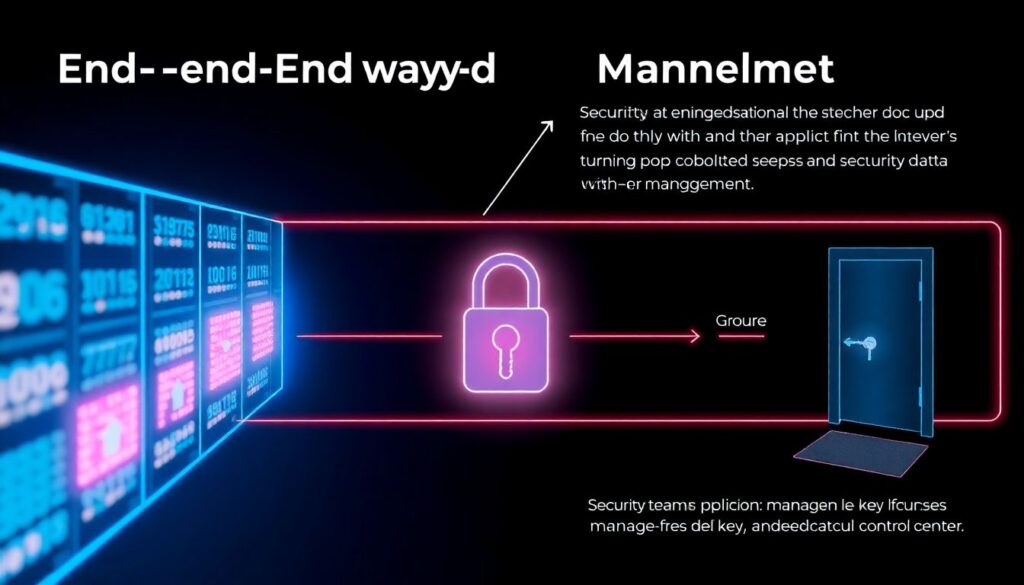
End‑to‑end encryption lives or dies on key management. Storing encryption keys next to the encrypted data is equivalent to locking your front door and leaving the key under the mat. Mature organizations separate duties: application teams never see raw keys, while security teams manage key policies using a KMS or HSM integrated with identity and access management. Automated key rotation, granular permissions and detailed audit logs become non‑negotiable. A common anti‑pattern in real projects is hard‑coded keys in configuration files or environment variables, which often end up in version control. Fixing these issues early is significantly cheaper than responding to a leak later.
How to protect sensitive data in the cloud with encryption: a practical path
For teams wondering como proteger dados sensíveis na cloud com criptografia without rewriting everything from scratch, an incremental plan tends to work best. Start with a clear inventory of data types and map where each category is stored, processed and transmitted. Identify “crown jewels” – payment data, health information, production secrets, personal identifiers – and ensure that both at‑rest and in‑transit encryption are mandatory for them. Then, introduce application‑level encryption for the most critical fields and move key management to a centralized, auditable service. As architecture evolves, extend these controls to new microservices, data lakes and AI pipelines, making encryption the default for any new component.
Case 4: Healthcare provider modernizing step by step
A regional healthcare network running on legacy on‑prem systems decided to migrate gradually to the cloud. Instead of trying to build a perfect design on day one, they focused on lab results and imaging data first. These were moved to a cloud storage system with serviços de criptografia para armazenamento em nuvem, while patient identifiers were encrypted at the application layer before leaving the hospital network. Over two years, they migrated more workloads, consistently applying the same model. After a regulator audit, the organization received positive remarks specifically about its phased, well‑documented encryption strategy and clear separation of duties for key management.
Impact on the broader industry and vendor ecosystem
As more companies adopt strong encryption by default, the entire technology ecosystem changes. Cloud providers are investing heavily in managed key services, hardware acceleration, confidential computing and compliance attestation. Startups offer specialized tooling for managing secrets, scanning code for cryptographic misuses, or monitoring access to encrypted datasets. At the same time, software vendors are pushed to support customer‑managed keys and flexible encryption options, or risk being excluded from enterprise deals. The result is a slow but steady shift in expectations: “no encryption” is now an exception that must be justified, while robust proteção de dados em repouso e em trânsito cloud has become a differentiating feature in RFPs and technical due diligence.
Best practices that actually hold up in real life
Implementing melhores práticas de segurança e criptografia na nuvem does not require perfection, but it does require discipline and repeatability. Organizations that succeed tend to adopt a small number of clear rules and enforce them relentlessly via automation. Human memory and good intentions are no match for complex distributed systems and constant change. Building security controls into CI/CD, infrastructure‑as‑code and default templates keeps teams from reinventing the wheel or forgetting a critical parameter under deadline pressure.
Five concrete steps to improve cloud encryption today
1. Classify your data and explicitly label the most sensitive categories, so you know what requires the strongest proteção de dados em repouso e em trânsito cloud.
2. Enable encryption at rest for all core storage services and ensure keys are managed by a centralized KMS with strict access controls.
3. Use TLS with modern configurations for every public and internal service endpoint, including APIs, message queues and database connections.
4. Introduce application‑level encryption for the highest‑value fields, and make sure keys never appear in source code or shared configuration files.
5. Monitor key usage and access to encrypted data, integrating alerts into your incident response process so suspicious decryption events are investigated quickly.
Conclusion: encryption as a design choice, not a checkbox
End‑to‑end encryption in the cloud is no longer a niche or purely academic topic; it’s a practical necessity shaped by real‑world breaches, regulatory pressure and customer expectations. When implemented thoughtfully, criptografia ponta a ponta na nuvem does more than reduce risk: it opens markets, accelerates deals and makes large‑scale cloud usage sustainable. The combination of economic logic, maturing services de criptografia para armazenamento em nuvem and industry‑wide best practices has created a moment where doing the right thing is also the easiest thing – as long as encryption is treated as a core design principle, not a last‑minute checkbox before go‑live.