
To evaluate cloud compliance with LGPD, GDPR and other regulations, first map what data you process in the cloud, where it flows and which providers are involved. Then compare current practices with legal requirements, review technical and organizational controls, verify contracts and logs, and document gaps with clear remediation actions.
Compliance Snapshot: Essential Metrics for Cloud Assessments
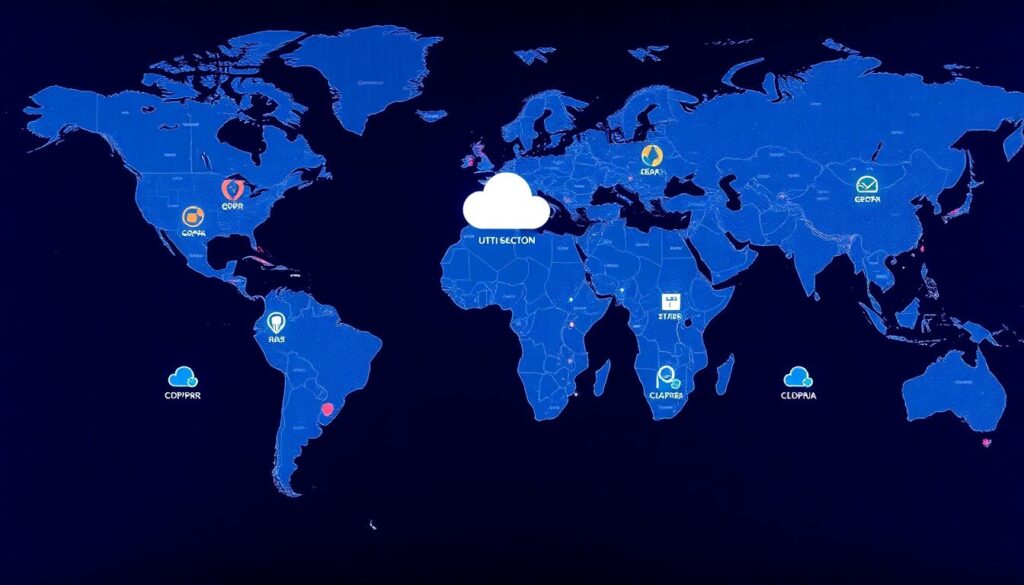
- Documented inventory of cloud systems, data categories and jurisdictions, including conformidade em cloud com LGPD e GDPR.
- Complete end-to-end data-flow maps covering collection, processing, sharing and international transfers.
- Evidence that legal bases, consent, data subject rights and retention rules are applied to cloud workloads.
- Baseline of technical controls: encryption, IAM, logging, monitoring and backup for all critical cloud services.
- Signed DPAs, SCCs/IDTA (if relevant) and vendor assessments for all CSPs and critical subprocessors.
- Supported incident response plan, tested at least via table-top exercises and backed by logs and tickets.
- Tracked remediation backlog with priorities, owners and due dates, aligned to business risk.
Assessing Scope: Identify Cloud Assets, Data Categories and Jurisdictions
This guide is suitable for Brazilian organizations (or companies processing Brazilian and EU data) that use cloud computing and want a safe, structured way to verify compliance with LGPD, GDPR and related rules. It works well for internal assessments, vendor due diligence and preparation for serviços de consultoria LGPD GDPR em nuvem.
Do not run a deep assessment if you lack management sponsorship, basic asset visibility, or if the environment is undergoing a disruptive migration that will invalidate findings within weeks. In those cases, stabilize architecture first, then assess.
Preparation checklist: people, scope and evidence
| Item | What to decide/collect | Owner / Stakeholders | Typical evidence or artifacts |
|---|---|---|---|
| Assessment scope | Cloud accounts, regions, business units and systems in scope. | CISO, DPO, system owners | Scope statement, list of accounts/subscriptions, architecture overview. |
| Data categories | Identify personal, sensitive, children, employee and customer data. | DPO, legal, product owners | RoPA entries, data catalog, DPIAs, database schemas. |
| Jurisdictions | Countries of data subjects, processing locations, storage regions. | Legal, privacy office | Contracts, cloud region settings, provider data residency statements. |
| Stakeholder map | Who approves findings, risk acceptance and remediation priorities. | Executives, risk committee | RACI matrix, governance charter, meeting minutes. |
| Evidence access | How to access logs, configurations, tickets and contracts safely. | Security, IT operations, procurement | Read-only cloud roles, ticketing access, contract repository permissions. |
For organizations asking como adequar cloud computing à LGPD, this scope definition step is where you avoid both under-coverage (missing risky workloads) and over-coverage (trying to assess everything at once and failing to finish).
Mapping Data Flows: From Collection to Cross-Border Transfers
Before checking detailed legal alignment, ensure you have tools, access and information to map how data moves in your cloud environments.
- Access to architecture diagrams for main cloud workloads (web apps, APIs, data pipelines, analytics, backups).
- Read-only access to cloud consoles and configuration views (networking, storage, IAM, logging and monitoring).
- Exports from data catalogs, CMDBs or RoPA entries referencing cloud systems and categories of data (including LGPD-sensitive data).
- List of third-party SaaS and subprocessors integrated with your cloud (email providers, analytics, payments, CRM).
- Cloud logging or SIEM access to validate real flows (egress logs, API gateway logs, load balancer logs).
- Network tools or diagrams showing VPNs, direct connect/express routes and internet egress points.
- Contracts and DPAs with CSPs and key SaaS vendors to confirm data processing locations and cross-border transfer mechanisms.
Good mapping is a core part of boas práticas de segurança и conformidade em nuvem LGPD: without it, you cannot prove where personal data travels or which country's law applies at each step.
Legal Alignment: Evaluating LGPD, GDPR and Sectoral Requirements
Before the detailed steps, run a quick mini-prep checklist to keep the assessment safe and efficient:
- Confirm senior sponsor and DPO are aware and support the assessment timeline.
- Agree on scope boundaries: which cloud accounts, products and business processes are included.
- Ensure assessors have non-production access where possible, or strict read-only permissions in production.
- Define where to store evidence (secure shared workspace with limited access and retention rules).
- Align on risk rating scales and what counts as high, medium or low for compliance gaps.
Regulation comparison for cloud-relevant requirements
| Topic | LGPD (Brazil) | GDPR (EU) | Other examples (high level) |
|---|---|---|---|
| Legal bases for processing | Similar set of legal bases; emphasis on necessity, consent and legitimate interest with local nuances. | Defined legal bases including consent, contract, legal obligation, vital interests, public task, legitimate interests. | Other privacy laws often define or imply legal bases; some rely heavily on consent. |
| International data transfers | Rules for transfers outside Brazil; requires guarantees and adequacy or contractual mechanisms. | Strict regime for transfers outside EEA; uses adequacy, SCCs, BCRs and transfer impact assessments. | Many regimes restrict transfers and require contracts or localization for certain data types. |
| Data subject rights | Access, correction, deletion, portability, information about sharing and revocation of consent. | Broad set of rights including restriction, objection and rights related to automated decision-making. | Scope of rights varies by law; some have more limited access or deletion rights. |
| DPO or privacy officer | Recommended or required depending on context; often designated as a good practice. | Mandatory in many cases (public bodies, large-scale monitoring or special category data). | Several laws require or recommend a privacy contact point or officer. |
| Security and breach notification | Requires security measures and breach notification to authorities and data subjects in certain cases. | Mandates "appropriate" security measures and breach notification within specific deadlines. | Notification rules, deadlines and thresholds differ significantly between jurisdictions. |
Step-by-step: safe method to evaluate cloud legal compliance
-
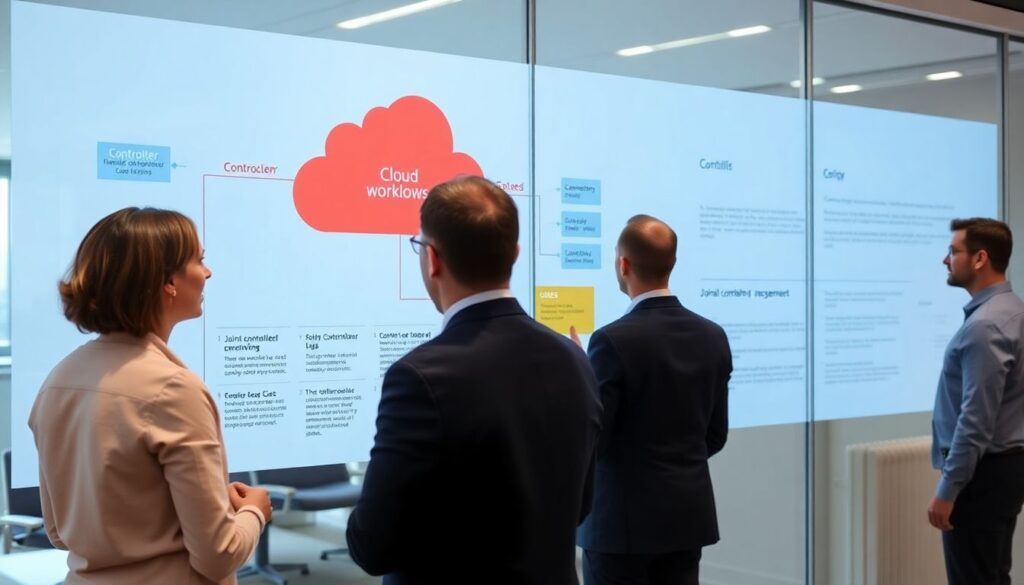
Confirm roles: controller, joint-controller and processor in cloud contexts
For each cloud workload, document whether your organization acts as a controller, joint controller or processor under LGPD and GDPR. This classification drives which obligations apply and which clauses you must require from providers.
- Mark roles in your RoPA or application inventory.
- Align role definitions with legal and DPO approval.
- Check if any SaaS behaves as a separate controller, not just a processor.
-
Validate legal bases and purposes for each cloud processing activity
List processing activities that rely on cloud infrastructure (IaaS, PaaS, SaaS) and match them to legal bases under LGPD and GDPR. Ensure purposes are specific, legitimate and compatible with what was disclosed to data subjects.
- Cross-check privacy notices, contracts and internal policies.
- Flag activities that rely solely on consent and occur in complex cloud chains.
- Document any secondary use and verify compatibility tests.
-
Check transparency and notice coverage for cloud providers and transfers
Review privacy notices, cookie banners and contractual clauses to ensure cloud providers, categories of recipients and cross-border transfers are clearly disclosed. For Brazilian users, confirm how LGPD-specific disclosures are presented.
- Verify that data subjects are informed about cloud hosting and main subprocessors.
- Confirm that international transfers and mechanisms are clearly explained.
- Align notice language between Portuguese (pt_BR) and other languages used.
-
Assess international transfer mechanisms for cloud regions and services
Map where data is stored and processed (regions, availability zones, backup locations) for each service. For data leaving Brazil or the EEA, confirm transfer mechanisms and supporting documentation.
- Check data residency settings in CSP consoles and SaaS admin panels.
- Collect DPAs, SCCs, BCRs or local equivalents as evidence.
- Ensure transfer impact assessments exist where required by GDPR guidance.
-
Evaluate data subject rights handling in cloud-based systems
Verify that your cloud workloads can support LGPD and GDPR rights requests (access, deletion, portability, restriction and others). Focus on technical feasibility, completeness and auditability.
- Test sample requests end-to-end in staging or low-risk scenarios.
- Confirm that deletion propagates to backups, logs and subprocessors where feasible.
- Ensure you can export data in structured, interoperable formats.
-
Review retention, minimization and anonymization in cloud data stores
For each database, object storage bucket, log archive and analytics dataset, verify that retention limits, minimization and anonymization practices align with declared purposes.
- Identify buckets or tables holding data longer than necessary.
- Check log retention and backups for excessive personal data storage.
- Evaluate anonymization or pseudonymization techniques where used.
-
Check sectoral and local add-ons (financial, health, telecom, public)
Map extra obligations applicable in Brazil and other jurisdictions (eg financial secrecy, health data rules, telecom requirements). Confirm that cloud deployments in those sectors support additional controls.
- Review regulator guidance or circulars that reference cloud usage.
- Check localization, encryption and segregation requirements.
- Align with any mandatory registration or authorization for cloud outsourcing.
Throughout this process, document which ferramentas de compliance LGPD para cloud you use (spreadsheets, GRC tools, RoPA platforms, CSP-native services) so you can repeat and audit the method later.
Controls Review: Technical and Organizational Safeguards in Cloud
Once legal alignment is mapped, review if technical and organizational controls in your cloud actually enforce those requirements.
- Identity and access management: strong authentication, least privilege, role-based access and regular access reviews for all cloud accounts.
- Encryption: data encrypted in transit and at rest using current, well-managed keys; restricted key access and rotation policies.
- Network security: restricted inbound/outbound rules, segmentation of sensitive workloads and control over public endpoints.
- Logging and monitoring: centralized logs, integrity protection, sufficient retention and alerting for suspicious activities related to personal data.
- Configuration management: baseline hardening standards, infrastructure as code and continuous compliance scanning against LGPD/GDPR-relevant benchmarks.
- Backup and recovery: tested restore procedures, defined RPO/RTO for critical personal data systems and secure storage for backups.
- Change management: documented approvals and testing for changes affecting personal data processing and security posture.
- Training and awareness: regular security and privacy training for staff operating or developing cloud systems.
- Incident management: clear runbooks for cloud security incidents, including privacy assessment and notification workflows.
- Third-party integrations: vetted API connections, managed secrets and periodic review of scopes/permissions granted to external apps.
Vendor Risk: Assessing CSPs, Subprocessors and Contractual Commitments
Cloud compliance often fails because vendor risk is underestimated. Avoid these frequent mistakes:
- Assuming "big" CSPs are automatically compliant for all your use cases without checking shared responsibility details.
- Missing or outdated DPAs with critical SaaS vendors and infrastructure providers.
- Incomplete list of subprocessors used by key vendors, especially for support, analytics and monitoring.
- Ignoring regional and industry-specific requirements when choosing data center regions or services.
- Accepting generic security descriptions instead of requesting concrete evidence (certifications, audit reports, penetration test summaries).
- Failing to set SLAs and incident notification timelines that align with LGPD/GDPR breach expectations.
- Not verifying how vendors support data subject rights and data portability in practice.
- Overlooking shadow IT and "freemium" cloud tools used by business units without procurement or DPO visibility.
- Not tracking vendor changes (subprocessor additions, region shifts, feature deprecations) that can break compliance assumptions.
- Outsourcing all responsibility to serviços de consultoria LGPD GDPR em nuvem and not keeping internal ownership for decisions and risk acceptance.
Evidence and Reporting: Building Audit Trails, Incident Playbooks and Remediation Plans
Different organizations will choose different levels of formality and tooling when documenting cloud compliance. The options below can be combined depending on maturity and regulatory pressure.
-
Lightweight internal assessment package
Suitable for smaller teams or early-stage companies needing a practical baseline. Use structured spreadsheets or simple GRC tools to log systems, findings, risk ratings and actions. Capture screenshots, config exports and contract excerpts as evidence stored in a controlled repository.
-
Formal compliance program with GRC platform
Appropriate for regulated sectors, larger enterprises or groups operating under strict supervision. Integrate your RoPA, DPIAs, risk registers and ticketing with a GRC tool, and link evidence (logs, reports, contracts) to each control and requirement. This enables better audits and continuous monitoring.
-
Hybrid approach with CSP-native tools and playbooks
Good middle ground when you want automation without full GRC overhead. Use CSP-native policy as code, configuration assessment and logging to monitor controls, while documenting LGPD/GDPR mappings and incident playbooks in shared internal wikis.
-
External independent review or certification-oriented path
Useful before regulator interactions, M&A or entering new markets. Combine internal documentation with third-party audits focused on boas práticas de segurança e conformidade em nuvem LGPD, reusing evidence where possible to avoid duplicated work.
Practical clarifications and edge-case guidance for compliance reviews
How often should we reassess cloud compliance under LGPD and GDPR?
At a minimum, reassess annually and after major architectural or business changes. Highly regulated or fast-changing environments may need more frequent partial reviews focused on specific systems or regions.
Is a CSP's compliance certification enough to prove our own conformity?
No. Provider certifications support your program but do not replace your obligations as controller or processor. You must configure services correctly, manage identities, and implement policies that reflect LGPD and GDPR requirements for your specific processing.
What should we do if data flows are unclear or undocumented?
Start with network and access logs, architecture diagrams and interviews with system owners. Where uncertainty remains, prioritize clarifying those flows as high-risk findings, and restrict unnecessary access or transfers until visibility improves.
How can we safely collect evidence from production cloud environments?
Use read-only roles, filtered log exports and configuration snapshots. Avoid downloading full databases or sensitive datasets; instead, rely on metadata, screenshots and queries that demonstrate controls without exposing live personal data.
Do we need DPIAs for all cloud systems?
Not necessarily. Perform DPIAs for processing that is likely to result in high risk to individuals, such as large-scale profiling, sensitive data or systematic monitoring. Document the rationale for when you do and do not run DPIAs.
Can we rely entirely on tools to manage cloud LGPD compliance?
Tools help with visibility, workflow and evidence collection, but human judgment from legal, DPO and security remains essential. Treat ferramentas de compliance LGPD para cloud as enablers for a governance process, not as a replacement for it.
What if jurisdictions conflict in their data localization or transfer rules?
Work with legal counsel to map conflicts and choose architectures that satisfy the strictest overlapping requirements where possible. This may include region-specific deployments, data segregation or alternative providers.