Why a cloud security compliance checklist matters for regulated companies
If your company touches health data, payment cards or personal data from Brazil, you can’t treat the cloud as “someone else’s computer and problem”. Regulators expect you to prove control, not just buy technology. A clear checklist de conformidade para cloud security em empresas reguladas keeps you from missing boring but critical details: data mapping, logging, contracts, backups, access reviews. It also helps you talk the same language with auditors, vendors and your own board when they ask whether LGPD, HIPAA and PCI-DSS are really covered or “just assumed to be fine in the cloud”.
Historical context: how LGPD, HIPAA and PCI-DSS met the cloud

When HIPAA came out in the 1990s, and the first versions of PCI-DSS followed, almost nobody was running large‑scale public cloud. The rules were written with on‑premises data centers in mind: clear perimeters, physical firewalls, badge access. Then cloud providers started offering shared infrastructure, multi‑tenant storage and elastic scaling. Regulators reacted slowly, but they never changed one key expectation: you stay responsible for protecting the data, even if someone else runs the servers. LGPD entered this world already “cloud aware”, but still assumes you understand where data lives and who is processing it.
The result is a slightly awkward marriage: old‑school regulation with modern, highly automated platforms. You now need to read any cloud security compliance LGPD HIPAA PCI-DSS requirement through the lens of shared responsibility. Some things the cloud provider can cover better than you ever could (physical security, hypervisor patches), while others belong squarely to your team: identity management, configuration, data classification, incident response. Your checklist exists to translate the generic legal and standard wording into concrete cloud actions and controls you can validate and monitor continuously.
Basic principles for a practical cloud compliance checklist
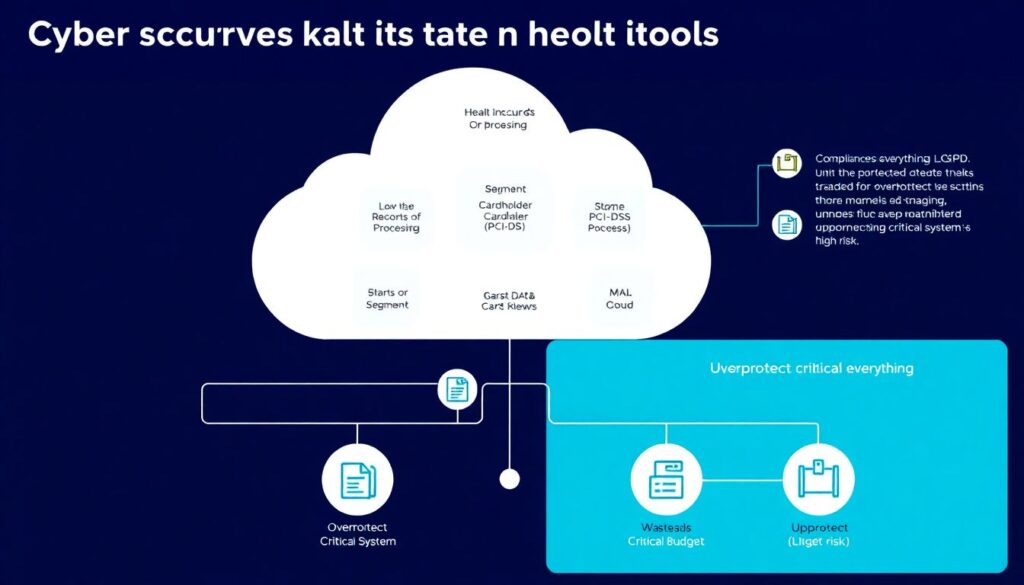
A solid checklist starts with data, not with tools. First, map which workloads in the cloud store or process health records (HIPAA), cardholder data (PCI-DSS) or personal data subject to LGPD. Without this, you’ll either overprotect everything and burn budget, or underprotect critical systems. From there, define which cloud regions, services and storage classes are allowed for each category. This simple “what data where” view is the backbone of any realistic compliance strategy and usually the first thing an auditor asks about when reviewing sensitive environments.
Next come identity and access management. Your list should force you to verify that privileged accounts are tightly controlled, MFA is enforced, keys and secrets are rotated, and no one keeps long‑lived admin tokens lying around. Different frameworks call this differently, but the idea is the same: least privilege and strong authentication. For regulated environments, you also need clear separation between production and non‑production, and between admin and business roles. This is also where many beginners fail by giving vendors or developers permanent global admin “just to save time”.
Encryption and logging are the third pillar. Your checklist should explicitly confirm that data is encrypted at rest and in transit, using configurations supported by your specific regulator or standard. Don’t rely on “default” cloud settings without documenting them. For logging, make sure you centralize and retain events from identity, network, storage and workloads. Regulators expect you to reconstruct what happened during a security incident, which is impossible without logs and clear retention rules. Tie these points directly to your LGPD, HIPAA and PCI‑DSS requirements so the mapping is easy to defend during reviews.
Concrete implementation examples in the cloud
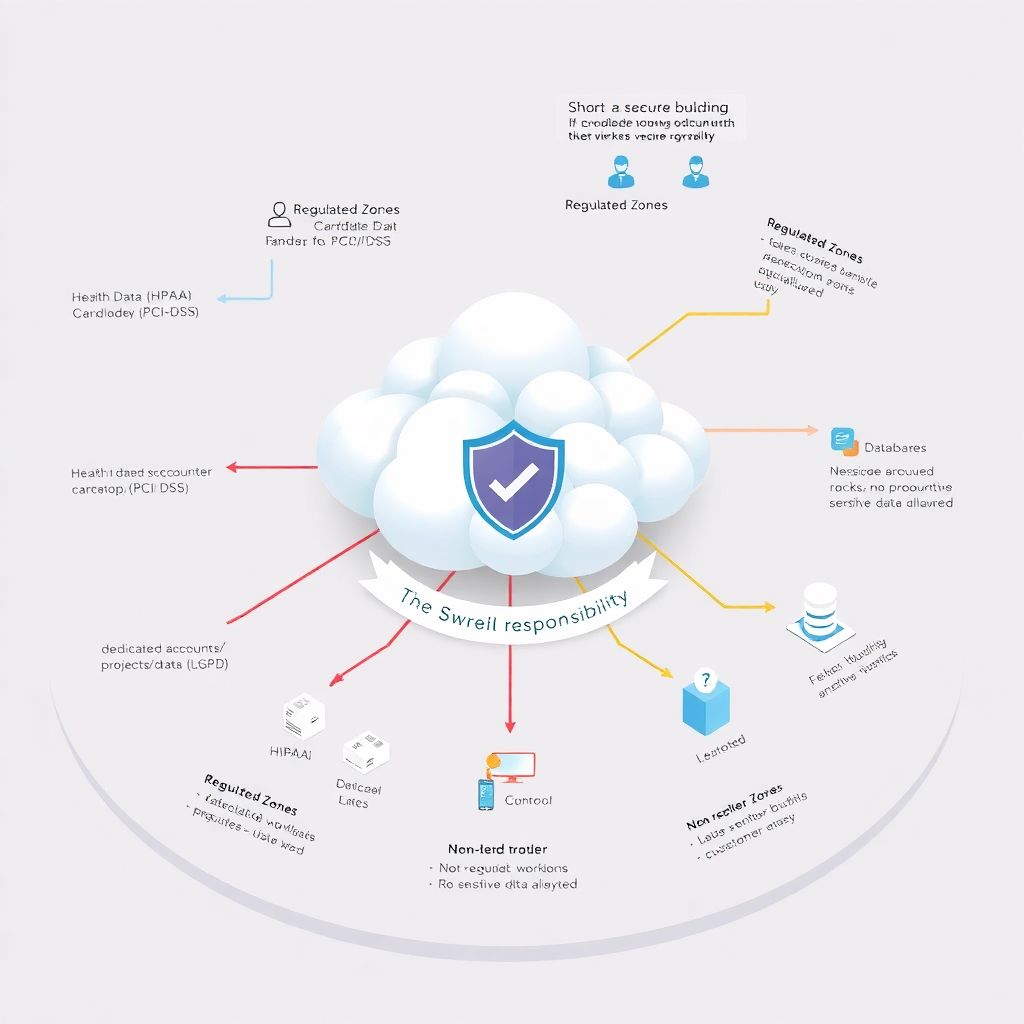
Imagine a mid‑size healthcare startup moving its patient portal to the cloud. They hire a consultoria segurança em nuvem LGPD para empresas reguladas to avoid compliance surprises. The consultant starts with a workshop to map data flows end‑to‑end: web front‑end, APIs, databases, third‑party integrations, backups and analytics. Then they define which cloud accounts, projects or subscriptions are “regulated zones” and which are not. Only the regulated zones can host PHI or LGPD personal data, and they require stricter access policies, separate logging and dedicated incident response runbooks that reference HIPAA requirements.
In a different case, a fintech processing credit card payments moves its payment gateway and fraud engine to the cloud. Here, serviços de conformidade cloud PCI-DSS e HIPAA (for co‑processing health spending data) are bundled into one program. Network segmentation becomes crucial: cardholder data flows only through specific subnets, with tightly controlled security groups and firewalls. Tokenization and vaulting are implemented so raw card data is never stored in generic microservices. The checklist includes regular ASV scans, quarterly vulnerability assessments and documented evidence that all components in the card data environment are patched within defined SLAs.
Another common scenario: an established retailer replicates customer data from on‑prem to cloud for analytics. They deploy ferramentas de segurança em nuvem para conformidade LGPD to automatically classify personal data and detect misconfigured storage buckets. The checklist requires every new data pipeline to be reviewed before going to production: purpose limitation, minimization of personal attributes, pseudonymization when possible, and explicit rules for retention and deletion. When someone wants to build a new dashboard, they must show where data comes from, which attributes are used and how access is restricted to authorized roles only.
Checklist core: what to verify step by step
Below is a lean, practical checklist you can adapt. The key is to make each item objectively testable, not just “sounds right” on paper:
1. Identify all cloud workloads that store or process regulated data (LGPD, HIPAA, PCI-DSS) and document data flows.
2. Define “regulated zones” (accounts, projects, VPCs) and forbid sensitive data elsewhere by policy.
3. Enforce centralized identity with MFA, strong password policies and least‑privilege roles for admins and services.
4. Confirm encryption at rest and in transit for all regulated data, documenting key management and rotation.
5. Enable and centralize logging for access, network, and configuration changes; set retention per regulatory needs.
6. Automate baseline configuration checks (CIS, vendor benchmarks) across all regulated environments.
7. Run regular vulnerability scans and patch management cycles aligned to PCI-DSS and HIPAA timelines.
8. Test incident response playbooks, including breach notification procedures required by LGPD and HIPAA.
9. Validate third‑party cloud vendors and tools with due‑diligence: DPAs, BAAs, and PCI attestation of compliance.
10. Review and update this checklist at least annually or after major architectural changes.
Frequent misconceptions and beginner mistakes
One of the most dangerous beliefs is that choosing a “compliant cloud provider” automatically makes your workloads compliant. Certifications help, but they cover only the provider’s responsibility. Your own misconfigurations, over‑permissive roles or exposed buckets are still fully your problem. New teams often confuse the shared responsibility model, assuming the provider manages encryption keys, backups and network rules by default. Auditors rarely accept “the cloud did it” as an explanation; they want clear proof that you actively configured and monitored controls relevant to LGPD, HIPAA or PCI.
Another classic rookie error is treating compliance as a one‑time project. People rush to pass an initial audit, write pretty policies, maybe buy some tools, and then stop. Six months later, new services are deployed without review, IAM rules are relaxed “temporarily” and documentation is out of date. When the next auditor or regulator visit comes, the gap between paper and reality is obvious. To avoid this, build your checklist directly into CI/CD pipelines, change management and onboarding processes. Every new system or major change should trigger a lightweight but real compliance review.
Beginners also underestimate logging and evidence. They believe that “we have logs somewhere” is enough, until an incident occurs and nobody can reconstruct who accessed what and when. Or they run vulnerability scans but don’t keep reports and remediation records. For auditoria de segurança em nuvem e conformidade regulatória, the absence of organized evidence is almost as bad as the absence of controls. Treat screenshots, reports, tickets and approvals as explicit deliverables in your checklist. If you can’t show it, regulators and auditors will assume it wasn’t done.
Finally, many new teams focus heavily on fancy security tools while neglecting boring basics like data inventory, access reviews and backup testing. It’s tempting to buy advanced anomaly detection and AI‑driven dashboards, but most serious findings in regulated environments still come from very simple issues: open databases, hard‑coded credentials, non‑encrypted backups, shared admin accounts. A realistic checklist keeps you grounded: handle the fundamentals first, prove they work, and only then layer in more sophisticated tooling where it clearly supports specific LGPD, HIPAA or PCI-DSS requirements.
Putting it all together in your daily operations
To make your checklist more than a PDF nobody reads, integrate it with the tools and workflows your teams already use. Turn items into tickets or tasks in your agile board, link them to infrastructure‑as‑code repositories, and automate as many checks as possible. Misconfigurations in IAM, storage or network should trigger alerts and, ideally, automatic remediation for known patterns. Keep ownership clear: every checklist domain (data, identity, network, logging, vendors) needs a named responsible person, not a generic “security team” label that diffuses accountability.
Over time, measure how your checklist affects both risk and velocity. If developers see it only as a blocker, they’ll avoid security until the last minute. Instead, involve them in refining the items so they’re specific, quick to validate and aligned with real project stages. When auditors arrive, use the checklist as your storyline: walk them through each area, show evidence and explain how cloud‑native controls meet regulatory expectations. Done this way, cloud compliance stops being a yearly panic event and becomes a predictable, continuous part of how your regulated company builds and runs systems.