Categoria: Manuais
-
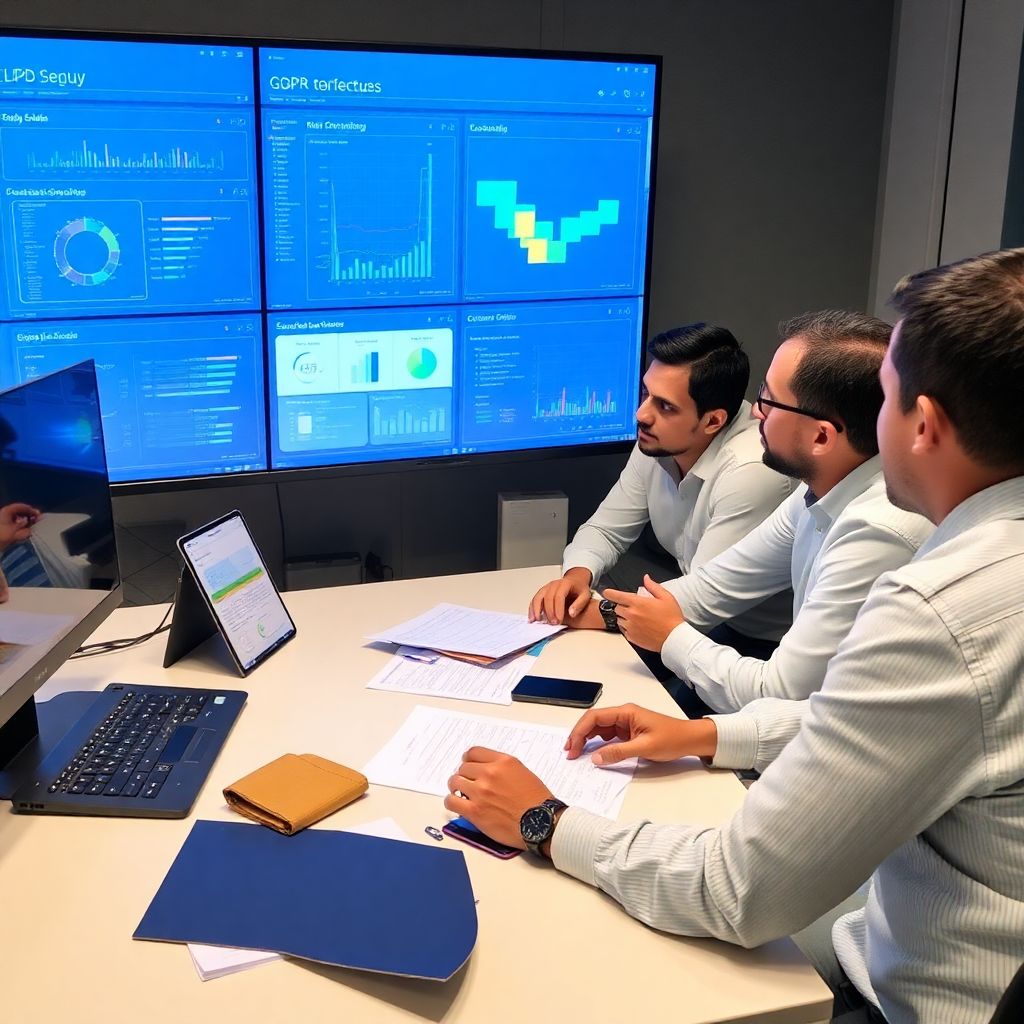
Cloud governance and compliance program under Lgpd, Gdpr and Iso 27001
A cloud governance and compliance program for LGPD, GDPR and ISO 27001 defines clear ownership, risk-based controls and continuous monitoring for your cloud workloads. Start by scoping regulations, mapping data flows and defining policies, then implement technical safeguards, vendor controls and recurring audits aligned with your Brazilian context and your providers. Governance and Compliance Quick-Checklist…
-

Complete hardening guide for kubernetes clusters in production cloud environments
A practical Kubernetes hardening guide for Brazilian cloud production clusters: start by mapping threats and compliance needs, then standardize hardened node and control-plane baselines, lock down network paths, enforce strict RBAC and workload identities, add runtime protection and observability, and finally automate via CI/CD, policy-as-code and continuous security monitoring. Critical controls overview for production clusters…
-

Serverless security: specific risks, key tools and secure coding patterns
Serverless security in the cloud depends on treating each function as a small, internet-exposed application: harden inputs, minimize permissions, secure the build pipeline, and monitor runtime behavior. Focus on least‑privilege IAM, strict dependency control, event validation, and dedicated monitoring platforms for serverless architecture instead of relying only on traditional VM or container defenses. Security executive…
-

How to create an incident response runbook for cloud infrastructure
A practical runbook de resposta a incidentes em nuvem for pt_BR teams should define clear scope, roles, decision gates, and safe, reversible actions. Start from a simple modelo de runbook para resposta a incidentes em cloud, connect it to your monitoring and ticketing tools, document per-service containment steps, and rehearse with simulations before production use….
-

Continuous cloud vulnerability monitoring: tools, metrics and best practices
Continuous cloud vulnerability monitoring is an ongoing process that discovers, assesses and tracks weaknesses in your cloud accounts, workloads and CI/CD artefacts. It combines automated scans, clear metrics, and repeatable remediation workflows so you know what is exposed now, what matters most for risk, and whether your fixes are actually reducing exposure. Essential conclusions for…
-

Zero trust architecture guide for multi-cloud and hybrid environments
Zero Trust for multi-cloud and hybrid environments means authenticating every identity, authorizing every request with least privilege, and continuously validating context across all clouds and data centers. This guide gives a practical, risk-aware, step-by-step approach to arquitetura zero trust multi cloud, focusing on safe, incremental changes suitable for Brazilian enterprises. Practical checklist for deploying Zero…
-

Backup, recovery and business continuity strategies for threats in cloud environments
Build threat-driven strategies for backup, disaster recovery and business continuity in cloud by mapping business impact to RTO/RPO, hardening backups against ransomware, and automating failover with clear runbooks. Use multi-region, multi-account and immutable storage, and test regularly so your backup em nuvem para empresas actually works under real incidents. Strategic snapshot: immediate actions for cloud…
-

Cloud Soc implementation guide: logging, correlation and anomaly detection
A cloud-focused SOC for Brazilian environments builds on three pillars: consistent cloud logging, tuned correlations, and safe anomaly detection. Start by standardizing logs from all cloud providers, feed them into a resilient pipeline, apply cloud-aware SIEM rules, and gradually layer anomaly models. Keep everything documented, monitored, and periodically reviewed against real incidents. Fast-track checklist for…
-

Secure cloud pentesting and vulnerability assessments with compliance best practices
To run cloud pentests and vulnerability assessments safely and compliant in pt_BR contexts, you must obtain explicit written authorization, align with provider policies (AWS, Azure, GCP), define a narrow scope, use non-destructive techniques, protect production data, and document every action. When in doubt, involve legal, compliance, and a specialized cloud security consultancy. Pre-engagement essentials and…
-
Devops secrets management: comparing vault, secret manager and alternative tools
For most pt_BR teams, start with a cloud-native Secret Manager from your main provider as the best cost/benefit, use Vault when you need multi-cloud, dynamic secrets and strict compliance, and keep lightweight options (Kubernetes + SOPS or CI secrets) for small, low‑risk projects or constrained budgets. Executive comparison snapshot Central rule: keep secrets outside code…