Categoria: Manuais
-

Cnapp tools review: what they really deliver in visibility and protection
CNAPP tools really deliver value when they map every cloud asset, continuously detect risks, and block real attacks without drowning your team in noise or hidden costs. To pick the best option, compare depth of visibility, runtime controls, integration effort, telemetry costs, and how pricing aligns with your current and future cloud footprint. Executive findings…
-

Secure Ci/cd pipeline guide with integrated Sast, Dast and Sca scans
A secure CI/CD pipeline with SAST, DAST, and SCA means every code change is automatically built, tested, scanned, and promoted only if security checks pass. You design the architecture, choose suitable tools, integrate scans into each stage, enforce fail-closed gates, protect secrets and artifacts, and continuously monitor and improve results. Critical security checkpoints for CI/CD…
-

Cloud sensitive data protection guide: encryption, tokenization and Kms key management
To protect sensitive data in the cloud you must classify data, encrypt it at rest and in transit, apply tokenization where raw values are not needed, and run strict key management with KMS. This manual focuses on safe, repeatable steps that teams in Brazil can adopt across AWS, Azure and GCP. Immediate Protection Checklist for…
-
Secure Iam policies in Aws, azure and google cloud: avoid common configuration errors
Configure secure IAM in AWS, Azure, and Google Cloud by enforcing least privilege, using managed roles where possible, separating human and workload identities, and continuously auditing permissions. Avoid wildcard grants, unused admin roles, and shared accounts. Start small, test in non‑production, and gradually refine policies with logs and access reviews. Policy Essentials Checklist Map business…
-

Hardening containers and kubernetes on public cloud providers practical guide
To harden containers and Kubernetes on public cloud providers, start by enforcing secure images, strong runtime isolation, least‑privilege RBAC, and strict network policies. Combine cloud‑native controls from AWS, Azure, and GCP with Kubernetes primitives, automate checks in CI/CD, and continuously monitor drift, vulnerabilities, and misconfigurations across all clusters and namespaces. Essential Security Outcomes and Risk…
-

Generative Ai trends: impact on cloud security and modern malware development
Generative AI reshapes cloud security by supercharging both attackers and defenders. It enables faster phishing, malware generation and cloud misconfiguration discovery, but also powers anomaly detection, automated response and secure coding assistance. Teams in Brazil using public cloud must update threat models, controls and processes to handle AI-driven scale, speed and unpredictability. Executive summary: generative…
-

News: recent attacks on cloud infrastructures and key lessons for security
Recent cloud-infrastructure attacks typically combine three elements: an exposed entry point (misconfiguration or supply chain), stolen or abused identities, and weak monitoring that delays response. To protect your company, focus on hardening configurations, locking down credentials, improving logging and detection, and preparing a tested containment-and-recovery runbook for critical cloud workloads. Concise overview of recent cloud-infrastructure…
-
Sensitive data protection in cloud: encryption, tokenization and secure key management
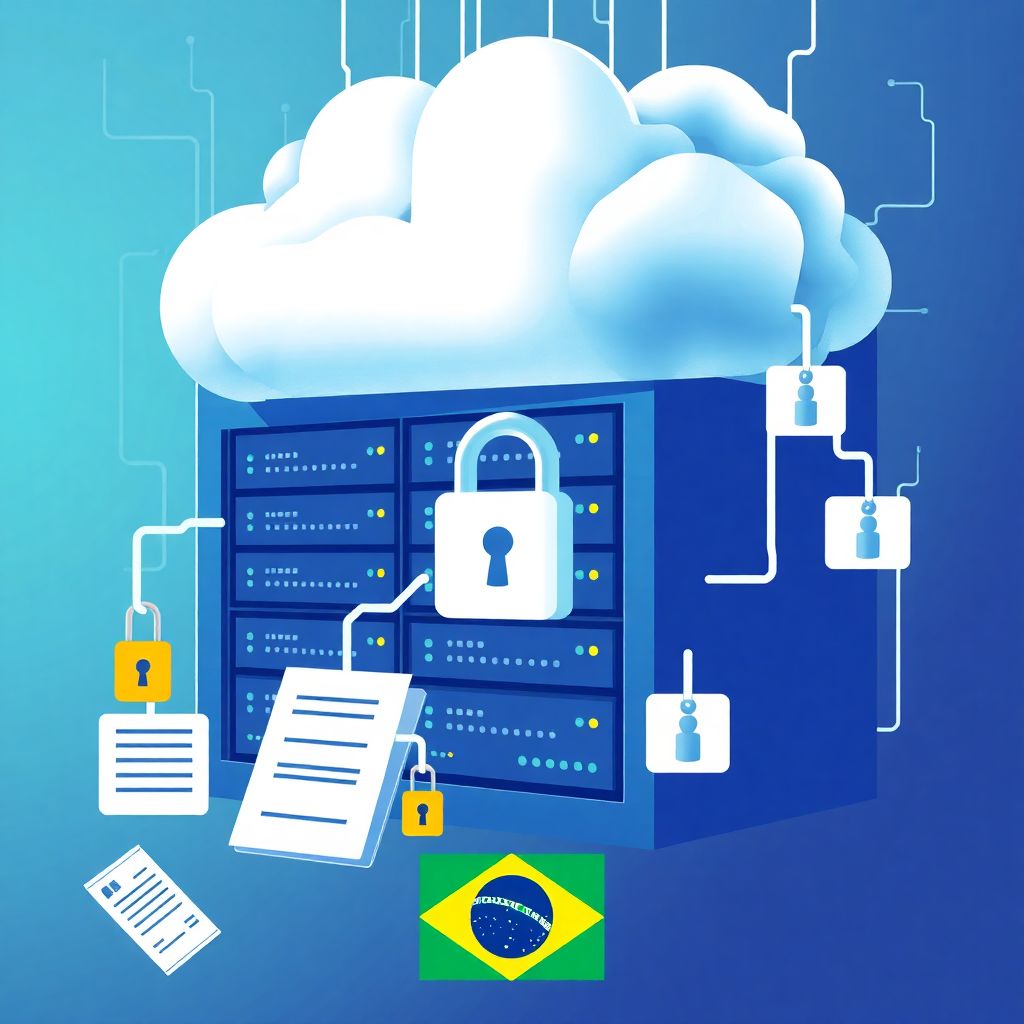
To protect sensitive data in cloud environments you must classify data, choose between encryption and tokenization per use case, and operate a secure key management setup using cloud KMS and, when needed, HSMs. Combine technical controls with strict access policies, logging, rotation, and a tested incident response plan aligned with Brazilian LGPD requirements. Core principles…
-

Zero trust in the cloud: implementing from initial planning to continuous operation
Zero Trust na nuvem means verifying every identity, device and workload continuously, segmenting access and encrypting data by default. To implement safely, start with cloud inventories and risks, design a reference architecture, harden identity and network controls, protect data with managed keys, then automate monitoring and policy validation. Implementation snapshot: core Zero Trust steps Map…
-

Future trends in cloud cybersecurity driven by Ai, automation and autonomous defense
Future cloud security will be dominated by AI-driven detection, policy‑aware automation and progressively autonomous defense. For a Brazilian mid‑size company, the practical move is to centralize logs, plug in cloud‑native AI analytics, automate the top five incident responses, and keep a human in the loop for all high‑impact actions. Executive snapshot of imminent cloud-security shifts…