Categoria: Revisões de Ferramentas
-

Implementing devsecops in Ci/cd pipeline for cloud native applications
To implement DevSecOps in a CI/CD pipeline for cloud-native applications, embed security checks at every stage: threat modeling in feature design, SCA/SAST/DAST in CI, strict secrets management, image signing and artifact protection in registry, policy-as-code for gates, plus automated compliance reporting. Start small with one service, then standardize across your platform. Security checkpoints overview for…
-
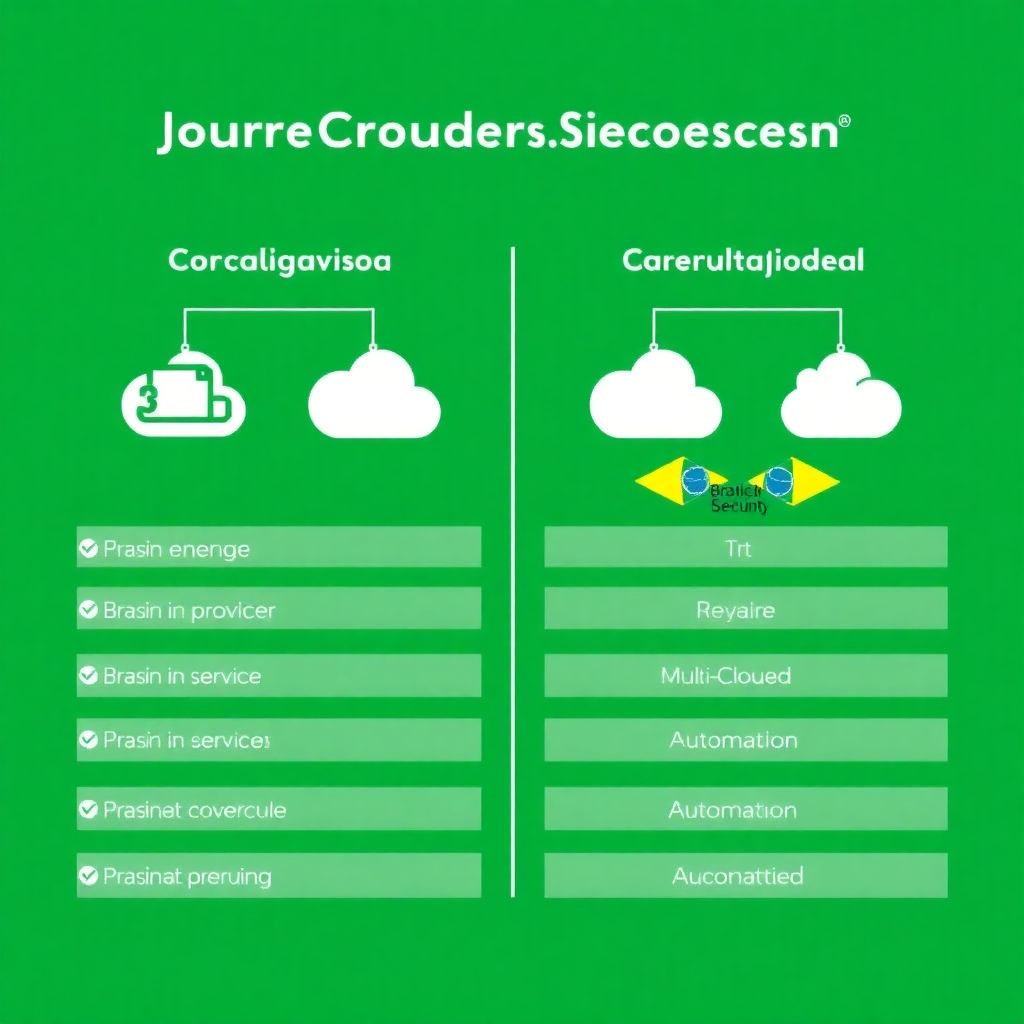
Cspm tools review: comparing leading solutions for cloud security posture
The best CSPM choice for your Brazilian cloud environment depends on cloud footprint, team skills, and budget. For small teams with one main cloud, starting with the cloud-native CSPM is usually enough and cheap. For multi-cloud, compliance-heavy, or fast‑growing environments, an independent multi‑cloud CSPM platform gives better coverage and automation. Budget-focused evaluation highlights Start with…
-

Identity and access management in hybrid environments: integrations, pitfalls and design patterns
Hybrid IAM for Brazilian companies means centralizing identity across on‑prem AD and multiple clouds, using federation (OIDC/SAML), synchronized directories and automated provisioning. You reduce password sprawl, shadow accounts and audit gaps by designing clear trust boundaries, role models and monitoring. Start small, integrate critical apps first, and continuously harden policies. Core principles for secure hybrid…
-

Cis benchmarks in practice: applying and automating compliance in cloud environments
CIS Benchmarks in cloud mean translating each recommendation into concrete provider services, enforcing them with automation, and continuously checking drift. For pt_BR teams asking “CIS Benchmarks cloud como implementar”, the practical path is: map controls, prioritize high‑impact items, apply them safely in AWS/Azure/GCP, automate with IaC and policy, then monitor and report. Quick compliance snapshot…
-

Cloud incident response manual: step-by-step from alert to postmortem
A practical cloud incident response manual in pt_BR context should define clear owners, automated alerts, safe containment steps, and a simple post-incident review loop. Start by creating a documented plano de resposta a incidentes em cloud computing, then connect it to tools, runbooks, and metrics so teams can execute resposta a incidentes em nuvem passo…
-

Modern ransomware protection techniques for cloud and hybrid environments
Modern protection against ransomware in cloud and hybrid environments combines strong identity controls, immutable backups, microsegmented networks, continuous detection and well-tested recovery runbooks. Use cloud-native tools (AWS, Azure, GCP) plus clear operational playbooks. Focus on preventing lateral movement, enforcing least privilege and guaranteeing that clean data and infrastructure can be restored quickly and safely. Quick…
-

Real-time threat monitoring and detection with cloud Siem and Xdr
To monitor and detect threats in real time with cloud-integrated SIEM and XDR, start from a clear architecture, define log sources, build a normalized pipeline, implement correlation and ML-based rules, automate incident response playbooks, and continuously validate, tune, and report against operational and compliance requirements across AWS, Azure, and GCP. Quick readiness checklist for SIEM…
-

Assessing cloud compliance maturity with Lgpd, Gdpr and other regulatory standards
To evaluate cloud compliance with LGPD, GDPR and other regulations, first map what data you process in the cloud, where it flows and which providers are involved. Then compare current practices with legal requirements, review technical and organizational controls, verify contracts and logs, and document gaps with clear remediation actions. Compliance Snapshot: Essential Metrics for…
-

Api security in cloud-native: authentication, authorization, rate limiting, secure logging
Secure APIs in cloud-native architectures by combining strong authentication, least-privilege authorization, rate limiting at the edge and service level, and secure logging with redaction and monitoring. Use an API gateway or service mesh, centralized identity (OIDC/JWT), and automated alerts to quickly detect and block abuse while preserving auditability and compliance. Pre-deployment security checklist Define clear…
-

Cspm tools technical comparison: key strengths and limitations explained
Choosing a CSPM tool is about matching risk, cloud scale, and budget. For most small and mid-size Brazilian companies, a cloud-native CSPM plus focused hardening is often enough. Multi-cloud or regulated environments usually need an enterprise multi-cloud CSPM, while developer-centric or open-source options fit teams that can invest more engineering time than cash. Top-line takeaways…