Categoria: Artigos
-
Common cloud misconfiguration errors that cause data breaches and how to avoid them
Common cloud data leaks come from public storage, overprivileged IAM, exposed endpoints, missing encryption, weak monitoring, and CI/CD secret leaks. Start with read-only audits of permissions, network paths, and logs. Then apply least privilege, restrict public access, enforce encryption, harden pipelines, and add continuous auditoria de configuração de cloud e prevenção de vazamento de dados.…
-
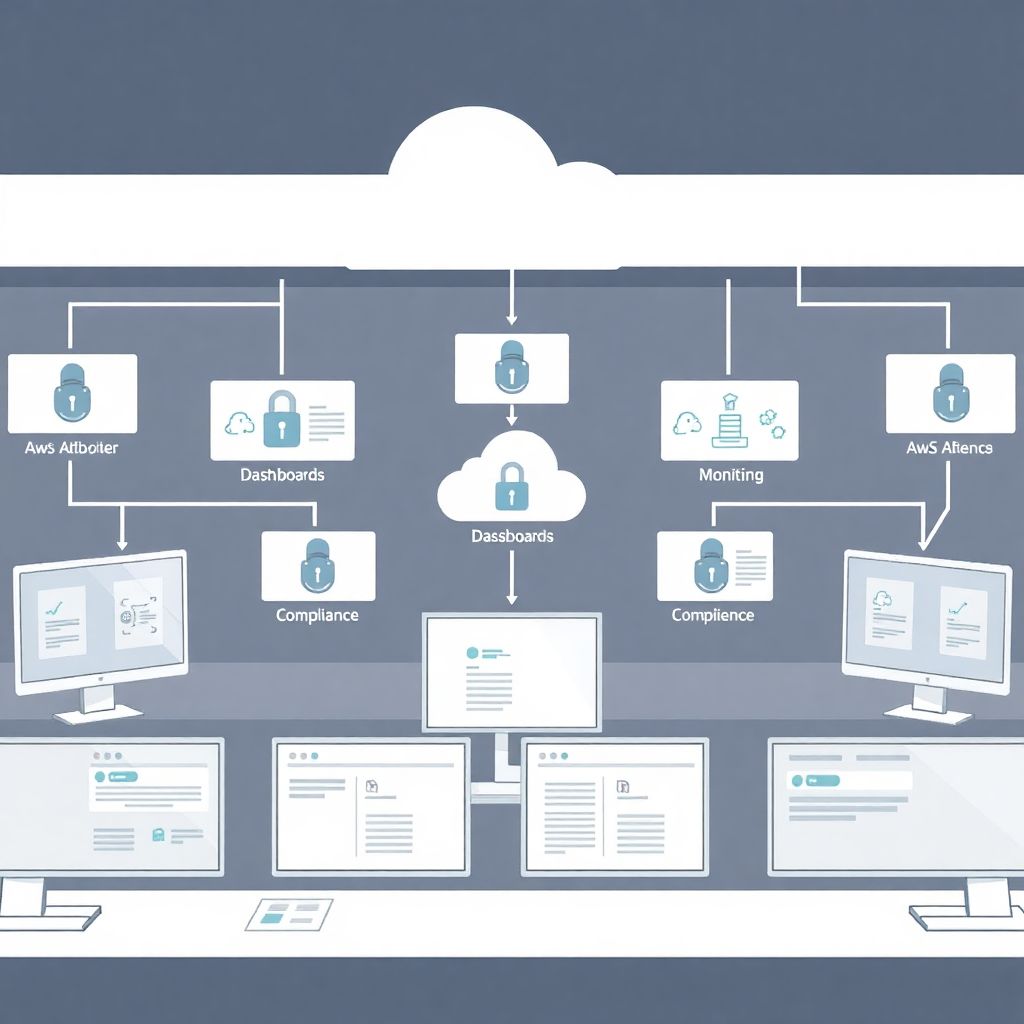
Secure Aws configuration guide: best practices for new and legacy accounts
Secure configuration of AWS accounts starts with strong foundations: Organizations, SCPs, MFA, least‑privilege IAM, segmented VPCs, mandatory encryption, and continuous monitoring. For both new and legacy environments, prioritize centralized logging, GuardDuty, backups, and automated remediation. Treat every account as production, and document decisions to enable future auditing and safe scaling. Immediate Hardening Checklist for New…
-

Cnapp tools review for security teams: cloud-native application protection platform
Cloud-Native Application Protection Platforms (CNAPP) unify visibility, misconfiguration management, vulnerability detection, and runtime protection across Kubernetes, containers, and cloud services. For Brazilian security teams, the priority is choosing ferramentas CNAPP para segurança em nuvem that plug into existing CI/CD, scale across multiple clouds, and provide clear, risk-based prioritization instead of noisy alerts. Capabilities Snapshot for…
-

Cloud security compliance with Lgpd, Gdpr and Pci-dss regulations
To apply LGPD, GDPR and PCI-DSS to cloud security, start by mapping legal requirements to your shared responsibility model, classify and localize sensitive data, implement strong encryption and key management, enforce least-privilege IAM with complete logging, and maintain continuous evidence collection and testing backed by contracts and attestations from all cloud providers and processors. Core…
-

Secure cloud migration guide: practical checklist of key risks and controls
A secure cloud migration for Brazilian organizations requires a clear risk inventory, a minimum baseline of controls, and disciplined execution. Start by mapping business impact, then design a segmented architecture, protect data by classification, enforce strong identity and access management, implement monitoring and backup, and finally test with phased cutover and defined rollback. Executive checklist:…
-

How to create an incident response runbook for cloud infrastructure
A cloud incident runbook is a structured, step-by-step guide that tells your team exactly what to do when something breaks or looks malicious in your cloud infrastructure. It defines scope, roles, triggers, actions, tools, SLAs, and verification checks so resposta a incidentes em nuvem serviços gerenciados and in-house teams can act consistently and safely. Critical…
-
Shared responsibility models: what is truly the customer’s responsibility?
In a cloud shared responsibility model, the provider secures the cloud infrastructure, while the customer secures what they run and store inside it: identities, configurations, data, and day‑to‑day operations. Understanding these boundaries lets you design safe steps, avoid misconfigurations, and negotiate realistic responsibilities, especially in Brazilian (pt_BR) regulatory and business contexts. At-a-Glance: What Customers Truly…
-

Siem and Soar integration with Aws, azure and Gcp logs for advanced threats
To integrate SIEM and SOAR with AWS, Azure and GCP logs for advanced threat detection, start by standardising log collection, normalising schemas and enforcing strong access controls. Then design correlation rules and playbooks that span clouds, validate data quality and tune detections to reduce false positives while meeting data residency and compliance requirements. Critical integration…
-

Sensitive data protection in cloud: encryption at rest, in transit, in use
To protect sensitive data in cloud environments, combine encryption at rest, in transit and in use with strong key management, monitoring and incident response. Classify business data, map all cloud storage and flows, enforce provider-native encryption, harden TLS, and selectively use confidential computing for high-impact workloads, always balancing security, cost and performance. Concise technical summary…
-

Api security in cloud-native environments from design to production monitoring
Cloud-native API security in pt_BR environments means embedding controls from design to runtime: threat modeling, strong authN/Z, encrypted traffic, secure pipelines, and continuous monitoring. This guide gives a practical, risk-aware runbook so you can implement segurança de api em cloud native safely across Kubernetes, serverless, and managed PaaS, without relying only on perimeter firewalls. Essential…